

You are staring at a blinking cursor. You are finalizing a keynote speech, polishing a college essay, or drafting a LinkedIn post designed to inspire your professional network. You know Malcolm Gladwell made a profound point about practice, success, or timing in his bestseller Outliers: The Story of Success, but paraphrasing it just does not carry the same weight. You need his exact words.

You do not have the time to dig through your dog-eared paperback from Barnes & Noble or scroll endlessly through Goodreads. You need precise, verified text that you can drop directly into your content to instantly elevate your argument.
Gladwell’s work shattered the myth of the "self-made" genius. By reframing how we look at high achievers—from software billionaires to professional hockey players—he gave us a new vocabulary for success. Below is a carefully curated selection of the best quotes from outliers, categorized by theme, complete with context and advice on how to deploy them in your own material.
If you are building a presentation or essay around these concepts, owning the source material is a game-changer. While these quotes give you the highlights, diving into Gladwell's full text provides the rich, storytelling context—like the fascinating breakdown of Canadian hockey players or the Beatles' grueling Hamburg gigs—that makes his arguments so compelling. If you haven't yet read the book that sparked a global conversation about the true nature of success, it is an absolute must-have for your professional library.

Outliers
Malcolm Gladwell
 43 Min
 8 Key Points
 4.5 Rate
The 10,000-Hour Rule: Mastery and Practice
When people think of this book, they immediately think of the time it takes to achieve mastery. If you are coaching a team, teaching a class, or trying to motivate an audience to stick to their craft, these outliers quotes about 10000 hours are your heavy hitters. They dismantle the idea of overnight success and replace it with the gritty reality of relentless practice.

"Practice isn't the thing you do once you're good. It's the thing you do that makes you good."
The Context: Gladwell uses this to explain how the Beatles played grueling eight-hour sets in Hamburg, Germany, long before they invaded America. They didn't start out as legends; the sheer volume of their practice forced them to become legendary.
How to Use It: This is the ultimate motivational hook. Use it in a presentation about skill acquisition, employee onboarding, or any scenario where your audience might feel frustrated by early failures. It normalizes the struggle.
How to Use It: This is the ultimate motivational hook. Use it in a presentation about skill acquisition, employee onboarding, or any scenario where your audience might feel frustrated by early failures. It normalizes the struggle.
"Ten thousand hours is the magic number of greatness."
The Context: Drawing on studies of elite musicians and chess grandmasters, Gladwell posits that true world-class expertise requires a massive time investment.
How to Use It: Drop this into a social media carousel or a short-form video script when discussing commitment. It is punchy, highly quotable, and instantly recognizable.
How to Use It: Drop this into a social media carousel or a short-form video script when discussing commitment. It is punchy, highly quotable, and instantly recognizable.
"Achievement is talent plus preparation. The problem with this view is that the closer psychologists look at the careers of the gifted, the smaller the role innate talent seems to play and the bigger the role preparation seems to play."
The Context: This is Gladwell’s direct attack on the "talent myth." He argues that once a baseline of ability is met, preparation takes the wheel completely.
How to Use It: Perfect for academic essays or thought-leadership articles discussing education reform, hiring practices, or organizational development. It gives you the academic authority to argue against hiring purely based on "raw potential."
How to Use It: Perfect for academic essays or thought-leadership articles discussing education reform, hiring practices, or organizational development. It gives you the academic authority to argue against hiring purely based on "raw potential."
Gladwell’s 10,000-hour rule is famously based on the research of psychologist Anders Ericsson. If you find yourself fascinated by the mechanics of world-class expertise, you might want to explore the original science behind the theory. Ericsson’s own work goes beyond simply logging hours, introducing the concept of "deliberate practice"—a structured, highly focused method of skill acquisition that separates average performers from true masters. It is the perfect companion read for anyone looking to optimize their own training or coach a team to greatness.

Peak
Anders Ericsson and Robert Pool
27 Min13 Key Points4.5 RateIf your reading list is starting to feel like a second job, you're not alone. For those who want to absorb the core concepts of books like Outliers and Peak without dedicating weeks to reading, a summary app can be a game-changer.


Get the core principles from books on mastery and success in 15-minute audio or text summaries, helping you apply big ideas without the heavy time investment.
 LeapAhead
Finding Purpose: The Meaningful Work Framework
Hard work is only sustainable if the person doing it cares about the outcome. If you are an HR leader, a manager trying to inspire your team, or a writer exploring workplace psychology, you need an outliers meaningful work quote to anchor your point. Gladwell’s analysis of Jewish immigrant garment workers in New York brilliantly illustrates what makes labor fulfilling.

"Hard work is a prison sentence only if it does not have meaning. Once it does, it becomes the kind of thing that makes you grab your wife around the waist and dance a jig."
The Context: Gladwell points out that working long hours in a challenging environment is not inherently bad. If the worker sees a direct correlation between their sweat and their family's upward mobility, the work transforms from a burden into a joy.
How to Use It: Use this when discussing company culture, burnout, or employee retention. It shifts the conversation from "working less" to "working with purpose."
How to Use It: Use this when discussing company culture, burnout, or employee retention. It shifts the conversation from "working less" to "working with purpose."
"Those three things—autonomy, complexity, and a connection between effort and reward—are, most people agree, the three qualities that work has to have if it is to be satisfying."
The Context: This is perhaps the most actionable, definitive framework provided in the entire book. Gladwell breaks down the anatomy of a good job.
How to Use It: If you are structuring a workshop on leadership or designing a new project workflow for your team, put this quote on a slide. It gives you three clear pillars (Autonomy, Complexity, Reward) to build your presentation around.
How to Use It: If you are structuring a workshop on leadership or designing a new project workflow for your team, put this quote on a slide. It gives you three clear pillars (Autonomy, Complexity, Reward) to build your presentation around.
Gladwell’s framework of autonomy, complexity, and effort-to-reward is a powerful lens for job satisfaction, but it is just the tip of the iceberg when it comes to workplace psychology. If you are a manager or HR professional trying to unlock intrinsic motivation within your team, exploring the behavioral science behind what makes us work is essential. Daniel Pink’s groundbreaking research expands on these exact themes, proving that the traditional carrot-and-stick approach to motivation is completely outdated in the modern, creative economy.

Drive
Daniel H. Pink
24 Min11 Key Points4.5 RateOpportunity and Circumstance: The Hidden Drivers
The most profound malcolm gladwell success quotes are the ones that force us to look outside ourselves. We love to celebrate the lone hero who fought against all odds, but Gladwell asks us to look at the advantages that hero was handed.

"Outliers are those who have been given opportunities—and who have had the strength and presence of mind to seize them."
The Context: This balances the book's thesis. Yes, circumstances matter, but the individual must still step up to the plate. Bill Gates had unprecedented access to a computer in 1968, but he also had the drive to program on it for thousands of hours.
How to Use It: This is a fantastic excerpt for commencement speeches or graduation addresses. It acknowledges the privilege and support the students have received from their parents and teachers, while still challenging them to take action.
How to Use It: This is a fantastic excerpt for commencement speeches or graduation addresses. It acknowledges the privilege and support the students have received from their parents and teachers, while still challenging them to take action.
"Success is not a random act. It arises out of a predictable and powerful set of circumstances and opportunities."
The Context: By looking at the birth months of elite Canadian hockey players (who are overwhelmingly born in January, February, and March), Gladwell proves that arbitrary cutoff dates create systemic advantages.
How to Use It: Ideal for policy discussions, systemic analysis, or business strategy. It encourages your audience to look for the "hidden rules" in their own industries.
How to Use It: Ideal for policy discussions, systemic analysis, or business strategy. It encourages your audience to look for the "hidden rules" in their own industries.
"It is not the brightest who succeed... It is those who have been given opportunities."
The Context: Intelligence has a threshold. Once an IQ is high enough (around 120), additional intelligence does not guarantee greater real-world success. At that point, background and opportunity become the deciding factors.
How to Use It: A powerful hook for discussions on equity, diversity, and inclusion initiatives. It underscores the necessity of creating opportunities for underrepresented groups rather than just searching for "genius."
How to Use It: A powerful hook for discussions on equity, diversity, and inclusion initiatives. It underscores the necessity of creating opportunities for underrepresented groups rather than just searching for "genius."
Acknowledging that opportunity and hidden circumstances play a massive role in success can sometimes feel discouraging—after all, we cannot control where or when we were born. However, how we respond to the opportunities we are given is driven entirely by our internal belief systems. If you want to cultivate the resilience needed to seize those rare, life-changing moments, understanding the psychology of growth versus fixed mentalities is a crucial next step. It transforms the way you approach learning, failure, and ultimate achievement.
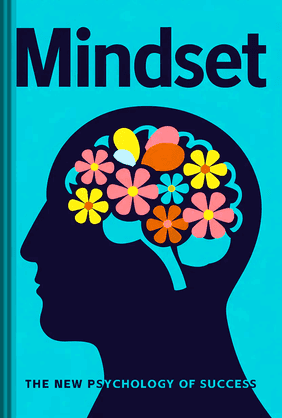
Mindset
Carol S. Dweck
51 Min8 Key Points4.6 RateBuilding a foundation of knowledge from all these powerful books is a great goal, but finding the time can be the biggest hurdle. If you're struggling to keep up with your learning after a long day, consider fitting it into the moments you already have.
Turn your commute or workout into productive learning time by listening to the key insights from thousands of personal growth and psychology books.
LeapAheadLegacy, Community, and Upbringing
No one operates in a vacuum. Gladwell dedicates the latter half of his book to cultural legacies, proving that the values handed down by our ancestors impact how we handle authority, danger, and hard work today.
"No one—not rock stars, not professional athletes, not software billionaires, and not even geniuses—ever makes it alone."
The Context: The ultimate summary of the book's message. Individualism is a powerful narrative in American culture, but it is fundamentally flawed when examining true statistical outliers.
How to Use It: Put this at the end of an award acceptance speech, an acknowledgment section of a book, or a Thanksgiving corporate newsletter. It is the ultimate expression of gratitude and community recognition.
How to Use It: Put this at the end of an award acceptance speech, an acknowledgment section of a book, or a Thanksgiving corporate newsletter. It is the ultimate expression of gratitude and community recognition.
"Who we are cannot be separated from where we're from."
The Context: Gladwell explores how cultural communication styles—like the "mitigated speech" used by pilots from certain hierarchical cultures—can literally mean the difference between life and death.
How to Use It: Use this in contexts involving cross-cultural communication, global team management, or psychological profiles. It reminds the audience to respect and understand cultural backgrounds rather than fighting them.
How to Use It: Use this in contexts involving cross-cultural communication, global team management, or psychological profiles. It reminds the audience to respect and understand cultural backgrounds rather than fighting them.
"We are so caught in the myths of the best and the brightest and the self-made that we think outliers spring naturally from the earth. We look at the young Bill Gates and marvel that our world allowed that thirteen-year-old to become a fabulously successful entrepreneur. But that's the wrong lesson."
The Context: Our obsession with individual brilliance blinds us to the systems that actually produce greatness. If we only look at the person, we miss the ecosystem.
How to Use It: A provocative opener for an essay challenging the status quo. It immediately tells your reader that you are about to dismantle a popular belief.
How to Use It: A provocative opener for an essay challenging the status quo. It immediately tells your reader that you are about to dismantle a popular belief.
How to Effectively Integrate These Quotes into Your Content
Having the best quotes from outliers is only half the battle. Knowing how to present them ensures they land with maximum impact. Here are three strategic ways to deploy these insights.
1. The "Pause and Pivot" in Public Speaking
When delivering a keynote, do not rush through a quote. Say it, pause for two seconds, and then explain how it applies to the audience sitting in front of you. For example, if you quote Gladwell on the 10,000 hours, follow it up directly: "You might be at hour 500 right now. It feels exhausting. But Gladwell reminds us that the exhaustion isn't a sign to quit—it's the exact mechanism of getting good."
When delivering a keynote, do not rush through a quote. Say it, pause for two seconds, and then explain how it applies to the audience sitting in front of you. For example, if you quote Gladwell on the 10,000 hours, follow it up directly: "You might be at hour 500 right now. It feels exhausting. But Gladwell reminds us that the exhaustion isn't a sign to quit—it's the exact mechanism of getting good."
2. The "Myth-Buster" Hook for Essays and Articles
Start your piece with a widely accepted but flawed idea. Then, use Gladwell to destroy it.
Example: "We love the story of the self-made billionaire. We love the idea of raw, untamed genius fighting its way to the top. But as MAlcolm Gladwell wrote, 'No one ever makes it alone.' The reality of success is much more complicated, and much more heavily reliant on community."
Start your piece with a widely accepted but flawed idea. Then, use Gladwell to destroy it.
Example: "We love the story of the self-made billionaire. We love the idea of raw, untamed genius fighting its way to the top. But as MAlcolm Gladwell wrote, 'No one ever makes it alone.' The reality of success is much more complicated, and much more heavily reliant on community."
3. The Carousel Framework for Social Media
Platform algorithms on Instagram and LinkedIn favor high-retention content like carousels. Use the "Meaningful Work" quote as your structure.
Platform algorithms on Instagram and LinkedIn favor high-retention content like carousels. Use the "Meaningful Work" quote as your structure.
- Slide 1: Hook (Why do you hate your job?)
- Slide 2: Gladwell's Quote on Meaningful Work.
- Slide 3: Breakdown Autonomy.
- Slide 4: Breakdown Complexity.
- Slide 5: Breakdown Effort & Reward.
- Slide 6: Call to Action (Which of these is missing from your current role?).
FAQ
What is the main message of Outliers?
The core message of Outliers is that extraordinary success is not primarily the result of individual talent or a high IQ. Instead, it is the product of hidden advantages, cultural legacies, timing, and an environment that allows for massive amounts of meaningful practice. We focus too much on what successful people are like, and not enough on where they are from.
The core message of Outliers is that extraordinary success is not primarily the result of individual talent or a high IQ. Instead, it is the product of hidden advantages, cultural legacies, timing, and an environment that allows for massive amounts of meaningful practice. We focus too much on what successful people are like, and not enough on where they are from.
What is the exact 10,000-hour rule quote?
While Gladwell references the concept multiple times, the most direct and famous line from the book is: "Ten thousand hours is the magic number of greatness." He also states, "Practice isn't the thing you do once you're good. It's the thing you do that makes you good."
While Gladwell references the concept multiple times, the most direct and famous line from the book is: "Ten thousand hours is the magic number of greatness." He also states, "Practice isn't the thing you do once you're good. It's the thing you do that makes you good."
How did Malcolm Gladwell define an outlier?
Gladwell defines an outlier as "something that is situated away from or classed differently from a main or related body" and "a statistical observation that is markedly different in value from the others of the sample." In human terms, it refers to men and women who do things that are so far out of the ordinary that they lie outside everyday experience.
Gladwell defines an outlier as "something that is situated away from or classed differently from a main or related body" and "a statistical observation that is markedly different in value from the others of the sample." In human terms, it refers to men and women who do things that are so far out of the ordinary that they lie outside everyday experience.
Does Gladwell say talent doesn't matter at all?
No. Gladwell acknowledges that innate talent matters up to a certain point—it acts as a threshold. For instance, you need a certain level of height and athleticism to play professional basketball, or a baseline IQ to handle advanced mathematics. However, once that threshold is met, it is preparation, opportunity, and thousands of hours of practice that separate the good from the great.
No. Gladwell acknowledges that innate talent matters up to a certain point—it acts as a threshold. For instance, you need a certain level of height and athleticism to play professional basketball, or a baseline IQ to handle advanced mathematics. However, once that threshold is met, it is preparation, opportunity, and thousands of hours of practice that separate the good from the great.