


That weekly Sunday morning notification is always a heavy hit. You glance at your screen and see your daily average is up another 15%. You tell yourself you only check your phone for work emails, a quick text, or a brief scroll to unwind. Yet, the data tells a different story: five, six, or maybe even eight hours gone.
Your phone is essentially a slot machine in your pocket. Thousands of engineers are actively working to keep your eyes glued to that glowing rectangle. Trying to put the phone down using willpower alone is a losing game. You need a system. You need physical boundaries, automated friction, and hard tech limits.
The Reality Check: You Are Not Failing, The System is Working
Before we fix the problem, you need to understand the scale of it. If you feel guilty about your screen habits, look at the baseline. The average screen time adults rack up in the United States currently hovers around seven hours a day.
Do the math. Seven hours a day is roughly 106 full days a year staring at a screen. That is an enormous chunk of your waking life handed over to endless feeds, targeted ads, and notification badges.
The underlying mechanism here is a dopamine loop. Every time you see a notification badge, your brain gets a microscopic hit of dopamine. You open the app to clear the badge, you scroll to see if there is a new reward, and the cycle reinforces itself. Breaking this loop requires breaking the visual triggers and adding roadblocks between you and the feed.
If you want to truly understand why your brain is so susceptible to this endless cycle of digital rewards, it helps to look at the science of addiction. Dr. Anna Lembke's eye-opening research dives deep into how our modern world overloads us with instant gratification, making it incredibly difficult to pull away from our screens. Her work offers a fascinating, science-backed look at how to reset your brain's reward system and break free from the compulsive need to check your phone.
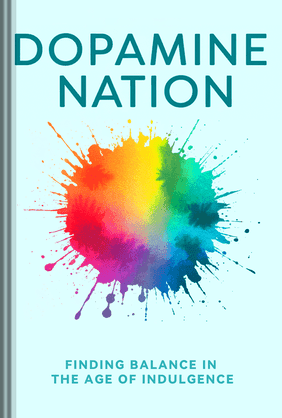
Dopamine Nation
Anna Lembke, M.D.
 20 Duration
 8 Key Points
 4.6 Rate
Recognizing these patterns is the first step. If you feel your relationship with your device has become compulsive, it's helpful to understand the bigger picture.

Let Your Devices Do the Heavy Lifting
If you want to cut your usage in half by next week, start with software intervention. You must make it annoying to open your problem apps.
Setting a Hard Screen Time Limit (iPhone Guide)
Apple’s native tools are powerful, but most people set them up wrong. They create a limit, hit the cap, and then tap "Ignore for 15 minutes." That defeats the entire purpose. Here is how to lock down a screen time limit iPhone users can actually benefit from without cheating.
- Find Your Problem Apps: Go to Settings > Screen Time > See All Activity. Identify the top three apps draining your time. Usually, it is Instagram, TikTok, or YouTube.
- Set the App Limit: Go to App Limits > Add Limit. Select those specific apps. Give yourself a realistic budget—say, 30 minutes a day.
- The Lock-in Trick: This is the most crucial step. Go back to the main Screen Time menu and tap "Use Screen Time Passcode." Hand your phone to a trusted friend or your partner. Have them enter a 4-digit passcode that you do not know.
- Enable Block at End of Limit: When setting your App Limit, ensure the toggle for "Block at End of Limit" is on.
Now, when your 30 minutes are up, the app locks. The "Ignore Limit" button will require the passcode. Since you do not have it, the scrolling stops instantly.

Best Apps to Block Social Media
If native settings are not enough, or if you work across multiple devices like a Mac and an iPad, you need third-party enforcement. Relying on the right apps to block social media adds an extra layer of defense.
- One Sec: This app is a psychological circuit breaker. Every time you try to open a target app like Twitter or Instagram, One Sec forces you to stare at a deep-breathing animation for 10 seconds before the app opens. By the time the 10 seconds are up, the subconscious urge to scroll usually vanishes. You realize you didn't actually want to check the app; your thumb just did it out of muscle memory.
- Opal: Opal acts as a local VPN on your phone, completely severing the internet connection to your selected apps during focus hours. You can set it to "Deep Focus" mode, which makes it impossible to bypass the block until the timer runs out.
- Freedom: Perfect for professionals. Freedom syncs across all your devices. If you block Reddit on your phone, Freedom automatically blocks it on your laptop too.
While apps and software blocks are fantastic external barriers, mastering your attention also requires an internal shift. If you are looking to build a foolproof system to manage both the tech in your pocket and the psychological triggers that make you reach for it, Nir Eyal provides an exceptional blueprint. His actionable strategies will teach you how to organize your daily routine and leverage technology so that it serves you, rather than the other way around.
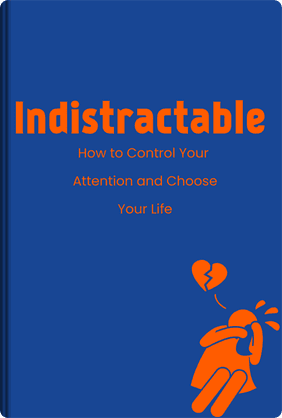
Indistractable
Nir Eyal
23 Duration10 Key Points4.5 RateRestructure Your Physical Environment
Software limits are only half the battle. Your physical environment dictates your automatic behaviors. If your phone is sitting on the desk next to your keyboard, you will pick it up.
The Bedroom Ban
Do not use your phone as an alarm clock. When your phone rests on your nightstand, it is the last thing you see before sleep and the first thing you grab when you wake up. This ruins your sleep hygiene and guarantees you start your day in a reactive state.
Buy a cheap, basic digital alarm clock from Amazon. Set your bedroom thermostat to a cool 65 degrees Fahrenheit, plug your phone into a charger in the kitchen or the living room, and leave it there overnight. When you wake up, you actually have to get out of bed to silence your phone. The morning doomscroll is completely eliminated.
Banning your phone from the bedroom might feel like a severe step at first, but it is arguably the best decision you can make for your overall well-being. To truly appreciate why high-quality rest is the ultimate productivity hack—and why scrolling in bed is so destructive to your physical and mental health—it is worth exploring the profound science of sleep. Understanding these mechanics will give you all the motivation you need to leave that charger in the kitchen.

Why We Sleep
Matthew Walker and Steve West
38 Duration8 Key Points4.6 RateThis late-night scrolling habit is often a subconscious attempt to reclaim personal time, but it comes at the cost of your sleep and next-day energy.
Kill the Color
Your phone’s screen is engineered to look like candy. Bright reds, deep blues, and vibrant greens hijack your visual cortex. Strip that away, and the phone immediately becomes less appealing.
Turn your phone screen to Grayscale.
- On iOS: Go to Settings > Accessibility > Display & Text Size > Color Filters. Turn them on and select Grayscale.
- Pro Tip: You can map this to a triple-click of the power button (Settings > Accessibility > Accessibility Shortcut).
When you strip the color out of Instagram, it looks like a boring newspaper. The dopamine rush of seeing a red notification badge turns into a dull gray dot. You will naturally spend less time looking at it.
The Replacement Strategy: Fill the Void
You cannot simply remove a bad habit; you must replace it. If you block all your apps and sit on your couch staring at the wall, the friction will eventually break you. You need high-quality offline alternatives ready to go.

Rediscover Long-Form Content
Your attention span has been fractured into 15-second intervals. Rebuilding it requires practice. Keep a physical book on your coffee table or nightstand. Go to Barnes & Noble and buy something purely for entertainment—sci-fi, a thriller, a biography. Do not start with dense philosophy; start with a page-turner to get your brain used to focusing on one narrative.
If you struggle with physical books, load up Audible. Listen to a book while you cook dinner or fold laundry instead of propping your phone up to watch YouTube Shorts. If you prefer reading on a screen, use an e-reader or Apple Books, but ensure notifications are entirely disabled.
And if jumping back into full-length books feels daunting, you can ease into it by absorbing the core ideas first.

This app helps you tackle your reading list by summarizing nonfiction books into 15-minute audio or text explainers, perfect for rebuilding your focus.
 LeapAhead
Physical Movement
When you feel the itch to reach for your phone to kill time, force a physical reset. Go outside and walk two miles. Leave the phone at home or put it on Do Not Disturb. The act of moving and looking at distant objects relaxes your eye muscles and resets your nervous system.
Reaping the Digital Detox Benefits
Once you lock down your devices and redesign your environment, the transformation is rapid. The digital detox benefits extend far beyond just having more free time.
You will notice a sharp drop in baseline anxiety. The constant low-level panic of missing an email, a text, or a trending topic fades away. Your sleep quality will skyrocket because you are no longer blasting your retinas with blue light at midnight, allowing your body's natural melatonin production to function correctly.
Much of this anxiety stems from the compulsive consumption of negative content, a pattern that has a specific name and a targeted solution.
More importantly, your ability to focus returns. Without the constant task-switching demanded by a smartphone, you can sit down and do deep, meaningful work for hours at a time. You reclaim the cognitive bandwidth required to organize your life, advance your career, or simply be present with your family.
Stop treating your screen time report as an unavoidable tragedy. Treat it as a metric to be managed. Put the blocks in place, embrace the friction, and take your time back.
Putting these systems in place gives you back the most valuable resource you have: time. If you're looking for a structured way to invest that reclaimed time in yourself, there are tools designed for exactly that.
Use your screen-free moments to learn, with 15-minute summaries of books on productivity, career growth, and mindfulness that fit into any schedule.
LeapAheadReclaiming your time from tech companies isn't just about reducing a number on a screen; it is about taking back your ability to think deeply and live intentionally. If you have noticed your attention span fragmenting over the years and want a comprehensive look at how modern culture engineered this crisis, Johann Hari’s investigative work is a must-read. It is a powerful reminder of what is at stake and a rallying cry to protect your most valuable resource: your focus.
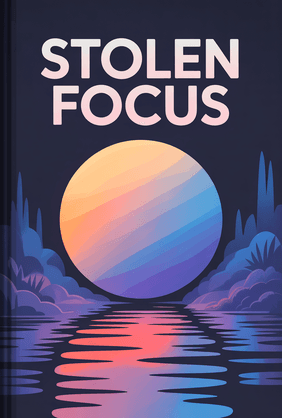
Stolen Focus
Johann Hari
20 Duration8 Key Points4.7 RateFAQ
Does turning my phone screen to grayscale actually work?
Yes. App developers use vibrant colors—especially red for notification badges—to trigger immediate psychological urgency and dopamine release. By switching your screen to grayscale, you remove the visual reward. Social media feeds become visually flat and boring, which drastically reduces the subconscious desire to keep scrolling.
Yes. App developers use vibrant colors—especially red for notification badges—to trigger immediate psychological urgency and dopamine release. By switching your screen to grayscale, you remove the visual reward. Social media feeds become visually flat and boring, which drastically reduces the subconscious desire to keep scrolling.
How do I reduce screen time when my job requires me to be on my phone?
Separate your tools. If you manage social media for work, do it strictly from a desktop computer if possible. If you must use your phone, heavily utilize iOS Focus Modes. Create a "Work" focus that hides all personal apps (like your personal Instagram or Reddit) and a "Personal" focus that mutes Slack and Outlook. Use apps like Freedom to block non-essential sites during your designated work hours.
Separate your tools. If you manage social media for work, do it strictly from a desktop computer if possible. If you must use your phone, heavily utilize iOS Focus Modes. Create a "Work" focus that hides all personal apps (like your personal Instagram or Reddit) and a "Personal" focus that mutes Slack and Outlook. Use apps like Freedom to block non-essential sites during your designated work hours.
Will reducing my screen time really improve my sleep?
Absolutely. Screens emit blue light, which tricks your brain into thinking it is still daytime, suppressing the release of melatonin (the sleep hormone). Furthermore, consuming highly stimulating content (like news or fast-paced videos) elevates your heart rate and cortisol levels right before bed. Removing screens from your bedroom ensures your brain transitions properly into a sleep state.
Absolutely. Screens emit blue light, which tricks your brain into thinking it is still daytime, suppressing the release of melatonin (the sleep hormone). Furthermore, consuming highly stimulating content (like news or fast-paced videos) elevates your heart rate and cortisol levels right before bed. Removing screens from your bedroom ensures your brain transitions properly into a sleep state.