


You want to understand the grand sweep of human civilization. But the thought of reading a dense, 1,000-page college textbook full of memorized dates and dead monarchs sounds awful. You are looking for the big picture. How did we go from discovering fire in the savanna to carrying supercomputers in our pockets? You need narratives that connect the dots.
Most people abandon history books because they pick the wrong ones. They grab hyper-specific academic papers instead of engaging overviews. Here is a curated breakdown of the top titles that explain the history of mankind without putting you to sleep.
The Essential "Big History Books" (Macro Perspectives)
Big history books zoom way out. They do not care about the daily life of a specific 14th-century king. They look at thousands or millions of years, combining biology, anthropology, and economics to explain the human trajectory. Since many of these works are grounded in the study of human cultures and societies, they serve as a fantastic gateway to a fascinating field.
1. Sapiens: A Brief History of Humankind by Yuval Noah Harari
If you only read one book on this list, make it this one. Harari completely disrupted how we consume history by breaking our entire existence into three distinct revolutions: Cognitive, Agricultural, and Scientific.
- The Core Takeaway: Humans dominate the planet because we are the only species that can cooperate flexibly in large numbers. We do this by believing in shared fictions—like money, religion, and corporations.
- Why It Works: Harari writes with aggressive clarity. He takes incredibly complex evolutionary concepts and explains them using modern analogies.
- Reading Tip: The audiobook version is exceptionally popular on Audible. The pacing makes it a perfect companion for a long commute or a road trip.

If you are ready to completely change the way you view our species, grabbing a copy of Harari's masterpiece is the perfect first step. It is rare to find a history book that is as intellectually thrilling as a great sci-fi novel, yet grounded in serious anthropology. Whether you listen to the hit audiobook or highlight a physical copy, this read will leave you questioning everything you thought you knew about money, religion, and human dominance. For those who have already finished it and are looking for similar mind-expanding reads, there are many other titles that capture the same spirit.

Sapiens
Yuval Noah Harari
 45 Duration
 8 Key Points
 4.5 Rate
2. Guns, Germs, and Steel by Jared Diamond
Why did European populations conquer the Americas, and not the other way around? For decades, history books offered culturally biased or outright racist explanations. Jared Diamond, a geographer and historian, dismantled those ideas by pointing to environmental determinism.
- The Core Takeaway: Geography is destiny. The Eurasian continent had a massive head start because of its East-West axis, which allowed for the easy spread of crops, domesticated animals, and, consequently, immunities to devastating diseases.
- Why It Works: It functions like a massive historical detective story. Diamond lays out the evidence piece by piece until the conclusion feels inevitable.
- Reading Tip: This book is dense in the middle chapters. If you get bogged down in the specifics of crop domestication, skim forward. The broader thesis is what matters.
To dive deeper into the geographical lottery that shaped human conquests, Diamond’s Pulitzer Prize-winning work is an absolute must-read. By stripping away cultural biases and focusing strictly on environmental advantages, he offers a deeply satisfying and logical explanation for the modern balance of power. If you enjoy historical mysteries backed by meticulous scientific evidence, this book will fundamentally upgrade your understanding of global history.
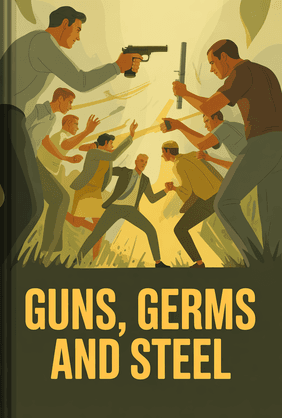
Guns, Germs, and Steel
Jared Diamond, Ph.D.
16 Duration7 Key Points4.8 RateWhile these macro-history books offer incredible insights, their length and density can be intimidating. If you're eager to grasp their core arguments but don't have weeks to dedicate to one book, a summary app can be a great way to start.

Understand the game-changing ideas from dense history books like Sapiens in 15-minute summaries, perfect for learning the big picture without the time commitment.

Download LeapAhead App now
The Most Engaging World History Books
If you want to zoom in slightly from the evolutionary scale and look at empires, trade routes, and global connections, these world history books are the gold standard.
3. The Silk Roads: A New History of the World by Peter Frankopan
Most of us grew up with a strictly Western-centric view of history. We learned about Greece, Rome, the Renaissance, and the American Revolution. Frankopan rips the center of the world map away from Europe and places it squarely in the Middle East and Central Asia.
- The Core Takeaway: The real engine of global civilization, trade, and cultural exchange has almost always been the network connecting East and West.
- Why It Works: It recontextualizes everything you thought you knew. When you read about the Crusades or the discovery of the Americas from the perspective of Asian trade routes, history suddenly looks completely different.
- Reading Tip: Grab a physical copy from Amazon or Barnes & Noble. The maps included in the print editions are crucial for visualizing the shifting trade routes.

4. A Little History of the World by E.H. Gombrich
Do not let the title fool you. While originally written for younger readers, this is a masterclass in concise, beautiful writing. Gombrich wrote this entire book in six weeks, and it reads with the urgency and passion of someone telling you a story across a dinner table.
- The Core Takeaway: Human history is a continuous, flowing narrative of triumphs, mistakes, and discoveries, completely interconnected across borders.
- Why It Works: There is zero academic jargon. It is an incredibly comforting, sweeping narrative that gives you a chronological mental framework to hang other historical facts on later.
While Gombrich and Frankopan offer incredible sweeping overviews, you might find yourself wanting to dig a little deeper into the specific empires that first connected our world. If you love the idea of a flowing, chronological narrative but want a bit more detail on the earliest civilizations, Susan Wise Bauer delivers an exceptional, page-turning account. Her work masterfully connects the dots between the first great kings, wars, and cultures that laid the foundation for everything that followed.
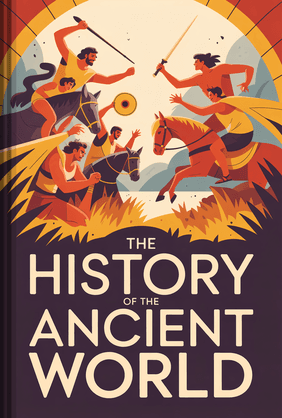
The History of the Ancient World
Susan Wise Bauer, John Lee
36 Duration8 Key Points4.8 RateMust Read History Books for Alternative Perspectives
Sometimes, the established narrative needs a shake-up. These history of mankind books challenge the standard pessimistic views of our past.
5. Humankind: A Hopeful History by Rutger Bregman
For centuries, the underlying assumption in Western philosophy and history has been "Veneer Theory"—the idea that civilization is just a thin crust over our inherently selfish, savage nature. Bregman violently disagrees.
- The Core Takeaway: Homo sapiens evolved to be friendly. Our survival depended on cooperation, empathy, and social connection, not brutal competition.
- Why It Works: Bregman revisits famous historical events and psychological studies (like the Stanford Prison Experiment or the real-life Lord of the Flies) and proves that the darker versions of these stories were either exaggerated or completely fabricated.
- Reading Tip: Read this immediately after reading heavy, war-focused histories. It acts as a necessary palate cleanser for your view of humanity.

Ready to challenge the cynical view of human nature? Bregman’s refreshing and meticulously researched book is the perfect antidote to the heavy, war-torn narratives that dominate traditional history sections. By reading the actual data behind famous psychological experiments and historical events, you will walk away with a profound sense of optimism. Pick up this title if you want to discover why our capacity for kindness is actually our greatest evolutionary survival tool.
Humankind
Rutger Bregman
23 Duration10 Key Points4.8 Rate6. The Dawn of Everything by David Graeber and David Wengrow
The standard story goes like this: We were egalitarian hunter-gatherers, then we discovered farming, which forced us to settle down, invent private property, and create rigid, unequal social hierarchies. Graeber and Wengrow argue that this linear narrative is entirely wrong.
- The Core Takeaway: Early human societies were incredibly diverse and politically experimental. Many ancient cities existed for centuries without kings, bosses, or ruling classes.
- Why It Works: It treats ancient humans as conscious political actors who made active choices about how to organize their societies, rather than passive victims of agricultural technology. This re-examination of our deep past connects directly to the larger story of our biological and social development.
How to Choose Your Next Historical Read
You have limited time. Picking a 700-page book is a major commitment. Use these criteria to match the right book to your current bandwidth.
Step 1: Determine Your Preferred Scope
If you want to know how biology and culture intersect over millions of years, pick up Harari or Diamond. If you prefer reading about emperors, wars, and shifting borders over the last 3,000 years, stick to Frankopan or Gombrich.
Step 2: Choose Your Format Wisely
- Audiobooks: Big history books are fantastic on audio. Narrators bring out the conversational tone of authors like Harari and Bregman.
- E-Readers (Kindle/Apple Books): Great for books with heavy academic notes. You can quickly highlight passages and look up unfamiliar geographic terms without breaking your flow.
- Hardcovers: Essential for books that rely heavily on maps, photographs, and charts.
For those who find even full audiobooks a challenge to fit into a packed week, there's another format that blends perfectly with a busy lifestyle like commuting or working out.
Listen to the key takeaways from bestselling history books during your commute or gym session, turning small pockets of free time into powerful learning opportunities.
Download LeapAhead App now
Step 3: Check the Readability Score
Before buying, open Goodreads and read the top three critical reviews. If users repeatedly complain about the book reading like a "doctoral thesis," and you are looking for casual evening reading, walk away. The best human history books prioritize narrative flow just as much as factual accuracy.
Finding that perfect balance between epic scope and an entertaining, readable tone is the ultimate goal when choosing your next book. If you want to zoom out as far as possible—looking not just at human civilization, but at the entire story of how we even got a planet to live on—Bill Bryson is the perfect guide. His witty, accessible approach makes the most complex scientific and historical timelines feel like a fun conversation with a brilliant friend.
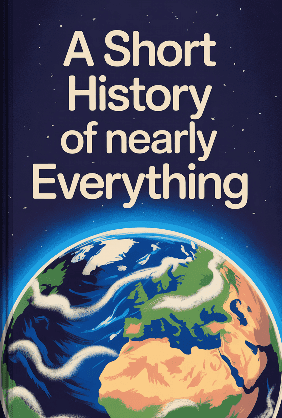
A Short History of Nearly Everything
Bill Bryson
24 Duration10 Key Points4.6 RateFAQ
What is the best history book for a complete beginner?
A Little History of the World by E.H. Gombrich is the perfect starting point. It offers a conversational, chronological overview without getting bogged down in dates and academic debates. If you want something more modern, Sapiens is the standard entry point for adult readers.
A Little History of the World by E.H. Gombrich is the perfect starting point. It offers a conversational, chronological overview without getting bogged down in dates and academic debates. If you want something more modern, Sapiens is the standard entry point for adult readers.
Are audiobooks a good way to consume complex history books?
Yes. In fact, many readers find dense historical narratives easier to digest via audiobooks. Professional narration forces a steady pace, preventing you from getting stuck on difficult names or locations. Services like Audible are packed with highly-rated performances of these exact titles.
Yes. In fact, many readers find dense historical narratives easier to digest via audiobooks. Professional narration forces a steady pace, preventing you from getting stuck on difficult names or locations. Services like Audible are packed with highly-rated performances of these exact titles.
How do I avoid historically inaccurate books?
Stick to books written by recognized historians, anthropologists, or journalists who cite their sources extensively. Look for robust bibliographies at the back of the book. While every broad historical overview will have some critics regarding specific details, books published by major academic or commercial presses usually undergo rigorous fact-checking.
Stick to books written by recognized historians, anthropologists, or journalists who cite their sources extensively. Look for robust bibliographies at the back of the book. While every broad historical overview will have some critics regarding specific details, books published by major academic or commercial presses usually undergo rigorous fact-checking.
Is it better to read macro history or micro history first?
Always start with macro history (big history). Reading a macro book like Sapiens gives you a mental scaffolding. Once you understand the broad timeline of human development, reading a micro history about a specific event (like the American Civil War or the French Revolution) becomes much more rewarding because you understand exactly where it fits in the grand scheme.
Always start with macro history (big history). Reading a macro book like Sapiens gives you a mental scaffolding. Once you understand the broad timeline of human development, reading a micro history about a specific event (like the American Civil War or the French Revolution) becomes much more rewarding because you understand exactly where it fits in the grand scheme.