

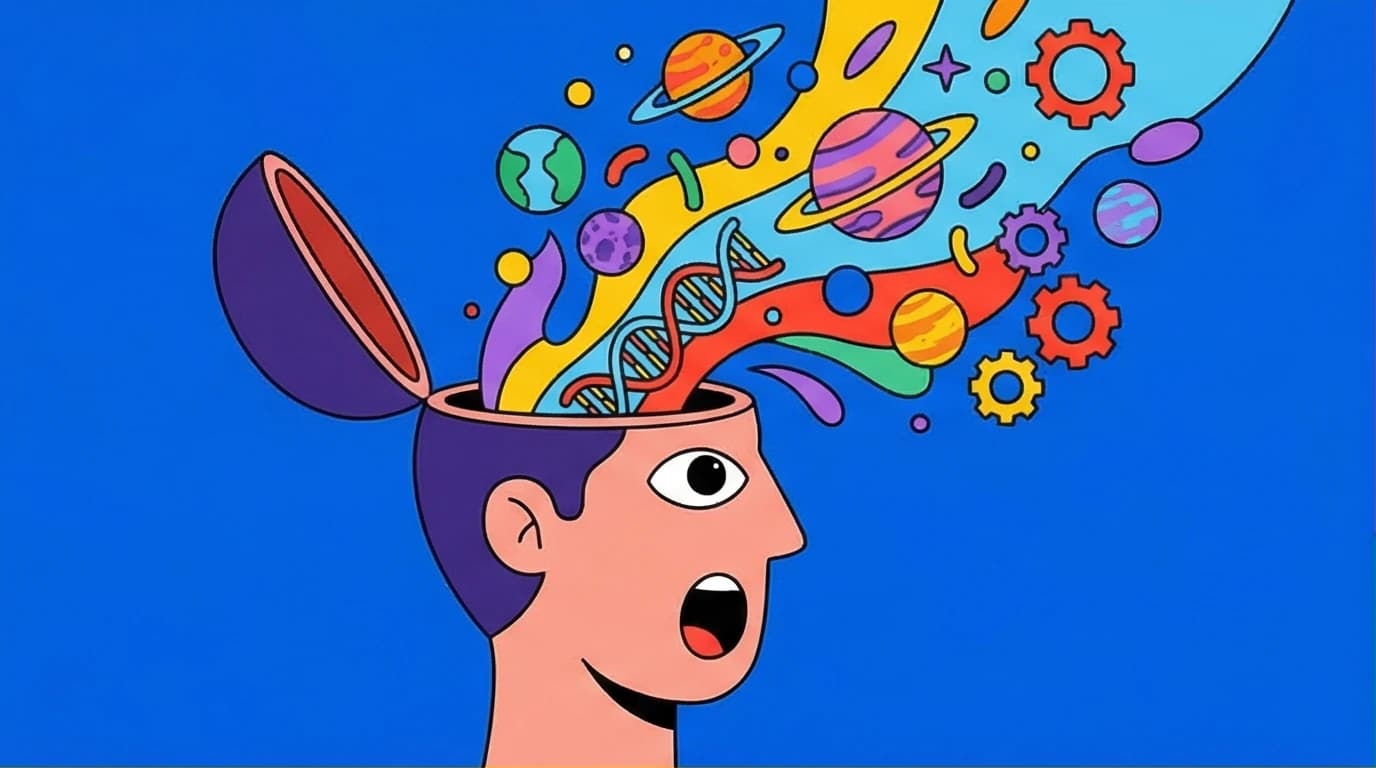
You just turned the last page of Sapiens. Your brain is buzzing with new ways of looking at religion, money, and empires. You now understand that human society is built on shared fictions, and you will never look at a dollar bill or a corporate logo the same way again. Now, you’re staring at the Goodreads app or browsing the aisles of Barnes & Noble, feeling entirely lost. How do you follow up a book that rewrote the history of the human race in 400 pages?
Finding what to read after Sapiens is notoriously difficult. You do not just want a dry history textbook detailing dates and battles. You want a massive, sweeping narrative. You want to zoom out 10,000 miles above Earth and look at the underlying mechanics of human behavior, biology, and civilization.
To save you the hassle of sifting through thousands of Amazon reviews, we have categorized the ultimate reading list for big-history enthusiasts.
The Core Foundations: Geography, Biology, and Destiny
If your favorite part of Harari’s work was learning how biology and physical environment shaped human destiny, these books similar to Sapiens will scratch that exact itch.
1. Guns, Germs, and Steel by Jared Diamond
If there is a godfather to the modern "big history" genre, it is Jared Diamond. This Pulitzer Prize-winning book asks a simple but dangerous question: Why did Eurasian civilizations conquer the world, instead of Native Americans or Africans?
Diamond rejects the idea of biological superiority. Instead, he points to geographic luck. Eurasians had access to the best domesticable plants (wheat) and animals (cows, horses, pigs), which led to denser populations, immunity to terrible diseases, and eventually, the creation of steel weapons. Where Harari focuses on the "Cognitive Revolution," Diamond focuses on the environmental lottery. This is mandatory reading if you want to understand the physical scaffolding of human civilization.
If you want to truly grasp how geography and environmental luck shaped the modern world, this Pulitzer Prize-winning classic is an absolute must-read. It perfectly complements Harari's narrative by focusing on the physical world rather than the cognitive one. Dive into the complete book right here to see why it remains the foundational text of the "big history" genre and an essential addition to any history buff's library.

Guns, Germs, and Steel
Jared Diamond, Ph.D.
 16 Duration
 7 Key Points
 4.8 Rate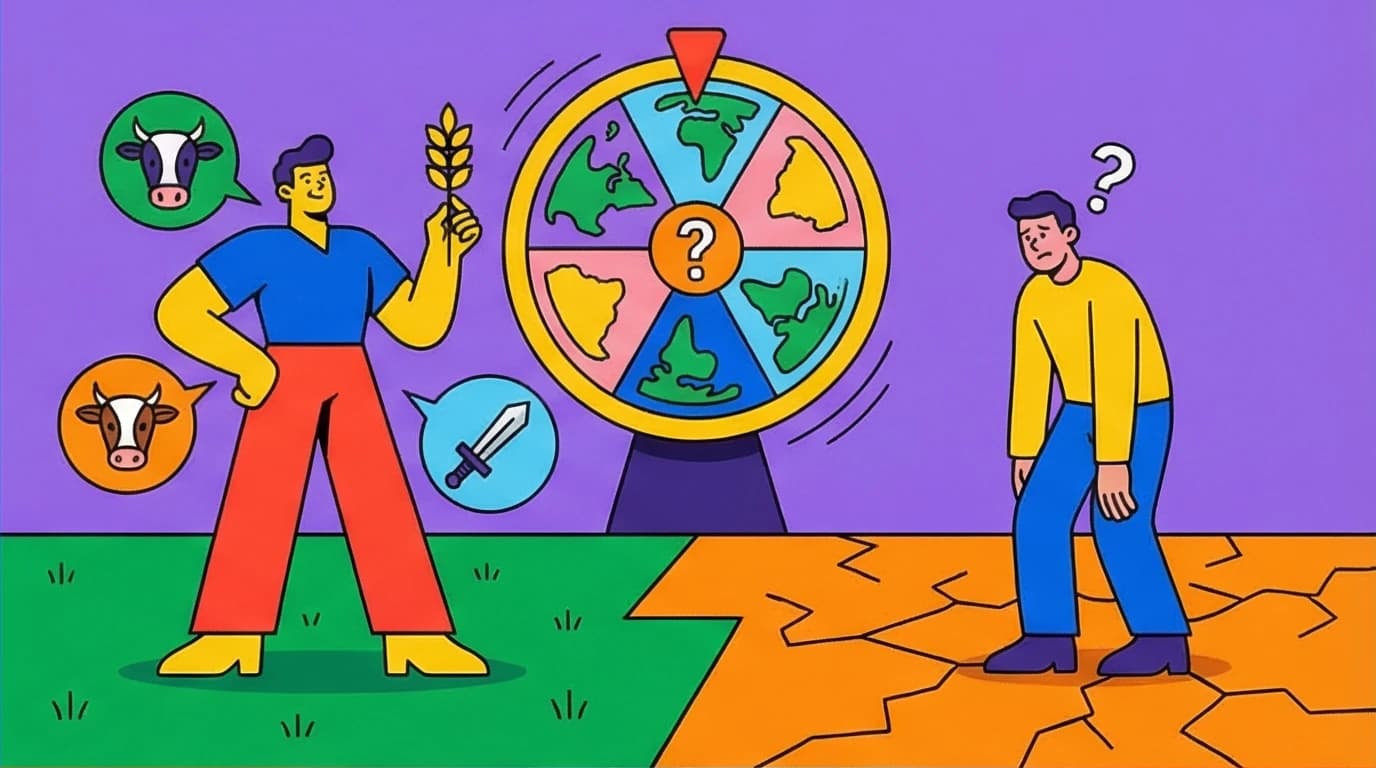
2. The Third Chimpanzee by Jared Diamond
Before Guns, Germs, and Steel, Diamond wrote this slightly shorter, highly accessible book exploring the tiny 2% genetic difference between humans and chimpanzees. It explores how that minuscule genetic gap led to art, language, agriculture, and our unique capacity for self-destruction. It reads very much like the early chapters of Sapiens, focusing heavily on evolutionary biology and anthropology.
3. Behave: The Biology of Humans at Our Best and Worst by Robert Sapolsky
Harari explains what humans did throughout history. Sapolsky explains why our brains made us do it. Sapolsky is a neurobiologist and primatologist who breaks down human behavior layer by layer. He starts a second before a behavior occurs (neuroscience), moves to days before (hormones), and eventually zooms out to centuries and millennia before (evolution and culture). It is denser than Sapiens, but it offers a profound, science-backed explanation for human tribalism, violence, and cooperation.
Ready to explore the intricate wiring of the human brain? Sapolsky's masterwork takes you on a fascinating journey through the neurological and evolutionary triggers behind our best and worst actions. It is an eye-opening follow-up for anyone who loved the anthropological elements of Sapiens but wanted more hard science on why we form tribes, wage wars, and build complex societies. Grab a copy to decode the biology of human behavior.

Behave
Robert M. Sapolsky, Ph.D.
42 Duration9 Key Points4.6 RateThese foundational books are brilliant, but also incredibly dense. If you're short on time but want to absorb the core ideas from these heavy hitters before committing, an app can help.

Get the key takeaways from complex books like Behave or Guns, Germs, and Steel in just 15 minutes, so you can decide which ones to read in full.

Download LeapAhead App now
Challenging the Narrative: What Sapiens Got Wrong
When you search for books like Sapiens Reddit users are quick to point out that anthropologists and professional historians have strong critiques of Harari's work. They argue his view of the Agricultural Revolution as history's "biggest fraud" is overly simplistic. If you want to dive into the intellectual debate, you need to read the counter-arguments.
4. The Dawn of Everything by David Graeber and David Wengrow
This is the ultimate intellectual rival to Sapiens. The late anthropologist David Graeber and archaeologist David Wengrow completely dismantle the standard narrative that human history moved in a straight line from egalitarian hunter-gatherers to oppressive farming states.
They use massive amounts of new archaeological evidence to prove that early humans were highly conscious political actors. They experimented with different social structures—living in hierarchies during the winter and egalitarian communes during the summer. They built massive cities without kings or police forces. If you want a book that completely subverts everything you just learned in Sapiens, this is your next purchase.

5. Against the Grain by James C. Scott
Harari briefly touches on the misery brought by wheat domestication. James C. Scott builds an entire masterpiece around this concept. Against the Grain explores why early states forced people into grain agriculture: because grain grows above ground, ripens simultaneously, and is incredibly easy for tax collectors to measure and confiscate. Scott shows that early "civilization" was actually a trap of taxation, disease, and forced labor, and that "barbarians" living outside state control often had significantly better, healthier lives.
Zooming Out: The Universe and Global Networks
For readers looking for non fiction books like Sapiens that expand the scope even further—beyond just the human species or a Eurocentric viewpoint—these selections are top tier.
6. A Short History of Nearly Everything by Bill Bryson
If Sapiens is the history of us, Bryson’s book is the history of everything that makes our existence possible. Bryson tackles the cosmos, geology, physics, and evolutionary biology. He explains how we went from nothing to something, and eventually to human beings. Bryson uses a highly conversational, often hilarious tone. It is less philosophical than Harari but packs a massive educational punch without ever feeling like a textbook.
Bryson’s ability to take the most complex scientific concepts—from quantum mechanics to human evolution—and turn them into laugh-out-loud storytelling is unmatched. If you are looking for a break from heavy academic texts but still want to deeply understand the origins of the universe and our planet, this is the perfect palate cleanser. Pick up this highly accessible and wildly entertaining read to keep your intellectual momentum going.
A Short History of Nearly Everything
Bill Bryson
24 Duration10 Key Points4.6 Rate7. The Silk Roads: A New History of the World by Peter Frankopan
Traditional history classes in the United States focus almost entirely on the West: Greece, Rome, Western Europe, and America. Frankopan shifts the center of gravity to the East, arguing that the real engine of human history has always been the network of trade routes connecting Asia, the Middle East, and Europe. If Harari showed you the mechanisms of empires, Frankopan shows you the actual veins and arteries through which money, religion, and disease flowed to build the modern world.
8. Prisoners of Geography by Tim Marshall
This is a fast-paced, highly readable analysis of geopolitics. Marshall explains how physical landscapes—mountains, rivers, and oceans—dictate the behavior of modern nations. Why is Russia always trying to secure its western border? Why is the United States essentially a geopolitical fortress? While Sapiens looks at imagined realities, Marshall grounds you firmly in cold, hard dirt and rock. It is an excellent, practical follow-up for readers trying to understand today's global news cycle.
Looking Forward: The Future of the Species
Harari ends Sapiens by questioning where human enhancement will take us. The following books pick up exactly where that final chapter leaves off.
9. Homo Deus: A Brief History of Tomorrow by Yuval Noah Harari
The most logical step after finishing Sapiens is reading its direct sequel. Homo Deus shifts the focus from our past to our immediate future. Harari argues that humans have largely conquered famine, plague, and war. So, what is next? The quest for immortality, absolute happiness, and divine power. He deeply explores artificial intelligence, data religion (Dataism), and the terrifying possibility that algorithms will soon know us better than we know ourselves.
You have already experienced Harari’s brilliance in mapping out our past. Now, it is time to let him guide you through the startling, sometimes unnerving possibilities of our immediate future. From the rapid rise of artificial intelligence to the quest to upgrade humanity into engineered "gods," this direct sequel to Sapiens is just as unputdownable as the original. Don't wait to see where the human story is heading next.

Homo Deus
Prof. Yuval Noah Harari
41 Duration8 Key Points4.5 Rate
10. 21 Lessons for the 21st Century by Yuval Noah Harari
If Sapiens is the past and Homo Deus is the future, 21 Lessons is the present. Harari tackles immediate issues: immigration, nationalism, fake news, and the current state of technology. It reads more like a collection of brilliant essays rather than a single grand narrative, but it retains the same sharp, analytical voice you love.
11. Superintelligence by Nick Bostrom
Harari touches on the dangers of AI. Nick Bostrom wrote the definitive, terrifying book on it. Bostrom explores what happens when machine brains surpass human brains in general intelligence. Will they save us or destroy us? This book is incredibly dense and requires your full attention, but it is the gold standard for understanding the existential risks facing our species right now.
12. The Righteous Mind by Jonathan Haidt
To understand why human beings cannot seem to agree on how to build the future, you must understand moral psychology. Haidt explains why good people are divided by politics and religion. He argues that moral judgments are driven not by logic, but by deep-seated evolutionary intuitions. It perfectly complements Harari’s theory of "imagined realities" by explaining the biological firmware that makes us believe in those realities.
Understanding the future of our species requires a deep look at the moral divides that shape our politics and cultures in the United States and abroad. Haidt's groundbreaking research on moral psychology perfectly fills in the gaps, explaining the invisible evolutionary frameworks that make humans both incredibly cooperative and fiercely divided. Add this essential read to your nightstand to fundamentally change how you understand the people around you.

The Righteous Mind
Jonathan Haidt, Ph.D.
19 Duration8 Key Points4.5 RateHow to Choose Your Next Big History Book
You have a massive list now. How do you actually pick one?
If you want to stick to the exact same vibe: Read Guns, Germs, and Steel. It is the closest parallel in terms of sweeping historical scale.
If you love consuming content via audio: Books like this are perfect for Audible. A Short History of Nearly Everything and The Dawn of Everything have phenomenal audiobook narrations. Just remember that these books are long (often 15+ hours of listening), so pick a narrator whose voice you actually enjoy.
If you want to argue with your friends: Pick up The Dawn of Everything. It equips you with fascinating data points that completely destroy the conventional wisdom we are taught in high school history classes.
If you want to understand tomorrow's news today: Read Homo Deus or Prisoners of Geography.
Reading big history fundamentally changes your worldview. It strips away the day-to-day noise and allows you to see the massive currents shaping our lives. Grab one of these titles, clear your weekend, and get ready to have your mind expanded all over again.
If you're excited to dive into this list but know that your busy schedule makes it tough to get through 12 new books, you can use microlearning to your advantage.
Turn your commute into learning time by listening to 15-minute summaries of the books on this list, helping you clear your "reading debt" and learn faster.
Download LeapAhead App now
FAQ
Do I need a background in science or history to read these books?
No. The beauty of the "big history" genre is that it is written for the general public. Authors like Jared Diamond and Bill Bryson are masters at translating complex genetic, historical, and geographic data into engaging stories. You do not need a degree to understand them.
No. The beauty of the "big history" genre is that it is written for the general public. Authors like Jared Diamond and Bill Bryson are masters at translating complex genetic, historical, and geographic data into engaging stories. You do not need a degree to understand them.
What is the absolute best book to read immediately after Sapiens?
If you want to continue the timeline into the future, read Homo Deus by Yuval Noah Harari. If you want a deeper dive into why certain civilizations conquered others using a different framework than Harari’s, Guns, Germs, and Steel is the undisputed top choice.
If you want to continue the timeline into the future, read Homo Deus by Yuval Noah Harari. If you want a deeper dive into why certain civilizations conquered others using a different framework than Harari’s, Guns, Germs, and Steel is the undisputed top choice.
Why do some historians on Reddit criticize Sapiens?
Professional historians and anthropologists often argue that Sapiens oversimplifies complex historical events to fit a neat narrative. For example, Harari's assertion that the Agricultural Revolution was a miserable trap is heavily debated. If you want to explore these criticisms, The Dawn of Everything by David Graeber provides the exact counter-evidence academics use to debate Harari.
Professional historians and anthropologists often argue that Sapiens oversimplifies complex historical events to fit a neat narrative. For example, Harari's assertion that the Agricultural Revolution was a miserable trap is heavily debated. If you want to explore these criticisms, The Dawn of Everything by David Graeber provides the exact counter-evidence academics use to debate Harari.
Are these books better in physical format or as audiobooks?
It depends on your retention style. Because these books contain thousands of years of history and dense theories, many readers prefer physical or Kindle versions so they can highlight text and flip back to previous chapters. However, if you have a long commute, these titles translate exceptionally well to audiobooks due to their storytelling nature.
It depends on your retention style. Because these books contain thousands of years of history and dense theories, many readers prefer physical or Kindle versions so they can highlight text and flip back to previous chapters. However, if you have a long commute, these titles translate exceptionally well to audiobooks due to their storytelling nature.