


You just finished listening to a mind-blowing podcast featuring Yuval Noah Harari, or maybe you spotted his massive bestsellers stacked on the front tables at Barnes & Noble. You want to dive into his universe. But with hundreds of pages per book spanning from the Stone Age to artificial intelligence algorithms, committing to his bibliography feels like a massive undertaking.
You need a roadmap. Plunging into Harari’s work without understanding how his books connect can leave you feeling disoriented. His arguments build on specific definitions of human behavior, religion, and technology. If you skip the foundation, the later predictions might seem baseless or overwhelming.
Here is the exact analytical breakdown of how to navigate his works, what core themes each book tackles, and how to sequence your reading for maximum impact.
And if the sheer size of these books feels intimidating, getting a preview of the core arguments can be a smart first step.


LeapAhead

Grasp the key insights from dense works like Sapiens and Homo Deus in just 15 minutes, helping you understand their powerful ideas before you commit to the full read.
The Core Trilogy: The Past, The Future, and The Present
The most logical way to tackle Yuval Noah Harari books in order is by following his thematic timeline. Harari didn't just write three isolated books; he wrote a conceptual trilogy. He maps out where humanity came from, where we are inevitably going, and what we must do right now.
1. Sapiens: A Brief History of Humankind (The Past)
Sapiens is the undeniable starting point. Originally published in Hebrew in 2011 and translated into English in 2014, this book catapulted Harari into global intellectual stardom.
The book seeks to answer one fundamental question: How did an ape living in the corner of Africa come to rule the entire planet? Harari breaks human history down into three major revolutions:
- The Cognitive Revolution: Happening around 70,000 years ago, this is when humans developed the unique ability to create and believe in fictions. Harari argues that things like money, human rights, nations, and corporations do not exist in the physical world. They are collective myths. Because humans can believe in these shared myths, we can cooperate in massive numbers.

- The Agricultural Revolution: Around 10,000 years ago, humans stopped foraging and started farming. Harari controversially labels this "history's biggest fraud," arguing that wheat domesticated us, not the other way around, leading to harder labor and worse diets for the average person.
- The Scientific Revolution: Beginning roughly 500 years ago, humanity admitted its own ignorance and started pursuing power through empirical observation and technological advancement, leading directly to modern capitalism and imperialism.
Why you must read it: Sapiens establishes the vocabulary Harari uses in all his subsequent work. You have to understand his concept of "collective fictions" before you can understand his critiques of modern technology and politics.
Harari's account of how a single species of ape came to dominate the planet naturally sparks curiosity about the specific biological and cognitive leaps that made it possible. Understanding the long, complex journey of our ancestors provides a rich backdrop to the historical narrative he presents.
If you are ready to explore the origins of our collective myths and understand how early humans conquered the globe, getting your hands on this foundational text is step one. It establishes the essential vocabulary and historical framework for all of Harari's subsequent theories. Whether you prefer a physical copy for your bookshelf or an audiobook for your daily commute, plunging into this sweeping narrative is an absolute must for anyone serious about understanding the evolution of human civilization.

Sapiens
Yuval Noah Harari
 45 Duration
 8 Key Points
 4.5 Rate
2. Homo Deus: A Brief History of Tomorrow (The Future)
Published in 2016, Homo Deus shifts the lens from our ancient past to our distant future.
For the majority of human history, our species wrestled with three massive problems: famine, plague, and war. Harari opens Homo Deus by arguing that in the 21st century, these are no longer uncontrollable forces of nature, but manageable challenges. So, what replaces them at the top of the human agenda? Immortality, happiness, and divinity.
As humans push toward upgrading themselves into gods (Homo Deus), we will rely increasingly on biotechnology and artificial intelligence. Harari introduces the concept of "Dataism"—a new religion where value is determined by data processing. He explores terrifying but highly logical scenarios where algorithms know us better than we know ourselves, rendering the majority of humans economically and politically useless.

Why you must read it: It forces you to look at your smartphone, your Apple Watch, and modern medical science through an entirely different, slightly chilling lens. It strips away the utopian shine of Silicon Valley and presents a stark, analytical look at where humanism goes to die.
Harari’s unsettling vision of artificial intelligence and algorithmic control in the twenty-first century is bound to spark a deeper curiosity about where our technology is heading. If you find yourself fascinated by the ethical and existential dilemmas of an AI-driven future, you will want to explore other cutting-edge perspectives. Understanding how we can steer machine learning to benefit humanity—rather than render us obsolete—is one of the most vital conversations happening in Silicon Valley today.
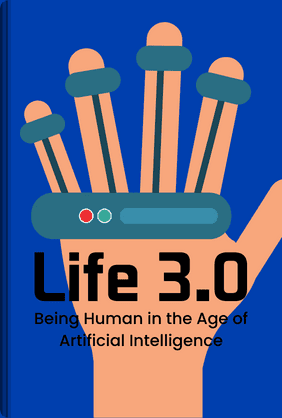
Life 3.0
Max Tegmark
35 Duration8 Key Points4.7 Rate3. 21 Lessons for the 21st Century (The Present)
After covering the past and the future, Harari published 21 Lessons for the 21st Century in 2018. This book acts as a magnifying glass on the immediate present.
While the first two books are grand historical narratives, this one is a collection of essays addressing today's most pressing anxieties. Harari drops the sweeping timelines and focuses on the headlines: the rise of Donald Trump, the threat of fake news, the illusion of truth, immigration, and terrorism.
He tackles the immediate threat of AI automating millions of jobs and the political collapse of the liberal democratic story. He ends the book on a surprisingly personal note, advocating for meditation as a tool to retain focus in a world actively trying to hijack our attention.
Why you must read it: If Sapiens is a history textbook and Homo Deus is a sci-fi warning, 21 Lessons is a survival guide for the next ten years. It translates his high-level academic theories into practical geopolitical analysis.
As Harari breaks down the immediate anxieties of our modern era—from fake news to political polarization—it is completely natural to wonder how our brains are wired to handle such overwhelming complexities. To truly grasp why we react the way we do to today's geopolitical stressors, looking into the neurobiology of human behavior provides an incredibly powerful lens. Exploring the science behind our best and worst impulses perfectly complements Harari's sociological and historical insights.

Behave
Robert M. Sapolsky, Ph.D.
42 Duration9 Key Points4.6 RateTackling the Big Dilemma: Should I Read Sapiens or Homo Deus First?
This is the most common roadblock for new readers. You look at the descriptions, and maybe the futuristic tech focus of Homo Deus appeals to you much more than ancient history. You ask yourself: should I read Sapiens or Homo Deus first?
The answer is unequivocally Sapiens.
Do not skip to the future. Homo Deus operates almost entirely on the foundation built in Sapiens. In the second book, Harari spends a significant amount of time deconstructing the "liberal humanist" agenda. To understand why humanism is failing in the face of AI, you must first understand how humanism replaced traditional religion in the first place—a process detailed exclusively in Sapiens.

Furthermore, Harari’s definition of "religion" is highly unconventional. He classifies capitalism, communism, and nationalism as religions (shared belief systems that organize human cooperation). If you jump straight into Homo Deus without this context, his arguments about Dataism becoming the next great religion will feel unearned and confusing. Read Sapiens first. Treat it as the prerequisite course.
The Latest Addition: Nexus (2024)
In late 2024, Harari published Nexus: A Brief History of Information Networks from the Stone Age to AI.
If the original trilogy is the core curriculum, Nexus is the urgent masterclass on artificial intelligence. Harari zooms in on how information networks have historically built or destroyed human societies. He traces the lineage from oral storytelling to the printing press, the radio, and finally, self-learning AI algorithms.
Unlike previous technologies, AI is the first tool that can make decisions and create new ideas independently. Nexus serves as a dire warning about the fragility of truth in the age of algorithmic governance.
Where does this fit in the reading order? Read Nexus after you complete the main trilogy. It shares thematic DNA with 21 Lessons but dives significantly deeper into the mechanics of information theory and AI safety.
What is the Best Yuval Noah Harari Book for You?
While reading in chronological publication order is the ideal path, your available time and personal interests might dictate a different approach. If you only have the bandwidth to commit to one major title, identifying the best Yuval Noah Harari book depends entirely on what you want to extract from it.
For the History Buff and the Generalist: Sapiens
If you want a paradigm-shifting view of human nature and enjoy authors like Jared Diamond (Guns, Germs, and Steel), Sapiens is the undisputed masterpiece. It is the most universally acclaimed of his works and offers the highest density of "aha" moments that will change how you view everyday concepts like money and credit.
If you want a paradigm-shifting view of human nature and enjoy authors like Jared Diamond (Guns, Germs, and Steel), Sapiens is the undisputed masterpiece. It is the most universally acclaimed of his works and offers the highest density of "aha" moments that will change how you view everyday concepts like money and credit.
Harari's work is part of a grand tradition of 'big history' that seeks to explain vast stretches of our past. If his style of connecting biology, economics, and culture resonates with you, you will find a wealth of other authors who take on similarly ambitious projects.
Speaking of Jared Diamond, you simply cannot discuss the broad strokes of human civilization without acknowledging the groundbreaking work that paved the way for modern macro-history. For readers who love Harari's sweeping analytical style, diving into the geographical, environmental, and biological factors that shaped human conquest is the perfect complementary deep dive. It expands on the agricultural and scientific revolutions, offering a compelling explanation for why power dynamics shifted the way they did across the globe.

Guns, Germs, and Steel
Jared Diamond, Ph.D.
16 Duration7 Key Points4.8 RateFor the Tech Founder and the Futurist: Homo Deus
If you work in tech, artificial intelligence, or data analytics, Homo Deus will speak directly to your industry. It strips away the marketing hype of modern technology and examines the philosophical endpoint of Silicon Valley's obsession with data. It is darker, highly analytical, and deeply relevant to the current discourse around AI.
If you work in tech, artificial intelligence, or data analytics, Homo Deus will speak directly to your industry. It strips away the marketing hype of modern technology and examines the philosophical endpoint of Silicon Valley's obsession with data. It is darker, highly analytical, and deeply relevant to the current discourse around AI.
For the Pragmatist and the News Junkie: 21 Lessons for the 21st Century
If you hate long historical build-ups and want immediate commentary on today’s political climate, start here. Because it is structured as 21 distinct essays, it is much easier to pick up, put down, and read out of order. It requires less sustained attention than his overarching historical narratives.
If you hate long historical build-ups and want immediate commentary on today’s political climate, start here. Because it is structured as 21 distinct essays, it is much easier to pick up, put down, and read out of order. It requires less sustained attention than his overarching historical narratives.
Expanding the Universe: Alternative Formats and Adaptations
Harari understands that digesting a 400-page dense historical analysis isn't for everyone. Over the years, he has adapted his core concepts into different formats that cater to different consumption habits.
Sapiens: A Graphic History (Volumes 1-3)
Co-created with comic artists David Vandermeulen and Daniel Casanave, these graphic novels adapt the original text into a vibrant, visual narrative. Harari himself appears as a character, walking readers through historical concepts alongside a cast of fictional scientists and historical figures.
- Who is this for? Visual learners, younger readers, or adults who want to revisit the concepts of Sapiens without rereading the massive original text.
Unstoppable Us (Children’s Series)
Harari adapted his macro-historical theories for middle-grade readers (ages 8-12). Unstoppable Us takes the complex ideas of the Cognitive Revolution and explains them through accessible stories and illustrations.
- Who is this for? Parents who want to introduce their kids to critical thinking, history, and anthropology without overwhelming them with academic jargon.
The Audio Experience
If sitting down with a physical book isn't viable, Harari's works translate exceptionally well to audio. Available on Audible and Apple Books, the audiobooks are narrated with clear, engaging pacing. Sapiens (narrated by Derek Perkins) clocks in at over 15 hours. Listening at 1.2x or 1.5x speed is a highly effective way for commuters to absorb his massive historical framework over a couple of weeks.
For those who find even a 15-hour audiobook a major commitment, there's another way to fit this essential knowledge into a packed schedule.
LeapAhead
Absorb the main arguments of Harari’s entire trilogy on the go, turning your commute or a short break into a powerful micro-learning session.
Executing Your Reading Strategy
You now have the complete map of Yuval Noah Harari’s intellectual universe. The strategy is clear:
Commit to the chronological timeline. Grab a copy of Sapiens and push through the first few chapters on the Cognitive Revolution. Once you grasp his concept of shared fictions, the rest of the book will fly by. From there, let your momentum carry you straight into the futuristic dread of Homo Deus, ground yourself with the contemporary realities of 21 Lessons for the 21st Century, and round out your understanding with the urgent technological warnings in Nexus.
Harari does not write to give you warm, comforting answers. He writes to dismantle your preconceived notions about human existence. Follow the sequence, trust the structure, and prepare to have your worldview fundamentally altered.
FAQ
Is Sapiens historically and scientifically accurate?
While Sapiens is highly praised for its grand narrative, some professional historians and anthropologists criticize it for oversimplifying complex events and presenting controversial theories as established facts (particularly regarding the Agricultural Revolution). It is best read as a philosophical framework for understanding human history, rather than a strict, peer-reviewed academic textbook.
While Sapiens is highly praised for its grand narrative, some professional historians and anthropologists criticize it for oversimplifying complex events and presenting controversial theories as established facts (particularly regarding the Agricultural Revolution). It is best read as a philosophical framework for understanding human history, rather than a strict, peer-reviewed academic textbook.
Do I need to read the graphic novels if I have already read Sapiens?
No. The graphic novels cover the exact same core concepts as the original book. However, if it has been years since you read the original and you want a quick, visually engaging refresher, the graphic novels are an excellent, low-friction way to revisit his ideas.
No. The graphic novels cover the exact same core concepts as the original book. However, if it has been years since you read the original and you want a quick, visually engaging refresher, the graphic novels are an excellent, low-friction way to revisit his ideas.
Are there any skipped books in this reading order?
Before Sapiens, Harari wrote several academic books focusing on military history (like Renaissance Military Memoirs). Unless you are a hardcore academic studying 15th-century warfare, you can completely ignore these. His mainstream philosophical and historical narrative begins officially with Sapiens.
Before Sapiens, Harari wrote several academic books focusing on military history (like Renaissance Military Memoirs). Unless you are a hardcore academic studying 15th-century warfare, you can completely ignore these. His mainstream philosophical and historical narrative begins officially with Sapiens.
How long does it take to read the core trilogy?
The core trilogy (Sapiens, Homo Deus, 21 Lessons) totals roughly 1,200 pages. An average reader spending 30 to 45 minutes a day will likely need about two to three months to comfortably read and digest all three books.
The core trilogy (Sapiens, Homo Deus, 21 Lessons) totals roughly 1,200 pages. An average reader spending 30 to 45 minutes a day will likely need about two to three months to comfortably read and digest all three books.