

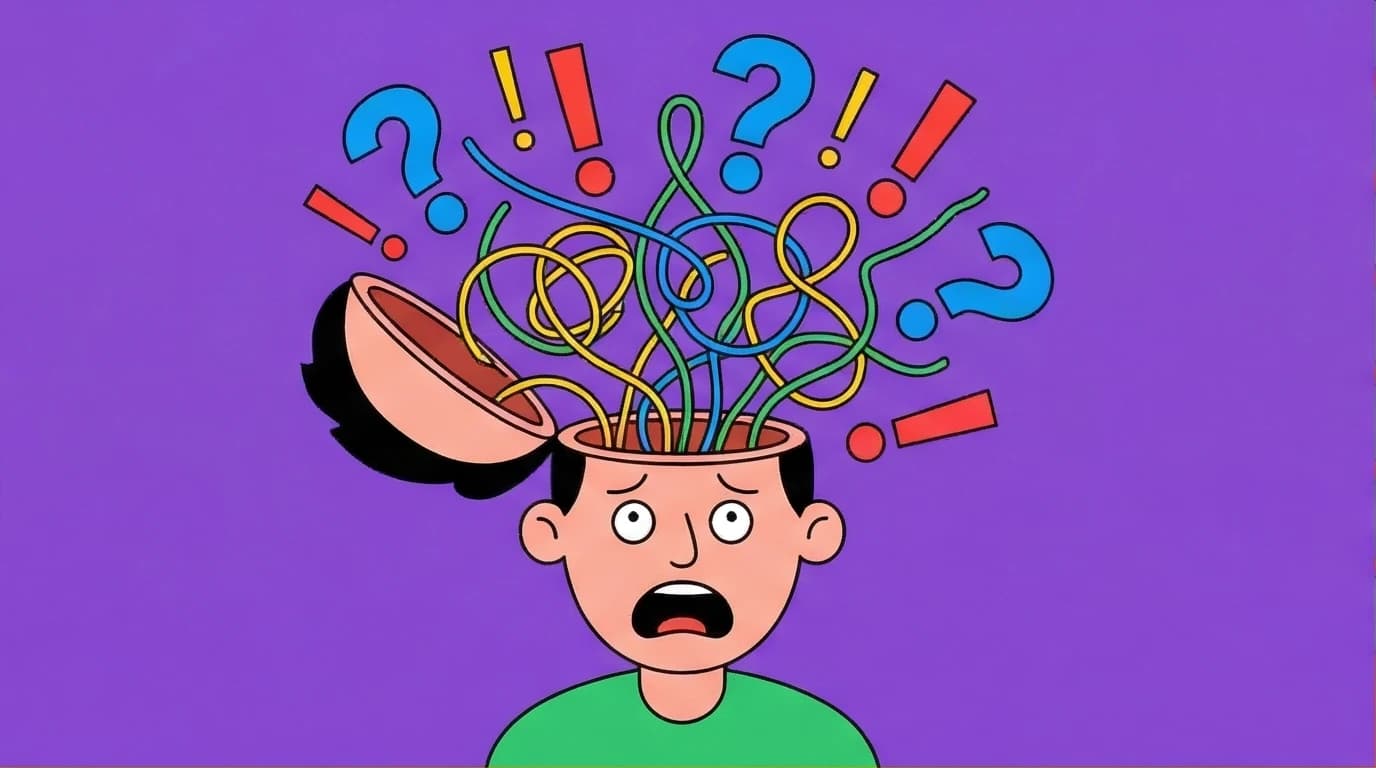
You send an email to your boss and immediately spend the next three hours wondering if your tone was too harsh. Your head hits the pillow at 11 PM, but your brain decides it is the perfect time to review a minor, awkward interaction you had at a Starbucks five years ago. You are exhausted, yet your mind simply refuses to shut off.
This is not active problem-solving. This is overthinking.
Many people confuse a racing mind with high intelligence or careful planning. In reality, chronic overthinking is a destructive cognitive habit. It keeps you stuck in a loop of hypothetical scenarios and past regrets, preventing you from taking actual action. If you want to regain your mental energy, you first need to diagnose the specific ways your mind is trapping you.
Core Signs of Overthinking
Overthinking rarely announces itself. It usually disguises itself as "being prepared" or "being reflective." Look for these unmistakable signs in your daily life.
1. You Experience Severe Analysis Paralysis
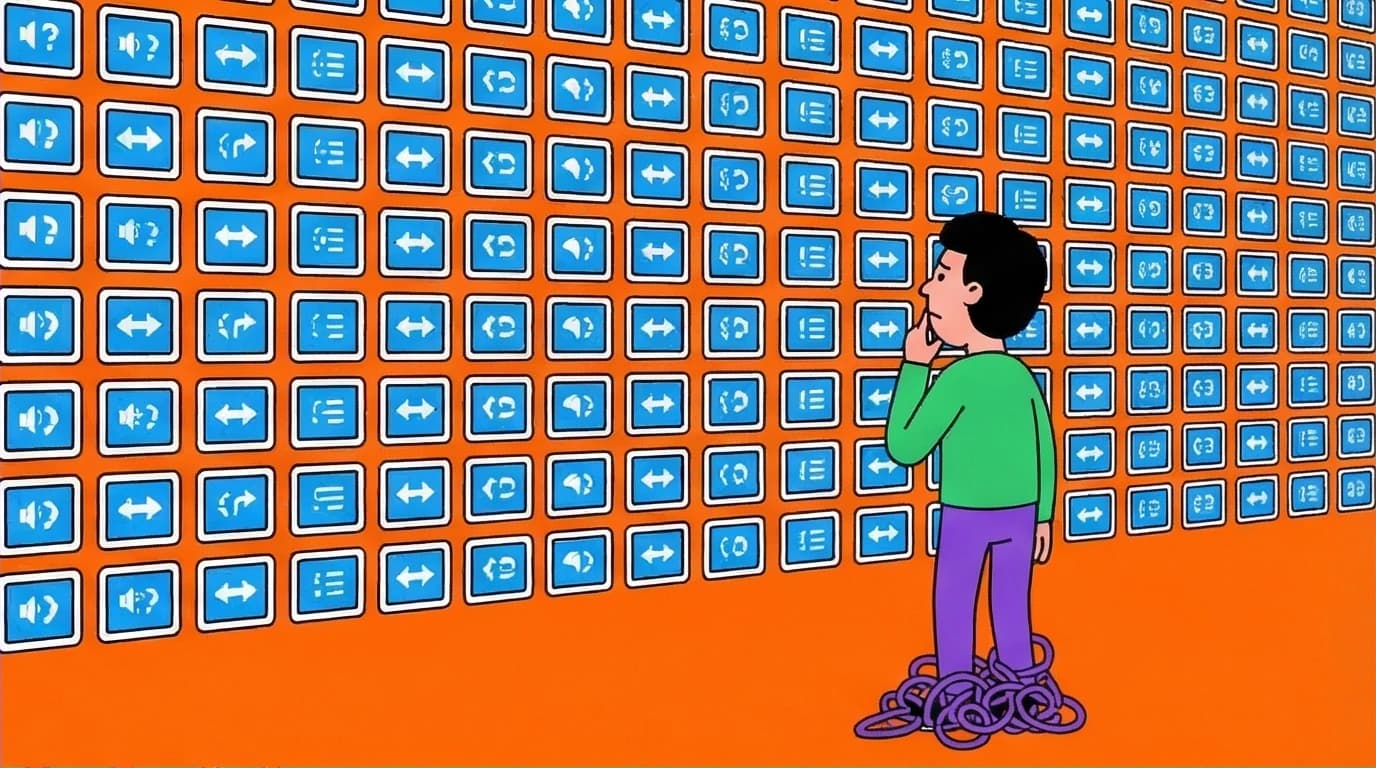
You stare at a restaurant menu, scroll through Netflix for 40 minutes, or spend days comparing five similar coffee makers on Amazon. Instead of making a choice and moving forward, you freeze. This is analysis paralysis. You are terrified of making the "wrong" decision, so you gather endless amounts of information. The result is zero action and massive mental fatigue.
2. You Ruminate on the Past
Problem-solving focuses on the present and the future. Rumination anchors you to the past. You replay conversations on a loop, rewriting the script in your head to figure out what you should have said. You obsess over mistakes that cannot be changed. Your brain acts as a harsh movie director, forcing you to watch your most embarrassing moments over and over.
3. You Catastrophize the Future
You rarely imagine a positive or neutral outcome. If your manager asks for a quick meeting, you immediately assume you are getting fired. If your partner takes two hours to text back, you assume the relationship is over. Your brain constantly generates "what if" scenarios, jumping straight from a minor trigger to a total catastrophe.
4. You Try to Mind-Read
You spend an unhealthy amount of time trying to decode the hidden meanings behind what other people say or do. If a friend replies to a text with "OK" instead of their usual exclamation points, you spend the whole afternoon wondering why they are mad at you. You project your own insecurities onto others, assuming you know exactly what they are thinking.
5. You Are Physically Exhausted by Your Thoughts
Your brain consumes about 20% of your body's energy. When you overthink, you push your brain into overdrive. You might wake up feeling like you just ran a marathon, even if you slept for eight hours. This mental friction often leads to physical symptoms like tension headaches, tight shoulders, and an upset stomach.
If you recognize yourself in these exhausting patterns of endless rumination and decision fatigue, you might be looking for a practical way to hit the brakes. Breaking the cycle of overthinking starts with recognizing your specific mental traps. For a structured approach to calming your mind, Stop Overthinking by Nick Trenton is an excellent resource. It provides actionable techniques to rewire your thought processes, manage your daily stressors, and finally find some much-needed mental peace.
Stop Overthinking
Nick Trenton
 50 Duration
 9 Key Points
 4.5 Rate
The Root Cause: "Why do I overthink so much?"
When you catch yourself deep in a thought spiral, it is natural to ask: why do I overthink so much? You are not broken. Your brain is simply trying to protect you, but it is using a flawed strategy.
The Illusion of Control
Humans hate uncertainty. Your brain views the unknown as a threat. Overthinking is your mind’s attempt to predict every possible outcome so you will never be caught off guard. You trick yourself into believing that if you just think about a problem long enough, you can control the outcome. You cannot. Thinking is not doing.
Perfectionism
Perfectionists are notorious overthinkers. If you tie your self-worth to making zero mistakes, your brain will analyze every single detail before you take a step. The fear of failure becomes so overwhelming that your mind prefers the safety of endless planning over the risk of actual execution.
Past Trauma and Emotional Baggage
If you grew up in an unpredictable environment or experienced severe setbacks, your nervous system learned to be hyper-vigilant. Your overthinking is a leftover survival mechanism. Your brain is scanning your environment—and your thoughts—for danger, desperately trying to keep you safe from getting hurt again.
Understanding the underlying reasons for your racing thoughts—whether it is an intense need for control, perfectionism, or past emotional baggage—is incredibly validating. However, intellectual understanding isn't always enough to stop the anxiety in its tracks. If you want to dive deeper into why your brain constantly looks for threats, Don't Feed the Monkey Mind by Jennifer Shannon is a fantastic read. It uses proven cognitive behavioral therapy strategies to help you stop rewarding your brain's anxious impulses and start living a more grounded life.

Don't Feed the Monkey Mind
Jennifer Shannon
21 Duration8 Key Points4.4 RateOverthinking vs Anxiety: Knowing the Difference
People often use the terms interchangeably, but understanding overthinking vs anxiety is crucial for figuring out the right way to manage your mental health.
Overthinking is a cognitive process. It is the act of thinking too much about a specific topic, situation, or decision. It is a habit. You can often trace it back to a specific trigger—like an upcoming job interview or a difficult conversation.
Anxiety is an emotional and physiological state. It is a broader mental health condition that affects your entire body. While anxiety almost always involves overthinking, overthinking does not always mean you have a clinical anxiety disorder.
Here is how you can tell the difference:
- Duration and Scope: Overthinking usually stops once the specific problem is resolved or the event passes. Generalized Anxiety Disorder (GAD) persists for months and attaches itself to a wide variety of topics, even when there is no logical reason to worry.
- Physical Symptoms: Overthinking might make you feel tired or stressed. Clinical anxiety triggers the fight-or-flight response. You might experience a racing heart, shortness of breath, dizziness, sweating, or panic attacks.
- Control: While it is hard to stop overthinking, you can often snap yourself out of it by changing your environment or diving into a demanding task. Severe anxiety feels entirely out of your control and significantly impairs your ability to function in daily life.
If your racing thoughts are accompanied by severe physical symptoms and panic, it is time to consult a medical professional or a licensed therapist.
Overthinking Psychology: What Happens in Your Brain
To truly break the habit, you need to understand the basic overthinking psychology at play.
The Default Mode Network (DMN)
When you are actively engaged in a task—like reading a complex report or playing a sport—your brain's executive networks are in charge. But the moment you stop paying attention to the outside world, your brain switches to the Default Mode Network (DMN).
The DMN is responsible for self-reflection, mind-wandering, and daydreaming. In a healthy brain, the DMN helps you process your identity and recall memories. In an overthinker's brain, the DMN is hyperactive. It becomes a trap. The moment you are not distracted, your DMN takes over and starts serving up your greatest hits of regrets and fears.
The Amygdala and the Stress Loop
When you imagine a worst-case scenario, your amygdala (the brain's fear center) cannot tell the difference between a real threat and an imagined one. If you picture losing your job, your brain releases cortisol and adrenaline just as it would if a bear were chasing you.
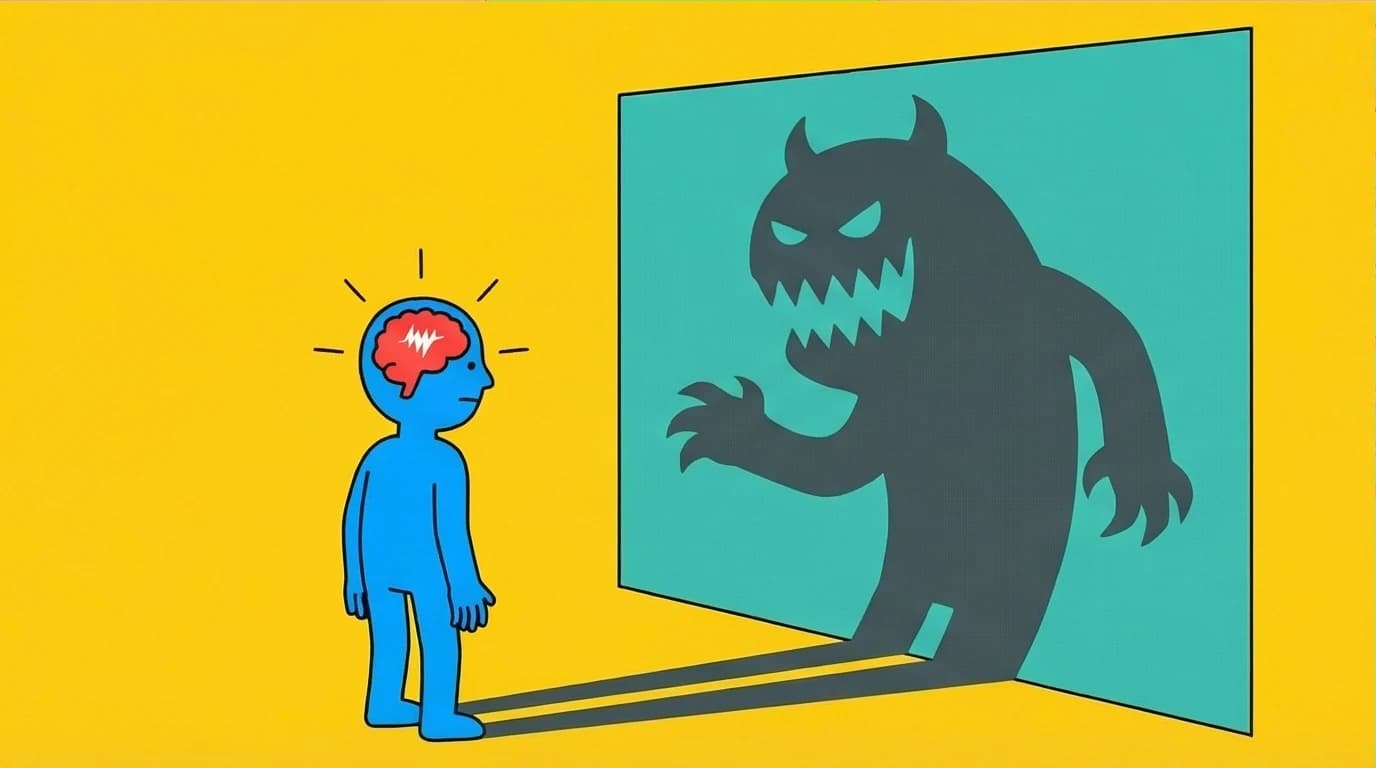
This creates a dangerous feedback loop. Your thoughts trigger stress hormones. The stress hormones make you feel on edge. Your brain notices you feel on edge, so it searches for more things to worry about to explain the feeling. You are literally stressing yourself out over things that do not exist yet.
Learning about the Default Mode Network and the amygdala's stress loop reveals a comforting truth: your racing thoughts are a biological mechanism, not a personal failure. If you are fascinated by the science of your inner dialogue and want to learn how to master it, you should pick up Chatter by Ethan Kross, Ph.D. As an award-winning psychologist, Kross explores exactly why our internal voice can become so toxic and offers science-backed tools to transform that critical inner narrator into a helpful coach.
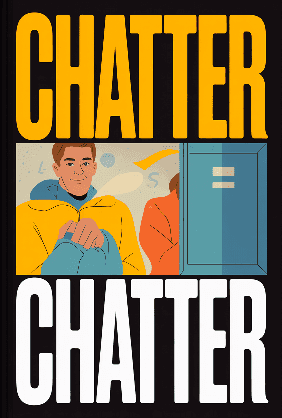
Chatter
Ethan Kross, Ph.D.
23 Duration10 Key Points4.3 RateHow to Short-Circuit the Overthinking Loop
You cannot stop a moving train by standing in front of it, and you cannot stop overthinking by simply telling yourself to "stop thinking." You need actionable ways to redirect your brain's energy.
1. Shift from "What If" to "How Can I"
Overthinkers ask passive, unanswerable questions: What if I fail? What if they do not like me?
Force your brain to answer active, problem-solving questions: How can I prepare for this presentation? What is the very first step I need to take right now? This shifts blood flow from the fear centers of your brain back to the prefrontal cortex, which handles logic and execution.
Force your brain to answer active, problem-solving questions: How can I prepare for this presentation? What is the very first step I need to take right now? This shifts blood flow from the fear centers of your brain back to the prefrontal cortex, which handles logic and execution.
2. Set a Worry Timer
Give your brain permission to overthink, but put a hard boundary on it. Schedule 15 minutes a day (e.g., 4:00 PM to 4:15 PM) as your dedicated "worry time." If an anxious thought pops up at 10:00 AM, tell yourself, "I will think about this at 4:00 PM." When the timer goes off, write down every single fear. When the 15 minutes are up, close the notebook and walk away.
3. Practice "Brain Dumping"
Your brain is a terrible office filing system. It is meant for generating ideas, not holding onto them. When your thoughts are swirling, grab a piece of paper and write them all down. Do not edit. Do not organize. Just get the thoughts out of your head and onto the page. Seeing your fears written down often takes away their power and makes them look far less intimidating.

4. Box in Your Decisions
To defeat analysis paralysis, implement strict deadlines for small choices. Give yourself exactly 60 seconds to pick a movie on Netflix. Give yourself exactly five minutes to choose a meal on a menu. Accept that making a "good enough" choice quickly is vastly superior to making the "perfect" choice after an hour of mental agony.
Implementing these strategies—like setting worry timers or brain dumping—takes practice, but the relief you will feel is worth the effort. By forcing your brain out of passive rumination and into active problem-solving, you reclaim your time and energy. For even more practical frameworks on making quick decisions and letting go of mental clutter, Don't Overthink It by Anne Bogel is a wonderful guide. It is packed with relatable advice on how to stop second-guessing your everyday choices and start enjoying your life again.

Don't Overthink It
Anne Bogel
41 Duration8 Key Points4.6 RateIf the idea of adding four new books to your reading list feels like it could trigger more overthinking, remember that learning new skills doesn't have to be an all-or-nothing task.


Grasp the core ideas from books like these in just 15 minutes, making it easier to absorb new strategies without the pressure of a long read.
 LeapAhead
FAQ
Does overthinking mean I have ADHD or OCD?
Not necessarily. While overthinking is a symptom commonly associated with Attention-Deficit/Hyperactivity Disorder (ADHD) and Obsessive-Compulsive Disorder (OCD), having a racing mind alone does not equal a diagnosis. ADHD often involves racing thoughts due to a lack of executive function and focus regulation. OCD involves intrusive, unwanted thoughts (obsessions) that lead to repetitive behaviors (compulsions). If your overthinking feels obsessive or highly disruptive, speak with a psychiatrist.
How do I stop overthinking at night when I am trying to sleep?
Your mind races at night because it is the first time all day you do not have external distractions. To fix this, create a buffer zone before bed. Write down tomorrow's to-do list at 8 PM so your brain does not have to "hold" those tasks overnight. Keep your bedroom cool (around 65 degrees Fahrenheit) to signal to your body it is time to sleep. If you cannot sleep after 20 minutes, get out of bed, read a physical book under dim light, and go back only when you are truly tired.
Can chronic overthinking cause physical health problems?
Yes. Chronic overthinking keeps your body in a prolonged state of stress, meaning your cortisol levels remain elevated. Over time, this chronic stress can lead to digestive issues, a weakened immune system, chronic fatigue, high blood pressure, and severe sleep disturbances. Addressing your thought patterns is just as important for your physical health as it is for your mental health.