


You send a text. Two hours pass without a reply. Suddenly, your mind spirals into a dozen worst-case scenarios, analyzing everything you said or did over the past week. You know this constant analyzing is exhausting, but you just cannot seem to hit the off switch on your brain.
This loop of doubt does not mean your relationship is doomed, nor does it mean you are broken. It simply means your alarm system is malfunctioning. When you constantly analyze every micro-expression, tone of voice, or delayed response, you are trying to predict pain so you can protect yourself from it. But instead of keeping you safe, this habit drains your energy and slowly chips away at the intimacy you actually crave.
Here is how you can understand the mechanics of your anxiety and take concrete steps to quiet your mind.
The Anatomy of Relationship Anxiety
Before you can fix the problem, you need to understand the machine driving it. Overthinking in relationships rarely starts with the relationship itself. It is a protective mechanism built on past experiences.
The Role of an Anxious Attachment Style
If you find yourself constantly waiting for the other shoe to drop, you likely have an anxious attachment style. This blueprint is often formed in childhood or after a series of unpredictable romantic partnerships. If love was inconsistent or required you to "earn" it, your brain learned to stay hyper-vigilant.
People with an anxious attachment style act like human radar systems. You are incredibly perceptive, which is a gift, but you also assign catastrophic meaning to neutral events. A partner sighing because they had a long day at the office suddenly means they are losing interest in you. Your nervous system interprets distance not as a need for space, but as a threat to your survival.
If you recognize yourself in the description of an anxious attachment style, you are already making huge strides toward healing. Understanding why your internal alarm system goes off is the key to creating lasting intimacy. If you want to dive deeper into how our early emotional blueprints shape our romantic partnerships, Hold Me Tight is a phenomenal resource. Dr. Sue Johnson beautifully explains the science of love and provides actionable conversations you can have with your partner to step out of the anxiety loop and build a truly secure connection.

Hold Me Tight
Dr. Sue Johnson
 26 Duration
 10 Key Points
 4.6 Rate
The Trap of Overthinking Text Messages
Nothing triggers modern relationship anxiety quite like a cell phone. Overthinking text messages is the quickest way to ruin your peace of mind. You stare at the typing indicator, analyze the sudden use of punctuation, or wonder why they watched your Instagram story but did not reply to your iMessage.
Texting strips away tone, body language, and context. It leaves massive blank spaces. And an anxious brain hates blank spaces. It will immediately fill those gaps with the worst possible narrative. You convince yourself that a short "Okay" means they are angry, rather than realizing they might just be driving or busy in a meeting.
How Overthinking Sabotages What You Want Most
The cruelest irony of relationship anxiety is that it often creates the exact outcome you are terrified of. It operates as a self-fulfilling prophecy.
When you overthink, you operate from a place of fear. You might start asking for constant reassurance, picking fights to test their loyalty, or withdrawing completely to see if they will chase you. At first, a supportive partner will try to comfort you. Over time, however, being constantly interrogated or doubted feels like walking on eggshells. They pull back to get some breathing room. You sense them pulling back, which spikes your anxiety further, causing you to grip even tighter.
You end up destroying the emotional safety of the relationship, not because you are incompatible, but because the anxiety took the wheel.
Watching your own mind sabotage a relationship you care about is incredibly frustrating. The good news is that overthinking is largely a learned mental habit, which means it can be unlearned. Before you can fix the relationship dynamics, you have to quiet the noise in your own head. Stop Overthinking by Nick Trenton is a fantastic, practical guide that teaches you how to recognize your mental traps, lower your daily stress levels, and stop the endless spiral of "what ifs." It is exactly the toolkit you need when your brain starts working against you.
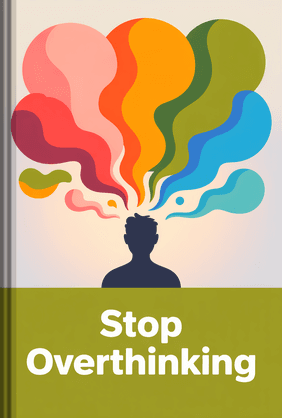
Stop Overthinking
Nick Trenton
50 Duration9 Key Points4.5 RateThe advice in books like this is powerful, but it's hard to find the mental energy to read when you're already exhausted from anxiety.

LeapAhead breaks down books on emotional regulation into 15-minute audio sessions, so you can learn to calm your mind during your commute or a short break.

Download LeapAhead App now

How to Stop Overthinking Relationships: The Action Plan
Breaking this cycle requires more than just telling yourself to "stop thinking about it." You need practical interventions that interrupt the anxiety before it dictates your behavior.
1. Separate Facts from Fiction
When the anxiety hits, your brain tells you a story. You need to become an active investigator of your own thoughts. Grab a piece of paper and draw a line down the middle.
On the left side, write down the undeniable, objective facts.
Example: He has not texted me back in three hours.
Example: He has not texted me back in three hours.
On the right side, write down the story you are telling yourself.
Example: He is losing interest, he found someone better, and he wants to break up.
Example: He is losing interest, he found someone better, and he wants to break up.
Look at the facts alone. Can those facts have a different explanation? Could he be caught up at work? Did his phone die? Are there alternative explanations that do not involve you being abandoned? Forcing your brain to look at objective data slows down the emotional spiral.

2. Regulate Your Nervous System First
You cannot logic your way out of a panicked nervous system. When relationship anxiety flares up, your body enters a fight-or-flight state. Your heart rate increases, and your chest gets tight.
Before you send that double text or demand an explanation, physically change your state.
- Change your temperature: Splash cold water on your face or hold an ice cube. This triggers the mammalian dive reflex, immediately slowing your heart rate.
- Move: Walk a mile around your neighborhood. Burn off the excess adrenaline.
- The 24-Hour Rule: If something bothers you, wait 24 hours before bringing it up. If it still feels important the next day, discuss it. Most of the time, the intense urgency will fade.
3. Communicate Your Needs Without Blame
Stopping the overthinking does not mean suppressing your needs. If you need more connection, you must ask for it directly. The problem arises when anxiety does the talking.
Anxious communication: "Why are you ignoring me today? You never text me anymore." (This triggers defensiveness).
Secure communication: "Hey, I've been feeling a little disconnected today. I’d love to catch up on a quick phone call tonight if you have a few minutes." (This states a need clearly and gives them a chance to meet it).
Read books like Attached by Amir Levine and Rachel Heller (you can easily find it on Amazon or at Barnes & Noble) to learn more about how to communicate your attachment needs effectively.
Since understanding your attachment style is absolutely vital to clearly communicating your needs, Attached is widely considered the holy grail for relationship anxiety. Levine and Heller offer a scientifically backed look into why we behave the way we do in romantic partnerships. By reading this book, you will quickly learn how to identify whether you are dealing with an avoidant partner or just fighting your own anxious tendencies, making it much easier to navigate conflicts without placing blame.
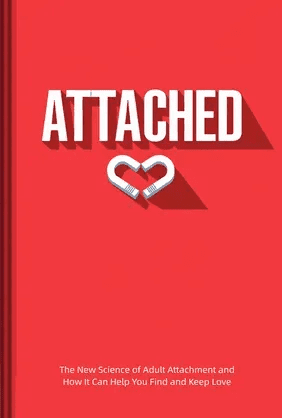
Attached
Amir Levine, PhD, Rachel Heller, MA
48 Duration9 Key Points4.5 Rate4. Build a Life Outside the Relationship
Overthinking happens when the relationship becomes the sole source of your emotional stability. If your partner is the only good thing in your life, the thought of losing them is understandably terrifying.
You need load-bearing pillars outside of your romance. Reinvest in your friendships. Pick up a hobby that has nothing to do with your partner. Focus on your career goals. When your self-worth is distributed across multiple areas of your life, a shift in your partner's mood stops feeling like the end of the world.
Reclaiming your independence and building a life outside of your romance often requires one critical skill: boundary setting. When your identity has become totally wrapped up in your partner, taking a step back can feel uncomfortable at first. Nedra Glover Tawwab’s Set Boundaries, Find Peace is a brilliant guide for navigating this exact transition. It will teach you how to assert your own needs, protect your emotional energy, and confidently create a well-rounded life that actually makes you a healthier, more secure partner.
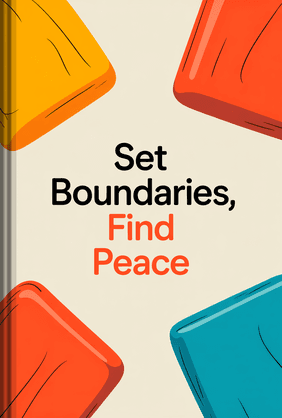
Set Boundaries, Find Peace
Nedra Glover Tawwab
29 Duration10 Key Points4.5 Rate5. Accept the Inherent Risk of Love
At its core, overthinking is an attempt to control the uncontrollable. You are trying to figure out a way to guarantee you will never get hurt.
You need to accept a tough reality: You cannot control your partner. You cannot force them to stay, and you cannot guarantee they will never break your heart. Love requires a leap of faith. True emotional security does not come from knowing your partner will never leave; it comes from knowing that even if they do, you will be okay. You will survive, rebuild, and thrive again.
Building this kind of internal security is a journey, and consistently learning is a powerful way to support it. If reading all the recommended books feels like a lot, you can start by absorbing their core ideas in a more manageable format.
With LeapAhead, you can explore the key lessons from bestselling relationship books in short summaries, helping you build a solid foundation for a more secure self.
Download LeapAhead App now
FAQ
Is it my gut instinct telling me something is wrong, or am I just overthinking?
This is the hardest distinction to make. Intuition is usually quiet, calm, and persistent. It feels like a subtle knowing. Overthinking and anxiety are loud, frantic, and urgent. If your thoughts are accompanied by a racing heart, a tight chest, and a desperate need for immediate reassurance, it is likely anxiety. Look at the evidence. If their actions consistently match their words but you are still panicking over minor details, your anxiety is driving the bus.
This is the hardest distinction to make. Intuition is usually quiet, calm, and persistent. It feels like a subtle knowing. Overthinking and anxiety are loud, frantic, and urgent. If your thoughts are accompanied by a racing heart, a tight chest, and a desperate need for immediate reassurance, it is likely anxiety. Look at the evidence. If their actions consistently match their words but you are still panicking over minor details, your anxiety is driving the bus.
Should I tell my partner that I overthink everything?
Yes, but frame it as self-awareness, not as their responsibility to fix. You can say, "I have a tendency to overthink small shifts in communication, and I am actively working on it. If I seem a bit anxious, it is usually just my own internal dialogue." This helps them understand your reactions without making them feel blamed or responsible for managing your emotions 24/7.
Yes, but frame it as self-awareness, not as their responsibility to fix. You can say, "I have a tendency to overthink small shifts in communication, and I am actively working on it. If I seem a bit anxious, it is usually just my own internal dialogue." This helps them understand your reactions without making them feel blamed or responsible for managing your emotions 24/7.
How do I handle the anxiety when my partner asks for space?
When an anxious overthinker hears "I need space," they translate it to "I am leaving you." Recognize that for many people, especially those with avoidant traits, space is just how they recharge their batteries. It is not a punishment. When they ask for space, respect the boundary. Use that time to focus heavily on your own nervous system regulation—go to the gym, see friends, or dive into a project. Do not sit by the phone tracking their location.
When an anxious overthinker hears "I need space," they translate it to "I am leaving you." Recognize that for many people, especially those with avoidant traits, space is just how they recharge their batteries. It is not a punishment. When they ask for space, respect the boundary. Use that time to focus heavily on your own nervous system regulation—go to the gym, see friends, or dive into a project. Do not sit by the phone tracking their location.
Can an anxious overthinker ever feel completely secure in a relationship?
Absolutely. With self-awareness, consistent effort, and often a supportive partner (ideally someone with a secure attachment style), you can earn security. You will likely always have moments where the old anxiety flares up, but over time, you will learn to recognize the triggers immediately and self-soothe before they turn into actions that damage the relationship.
Absolutely. With self-awareness, consistent effort, and often a supportive partner (ideally someone with a secure attachment style), you can earn security. You will likely always have moments where the old anxiety flares up, but over time, you will learn to recognize the triggers immediately and self-soothe before they turn into actions that damage the relationship.