


You stare at the ceiling at 2 AM, replaying a five-minute conversation from three days ago. Or maybe you've spent an hour staring at an email draft, terrified of hitting send. Your brain feels like a browser with 100 tabs open, completely exhausting your energy and keeping you paralyzed instead of moving forward.
Thinking is meant to solve problems. Overthinking creates them. When you analyze a situation until it feels like a threat, you are no longer processing information; you are just spinning your wheels. The good news is that overthinking is not a permanent personality trait. It is a mental habit. You can break it.
Here is exactly how to stop overthinking, regain your focus, and start taking action.
But first, it's crucial to distinguish between deep, productive thought and a destructive mental loop. Recognizing the specific patterns of this habit is the first step toward breaking free.
Immediate Circuit Breakers: How to Get Out of Your Head Right Now
When you are caught in a downward spiral of thoughts, you cannot simply reason your way out of it. Your brain is in a state of hyper-arousal. You need physical and mental circuit breakers to snap you back to reality. If you are wondering how to get out of your head in the middle of an anxiety loop, use these immediate interventions.
The 5-4-3-2-1 Grounding Technique
Anxiety lives in the future. Regret lives in the past. Overthinking bounces between the two. To stop the bounce, anchor yourself to the present physical environment.
Look around your room and identify:
- 5 things you can see: The edge of your desk, a coffee mug, a tree outside the window.
- 4 things you can physically feel: Your feet on the floor, the texture of your shirt, the weight of your watch.
- 3 things you can hear: The hum of the refrigerator, traffic outside, your own breath.
- 2 things you can smell: Coffee, laundry detergent.
- 1 thing you can taste: A mint, or just the resting state of your mouth.
This forces your brain to process sensory data instead of abstract fears. It disrupts the overthinking loop instantly.
Change Your Physical State
You cannot solve a physical stress response purely with mental logic. Move your body.
Go outside and walk a mile. The bilateral stimulation of walking actually helps the brain process stress. If you cannot leave your house, change your temperature. Splash ice-cold water on your face. The mammalian dive reflex triggers an immediate reduction in your heart rate and forces your nervous system to reset.
Do a "Brain Dump"
When thoughts stay in your head, they feel infinite and overwhelming. When you put them on paper, they become finite and manageable.

Grab a notebook from Amazon or Barnes & Noble—or just a scrap piece of paper—and write down every single thing bothering you. Do not organize the thoughts. Do not edit for grammar. Just write until your head feels empty. Seeing your fears written in black ink shrinks them. You will often realize that your "massive" cloud of anxiety is actually just three specific problems that need scheduling.
If you find yourself constantly battling these mental loops, it helps to have a dedicated toolkit to quiet the noise. Externalizing your worries on paper is just the beginning. To truly rewire your brain and break free from the paralyzing grip of endless analysis, you need practical frameworks that tackle the root of the problem. If you're looking for a deep dive into actionable techniques that stop the mental spin cycle and help you regain your peace of mind, this highly recommended read is a fantastic next step.
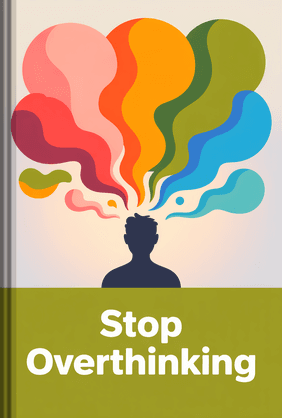
Stop Overthinking
Nick Trenton
 50 Duration
 9 Key Points
 4.5 Rate
Long-Term Ways to Stop Overthinking
Stopping a current spiral is just the first step. You need sustainable systems to prevent your brain from getting clogged in the first place. These are proven ways to stop overthinking before it paralyzes your day.
Schedule "Worry Time"
Telling yourself "don't worry" never works. Your brain demands attention. Instead, give your brain exactly what it wants, but on your own terms.

Schedule 15 minutes a day—say, 4:00 PM to 4:15 PM—as your dedicated "Worry Time." If an anxious thought pops up at 10:00 AM, tell yourself, "I am going to worry about this, but not until 4:00 PM." Write the thought down and move on. When 4:00 PM hits, set a timer and worry as hard as you can. When the timer goes off, you are done for the day. This trains your brain to compartmentalize stress.
Use the 10-10-10 Rule
Overthinkers treat every decision like it is life or death. Choosing what to eat for dinner suddenly feels as heavy as choosing a career path.
When you feel paralyzed, ask yourself how this decision will impact you in:
- 10 days
- 10 months
- 10 years
That awkward comment you made in a meeting? It might sting for 10 days. It will be completely forgotten in 10 months. It means absolutely nothing in 10 years. This framework rapidly strips away the artificial importance you place on minor events.
Implement the 2-Minute Rule for Decisions
Parkinson’s Law states that work expands to fill the time allotted for its completion. The same is true for decision-making. If you give yourself a week to decide which laptop to buy, you will spend a week agonizing over specs.
Set rigid deadlines. If a decision is low-stakes (what to eat, which movie to watch), give yourself exactly two minutes. Set a timer on your phone. When the alarm sounds, you must choose. You will quickly realize that the cost of indecision is far worse than the cost of making a suboptimal choice.
These long-term strategies are especially powerful for breaking the cycle of anxious thoughts that tend to spike when the world goes quiet. If you find your mind racing the moment your head hits the pillow, you're not alone.
Stop Overthinking Everything: Shifting Your Mindset
The root cause of overthinking is often a desperate need for certainty. You want a 100% guarantee that you will not fail, look foolish, or make the wrong choice. Certainty is a myth.
Perfectionism is the Enemy of Progress
You are waiting for the perfect moment, the perfect plan, or the perfect amount of research. That moment does not exist. The most successful people do not have perfect plans; they have a high tolerance for course-correcting along the way.
Adopt the "70% Rule." Once you have 70% of the information you need, make the call. Waiting for the last 30% takes too much time and kills your momentum. Action produces data. Overthinking just produces anxiety.
Distinguish Between Worry and Problem-Solving
Overthinkers often trick themselves into believing they are being productive. They think, "If I just analyze this from one more angle, I will find the solution."
Here is the difference:
- Worry: "What if I fail the presentation? What if my boss hates it? What if the projector breaks?" (Focuses on uncontrollable outcomes).
- Problem-Solving: "I will practice the presentation three times tonight. I will bring a backup copy on a flash drive." (Focuses on controllable actions).

Catch yourself when you are spinning in the "What ifs." Immediately pivot to "What can I do right now?"
Shifting your mindset from passive worry to active problem-solving takes practice, especially when your inner voice is working overtime. That constant internal dialogue can either be your greatest asset or your worst enemy. If you want to understand the science behind why we talk to ourselves the way we do—and how to harness that voice to work for you rather than against you—learning how to manage your mental "chatter" is game-changing. Here is a brilliant resource to help you steer your internal conversations in a healthier direction.
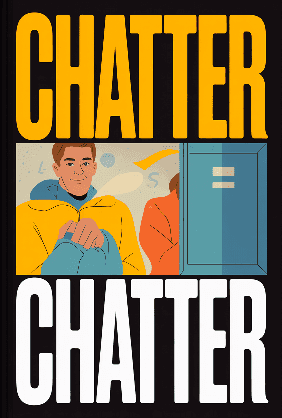
Chatter
Ethan Kross, Ph.D.
23 Duration10 Key Points4.3 RateEssential Tips for Overthinkers
Building a lifestyle that protects your mental energy requires daily maintenance. Here are actionable tips for overthinkers to implement into their daily routines.
Curate Your Information Diet
Your brain processes whatever you feed it. If you spend three hours a day doomscrolling through negative news or comparing your life to curated feeds, your brain will remain in a state of high alert.
Take control of your inputs. Swap mindless scrolling for high-quality content. Open Audible or Apple Books and listen to a biography or a business strategy book. Fill your mind with ideas that promote growth, rather than stimuli that trigger anxiety.
If finding the time for a full audiobook feels like one more thing to overthink, you can absorb the core lessons from growth-focused books in just a few minutes a day.


Learn the key ideas from bestselling books on mindset and productivity in 15-minute summaries, making it easy to build a positive information diet without the time commitment.
 LeapAhead
Limit Your Daily Choices
Decision fatigue is real. Every choice you make drains a small amount of mental energy. By the end of the day, your depleted brain defaults to overthinking.
Automate the trivial things. Eat the same breakfast every weekday. Organize your closet so you have a simple uniform for work. Plan your week's workouts on Sunday. Save your critical thinking power for the decisions that actually matter.
In our modern world, we are bombarded with an exhausting number of options—from what to watch on Netflix to which brand of toothpaste to buy at the grocery store. This constant barrage is a massive trigger for decision fatigue and overthinking. When you understand why having fewer options actually makes you happier and more productive, it becomes much easier to curate your daily life. If you want to explore the fascinating psychology behind why less is truly more when it comes to decision-making, you should definitely add this classic to your reading list.

The Paradox of Choice
Barry Schwartz, Ken Kliban, et al.
43 Duration9 Key Points4.3 RateFocus on the "Next Right Step"
When you look at a massive project, the brain panics. You start overthinking steps 14, 15, and 16 before you have even started step 1.
Stop looking at the whole staircase. Look entirely at the first step. If you need to write a report, do not think about the final presentation. Think about opening a Word document and writing the title. Once you take the first physical step, momentum takes over. Action cures fear.
Taking that very first step can feel incredibly daunting when your brain is fixated on the finish line. However, the secret to massive progress isn't taking giant leaps; it's committing to tiny, continuous improvements that bypass your brain's natural fear response. This concept, known as Kaizen, is an incredibly effective way to outsmart your own perfectionism and get out of a rut. For anyone who feels paralyzed by the sheer size of their goals, this insightful book provides a refreshing, low-stress blueprint for taking action.

One Small Step Can Change Your Life
Robert Maurer, Ph.D.
18 Duration7 Key Points4.7 RateApplying the wisdom from all these powerful books is a great way to rewire your thinking, but a long reading list can feel overwhelming in itself. For a more manageable approach, you can start by learning the main principles from these and other titles in a condensed format.
Stop the 'reading debt' guilt and absorb core lessons from books on overthinking and mental clarity by listening to their 15-minute audio summaries during your commute or break.
LeapAheadFAQ
Is overthinking a mental illness?
No. Overthinking itself is not a clinical diagnosis. It is a behavioral pattern and a symptom. However, chronic overthinking is heavily linked to Generalized Anxiety Disorder (GAD) and depression. If your overthinking prevents you from functioning normally, sleeping, or maintaining relationships, consult a mental health professional.
No. Overthinking itself is not a clinical diagnosis. It is a behavioral pattern and a symptom. However, chronic overthinking is heavily linked to Generalized Anxiety Disorder (GAD) and depression. If your overthinking prevents you from functioning normally, sleeping, or maintaining relationships, consult a mental health professional.
How do I stop overthinking at night when I am trying to sleep?
Your brain ramps up at night because there are no distractions. Keep your bedroom temperature cool (around 65 degrees Fahrenheit). Keep a notepad next to your bed. If a thought keeps you awake, turn on a dim light, write the thought down, and explicitly tell yourself, "The problem is on the paper now. I will handle it tomorrow."
Your brain ramps up at night because there are no distractions. Keep your bedroom temperature cool (around 65 degrees Fahrenheit). Keep a notepad next to your bed. If a thought keeps you awake, turn on a dim light, write the thought down, and explicitly tell yourself, "The problem is on the paper now. I will handle it tomorrow."
What if I actually need to think hard about a major life choice?
Deep thinking is intentional and bounded by time. Overthinking is repetitive and unbounded. If you are facing a major life choice (like moving to a new city or changing careers), structure your thinking. Give yourself a hard deadline (e.g., "I will decide by Friday at 5 PM"). List the pros and cons, talk to one trusted mentor, and then make the call. Stop reopening the debate once the decision is made.
Deep thinking is intentional and bounded by time. Overthinking is repetitive and unbounded. If you are facing a major life choice (like moving to a new city or changing careers), structure your thinking. Give yourself a hard deadline (e.g., "I will decide by Friday at 5 PM"). List the pros and cons, talk to one trusted mentor, and then make the call. Stop reopening the debate once the decision is made.
Can I ever completely stop overthinking?
You will never eliminate thoughts entirely—that is not how the human brain works. The goal is not zero thoughts. The goal is catching yourself when a thought turns from productive planning into useless rumination, and having the tools to shut that rumination down quickly.
You will never eliminate thoughts entirely—that is not how the human brain works. The goal is not zero thoughts. The goal is catching yourself when a thought turns from productive planning into useless rumination, and having the tools to shut that rumination down quickly.