

You are physically exhausted. You have been looking forward to your bed all day. But the second your head hits the pillow and the lights go out, your brain boots up like a supercomputer. Suddenly, you are replaying a minor conversation from three years ago, worrying about an upcoming deadline, and doing the mental math of exactly how many hours of sleep you will get if you fall asleep right now.
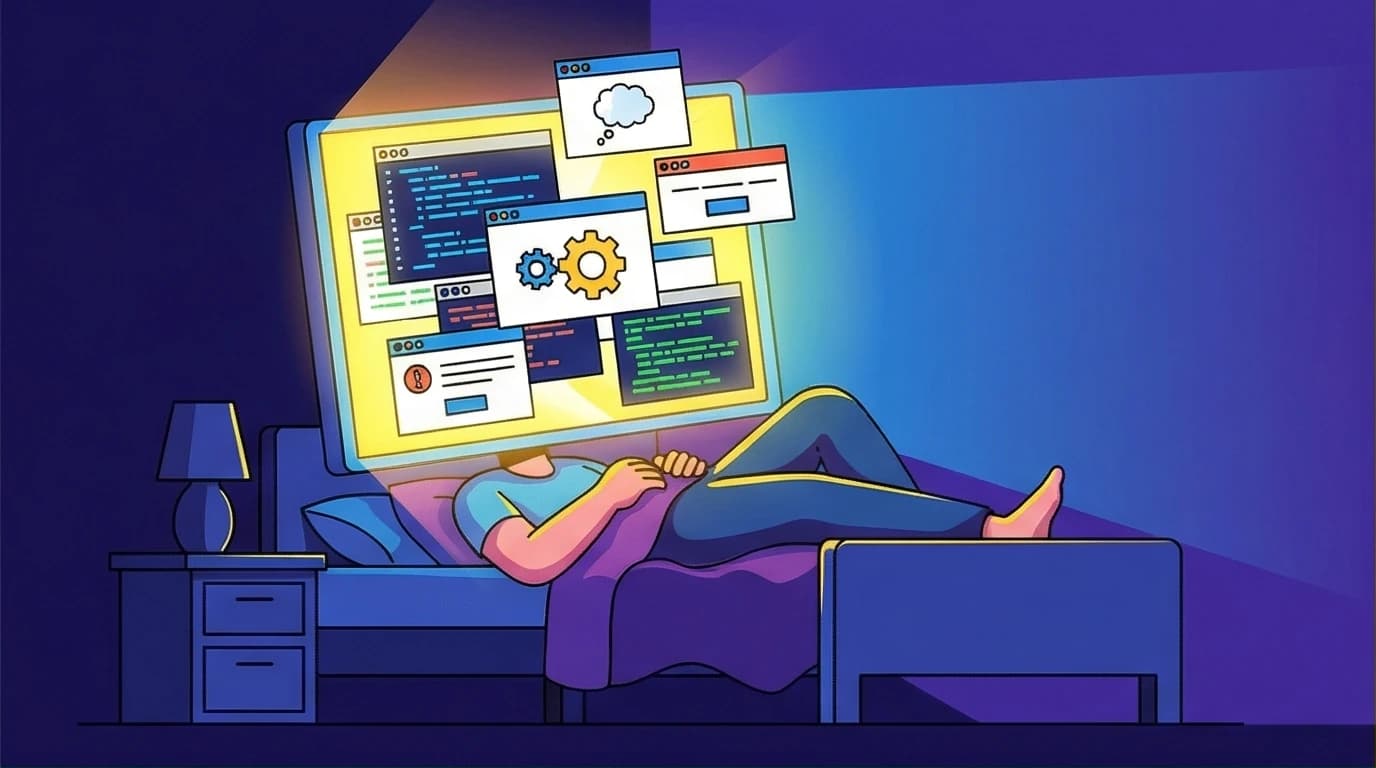
You are not alone. The frustration of being tired but unable to rest is universal. When overthinking can't sleep becomes your nightly routine, the bed transforms from a place of rest into a trigger for stress.
Let's break down exactly why this happens and give you actionable tools to quiet your mind.
Why Your Brain Speeds Up When You Lie Down
During the day, you are constantly distracted. Work, emails, podcasts, traffic, and conversations keep your mind occupied. Your brain has no quiet space to process background stress.
When you turn off the lights and put away your phone, those distractions vanish. Your brain finally gets a quiet moment and immediately starts sorting through the unprocessed mental clutter. Those racing thoughts at night are not a sign that something is broken. It is just your brain trying to organize your life at the absolute worst possible time.
To fix this, you cannot just command your brain to "stop thinking." Telling yourself not to think about a pink elephant guarantees you will picture a pink elephant. Instead, you need to redirect that mental energy.
If you find yourself constantly battling this surge of nighttime processing, you might need a more comprehensive strategy to quiet your inner monologue. When your brain treats your pillow like a signal to start analyzing every past mistake and future deadline, it helps to have a toolkit designed specifically for mental off-ramping. Nick Trenton dives deep into exactly why our brains get stuck in these endless loops and provides practical, actionable frameworks to help you break free from the exhausting cycle of mental pacing.
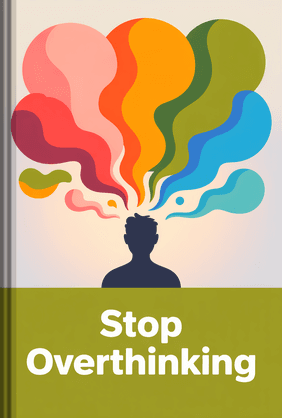
Stop Overthinking
Nick Trenton
 50 Duration
 9 Key Points
 4.5 Rate
Understanding that your brain is simply trying to process information is key. If you suspect this nighttime mental clutter is a symptom of a broader pattern, it can be helpful to recognize the other ways overthinking manifests.
Immediate Fixes: What to Do While You Are in Bed
If you are reading this in bed at 2:00 AM, you need immediate interventions. Here is how to stop overthinking at night using techniques you can apply right now.
1. The Bedside Brain Dump
Your brain holds onto worries because it is terrified you will forget them by morning. It loops the same thoughts to keep them active.

Give your brain permission to let go by writing things down. Keep a physical pen and a notepad on your nightstand. Do not use your phone—the blue light and notifications will wake you up further. When a thought keeps looping, turn on a dim light, write it down, and tell yourself, "It is safe on the paper. I will handle it tomorrow." This physical act of transferring information drastically reduces cognitive load.
Transferring your late-night worries onto a physical notepad is a fantastic first step in organizing your mental space. However, if your mind consistently feels like a web browser with a hundred open tabs, you might benefit from learning how to effectively categorize and dismiss those unhelpful thoughts long before your head hits the pillow. Learning to intentionally clean out your mental clutter during the day can drastically reduce the cognitive load that keeps you tossing and turning at night.
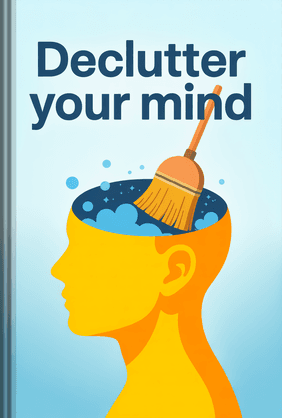
Declutter Your Mind
S. J. Scott & Barrie Davenport
29 Duration8 Key Points4.6 Rate2. Cognitive Shuffling (The Alphabet Game)
When you are anxious, your brain is locked into a logical, sequential path of worrying. Cognitive shuffling scrambles that logical path and mimics the random, nonsensical thoughts that naturally happen right before you fall asleep.
Here is how to do it:
- Pick a random, emotionally neutral word. Let's use "BIRD."
- Start with the first letter (B). Visualize as many objects starting with B as you can. A banana. A boat. A brick. A bicycle.
- Once you run out of B words, move to I. An igloo. An island. An iron.
- Keep going. You will rarely make it to the end of the word before your brain gives up its grip on reality and slips into sleep.
3. The 4-7-8 Breathing Technique
Racing thoughts trigger your sympathetic nervous system—your fight-or-flight response. Your heart rate elevates. You cannot sleep in this state. You have to manually trigger your parasympathetic nervous system (rest and digest) using your breath.
- Inhale quietly through your nose for 4 seconds.
- Hold your breath for 7 seconds.
- Exhale completely through your mouth, making a whoosh sound, for 8 seconds.
- Repeat this cycle four times.
The extended exhale acts as a biological brake pedal for your nervous system.
4. Break the Cycle: The 20-Minute Rule
If you have been lying awake for what feels like 20 minutes, get out of bed. Remaining in bed while frustrated trains your brain to associate the mattress with anxiety.
Go to a different room. Keep the lights extremely dim. Do a low-stimulation activity. Read a physical book (a dry biography or an old paperback from Barnes & Noble works best—avoid high-stakes thrillers). Do a jigsaw puzzle. Fold laundry. When your eyelids start feeling heavy, go back to bed.
Building a Buffer Zone: Nighttime Anxiety Solutions
Solving nighttime overthinking starts before you even enter the bedroom. If you speed down the highway at 80 miles per hour, you cannot instantly throw the car in park. Your brain needs a deceleration lane.

Set a Hard Cut-Off Time for Tech
Stop consuming new, highly stimulating information at least an hour before bed. Doomscrolling the news or watching intense television keeps your cortisol levels high. Put the phone on a charger across the room.
Lower the Temperature
Your core body temperature needs to drop slightly to initiate sleep. If your room is too warm, your body fights to cool down, which keeps you awake and fuels agitation. Set your thermostat to around 65 degrees Fahrenheit. A cool room paired with warm blankets creates the ideal physical environment for your brain to power down.
Use Familiar Audio Distractions
Silence is often the enemy of the overthinker. If the room is dead quiet, your internal monologue becomes the loudest thing in the room.
Introduce a safe external focus. White noise machines, brown noise playlists, or fans work well. Many people find success listening to audiobooks via Audible or Apple Books. The trick is to pick a book you have already read or a subject that is mildly interesting but not a cliffhanger. You want to pay just enough attention to follow the narrator's voice, which leaves no room for your own anxious thoughts. Set a sleep timer for 30 minutes.
If you find full-length audiobooks too engaging, a great alternative is to use an app that provides short, digestible summaries. This way, you can absorb useful ideas without getting hooked on a complex plot.

Offers 15-minute audio summaries of bestselling self-help books, providing a calm and productive distraction to help quiet a racing mind at bedtime.

Download LeapAhead App now
Schedule "Worry Time" During the Day
If your brain insists on worrying, give it an appointment. Schedule 15 minutes every afternoon at 4:00 PM specifically for worrying. Sit down, open a notebook, and write down everything stressing you out. Brainstorm solutions.
When those same thoughts try to surface at 11:00 PM, you can mentally remind yourself, "We already reviewed this at 4:00 PM, and it is on the agenda for tomorrow's session."
Scheduling dedicated worry time is an incredibly effective way to keep daytime anxiety from hijacking your evenings. But what do you do when those persistent, nagging thoughts still try to crash your wind-down routine? Sometimes, our brains act like stubborn toddlers demanding attention. Understanding how to stop feeding into this cycle and refusing to reward your brain's anxious loops is crucial for long-term peace of mind, ensuring your bedroom remains a sanctuary for rest rather than a stress trigger.

Don't Feed the Monkey Mind
Jennifer Shannon
21 Duration8 Key Points4.4 RateCreating a pre-sleep buffer is crucial for signaling to your brain that it's time to wind down. These nighttime strategies are part of a larger toolkit for managing a racing mind.
Common Mistakes That Keep You Awake
Avoiding bad habits is just as important as building good ones. If you are struggling with a hyperactive mind, eliminate these behaviors.
- Clock-Watching: Staring at the glowing numbers on your alarm clock only amplifies anxiety. You start calculating how exhausted you will be tomorrow. Turn the clock around. You do not need to know what time it is. Your alarm will go off when it goes off.

- Using Alcohol to Wind Down: A glass of wine might make you feel drowsy initially, but as the alcohol metabolizes, it causes fragmented sleep and triggers a spike in adrenaline. You will likely wake up at 3:00 AM with your heart pounding and your mind racing faster than before.
- Forcing Sleep: You cannot try hard to fall asleep. Sleep requires the absence of effort. The harder you try, the further away it gets. Tell yourself, "I am just going to lie here and rest my body. Even if I don't sleep, resting feels good." Paradoxically, taking the pressure off often results in sleep.
Sometimes, correcting your nighttime routine requires a slightly deeper understanding of how your body's biological sleep mechanics actually operate. If you have successfully eliminated poor habits like late-night screen time or alcohol but still find yourself staring at the ceiling for hours, it might be time to look at the neurology of rest. By learning what truly drives your sleep cycles, you can stop treating insomnia as a performance test, take the pressure off yourself, and finally get the rejuvenating rest you deserve.
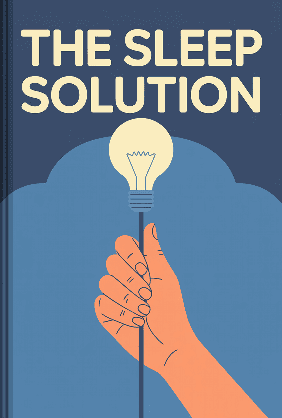
The Sleep Solution
W. Chris Winter, M.D.
41 Duration9 Key Points3.9 RateIf the thought of adding more books to your reading list feels overwhelming, especially when you're already exhausted, there's a more manageable way to access these kinds of insights.
Learn the core ideas from books on topics like anxiety and sleep in just 15-minute audio sessions, perfect for when you lack the energy for full-length reading.
Download LeapAhead App now
FAQ
Is it normal to only experience anxiety at night?
Yes. Daytime demands keep your cognitive functions occupied. Nighttime strips away all distractions, forcing you to confront the baseline stress or anxiety you ignored during the day. It is a very common phenomenon.
Yes. Daytime demands keep your cognitive functions occupied. Nighttime strips away all distractions, forcing you to confront the baseline stress or anxiety you ignored during the day. It is a very common phenomenon.
Should I take melatonin to stop overthinking?
Melatonin is a hormone that regulates your sleep-wake cycle; it is not a sedative or an anti-anxiety medication. While it can help shift your circadian rhythm, it will not necessarily stop a racing mind. Relying on cognitive tools and a proper wind-down routine is far more effective for anxiety-driven insomnia.
Melatonin is a hormone that regulates your sleep-wake cycle; it is not a sedative or an anti-anxiety medication. While it can help shift your circadian rhythm, it will not necessarily stop a racing mind. Relying on cognitive tools and a proper wind-down routine is far more effective for anxiety-driven insomnia.
What if I wake up in the middle of the night and start overthinking?
The exact same rules apply. Do not check your phone or look at the time. Do a bedside brain dump if a specific worry woke you up. If you cannot fall back asleep within 20 minutes, leave the bed, do a quiet activity in dim light, and return only when sleepy.
The exact same rules apply. Do not check your phone or look at the time. Do a bedside brain dump if a specific worry woke you up. If you cannot fall back asleep within 20 minutes, leave the bed, do a quiet activity in dim light, and return only when sleepy.
When should I see a doctor about nighttime racing thoughts?
If your inability to sleep lasts for more than three nights a week for over a month, severely impacts your ability to function during the day, or is accompanied by physical symptoms of panic (like chest pain or shortness of breath), it is time to consult a medical professional. They can help rule out underlying clinical anxiety or sleep disorders.
If your inability to sleep lasts for more than three nights a week for over a month, severely impacts your ability to function during the day, or is accompanied by physical symptoms of panic (like chest pain or shortness of breath), it is time to consult a medical professional. They can help rule out underlying clinical anxiety or sleep disorders.