

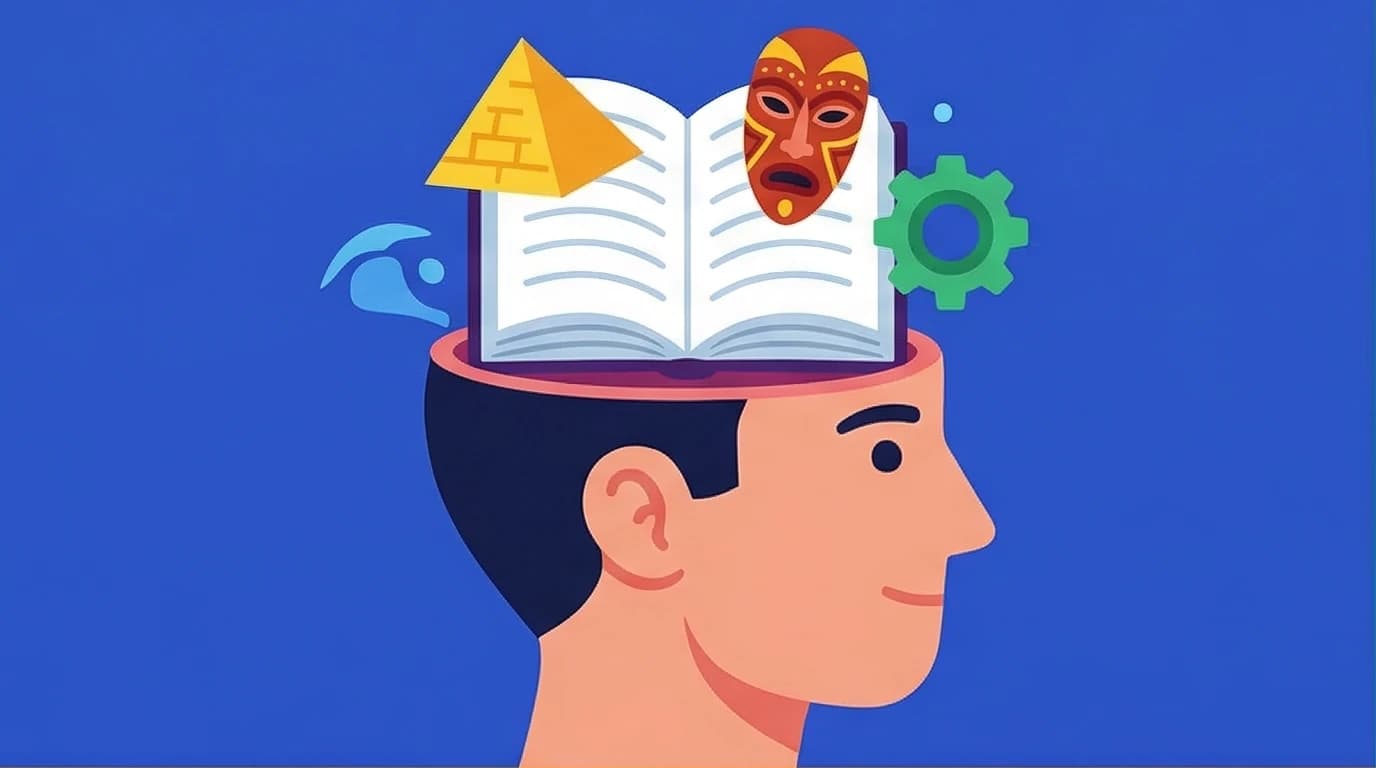
You are fascinated by different cultures, human evolution, and the strange societal norms we all follow. But every time you look for anthropology books to read, you hit a wall of dry academic jargon that feels like a reading assignment. You just want a brilliant, engaging narrative that decodes human behavior without putting you to sleep.
Anthropology does not have to be trapped in university libraries. The most impactful works in this field read like thrillers, historical epics, or intense character studies. They force you to question your own daily habits, the unwritten rules of your community, and the origins of modern civilization.
Here is a curated guide to the most engaging, thought-provoking reads that explain exactly who we are and how we got here.
What Separates Popular Anthropology Books from Textbooks?
When searching for understanding human behavior books, you want insights you can actually apply to your perspective of the world. A standard textbook lists dates, bone structures, and theoretical frameworks. A great trade paperback places you directly inside a remote Amazonian village, a bustling California hospital, or the savannas of early Africa.
You should look for books that feature:
- Narrative Drive: The author uses real people and specific events to illustrate broad cultural concepts.
- Modern Relevance: The historical or cultural lessons directly tie back to how we live, work, and interact in the United States and globally today.
- Accessible Language: The writer leaves terms like "epistemological framework" at the door and simply tells you why people do what they do.
Top Cultural Anthropology Books for Beginners
Cultural anthropology focuses on how people live, communicate, and organize their societies. If you want to step into a completely different worldview, these are the perfect starting points.
1. The Spirit Catches You and You Fall Down by Anne Fadiman
The Premise: This book documents the tragic, entirely preventable culture clash between a Hmong refugee family in Fresno, California, and the American medical system. Their daughter, Lia, has severe epilepsy. The American doctors see a neurological misfire requiring strict medication. Her parents see a condition where her soul has fled her body—a mark of spiritual distinction.
Why It Excels: Fadiman does not take sides. She masterfully shows how two groups of well-meaning people fail to communicate because they operate on completely different cultural assumptions. It is a masterclass in medical anthropology.
Best For: Readers interested in healthcare, immigration, and how cultural beliefs shape our definition of reality.

If you are ready to dive into this profound exploration of medical anthropology and cultural misunderstandings, this book is an absolute must-read. It is incredibly eye-opening for anyone living in a diverse country like the United States, illustrating just how deeply our heritage shapes our reality. Grab a copy to see firsthand why it remains a staple in both medical schools and university anthropology programs across the country.
The Spirit Catches You and You Fall Down
Anne Fadiman
 20 Duration
 7 Key Points
 3.8 Rate
2. Don't Sleep, There Are Snakes by Daniel Everett
The Premise: Everett traveled to the Amazon rainforest as a Christian missionary intending to translate the Bible for the Pirahã tribe. Instead, his encounters with their language and way of life completely dismantled his religious beliefs and his understanding of human linguistics.
Why It Excels: The Pirahã people have no words for numbers, no concept of past or future, and no creation myths. Everett’s first-hand account is funny, dangerous, and deeply profound. He breaks down how language dictates the way a society functions.
Best For: Anyone fascinated by linguistics, remote survival, and dramatic personal transformations.
If Everett's deep dive into the Amazon sparks your curiosity about how the words we use shape our societies, you might want to explore the broader evolution of our speech. Understanding the mechanics behind why we talk the way we do adds a fascinating layer to cultural anthropology. For an engaging, accessible look at how dialects and communication have evolved from our earliest ancestors to modern American English, check out this brilliant exploration of linguistics.
The Story of Human Language
Dr. John McWhorter, Ph.D.
47 Duration10 Key Points4.2 Rate3. My Freshman Year by Rebekah Nathan
The Premise: A university anthropology professor realizes she no longer understands her students. To figure out modern youth culture, she goes undercover, enrolls as a college freshman, moves into the dorms, and studies American college life using strict anthropological methods.
Why It Excels: We often think of anthropology as studying "other" distant cultures. Nathan turns the lens on everyday American life. She uncovers the unspoken social rules of dorm bathrooms, cafeteria seating, and the extreme time-management pressures of modern students.
Best For: Beginners looking for a highly relatable, everyday application of ethnography.
Big-Picture Understanding Human Behavior Books
If you prefer biological anthropology and macro-history, these books zoom out to examine the entire human species over thousands of years.
4. Sapiens: A Brief History of Humankind by Yuval Noah Harari
The Premise: Harari tracks the evolution of Homo sapiens from ordinary apes to the rulers of the planet. He argues that our superpower is not tool-making, but our unique ability to believe in shared fictions—like money, laws, corporations, and human rights.
Why It Excels: It takes millions of years of evolutionary biology and condenses it into a fast-paced, highly readable narrative. You will never look at a dollar bill or a modern corporation the same way again.
Best For: Readers who want a sweeping, unified theory of human history. (Available on Audible, it makes for an excellent long-drive listen).
Beyond this exploration of our past, Harari has also written extensively about our future and present-day challenges. For readers eager to continue the journey, exploring his other major works is a logical next step.

Ready to rethink everything you know about human history? Harari's groundbreaking work is the perfect companion for your morning commute or your next cross-country flight. It seamlessly connects the dots between early foraging societies and our modern obsession with credit scores and corporate ladders. If you want a thought-provoking, big-picture perspective on how Homo sapiens came to dominate the globe, this is the definitive starting point.

Sapiens
Yuval Noah Harari
45 Duration8 Key Points4.5 Rate5. Catching Fire: How Cooking Made Us Human by Richard Wrangham
The Premise: Wrangham argues that the discovery of fire and cooked food was the single biggest catalyst for human evolution. Cooking allowed early humans to spend less energy digesting raw plants and meat, channeling that saved energy into growing larger, more complex brains.
Why It Excels: It connects a daily household chore (cooking) directly to our anatomical development. It perfectly bridges the gap between biology, culture, and daily life.
Best For: Food lovers, biology geeks, and anyone curious about the physical evolution of the human body.
Wrangham's theory is just one of many fascinating perspectives on our biological journey. If this topic sparks your interest, there is a wealth of literature exploring our deep evolutionary past.
If you find yourself captivated by the intersection of our biology and our daily habits, there is so much more to uncover about why we act the way we do. Beyond just what we eat, the neurological and evolutionary drivers behind human behavior are endlessly fascinating. To dig even deeper into the hard science of our actions—from a split-second neurological impulse to thousands of years of cultural conditioning—this masterwork by a renowned Stanford neurobiologist is an incredibly rewarding read.
Behave
Robert M. Sapolsky, Ph.D.
42 Duration9 Key Points4.6 RateFeeling inspired by these big-picture books but overwhelmed by their length? There's a way to get the foundational knowledge from these classics without committing to hundreds of pages upfront.


LeapAhead

Digest the core arguments from sprawling works on human history and behavior in quick summaries, helping you decide which books to dive into fully.
Challenging Societal Norms: Anthropology Books to Read Now
These books dissect the invisible systems that govern our modern lives. They are highly recommended if you want to challenge the status quo of modern economics and society.
6. Debt: The First 5,000 Years by David Graeber
The Premise: Graeber, an economic anthropologist, destroys the classic textbook myth that human economies evolved from barter to money, and then to credit. He proves that credit and debt existed long before coins were ever minted, and shows how debt has been used historically as a moral weapon to control populations.
Why It Excels: It completely re-frames the concept of money. Graeber strips away the complex math of modern finance to show the raw human relationships and power dynamics hiding underneath.
Best For: Readers interested in economics, history, and social justice.

7. Righteous Dopefiend by Philippe Bourgois and Jeff Schonberg
The Premise: Based on over a decade of fieldwork, the authors embedded themselves in a community of homeless heroin addicts living under an interstate bridge in San Francisco.
Why It Excels: This is a hard-hitting look at structural violence in the United States. It forces the reader to look at race, poverty, and addiction not as personal moral failings, but as complex outcomes shaped by a fractured healthcare system and urban policy.
Best For: Readers who want an unflinching, gritty look at urban American ethnography.
How to Choose the Right Book for Your Reading Style
With so many popular anthropology books on the market, picking the right one comes down to your preferred learning style and available time.
If you commute daily:
Opt for narrative-heavy audiobooks. Books like Sapiens and Don't Sleep, There Are Snakes translate beautifully to audio because they follow a strong chronological storyline. Grab them on Audible or your local library app.
Opt for narrative-heavy audiobooks. Books like Sapiens and Don't Sleep, There Are Snakes translate beautifully to audio because they follow a strong chronological storyline. Grab them on Audible or your local library app.
And if your reading list is longer than your commute, you might want a way to absorb the core ideas from these dense books even faster.
LeapAhead
Grasp the key insights from dense anthropology classics like Sapiens or Debt in just 15-minute audio summaries, perfect for your daily commute.
If you read to relax before bed:
Avoid the heavy societal critiques (like Righteous Dopefiend) late at night. Pick up Catching Fire or My Freshman Year, which offer fascinating insights in shorter, easily digestible chapters.
Avoid the heavy societal critiques (like Righteous Dopefiend) late at night. Pick up Catching Fire or My Freshman Year, which offer fascinating insights in shorter, easily digestible chapters.
If you are building a reference library:
You will want physical copies of books like The Spirit Catches You and You Fall Down or Debt. You will likely find yourself highlighting passages and referencing the author's footnotes. These are mainstays you can easily find at Barnes & Noble or order through Amazon.
You will want physical copies of books like The Spirit Catches You and You Fall Down or Debt. You will likely find yourself highlighting passages and referencing the author's footnotes. These are mainstays you can easily find at Barnes & Noble or order through Amazon.
FAQ
Are anthropology books too academic for a casual reader?
Not the ones listed here. Trade anthropology books are specifically written for the general public. Publishers ensure these books avoid heavy academic jargon and focus on strong narratives, clear examples, and real-world applications. If a book feels like a chore, put it down and switch to a more narrative-driven author.
Not the ones listed here. Trade anthropology books are specifically written for the general public. Publishers ensure these books avoid heavy academic jargon and focus on strong narratives, clear examples, and real-world applications. If a book feels like a chore, put it down and switch to a more narrative-driven author.
What is the difference between cultural anthropology and sociology?
Both study human society, but they use different methods. Sociology often relies on quantitative data—surveys, statistics, and large demographic studies—to analyze modern institutions. Cultural anthropology relies heavily on ethnography, which means the researcher embeds themselves into the community for months or years to conduct qualitative, deep-dive observation.
Both study human society, but they use different methods. Sociology often relies on quantitative data—surveys, statistics, and large demographic studies—to analyze modern institutions. Cultural anthropology relies heavily on ethnography, which means the researcher embeds themselves into the community for months or years to conduct qualitative, deep-dive observation.
Is Sapiens considered a real anthropology book?
Sapiens is highly debated in academic circles. Many strict anthropologists and historians point out that Harari generalizes vast swaths of human history. However, as an introductory text to spark curiosity about human evolution and cognitive development, it remains one of the most effective and popular entry points for general readers.
Sapiens is highly debated in academic circles. Many strict anthropologists and historians point out that Harari generalizes vast swaths of human history. However, as an introductory text to spark curiosity about human evolution and cognitive development, it remains one of the most effective and popular entry points for general readers.
Should I start with biological or cultural anthropology?
Start with what naturally interests you. If you frequently wonder how the human body evolved, why we get sick, or how our brains developed, start with biological anthropology (Catching Fire). If you are fascinated by weird social norms, foreign languages, or human interactions, begin with cultural anthropology (The Spirit Catches You and You Fall Down).
Start with what naturally interests you. If you frequently wonder how the human body evolved, why we get sick, or how our brains developed, start with biological anthropology (Catching Fire). If you are fascinated by weird social norms, foreign languages, or human interactions, begin with cultural anthropology (The Spirit Catches You and You Fall Down).