

It is 11:30 PM. You just got into bed, exhausted. You open your phone to check one quick message, but within seconds, your thumb goes on autopilot. You are suddenly deep in a comment section about an impending economic crisis, a natural disaster miles away, or the latest political outrage. Your chest feels tight, your breathing is shallow, yet you swipe up again.

You know it is making you miserable. You know you need sleep. So, you might be asking yourself: why can't I stop scrolling?
You are not uniquely flawed, and you do not lack willpower. You are fighting a billion-dollar algorithm designed to hack your evolutionary biology. Breaking this cycle requires more than just telling yourself to "put the phone down." It requires understanding the mechanism of your anxiety and building physical friction between your thumb and the screen.
The Psychology: What is the Real Doomscrolling Meaning?
To fix the problem, you have to understand the mechanics of the trap. The exact doomscrolling meaning refers to the act of spending an excessive amount of screen time consuming negative news. But biologically, it is a hijacked survival instinct.
Human brains are wired with a "negativity bias." Ten thousand years ago, paying attention to positive news (a nice sunset) was pleasant, but paying attention to negative news (a predator in the bushes) kept you alive. Your brain prioritizes threats. Modern algorithms on platforms like X, TikTok, and Reddit are optimized for engagement. They quickly realize that fear, outrage, and anxiety keep you staring at the screen longer than joy does.
The Toxic Cycle of Anxiety and Scrolling
The link between anxiety and scrolling creates a brutal feedback loop.

When you feel anxious about the state of the world, your brain craves information. It operates on a flawed logic: If I just get enough information about this threat, I will figure out how to protect myself, and then I will feel safe.
This is the illusion of control. You read an article about inflation. You feel anxious. You scroll to find a solution or a consensus. You find ten more articles predicting worse outcomes. Your anxiety spikes further. You scroll more to calm the new anxiety.
You are drinking saltwater to cure your thirst. The very act of seeking reassurance through your feed is generating the panic that keeps you trapped.
This cycle of anxiety is a common side effect of how these platforms are designed. For a deeper look into the broader psychological impacts, explore our guide on the effects of social media on mental health.
If you're looking to break this cycle by feeding your brain with constructive knowledge but find your attention span too short for a full book, a more modern learning approach might be the answer.

LeapAhead

LeapAhead lets you absorb key ideas from bestselling books in 15-minute audio or text summaries, turning small pockets of time into productive learning instead of anxious scrolling.
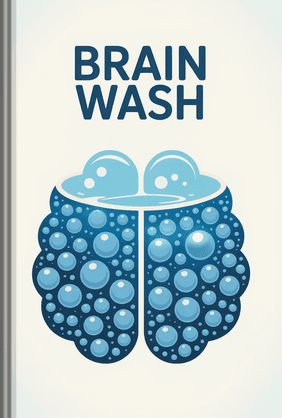
If you find yourself trapped in this endless loop of panic and scrolling, understanding what is physically happening inside your head can be a game-changer. Our modern digital environment is actively rewiring our circuitry, trapping us in chronic stress and impulsive behaviors. To truly grasp how this digital hijacking works—and how to detoxify your mind from it—Brain Wash is an incredible resource. It dives deep into the science of how screens manipulate our biology and offers a practical roadmap to reclaim your mental clarity, cool down your anxiety, and start thinking clearly again.
Brain Wash
David Perlmutter M.D. and Austin Perlmutter M.D.
 19 Duration
 9 Key Points
 4.5 Rate
Immediate Action Plan: How to Stop Doomscrolling Today
You cannot out-think an algorithm designed by thousands of engineers. You have to out-smart it by altering your digital environment. Stop relying on sheer willpower and start building friction.

1. Kill the Visual Dopamine (The Grayscale Hack)
Smartphones use bright, high-contrast colors (especially red notification badges) to trigger dopamine release in your brain. Removing the color turns your pocket slot machine back into a boring tool.
- iPhone Users: Go to Settings > Accessibility > Display & Text Size > Color Filters. Turn them on and select Grayscale.
- Android Users: Go to Settings > Accessibility > Color and Motion > Color Correction. Choose Grayscale.
Try scrolling through Instagram or a news feed in black and white. The experience becomes noticeably dull within minutes. Your brain stops getting the cheap dopamine hits, making it significantly easier to lock the screen and walk away.
2. Install a Dedicated Stop Doom Scrolling App
Do not rely on Apple's default Screen Time limits if you have already memorized your passcode and habitually hit "Ignore Limit for 15 Minutes." You need a stricter stop doom scrolling app that acts as a digital bouncer.
- Opal: This app blocks distracting apps at the DNS level. When you set "Deep Focus" mode, you cannot bypass the block. You simply cannot open the apps until the timer runs out.
- Freedom: Excellent for blocking specific websites and apps across all your devices simultaneously. If you try to switch from your phone to your laptop to keep scrolling, Freedom stops you.
- One Sec: This app forces you to take a deep breath for 10 seconds before an app opens. This tiny window of friction interrupts the unconscious, automatic tap, forcing you to consciously decide if you actually want to open the app.
3. Evict the Trigger Apps from Your Home Screen
If your favorite news aggregator or social media app is sitting on your home screen dock, you will open it without thinking.
Delete the apps from your phone entirely and force yourself to log in through a mobile browser. The mobile web experience is usually clunky and frustrating. That frustration is your friend. If you absolutely cannot delete them, move them off your home screen and bury them inside a folder on the third page of your apps. Make yourself work to find the doom.
4. Create Physical Distance at Night
Your bedroom should be a sanctuary for sleep, not a war room for global tragedies. If your phone is on your nightstand, you will reach for it when you cannot sleep.
Buy a cheap alarm clock. Plug your phone into a charger in your kitchen or bathroom. If you wake up at 3 AM with a sudden urge to check the news, you have to physically get out of a warm bed and walk down the hall. Most of the time, the effort isn't worth it, and you will just go back to sleep.
This late-night scrolling is a common pattern, often driven by a desire to reclaim personal time after a busy day. If you find this nighttime struggle particularly relatable, you can learn more about how to stop it.
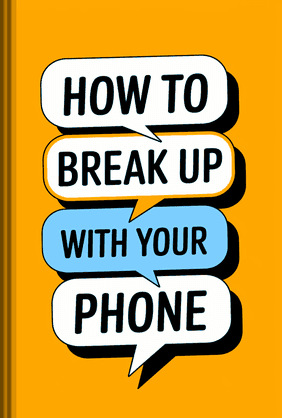
Creating physical distance is just the first step in rethinking how you interact with your devices. If you are serious about taking back control but feel completely overwhelmed by the idea of putting your device down, you are not alone. For a step-by-step, 30-day guide to resetting your relationship with your screen, How to Break Up with Your Phone is an absolute must-read. It is not about throwing your smartphone in the trash; rather, it provides a realistic, judgment-free plan to help you stop mindless swiping, improve your sleep, and enjoy your offline life without the constant urge to check for notifications.
How to Break Up with Your Phone
Catherine Price
45 Duration8 Key Points4.6 RateReplace the Habit: Give Your Brain a Better Alternative
Nature hates a vacuum. If you simply try to stop scrolling without giving your hands and brain something else to do, the anxiety will drive you right back to the screen. You need high-quality offline replacements.

- Read Long-Form Fiction: Fiction forces your brain to focus on a linear narrative, pulling you out of the fractured, chaotic reality of a social media feed. Keep a physical book from Barnes & Noble or a Kindle on your nightstand.
- Switch to Audio: If your eyes are tired but your brain is racing, turn off the lights and listen to an audiobook on Audible. You are still absorbing information, but you are completely removing the blue light and the interactive swiping mechanism.
- Do Something Tangible: When you feel the panic rising and the urge to scroll kicking in, shock your nervous system. Wash your face with freezing cold water. Do twenty push-ups. Organize a single drawer in your desk. Action neutralizes anxiety.
While these are excellent offline alternatives, sometimes the biggest hurdle is simply feeling too tired to start a new book after a long day.
LeapAhead
With LeapAhead, you can listen to the core insights from popular non-fiction books in just 15 minutes, making it an easy way to wind down with positive content instead of draining news feeds.
Swapping out the late-night doomscrolling for reading or offline hobbies sounds great in theory, but making those new behaviors stick can be tough. The secret isn't relying on willpower; it is about designing an environment where doing the right thing becomes frictionless. If you want to master the art of building better routines to replace your screen time, Atomic Habits is the gold standard. This book breaks down the exact framework for dismantling destructive digital behaviors and building positive, long-lasting habits through tiny, manageable changes that actually fit into your busy daily life.

Atomic Habits
James Clear
26 Duration8 Key Points4.7 RateRebuilding a Healthy Relationship with the News
Stopping the endless scroll does not mean you have to become ignorant of what is happening in the world. The goal is intentional consumption, not blind consumption.
Set an Information Budget: Decide when and how long you will consume news. For example: "I will read the news for 15 minutes while drinking my morning coffee." Set a literal timer. When it goes off, close the app.
Curate Your Feed Aggressively: Unfollow accounts that only post outrage-bait. Use the "Mute Words" feature on platforms like X to block specific political keywords, names of politicians, or triggering topics. Protect your digital space fiercely.
Seek Out Slow News: Social media is optimized for breaking news, which is often inaccurate and highly emotional. Switch to weekly newsletters or long-form journalism that summarizes the week's events with context and nuance, rather than minute-by-minute panic.
Breaking the habit takes a few days of serious digital detoxification. The first 48 hours will feel uncomfortable. Your brain will demand its regular dose of outrage and panic. Recognize that physical tension in your body, acknowledge the craving, step away from the screen, and go look at the sky. The world will still be there tomorrow, and you will be much better equipped to handle it if you get some sleep tonight.
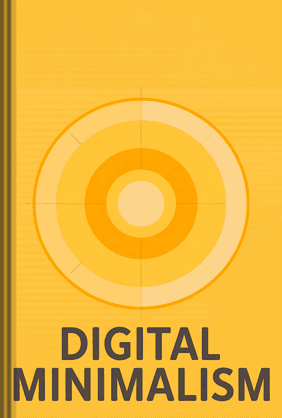
Taking back your time doesn't mean you have to disconnect from society completely—it just means being fiercely intentional about what you let into your mind. As you work to curate your news consumption and block out the noise, adopting a minimalist approach to your technology can bring immense peace. If you want a deeper philosophy on how to thrive in an increasingly noisy world, Digital Minimalism is a phenomenal read. It will teach you how to ruthlessly declutter your digital life, engage only with the tech that truly adds value, and permanently break free from the outrage machine.
Digital Minimalism
Cal Newport
20 Duration8 Key Points4.7 RateFAQ
Why does doomscrolling make me feel so physically exhausted?
Consuming constant negative information triggers your body's sympathetic nervous system—the fight-or-flight response. Your heart rate elevates, your muscles tense, and your body releases cortisol. Sustaining this state of high alert for hours while sitting perfectly still on your couch drains your physical energy, leaving you feeling entirely depleted.
Consuming constant negative information triggers your body's sympathetic nervous system—the fight-or-flight response. Your heart rate elevates, your muscles tense, and your body releases cortisol. Sustaining this state of high alert for hours while sitting perfectly still on your couch drains your physical energy, leaving you feeling entirely depleted.
Is it possible to stay informed without doomscrolling?
Absolutely. The key difference is intention versus compulsion. Doomscrolling is passive and endless. Staying informed is active and time-boxed. You can stay perfectly informed by checking a reputable news source once a day for 15 minutes, rather than absorbing fragmented, emotionally charged hot takes on social media for three hours.
Absolutely. The key difference is intention versus compulsion. Doomscrolling is passive and endless. Staying informed is active and time-boxed. You can stay perfectly informed by checking a reputable news source once a day for 15 minutes, rather than absorbing fragmented, emotionally charged hot takes on social media for three hours.
How long does it take to break the doomscrolling habit?
If you implement strict physical friction (like deleting apps or using strong blockers), you can break the immediate behavioral loop in about 3 to 5 days. However, resetting your brain's baseline dopamine levels and reducing the underlying anxiety can take two to three weeks of consistent effort.
If you implement strict physical friction (like deleting apps or using strong blockers), you can break the immediate behavioral loop in about 3 to 5 days. However, resetting your brain's baseline dopamine levels and reducing the underlying anxiety can take two to three weeks of consistent effort.
What should I do if my job requires me to be on social media?
Use strict boundaries. Separate your work accounts from your personal accounts. Use scheduling tools for your job on a desktop computer rather than scrolling on your phone. When the workday is over, log out completely. Treat social media like an office building—when you leave for the day, you do not take the stress home with you.
Use strict boundaries. Separate your work accounts from your personal accounts. Use scheduling tools for your job on a desktop computer rather than scrolling on your phone. When the workday is over, log out completely. Treat social media like an office building—when you leave for the day, you do not take the stress home with you.