


You open Instagram or TikTok just to unwind for a few minutes. An hour later, you close the app feeling worse than when you started. Your chest feels tight. You feel like everyone else is hitting major life milestones while you are falling behind. You feel mentally exhausted, yet you cannot stop yourself from picking up the phone again ten minutes later.
This cycle is not a personal failure. You lack neither discipline nor willpower. These platforms are explicitly engineered to capture and hold your attention using unpredictable reward systems. The negative feelings you are experiencing are entirely valid, and recognizing them is the only way to break the cycle.
Why Your Feeds Are Exhausting You
To fix the problem, you need to understand exactly what is happening in your brain when you scroll. The psychological toll of constant connectivity usually manifests in three distinct ways.

The Grip of FOMO Psychology
Fear of Missing Out (FOMO) is not just a trendy internet acronym. It is a deeply rooted evolutionary response. Human brains are wired for tribal connection. Thousands of years ago, being left out of the group meant you might not survive.
Today,
fomo psychology hijacks this survival instinct. When you see your friends gathering without you on a Snapchat story, or watch influencers traveling the world, your brain registers a perceived threat to your social standing. This triggers an immediate stress response. You are processing a high volume of idealized realities, making your own everyday life feel incredibly dull by comparison.The Weight of Social Media Anxiety
You post a photo and wait for the likes. You see someone typing an ellipsis on iMessage, and then it stops. You agonize over crafting the perfect witty comment.
This is
social media anxiety in action. It is the persistent, underlying dread tied to your digital identity. Users constantly perform for an invisible audience, curating the best moments of their lives while hiding the struggles. This relentless pressure to maintain a specific image, combined with cyberbullying or fear of public judgment, keeps your nervous system in a constant state of mild fight-or-flight.Recognizing Social Media Fatigue
Information overload is real. You are absorbing news about global tragedies, political arguments, your coworker's new puppy, and targeted ads for things you do not need—all within a 60-second window.
This rapid context-switching depletes your cognitive reserves.
Social media fatigue occurs when you are entirely overwhelmed by the sheer volume of digital interaction. You might notice a lack of interest in responding to texts, a general sense of apathy toward your feeds, or feeling physically tired after a scrolling session. Your brain simply cannot process the emotional whiplash of doomscrolling anymore.This specific type of draining online behavior has a name, and understanding it is the first step to stopping.
When you're constantly bombarded by the highlight reels of everyone from your next-door neighbor to celebrities across the country, it's no wonder your brain feels completely drained. If you're tired of feeling like your attention is constantly being hijacked by algorithms, understanding the root cause of this modern exhaustion can be incredibly validating. For a deep dive into how technology and social media are systematically engineered to fracture our concentration—and how to reclaim your mental space—this eye-opening exploration is a must-read.
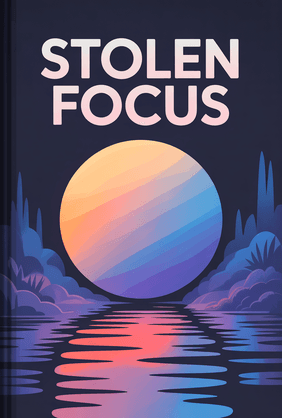
Stolen Focus
Johann Hari
 20 Duration
 8 Key Points
 4.7 Rate
The Tangible Social Media Effects on Mental Health
When these psychological triggers overlap day after day, the

social media effects on mental health become undeniable and measurable.- Sleep Disruption: The blue light emitted by screens suppresses melatonin production. More importantly, the stimulating content keeps your mind racing long after you turn off the lights. Poor sleep directly amplifies feelings of depression and anxiety the next day.
- Altered Dopamine Baselines: Short-form video platforms feed you rapid bursts of dopamine. Over time, your brain builds a tolerance. Everyday activities like reading a book, organizing your room, or having a regular conversation suddenly feel incredibly boring because they cannot compete with the algorithmic spikes.
- Body Image Issues: Constant exposure to heavily edited photos and extreme fitness standards severely impacts self-esteem, particularly in teens and young adults. It creates an unrealistic benchmark for physical appearance.
The common habit of sacrificing sleep for a few more minutes of scrolling is a key part of this cycle.
Realizing that your brain's reward system has been rewired by endless scrolling can be a tough pill to swallow, but it is the first step toward finding balance. The constant pursuit of algorithmic dopamine hits leaves us numb to the simple, everyday joys of offline life. If you want to understand the fascinating science behind why we become addicted to our screens and how to reset your brain's delicate chemical balance, Dr. Anna Lembke offers brilliant, actionable insights directly from her clinical practice.
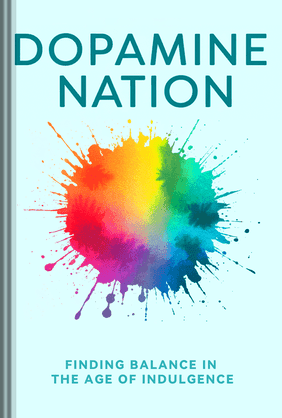
Dopamine Nation
Anna Lembke, M.D.
20 Duration8 Key Points4.6 RateIf the thought of tackling a full book feels daunting because your attention span is already stretched thin, there are ways to ease back into learning.

Get the core insights from books like Dopamine Nation in just 15 minutes, making it easier to absorb powerful ideas without the pressure of a long read.
 LeapAhead
How to Set Healthy Digital Boundaries
You do not need to delete every app and throw your phone into the ocean to protect your mental health. Total restriction often leads to digital bingeing later. The goal is intentionality.

Step 1: Audit Your Following List
Your feed is your mental environment. Treat it like your home. If someone walked into your living room and constantly insulted you or made you feel bad about your bank account, you would ask them to leave.
Do an aggressive audit. Unfollow or mute accounts that trigger inadequacy, jealousy, or stress. You do not owe anyone your digital attention. Fill your feed with content that educates, inspires, or genuinely makes you laugh.
Cleaning up your digital environment is a powerful way to protect your peace, but sometimes you need a broader philosophy to truly change how you interact with technology. It is not just about unfollowing a few accounts; it is about intentionally choosing which digital tools actually add value to your life. If you are ready to radically transform your relationship with your devices and embrace a more focused, intentional lifestyle, Cal Newport’s approach to decluttering your digital life is an absolute game-changer.
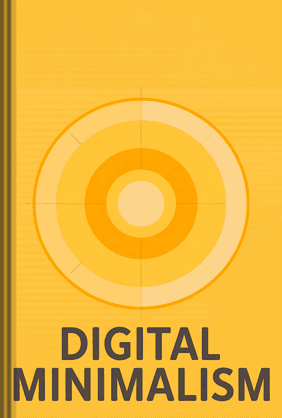
Digital Minimalism
Cal Newport
20 Duration8 Key Points4.7 RateStep 2: The Power of Taking a Break from Social Media
Sometimes, your brain needs a hard reset to break the dopamine loop.
Taking a break from social media does not mean abandoning it forever. Start small and structured.- The 24-Hour Weekend Detox: Pick one day a week (like Sunday) where social apps are strictly off-limits.
- Remove Frictionless Access: Delete the apps from your phone's home screen. Bury them in folders or delete them entirely for the weekend, forcing yourself to log in via a mobile browser if you absolutely need to check something. The minor inconvenience is often enough to stop mindless opening.
- Turn on Grayscale: Go into your phone's accessibility settings and change your screen to black and white. You will immediately realize how much the bright colors manipulate your attention. A gray feed is surprisingly boring.
Step 3: Establish "No-Scroll" Zones
Create physical spaces and times in your life where social media is banned.
- The Bedroom: Buy a traditional alarm clock and leave your phone to charge in the kitchen overnight. This prevents late-night doomscrolling and the morning routine of checking notifications before you even get out of bed.
- The Dinner Table: Whether you are eating alone or with family, keep the phone out of sight. Practice being present with your meal and your immediate surroundings.
Creating physical boundaries, like leaving your phone out of the bedroom, is one of the most effective ways to reclaim your time. However, breaking the muscle memory of constantly reaching for your device takes practice. If you find yourself struggling to enforce these new "no-scroll" zones and want a practical, step-by-step plan to untangle your life from your smartphone without giving it up entirely, this highly relatable guide provides the perfect blueprint for a healthier digital relationship.
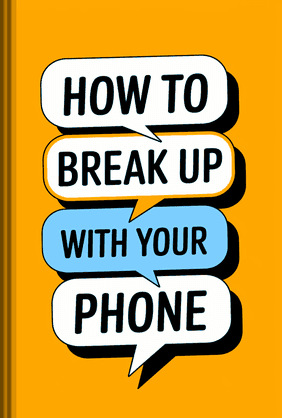
How to Break Up with Your Phone
Catherine Price
45 Duration8 Key Points4.6 RateAs you reclaim time once lost to mindless scrolling, you can fill those moments with something that restores your focus rather than drains it.
Use your newfound free time to listen to 15-minute book summaries on topics like mindfulness and digital well-being, turning a short break into a moment of growth.
LeapAheadWhile setting boundaries is a powerful strategy, sometimes the feeling of being attached to your phone runs deeper than a simple habit.
When to Seek Professional Support
While adjusting your habits works for many, the mental health impact of digital spaces can sometimes require intervention. If you notice that your digital habits are severely impacting your ability to work, study, or maintain real-life relationships, it is time to seek professional help.
Therapists can help you untangle self-worth from online validation and develop robust coping strategies for anxiety and depression. Do not wait until you are completely burnt out to ask for support.
FAQ
Does deleting social media actually improve mental health?
Yes, but the results depend on what you replace it with. Studies show that heavily reducing social media usage significantly decreases loneliness and depression. However, if you delete the apps and isolate yourself entirely, your mental health may not improve. The key is replacing screen time with active offline connections, hobbies, or exercise.
Yes, but the results depend on what you replace it with. Studies show that heavily reducing social media usage significantly decreases loneliness and depression. However, if you delete the apps and isolate yourself entirely, your mental health may not improve. The key is replacing screen time with active offline connections, hobbies, or exercise.
How do I know if my teen is experiencing social media anxiety?
Look for behavioral changes. If your teen is highly secretive about their phone, becomes extremely irritable when their screen time is restricted, obsessively takes photos to get the perfect angle, or withdraws from in-person friendships, they might be struggling. Approach them with empathy rather than punishment, acknowledging how difficult growing up online is.
Look for behavioral changes. If your teen is highly secretive about their phone, becomes extremely irritable when their screen time is restricted, obsessively takes photos to get the perfect angle, or withdraws from in-person friendships, they might be struggling. Approach them with empathy rather than punishment, acknowledging how difficult growing up online is.
I work in digital marketing. How can I avoid social media fatigue?
Separate your personal and professional digital spaces. Use dedicated tools or web browsers strictly for work, and log out the moment your shift ends. Turn off all push notifications on your personal devices. Schedule mandatory offline breaks during your workday where you step away from screens entirely.
Separate your personal and professional digital spaces. Use dedicated tools or web browsers strictly for work, and log out the moment your shift ends. Turn off all push notifications on your personal devices. Schedule mandatory offline breaks during your workday where you step away from screens entirely.
Is FOMO a real psychological condition?
While not an official medical diagnosis in the DSM-5, FOMO is widely recognized by psychologists as a legitimate cognitive bias and anxiety trigger. It is a powerful form of social anxiety driven by the fear of social exclusion, and it has profound, measurable impacts on stress levels and life satisfaction.
While not an official medical diagnosis in the DSM-5, FOMO is widely recognized by psychologists as a legitimate cognitive bias and anxiety trigger. It is a powerful form of social anxiety driven by the fear of social exclusion, and it has profound, measurable impacts on stress levels and life satisfaction.