


You sit down to work, read a book, or watch a movie. Five minutes later, your phone is in your hand. You did not consciously decide to pick it up; your brain just craved a hit of dopamine. You scroll through Instagram, check emails that do not matter, and suddenly an hour is gone. The constant need to be plugged in is draining your focus, hijacking your attention span, and keeping you distracted from real life.
You are losing hours of your life to a glowing rectangle. Understanding how to break phone addiction requires more than just telling yourself to "put it down." It requires a systematic teardown of your digital habits.
Understanding the Trap: Why Willpower Fails
Smartphones and the apps on them are engineered like slot machines. Every time you swipe down to refresh a feed, you are pulling a lever, hoping for a variable reward: a text, a like, a breaking news alert. This mechanism spikes dopamine, the neurotransmitter responsible for desire and motivation.
Over time, your brain builds a tolerance. You need more scrolling to get the same chemical hit. When you are separated from the device, anxiety kicks in. This intense, irrational fear of being offline or separated from your screen is known as nomophobia.

You cannot outsmart a team of Silicon Valley engineers using pure willpower. By the time you feel the urge to check your phone, the habit loop is already firing. To win, you have to break the loop before it starts.
If you find yourself endlessly scrolling and wondering why it’s so incredibly hard to just stop, you are dealing with a deeply ingrained chemical response, not a personal failure. To truly understand how our brains have been hijacked by modern technology and constant stimulation, Dopamine Nation by Dr. Anna Lembke is a phenomenal read. It breaks down the science of overconsumption and offers a clear, compassionate roadmap for resetting your brain's reward pathways so you can finally break free from compulsive behaviors.
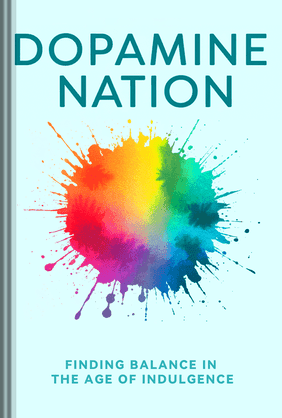
Dopamine Nation
Anna Lembke, M.D.
 20 Duration
 8 Key Points
 4.6 Rate
This compulsive need to consume content, especially when it’s negative or anxiety-inducing, has a name. If this sounds familiar, you might be stuck in a doomscrolling loop.
Take the Smartphone Addiction Test
Before you fix the problem, you need to measure the damage. You do not need a clinical diagnosis to know you have a problem, but a quick smartphone addiction test helps establish a baseline. Ask yourself these five questions:
- Is checking your phone the absolute first thing you do when you wake up and the last thing you do before sleep?
- Do you experience "phantom vibrations," feeling your phone buzz in your pocket when it actually did not?
- Does your Apple Screen Time (or Android Digital Wellbeing) show an average of over 4 hours of non-work-related usage per day?
- Do you feel physical anxiety or restlessness if your phone battery drops below 10% and you have no charger?
- Do you instinctively pull out your phone at every red light, in every elevator, or while waiting in any line?
If you answered yes to three or more, your dopamine baseline is hijacked. It is time for a hard reset.
If your test results confirmed your screen usage is higher than you'd like, the next step is to create a concrete plan.
The 3-Phase Dopamine Detox Phone Plan
A proper dopamine detox phone strategy does not mean throwing your device into the ocean. It means stripping away the addictive elements so the phone becomes a boring utility again.
Phase 1: Engineer Physical Friction
Your environment dictates your behavior. If the phone is within arm's reach, you will grab it. You must introduce physical friction between you and the device.
- Ban the phone from the bedroom. This is non-negotiable. Buy a basic $15 digital alarm clock from Amazon. Charge your phone in the kitchen or living room overnight. This instantly eliminates late-night scrolling and the morning inbox panic.
- The "Out of Sight" work rule. When executing deep work, put the phone in another room or inside a zipped bag. If it is on your desk face down, your brain is still actively expending energy trying to ignore it.
- Create phone-free zones. Declare your dining table, bathroom, and car console (unless using GPS) absolute dead zones for screens.

Banning the phone from the bedroom is especially critical if you find yourself sacrificing sleep for screen time. This common habit is often a symptom of a larger issue.
Redesigning your environment is the absolute most effective way to change a behavior, but it can feel overwhelming to figure out where to start. If you want a proven, step-by-step system to build better routines and break the bad ones, Atomic Habits by James Clear is a must-read. Clear explains exactly how small tweaks to your physical space—like charging your phone in another room—can completely transform your daily habits without relying on sheer willpower.

Atomic Habits
James Clear
26 Duration8 Key Points4.7 RatePhase 2: Digital Declutter and Neutering
Make the phone objectively less appealing to look at.
- Turn on Grayscale. Stripping the color from your screen destroys the slot-machine effect. Bright red notification badges and vibrant app icons trigger dopamine. Gray makes your screen look dull and lifeless. Go to your accessibility settings and map grayscale to a triple-click of the power button.
- Ruthless Notification Purge. Turn off every single notification except direct human contact (calls and direct text messages). No email pop-ups. No news alerts. No social media banners. You check these apps on your schedule, not theirs.
- Delete the Infinity Pools. Any app that has an infinite scroll (TikTok, Instagram, Reddit) must be deleted off the phone entirely. If you want to check them, log in through a clunky web browser. The added friction will significantly drop your usage.
Stripping your phone of its most addictive features is a great first step, but what happens when you need to completely rethink your relationship with technology? If you are ready to take your digital declutter to the next level, Digital Minimalism by Cal Newport is the ultimate guide. Newport offers a brilliant, no-nonsense philosophy for using technology intentionally to serve your goals, rather than letting Silicon Valley algorithms dictate how you spend your free time.
Digital Minimalism
Cal Newport
20 Duration8 Key Points4.7 RateThis article suggests several powerful books, but finding the time to read them all can feel like a challenge when you're trying to break an addiction to distraction.

Absorb the core ideas from books like these in just 15 minutes, making it easier to learn without fighting for long blocks of focused time.

Download LeapAhead App now
Phase 3: The 24-Hour Complete Detox
To kickstart your progress, execute a 24-hour fast. Pick a Saturday or Sunday. Turn the phone off completely and put it in a drawer for 24 hours.
You will feel anxious. You will reach into your pocket and find nothing. Your brain will beg for stimulation. This withdrawal is proof of the addiction.

Fill this void with high-friction, high-reward offline activities. Go for a long walk without headphones. Read a physical paperback book from Barnes & Noble. Organize your garage. Have a face-to-face conversation. Force your brain to relearn how to process natural, slow-release dopamine.
How to Stop Checking Phone Compulsively in Daily Life
Once you have reset your baseline, you need rules to prevent relapse. Figuring out how to stop checking phone screens constantly requires building new muscle memory.
Use the "Wait 10 Minutes" Rule
When you feel the sudden, burning urge to check your phone for no specific reason, acknowledge it. Then tell yourself, "I can check it, but I have to wait 10 minutes." Usually, within three minutes, the urge passes and you return to your actual task.
When you feel the sudden, burning urge to check your phone for no specific reason, acknowledge it. Then tell yourself, "I can check it, but I have to wait 10 minutes." Usually, within three minutes, the urge passes and you return to your actual task.
Batch Processing
Stop reacting to your phone as things happen. Instead, process your digital life in batches. Check emails at 10:00 AM, 2:00 PM, and 4:00 PM. Check social media for 15 minutes after dinner. When you control the schedule, the phone loses its power over your attention.
Stop reacting to your phone as things happen. Instead, process your digital life in batches. Check emails at 10:00 AM, 2:00 PM, and 4:00 PM. Check social media for 15 minutes after dinner. When you control the schedule, the phone loses its power over your attention.
Replace the Pacifier
If you reach for your phone to relieve social awkwardness or boredom, replace the action. Carry a small notebook and pen. Read a book on a dedicated e-reader like an Amazon Kindle (which has no browser or notifications). Stare out the window and let your mind wander. Boredom is not a disease; it is where creativity and mental processing happen.
If you reach for your phone to relieve social awkwardness or boredom, replace the action. Carry a small notebook and pen. Read a book on a dedicated e-reader like an Amazon Kindle (which has no browser or notifications). Stare out the window and let your mind wander. Boredom is not a disease; it is where creativity and mental processing happen.
Building new muscle memory to ignore your phone takes practice, but you don't have to navigate these distractions blindly. If you are serious about reclaiming your attention span and staying focused in a noisy world, check out Indistractable by Nir Eyal. It is an incredibly practical playbook that goes beyond standard advice, teaching you how to master internal triggers and design a life where you actually follow through on your intentions, both at work and at home.
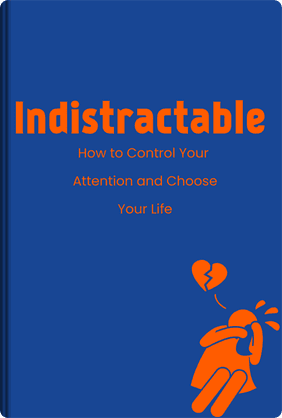
Indistractable
Nir Eyal
23 Duration10 Key Points4.5 RatePutting these principles into practice is key, but if diving into full books still feels daunting after a long day, you can start building a learning habit in a more accessible way.
Use your commute or a short break to listen to key insights from bestselling books on focus, turning moments you'd normally scroll into productive learning time.
Download LeapAhead App now
FAQ
How long does it take to break a phone addiction?
The acute psychological withdrawal (the anxiety, phantom vibrations, and constant reaching) usually fades after 3 to 7 days of strict boundaries. Rebuilding deep focus and completely resetting your neural pathways typically takes about 3 to 4 weeks of consistent habit enforcement.
The acute psychological withdrawal (the anxiety, phantom vibrations, and constant reaching) usually fades after 3 to 7 days of strict boundaries. Rebuilding deep focus and completely resetting your neural pathways typically takes about 3 to 4 weeks of consistent habit enforcement.
I need my phone for work. How do I manage a detox?
Compartmentalize. Use features like Apple's Focus Modes to create a strict "Work" profile that completely hides non-essential apps and notifications from 9 AM to 5 PM. Move all social and entertainment apps off your home screen. Treat the phone strictly as a business tool during those hours.
Compartmentalize. Use features like Apple's Focus Modes to create a strict "Work" profile that completely hides non-essential apps and notifications from 9 AM to 5 PM. Move all social and entertainment apps off your home screen. Treat the phone strictly as a business tool during those hours.
Is grayscale mode actually effective?
Yes. Your brain's visual reward center is highly reactive to bright, contrasting colors. By turning your screen black and white, you remove the psychological reward of looking at it. Most users report their screen time drops by 20% to 30% within the first week of using grayscale simply because the phone becomes incredibly boring to look at.
Yes. Your brain's visual reward center is highly reactive to bright, contrasting colors. By turning your screen black and white, you remove the psychological reward of looking at it. Most users report their screen time drops by 20% to 30% within the first week of using grayscale simply because the phone becomes incredibly boring to look at.
What if I relapse and go back to scrolling for hours?
Do not panic. Relapse is a normal part of breaking any compulsive behavior. Acknowledge the slip without guilt, identify the trigger (were you tired, stressed, or avoiding a difficult task?), and immediately reinstate your physical friction rules. Put the phone in another room and start fresh the next hour.
Do not panic. Relapse is a normal part of breaking any compulsive behavior. Acknowledge the slip without guilt, identify the trigger (were you tired, stressed, or avoiding a difficult task?), and immediately reinstate your physical friction rules. Put the phone in another room and start fresh the next hour.