


You want to reach the top of your field, but progress feels agonizingly slow. You put in the time, read the best books on Amazon, and watch countless tutorials, yet elite mastery still seems out of reach. You are stuck on a plateau, frustrated that the gap between being "good" and being "world-class" remains entirely vague.
The problem is not a lack of effort. The problem is a fundamental misunderstanding of what it takes to actually build elite skill.
The Origin: Where Did the Magic Number Come From?
Most people are familiar with the concept, but the actual science behind it is often lost in translation. When discussing the 10000 hour rule Malcolm Gladwell changed the way we view success. In his bestselling book Outliers, Gladwell popularized the idea that elite performers—from the Beatles playing relentless sets in Hamburg to Bill Gates writing code in his high school computer lab—had all accumulated roughly 10,000 hours of practice before they achieved massive success.
If you have ever picked up a copy of Outliers 10000 hours probably stood out to you as the ultimate magic number for success.
However, Gladwell based his narrative on the rigorous academic research of psychologist Anders Ericsson. Ericsson studied elite violinists at a prestigious music academy in Berlin. He discovered that by age 20, the absolute best violinists had accumulated 10,000 hours of highly structured practice.
The media ran with the number. The public adopted the formula. But a massive piece of the puzzle was left out.
Gladwell's book explores much more than just the time commitment to success, diving into the hidden advantages of culture, timing, and family background.
If you want to understand the cultural phenomenon that sparked this global conversation, you should absolutely read the book that started it all. Gladwell’s exploration into the hidden advantages, timing, and environmental factors that shape world-class achievers is a fascinating read that will completely change how you view high-level success.

Outliers
Malcolm Gladwell
 43 Duration
 8 Key Points
 4.5 Rate
If the thought of adding another book to your 'to-read' pile feels overwhelming, you can absorb its main ideas in a fraction of the time.


LeapAhead

Get the key insights from bestselling books like Outliers in just 15 minutes, perfect for turning your commute or workout into a powerful learning session.
The Greatest Misconception: Time Does Not Equal Skill
The most dangerous myth in self-improvement is believing that simply showing up guarantees progress. Many people assume it takes exactly 10000 hours to master a skill just by doing it repeatedly.
This is entirely false.

If you drive a car on the interstate for an hour every day for 30 years, you easily log over 10,000 hours of driving. Are you ready to race in NASCAR? No. You are the exact same driver you were two decades ago.
This happens because you rely on naive practice. You reach an acceptable level of performance, your brain automates the process, and you stop improving. You stop pushing the boundaries of your current capability.
To bridge the gap between amateur and expert, you must upgrade your operating system from naive practice to deliberate practice.
This common misunderstanding has led to significant debate. While the 10,000-hour idea is a powerful motivator, it's crucial to understand the nuances and criticisms raised by both academics and practitioners.
The Core Engine: Decoding Deliberate Practice
Deliberate practice is the engine that makes the 10000 hour rule work. It is uncomfortable, mentally exhausting, and highly structured. If your practice feels easy, you are not growing.

To make your hours count, your practice sessions must include four non-negotiable elements:
1. Specific, Micro-Defined Goals
You cannot just say, "I am going to practice coding for two hours." That is too broad. A deliberate goal looks like, "I am going to spend one hour building a specific API integration, and I will not move on until it runs without errors." Break the grand skill down into micro-skills.
2. Intense, Undivided Focus
Deliberate practice requires 100% of your cognitive capacity. You cannot have your phone buzzing, emails popping up, or a podcast playing in the background. Elite performers structure their practice in deep, uninterrupted blocks—often just 60 to 90 minutes at a time—because the mental load is too heavy to sustain longer without a break.
3. Immediate and Unforgiving Feedback
You cannot fix what you cannot see. Without a feedback loop, you will spend thousands of hours ingraining bad habits. This is why elite athletes watch game tape and hire coaches. You need a system—whether it is an expert mentor, a compiler throwing error codes, or user analytics—that tells you exactly what you did wrong the second you do it.
4. Operating at the Edge of Discomfort
Growth happens just outside your comfort zone. If you are succeeding 100% of the time, the task is too easy. If you are failing 100% of the time, the task is too hard. You want to aim for a sweet spot where you succeed about 85% of the time. The friction of that 15% failure rate forces your brain to adapt, rewire, and build new neural pathways.
If you are serious about implementing deliberate practice into your own routine, you need to hear directly from the scientist whose research actually defined the concept. Dr. Anders Ericsson's groundbreaking work forms the true foundation of skill acquisition, revealing exactly how to structure your training to bypass the typical amateur plateau and unlock extraordinary performance.

Peak
Anders Ericsson and Robert Pool
48 Duration10 Key Points4.5 RateHigh Validity vs. Low Validity Environments
Before you commit your life to a specific pursuit, you need to judge the environment. The 10000 hour rule applies perfectly to "high validity" environments. These are fields with clear rules, stable patterns, and immediate feedback. Think chess, classical music, gymnastics, or computer programming. If you move a pawn incorrectly, you lose your queen. The feedback is absolute.
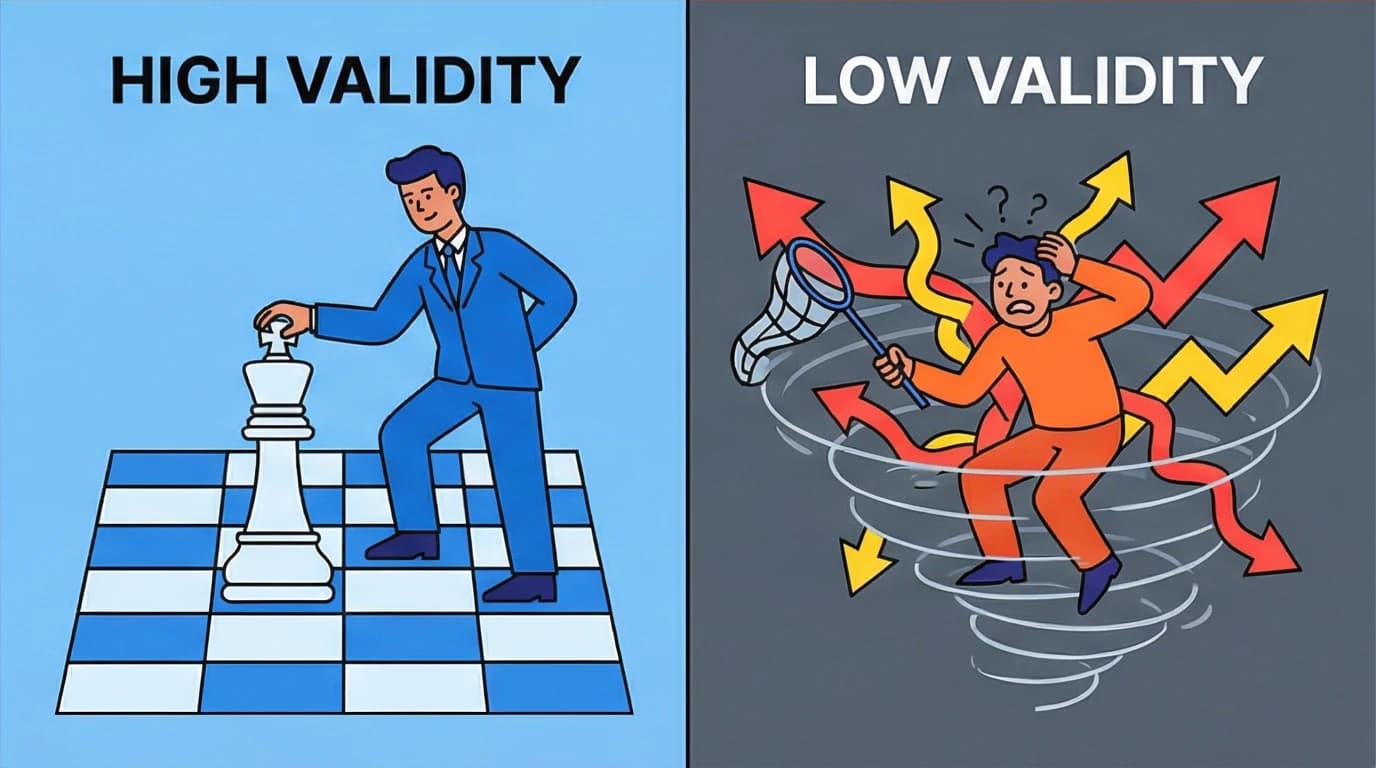
In "low validity" environments, the rules change constantly, and feedback is delayed or obscured by luck. Think stock market day trading or political forecasting. You can put 10,000 hours into predicting the stock market and still lose your shirt because the environment is fundamentally chaotic.
Focus your deliberate practice on skills where effort directly and consistently correlates with outcomes.
How to Apply the 10000 Hour Rule
Knowing the theory is useless without execution. If you want to know exactly how to apply the 10000 hour rule to your career or personal ambitions, follow this actionable roadmap.
Step 1: Deconstruct the Master Skill
Do not try to master "business." Break it down. Master copywriting. Master financial modeling. Master public speaking. Take the massive skill you want to acquire and chop it into a dozen micro-skills. Attack one micro-skill at a time.
Step 2: Track "Deep Work" Hours, Not Total Hours
Stop using the clock to validate your ego. Sitting at your desk for eight hours does not equal eight hours of practice. Start a timer specifically for your deep, deliberate practice sessions. You will likely find you only manage one or two true hours of deliberate practice a day. Track these high-quality hours relentlessly.
To truly maximize those high-quality hours, you have to master the art of working without distraction. It can be incredibly difficult to maintain that level of undivided attention in today's hyper-connected, notification-driven world, but learning how to ruthlessly eliminate interruptions is the ultimate competitive advantage for building elite skills.
Deep Work
Cal Newport
47 Duration8 Key Points4.6 RateStep 3: Engineer a Feedback System
Find someone who is five steps ahead of you and pay them to audit your work. If you cannot afford a coach, use peer review. If you are a writer, publish your work and study the engagement analytics. Never practice in a vacuum.
Step 4: Embrace the Plateau
Progress is never a straight line. You will experience rapid initial growth, followed by a long, frustrating plateau where nothing seems to improve. This is normal. The plateau is where your brain consolidates new information. When you hit a wall, do not quit. Instead, tweak your practice variables. Change your routine, seek different feedback, and push through.
The Cost of Elite Mastery
Committing to the 10000 hour rule means making brutal trade-offs. It means saying no to immediate gratification. It means dealing with the boredom of repetition and the ego-crushing reality of constant failure.
You do not need 10,000 hours to become reasonably good at a skill. You can learn enough guitar to play your favorite songs around a campfire in about 20 hours. You can become competent at a new software tool in a weekend.
But if you want to be the person others read about, the expert companies fight to hire, or the top 1% in your industry, there are no shortcuts. You have to put in the reps. You have to seek the harsh feedback. You have to embrace the friction.
Start the clock. Make the hours count.
Perhaps you are reading this and realizing you don't actually need to be in the top 1% of a given field—you just want to pick up a new hobby or a professional skill quickly. If your goal is to bypass the grueling 10,000-hour journey and simply get remarkably competent at something fast, there is a proven framework for accelerated learning that requires only a fraction of the time commitment.
The First 20 Hours
Josh Kaufman
24 Duration11 Key Points4.7 RateAbsorbing the wisdom from all these powerful books is a great first step, but it can be a huge time commitment. If your schedule is already packed, you can make consistent learning a part of your daily routine without finding extra hours.
LeapAhead
This app helps you grasp the core lessons from nonfiction bestsellers in 15-minute audio or text summaries, making it easy to keep learning even on your busiest days.
FAQ
Does it really take exactly 10,000 hours to master a skill?
No. The number 10,000 is an average found in a specific study of elite musicians, not a universal law of physics. Depending on the complexity of the skill, your genetic predispositions, and the quality of your coaching, world-class mastery could take 8,000 hours or it could take 20,000 hours. The core truth is that elite status requires years of sustained, deliberate effort.
No. The number 10,000 is an average found in a specific study of elite musicians, not a universal law of physics. Depending on the complexity of the skill, your genetic predispositions, and the quality of your coaching, world-class mastery could take 8,000 hours or it could take 20,000 hours. The core truth is that elite status requires years of sustained, deliberate effort.
Can I learn a new skill in less time if I just want to be good at it?
Absolutely. If your goal is basic competence rather than world-class mastery, you do not need thousands of hours. Research by author Josh Kaufman suggests that it takes only about 20 hours of focused, deliberate practice to go from knowing nothing to being reasonably competent at a new skill. The 10,000-hour framework is strictly for the top 1% of performers.
Absolutely. If your goal is basic competence rather than world-class mastery, you do not need thousands of hours. Research by author Josh Kaufman suggests that it takes only about 20 hours of focused, deliberate practice to go from knowing nothing to being reasonably competent at a new skill. The 10,000-hour framework is strictly for the top 1% of performers.
What if I start late in life? Can I still apply this rule?
Yes. While children have an advantage in neuroplasticity, adults possess superior executive function, better goal-setting abilities, and the discipline to maintain deliberate practice. You can start in your 30s, 40s, or 50s and still achieve exceptional mastery, provided you structure your practice correctly and maintain consistency.
Yes. While children have an advantage in neuroplasticity, adults possess superior executive function, better goal-setting abilities, and the discipline to maintain deliberate practice. You can start in your 30s, 40s, or 50s and still achieve exceptional mastery, provided you structure your practice correctly and maintain consistency.
How do I prevent burnout while aiming for 10,000 hours?
Focus on the process, not the massive end goal. Looking at a 10,000-hour mountain is overwhelming. Instead, measure your success by completing a 90-minute block of deliberate practice today. Celebrate small milestones, ensure you prioritize sleep for memory consolidation, and periodically step away from the skill to let your mind recover.
Focus on the process, not the massive end goal. Looking at a 10,000-hour mountain is overwhelming. Instead, measure your success by completing a 90-minute block of deliberate practice today. Celebrate small milestones, ensure you prioritize sleep for memory consolidation, and periodically step away from the skill to let your mind recover.