


You know exactly what you need to do to improve your life, but you cannot get yourself to do it. You hit the snooze button, skip the evening workout, and promise to start fresh tomorrow morning. This endless cycle of procrastination and broken promises destroys your self-belief, leaving you desperate for a framework that actually forces you to execute. While 75 Hard is designed for this exact purpose, it's an extreme challenge. For those curious about a more flexible approach, it's helpful to understand the alternatives.
The Core of 75 Hard Psychology
Many people mistake 75 Hard for a fitness program. It is not. The weight loss and physical transformations you see on social media are just a byproduct. At its core, this is an Iron Man for your brain.
Creator Andy Frisella designed the program to kill the inner voice that constantly negotiates for comfort. When you look at the exact rules—two 45-minute workouts (one outdoors), a gallon of water, 10 pages of reading, a strict diet, no alcohol, and a daily progress picture—they seem random. They are actually carefully engineered friction points designed to test your baseline of comfort. To ensure you're following the program correctly from Day 1, it's crucial to have a clear understanding of the specifics.
Understanding 75 hard psychology requires looking at how our brains handle choices. We suffer from decision fatigue. Every time you ask yourself, "Should I go to the gym today?" you burn mental energy. 75 Hard removes the choice. There is no negotiation. You either do the task, or you fail and start over at Day 1. This binary structure is exactly how to build mental discipline from scratch.
How the Rules Force Brain Rewiring
Building discipline habits does not happen through motivation. Motivation is a fleeting chemical spike that disappears the moment you face real friction, like a 20-degree Fahrenheit morning in Chicago or a torrential downpour. Discipline is a neural pathway built through repeated, uncomfortable action.
If you want to understand the exact science behind how your daily actions create lasting neural pathways, you might want to dive deeper into the mechanics of habit formation. While 75 Hard provides the rigid framework to force action, understanding the psychology of why small, non-negotiable behaviors accumulate into massive life changes can give you an extra edge. For a brilliant breakdown on making good habits inevitable and bad habits impossible, this book is an absolute must-read.

Atomic Habits
James Clear
 26 Duration
 8 Key Points
 4.7 Rate
The Power of the Outdoor Workout
The rule stating one 45-minute workout must be outdoors is the ultimate test of 75 hard mental toughness. Mother Nature does not care about your schedule or your comfort. When you force yourself to walk three miles in the freezing rain or push through a humid 95-degree afternoon, you are proving to your brain that external conditions do not dictate your internal actions.
This builds a massive psychological buffer. If you can train your brain to accept physical misery without quitting, sitting at a desk to finish a difficult work project suddenly feels effortless.

Reading 10 Pages of Non-Fiction
The reading requirement is not about getting through a specific book you bought at Barnes & Noble. It is about focused, analog attention. Audiobooks through Audible do not count for this challenge. You must physically sit down, open a book or an Apple Books app on your tablet, and actively process information for 10 pages.
This forces you to slow down. It repairs the attention span fractured by endless scrolling. You are required to feed your brain high-quality data (entrepreneurship, self-improvement) daily, which slowly shifts your internal monologue from self-doubt to growth. While the official rule is just 10 pages of any non-fiction book, selecting the right material can amplify the challenge's mental benefits.
While the rule specifies physical reading to rebuild focus, the challenge often sparks a hunger for more knowledge than 10 pages a day can satisfy. For those looking to absorb the core ideas from these powerful books during their commute or second workout, a summary app can be an excellent supplement.


LeapAhead

Get the key insights from essential non-fiction books in 15-minute audio summaries, perfect for reinforcing your learning goals during your daily outdoor workout.
Speaking of reading material for your 10 daily pages, selecting the right non-fiction book is crucial for shifting that internal monologue. Since 75 Hard is all about killing the inner voice that begs for comfort and breaking bad psychological patterns, you should feed your mind with strategies that reinforce that exact goal. If you are looking for a practical guide to identify and eliminate the self-destructive thoughts that hold you back, this fantastic read is an ideal companion for your challenge.
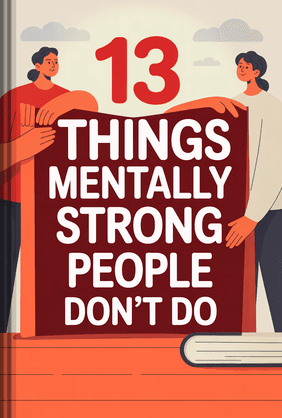
13 Things Mentally Strong People Don't Do
Amy Morin
21 Duration9 Key Points4.7 RateThe Gallon of Water and the Daily Photo
Drinking a gallon of water and taking a progress picture seem trivial, but they serve as constant, low-level cognitive anchors. They require you to remain aware of your goals from the moment you wake up until you go to sleep. You cannot coast through the day on autopilot. You must intentionally track your intake and your progress, proving to yourself that you can manage multiple variables perfectly.
The Hidden Benefits of 75 Hard
If you survive the program, the benefits of 75 hard extend far beyond fitting into a smaller shirt size. You completely change your self-identity.
Restored Self-Trust
Every time you break a promise to yourself, you lose a tiny piece of self-esteem. Your brain stops believing you. When you execute five specific tasks flawlessly for 75 days straight, you accumulate undeniable proof of your own reliability. You transition from someone who "tries" to do things to someone who simply gets things done.
Every time you break a promise to yourself, you lose a tiny piece of self-esteem. Your brain stops believing you. When you execute five specific tasks flawlessly for 75 days straight, you accumulate undeniable proof of your own reliability. You transition from someone who "tries" to do things to someone who simply gets things done.
Elimination of the "Victim" Mentality
The strictness of the zero-compromise rule means excuses hold no weight. It does not matter if your boss kept you late, if your car broke down, or if you feel slightly sick. The required tasks must be completed. This forces extreme ownership. You stop blaming external circumstances for your lack of progress and start finding aggressive solutions.
The strictness of the zero-compromise rule means excuses hold no weight. It does not matter if your boss kept you late, if your car broke down, or if you feel slightly sick. The required tasks must be completed. This forces extreme ownership. You stop blaming external circumstances for your lack of progress and start finding aggressive solutions.
Once you experience the profound shift of dropping your excuses and fully owning your circumstances during 75 Hard, you will never want to go back to a victim mentality. This concept of taking absolute accountability for every aspect of your life—whether in fitness, business, or relationships—is a superpower. If you want to take this philosophy of radical accountability and apply it to your career and personal goals, learning from elite Navy SEAL commanders will show you exactly how to lead yourself and others.

Extreme Ownership
Jocko Willink, Leif Babin
45 Duration7 Key Points4.6 RateCommon Pitfalls and How to Overcome Them
Many people fail 75 Hard multiple times before completing it. It is rarely the physical strain that breaks them; it is poor planning and mental weakness.
Relying on Convenience
You cannot wait to figure out your meals or your workout times until the day begins. If you do not have a hardcopy book ordered from Amazon ready on your nightstand, or your gym clothes laid out the night before, you will fail. The brain will exploit any lack of preparation to convince you to quit. Plan your daily schedule down to the hour.
You cannot wait to figure out your meals or your workout times until the day begins. If you do not have a hardcopy book ordered from Amazon ready on your nightstand, or your gym clothes laid out the night before, you will fail. The brain will exploit any lack of preparation to convince you to quit. Plan your daily schedule down to the hour.
Underestimating the Water Intake
Trying to drink half a gallon of water at 10:00 PM will ruin your sleep and potentially make you sick. Front-load your water intake. Knock out the first half-gallon before noon.
Trying to drink half a gallon of water at 10:00 PM will ruin your sleep and potentially make you sick. Front-load your water intake. Knock out the first half-gallon before noon.
The Day 20-30 Slump
The first two weeks run on excitement. Around Day 20, the novelty wears off. The physical fatigue sets in, and the end line feels impossibly far away. This is the exact moment the mental toughness training actually begins. Your brain will rationalize quitting: "I already proved I can do 20 days, that's enough." Recognize this negotiation tactic and immediately shut it down by stepping into your next required task.
The first two weeks run on excitement. Around Day 20, the novelty wears off. The physical fatigue sets in, and the end line feels impossibly far away. This is the exact moment the mental toughness training actually begins. Your brain will rationalize quitting: "I already proved I can do 20 days, that's enough." Recognize this negotiation tactic and immediately shut it down by stepping into your next required task.
When you hit that grueling Day 20 slump and your mind starts desperately negotiating for a day off, you need to draw inspiration from people who have mastered the art of suffering. Hearing how someone else completely calloused their mind against unimaginable physical and emotional pain can instantly put your 45-minute rain walk into perspective. If you need a powerful dose of reality and a masterclass in pushing past your perceived limits, nothing will fire you up quite like this extraordinary memoir.
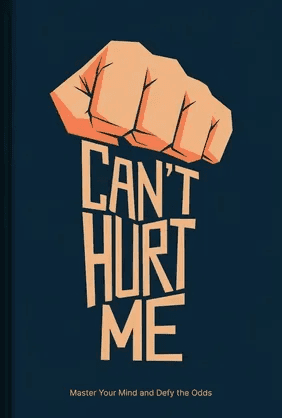
Can't Hurt Me
David Goggins, Adam Skolnick, et al.
26 Duration10 Key Points4.6 Rate
The Verdict on Mastering Your Mind
Achieving 75 hard mental toughness requires a complete surrender to the process. You are not trying to find a life hack; you are choosing to walk through the fire to burn away your own excuses. By the time you reach Day 75, the specific rules matter less than the weaponized mind you have developed along the way. You will have built a machine inside your head that defaults to action, execution, and unbreakable resolve.
Once you reach Day 75, the challenge isn't over—it's about integrating these disciplines into a sustainable lifestyle. To keep the learning habit strong on busy days, a tool that makes absorbing knowledge more efficient can be invaluable.
LeapAhead
Continue building your mental library post-challenge by listening to key takeaways from top business and self-help books in just 15 minutes.
FAQ
What happens if I forget a task and fail on Day 74?
You start over at Day 1. There are no exceptions, no passes, and no sick days. The entire purpose of the program is zero compromise. Accepting a failure and restarting is part of the mental resilience training.
You start over at Day 1. There are no exceptions, no passes, and no sick days. The entire purpose of the program is zero compromise. Accepting a failure and restarting is part of the mental resilience training.
Is 75 Hard safe for my mental health?
It is highly demanding and designed to induce stress. If you have a history of severe eating disorders or clinical depression, the rigid structure might trigger negative obsessions. For the average person struggling with simple laziness, the forced structure is exactly what breaks the cycle of procrastination.
It is highly demanding and designed to induce stress. If you have a history of severe eating disorders or clinical depression, the rigid structure might trigger negative obsessions. For the average person struggling with simple laziness, the forced structure is exactly what breaks the cycle of procrastination.
How do I maintain the discipline habits after Day 75?
You do not need to sustain the exact intensity of 75 Hard forever. The goal is to carry the underlying discipline into your regular life. Most graduates transition to a sustainable routine—like one daily workout and consistent reading—because their baseline standard for themselves has permanently increased.
You do not need to sustain the exact intensity of 75 Hard forever. The goal is to carry the underlying discipline into your regular life. Most graduates transition to a sustainable routine—like one daily workout and consistent reading—because their baseline standard for themselves has permanently increased.