


You hire more people, but your company's daily output barely moves. Your team is trapped in a cycle of constant context switching—handling customer support, tweaking code, and writing marketing copy all in the same afternoon. When everyone is responsible for everything, execution stalls, and scaling becomes impossible.
The solution to this modern scaling problem was documented in 1776. Adam Smith observed that breaking a large, complex job into distinct, repeatable micro-tasks fundamentally changes organizational output.
Here is exactly how this economic principle works, why it remains the bedrock of modern operational efficiency, and how you can apply it to your business today.
The Blueprint for Efficiency: The Wealth of Nations Pin Factory
Before assembly lines and project management software, Adam Smith illustrated the power of workflow segmentation through a simple manufacturing process.
The wealth of nations pin factory example is the most famous illustration of workplace efficiency in economic history. Smith observed two radically different ways to manufacture a simple metal pin:
- The Generalist Approach: An untrained worker performing every step of the process—drawing the wire, straightening it, cutting it, pointing it, and grinding the top to attach the head. A single worker doing everything might struggle to produce even 20 pins in a day.
- The Specialist Approach: The factory divided the work into 18 distinct operations, with different workers handling one or two specific steps.

The result? A team of ten specialized workers produced 48,000 pins in a single day. That is 4,800 pins per worker—a 24,000% increase in productivity without adding any new technology or working longer hours. The secret was the structure of the work itself.
If you want to dive deeper into the foundational economic theories that shaped modern capitalism, going straight to the source is highly recommended. Adam Smith’s original text doesn’t just cover the famous pin factory; it explores market dynamics, free trade, and how organizational structures drive a nation's prosperity. It remains a surprisingly relevant read for any entrepreneur or business leader looking to understand the mechanics of scaling production.
For those looking to grasp the most critical concepts without reading the entire volume, understanding the core arguments is a great starting point.

The Wealth of Nations
Adam Smith
 35 Duration
 8 Key Points
 4.6 Rate
While Smith's original work is a rewarding read, it can be dense. For managers short on time, getting the essential breakdown first can be a more practical approach.

Quickly absorb the foundational ideas from complex business books like The Wealth of Nations, turning big theories into actionable insights in just 15 minutes.

Download LeapAhead App now
How Division of Labor Increases Productivity
Understanding exactly how division of labor increases productivity allows managers to apply this concept to software engineering, marketing, and logistics. Smith identified three core catalysts for this massive leap in output.
1. Enhanced Dexterity and Skill (Mastery)
When an employee focuses entirely on a narrow set of responsibilities, their proficiency skyrockets. Adam Smith specialization dictates that a worker who repeats a single task develops muscle memory, deeper technical intuition, and faster problem-solving skills for that specific function. In a modern context, a dedicated front-end developer will code user interfaces much faster and with fewer bugs than a generalist who splits their time between server architecture and UI design.
2. Elimination of Transition Costs
Every time a worker switches from one type of task to another, they lose momentum. Psychologists now call this "context switching." Smith recognized that workers lose time changing tools, moving to different workstations, and mentally shifting gears. By dividing labor, employees stay stationed at their core competency, eliminating the friction and time loss associated with multi-tasking.

The modern equivalent of transition costs is the constant pinging of Slack messages and emails that force us to multitask. If your team is struggling to stay focused on their specialized tasks due to endless context switching, you might need a framework to protect their attention. Learning how to cultivate an environment where employees can lock into distraction-free zones will drastically multiply the benefits of divided labor.
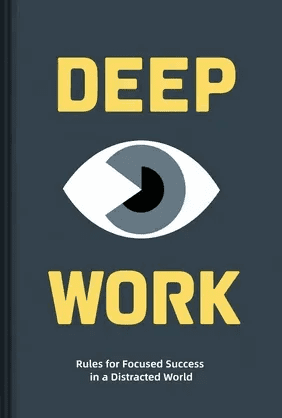
Deep Work
Cal Newport
47 Duration8 Key Points4.6 Rate3. The Catalyst for Automation and Innovation
When a complex job is broken down into its simplest components, it becomes much easier to figure out how to do it better. Workers who focus on a single micro-task are highly likely to invent new tools or shortcuts to make their specific job easier. Furthermore, once a task is simplified to a highly repeatable step, it becomes the perfect candidate for automation. You cannot easily automate a "marketing manager," but you can automate the specific task of "scheduling social media posts."
Modern Division of Labor Examples
Smith’s theory is not confined to 18th-century manufacturing. The most dominant companies in the United States operate strictly on these principles. Here are practical division of labor examples in today’s business landscape:
Amazon Fulfillment Centers
Amazon is the modern equivalent of the pin factory. Instead of one employee walking through a massive warehouse to find an item, put it in a box, print a label, and load it onto a truck, the labor is strictly divided.
- Pickers pull items from shelves.
- Packers box the items.
- Stowers organize inventory.
This intense specialization allows facilities to process millions of packages a day with rapid turnaround times.
Agile Software Development
Tech startups rarely rely on solitary developers to build an entire platform. They divide the labor to accelerate product release cycles.
- UI/UX Designers map the user journey.
- Back-end Engineers build the database infrastructure.
- Quality Assurance (QA) testers break the code to find bugs.
- DevOps ensures smooth deployment.
This prevents expensive engineers from wasting time on server maintenance when they should be writing core product code.
Understanding how to effectively divide labor in a modern IT or software environment can be challenging. If you are struggling to align your developers, QA testers, and operations teams without creating bottlenecks, there are fantastic resources that illustrate these concepts through engaging business fables. Discovering how to optimize these workflows and prevent specialized teams from working in isolated silos is essential for rapid product deployment.

The Phoenix Project
Gene Kim, Kevin Behr, George Spafford
20 Duration7 Key Points4.7 RateMedical and Healthcare Systems
A hospital visit is a sequence of highly specialized labor. You do not see a single doctor for everything. A triage nurse takes your vitals, an X-ray technician operates the imaging machine, a radiologist reads the scan, and an orthopedic surgeon performs the operation. This ensures patients receive expert care at every single touchpoint while maximizing the hospital's patient throughput.
The Downside: Avoiding the "Cog in the Machine" Trap
While specialization drives profit and scale, it carries a significant human risk. Adam Smith himself warned that spending years repeating a few simple operations could make a worker "as stupid and ignorant as it is possible for a human creature to become."
This famous warning is a reminder that Smith was not just an economist but a moral philosopher concerned with human well-being.

In modern management terms, over-specialization leads to:
- Employee Burnout: Repeating the same highly narrow task leads to extreme boredom and high turnover rates.
- Organizational Silos: Teams become so hyper-focused on their specific metric that they lose sight of the broader company goals.
- Fragility: If only one person knows how to operate a specific system and they leave the company, production halts.
How Managers Can Balance Efficiency and Engagement
To harvest the productivity benefits of division of labor without burning out your workforce, implement these strategies:
- Cross-Training and Job Rotation: Allow employees to rotate through adjacent roles. This builds bench strength in your organization and keeps the work mentally stimulating.
- Contextual Leadership: Ensure every specialized worker understands how their specific task impacts the final product. A data entry clerk is more motivated when they realize their work directly influences the accuracy of a major client deliverable.
- Automate the Mundane: Use software to eliminate the most mind-numbing repetitive tasks, elevating your employees to roles that require critical thinking and strategic oversight.
Preventing your team from feeling like mindless cogs requires a deep understanding of human psychology. While division of labor optimizes for speed, it can strip away the intrinsic motivation that keeps employees engaged. By learning what truly motivates modern workers—autonomy, mastery, and purpose—you can design specialized roles that are both highly efficient and deeply fulfilling, reducing turnover and driving long-term innovation.

Drive
Daniel H. Pink
24 Duration11 Key Points4.5 RateImplementing these strategies requires continuous learning, but finding time to read through all these foundational business books can be a challenge for any busy leader.
Fit essential business and leadership knowledge into your schedule by listening to key insights from bestselling books while you commute, work out, or take a short break.
Download LeapAhead App now
The principle of divided labor is one of Adam Smith's most practical contributions, but it's part of a much larger economic framework. To fully grasp how he envisioned markets operating, it's essential to also understand his most famous metaphor.
FAQ
What is the difference between division of labor and specialization?
Division of labor refers to the organizational process of breaking a large workflow into smaller, distinct tasks. Specialization refers to the individual worker focusing on and mastering one of those specific tasks. The division of labor creates the structure; specialization is the skill developed within that structure.
Division of labor refers to the organizational process of breaking a large workflow into smaller, distinct tasks. Specialization refers to the individual worker focusing on and mastering one of those specific tasks. The division of labor creates the structure; specialization is the skill developed within that structure.
Does the division of labor only apply to manufacturing?
No. While it originated in manufacturing, it is highly applicable to knowledge work and services. Law firms (divided into partners, associates, and paralegals), tech companies, and digital marketing agencies all rely heavily on division of labor to deliver high-quality work quickly.
No. While it originated in manufacturing, it is highly applicable to knowledge work and services. Law firms (divided into partners, associates, and paralegals), tech companies, and digital marketing agencies all rely heavily on division of labor to deliver high-quality work quickly.
At what stage should a startup implement division of labor?
In the very early stages (Seed), founders and early employees must be generalists to survive and keep burn rates low. As the company finds product-market fit and enters the scaling phase (Series A and beyond), leadership must transition the team from generalists to specialists to handle increased volume and maintain quality.
In the very early stages (Seed), founders and early employees must be generalists to survive and keep burn rates low. As the company finds product-market fit and enters the scaling phase (Series A and beyond), leadership must transition the team from generalists to specialists to handle increased volume and maintain quality.
Can division of labor negatively impact product quality?
Yes, if quality control is not integrated into the process. When tasks are highly divided, a worker might pass a defective component down the line because they only care about their specific metric. This is why specialized Quality Assurance (QA) checkpoints must be built into the workflow to catch errors before they reach the customer.
Yes, if quality control is not integrated into the process. When tasks are highly divided, a worker might pass a defective component down the line because they only care about their specific metric. This is why specialized Quality Assurance (QA) checkpoints must be built into the workflow to catch errors before they reach the customer.