

You already read his first book. You cleaned your room, stood up straight with your shoulders back, and built a predictable routine. Yet, something still feels off. Life either feels too stagnant, or an unexpected crisis has completely derailed your perfectly scheduled week. That is the trap of extreme predictability. While structure keeps you safe, it cannot help you grow.

This comprehensive beyond order summary delivers the exact psychological tools you need when your carefully structured life hits a wall. We will break down the underlying philosophy, analyze the complete rule set, and help you apply these concepts immediately.
The Core Philosophy: Why Order Isn't Enough
In his previous work, Peterson focused on pulling young men and women out of chaos. The antidote to a messy, aimless life was strict, self-imposed order. But order has a dark side. When pushed to the extreme, order becomes tyranny. It manifests as micromanagement in your career, rigidity in your relationships, and a paralyzing fear of the unknown.
To fully appreciate the shift in Beyond Order, it helps to understand the foundational principles he established first. For those who need a refresher on his original framework for conquering self-imposed chaos, exploring the key takeaways from his breakout book is an excellent starting point.
Beyond Order explores the other half of the human experience. It forces you to step out of the walled garden and into the wild. Chaos is where you find new opportunities, creativity, and the necessary friction required for genuine psychological growth.
If you are looking for a definitive beyond order Jordan Peterson summary, the entire book boils down to this single thesis: You must stand on the border of order and chaos. Keep one foot in the known and one foot in the unknown. That is where meaning exists.

The Complete Beyond Order Rules List Explained
To help you navigate this balance, Peterson offers 12 more rules for life. This is not a simple checklist. It is a psychological framework designed to prevent you from becoming bitter, arrogant, or paralyzed by fear.
Here is the complete beyond order rules list, stripped of academic tangents and distilled into actionable insights for your daily life.
Rule 1: Do not carelessly denigrate social institutions or creative achievement
We live in a culture that loves to tear down traditional systems. It is easy to look at corporate structures, marriage, or economic systems and point out their flaws. Peterson warns against tearing down fences before you understand why they were built.
- The Insight: Institutions contain the collected wisdom of past generations. They provide the baseline order you need to survive.
- The Action: Before you criticize a system at work or a traditional family structure, master it first. Only when you understand a system deeply do you earn the right to innovate and change it.
Rule 2: Imagine who you could be, and then aim single-mindedly at that
You are currently a fraction of what you could become. If you lack a clear target, life’s chaotic moments will easily blow you off course.
- The Insight: Meaning is found in the pursuit of a massive, almost unreachable goal. You need an ideal to strive toward to justify the suffering of daily life.
- The Action: Stop drifting. Pick a direction in your career or personal life. It doesn't have to be perfect. The simple act of aiming at a high target organizes your mind and actions.
Rule 3: Do not hide unwanted things in the fog
When you have a weird pain in your knee, or a quiet resentment building against your spouse, it is tempting to ignore it. You throw it into the "fog" and pretend it does not exist.
- The Insight: Monsters grow in the dark. Ignoring a problem guarantees it will return larger and more dangerous.
- The Action: Confront negative emotions immediately. Have that uncomfortable conversation with your boss. Check your bank account even if you know you are broke. Bring the threat out of the fog so you can actually fight it.

Rule 4: Notice that opportunity lurks where responsibility has been abdicated
Many people complain that they are stuck in their careers. Yet, in every office, there are tasks no one wants to do. Projects fall through the cracks.
- The Insight: Power and meaning belong to the person who voluntarily picks up a heavy load.
- The Action: Look around your workplace or your home. What is broken that no one is fixing? Step up, take ownership of that problem, and fix it. You make yourself indispensable by carrying the weight others refuse to bear.
Rule 5: Do not do what you hate
This sounds like a cliché, but Peterson approaches it from a moral standpoint. If your job forces you to lie, cheat, or compromise your core values, your soul will slowly decay.
- The Insight: Acting against your conscience creates internal chaos. It makes you cynical and weak.
- The Action: If your job makes you miserable because it violates your ethics, start plotting your escape. Update your resume, save your money, and prepare to leave. Do not stay in an environment that corrupts you.
Rule 6: Abandon ideology
Ideologies offer simple, one-size-fits-all answers to complex world problems. They blame a single group or a single system for everything wrong in society.
- The Insight: The world is too complex to be solved by a rigid ideology. Adopting one makes you intellectually lazy and prone to resentment.
- The Action: Stop using political or social dogmas as a crutch. Take responsibility for your own life instead of blaming abstract systems for your failures.
Rule 7: Work as hard as you possibly can on at least one thing and see what happens
Most people spread their energy across dozens of hobbies, projects, and goals, never achieving mastery in any.
- The Insight: Commitment is the antidote to chaos. When you focus intensely on a single pursuit, you forge your character.
- The Action: Pick one skill. It could be coding, writing, or a specific physical discipline. Commit to it completely for a year. The discipline you build will bleed into every other area of your life.
If you find yourself constantly jumping between side hustles, hobbies, and career paths without making real progress, narrowing your focus is the ultimate unlock. Commitment isn't just about discipline; it's about channeling your finite energy into a single, needle-moving goal. For readers wanting to dive deeper into this philosophy, there is an incredible resource that breaks down exactly how to block out the noise and achieve extraordinary results by simplifying your workload. It provides a strategic framework to help you discover the one specific pursuit that will make everything else in your life easier or unnecessary.

The ONE Thing
Gary Keller, Jay Papasan
 22 Duration
 10 Key Points
 4.5 Rate
Rule 8: Try to make one room in your home as beautiful as possible
Beauty is not a luxury; it is a necessity. When the outside world is harsh and chaotic, your physical environment needs to be a sanctuary.
- The Insight: A beautiful room signals to your brain that order and meaning exist. It elevates your mindset.
- The Action: You do not need a massive budget. Organize your living space. Buy a piece of art that actually means something to you. Repaint a wall. Create a physical space that commands respect.
Rule 9: If old memories still upset you, write them down carefully and completely
Trauma is literally chaos trapped in your nervous system. If a memory from five years ago still triggers a strong emotional response, you have not processed it.
- The Insight: Your brain keeps flashing the memory because it thinks the threat is still active.
- The Action: Sit down and write out the painful event in exhaustive detail. Analyze what happened, what your role was, and how you can avoid it in the future. Writing turns chaotic emotion into structured thought.

Processing unresolved memories is rarely a simple task, especially when those experiences have left a lasting physical imprint on your nervous system. Modern psychology has increasingly shown that trauma isn't just stored in our thoughts—it manifests in our biology, affecting everything from our heart rate to our immune system. If you are struggling to unpack past events or want to understand the deep physiological connection between your mind and your physical health, exploring how the body internalizes stress can be incredibly eye-opening. This foundational read offers brilliant insights into how you can rewire your brain and finally let go of the past.
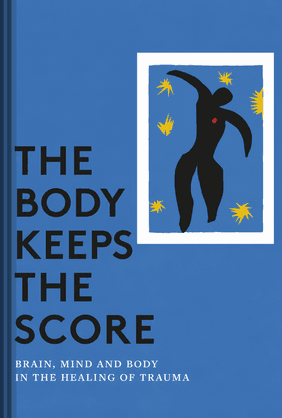
The Body Keeps The Score
Bessel Van Der Kolk
32 Duration10 Key Points4.5 RateRule 10: Plan and work diligently to maintain the romance in your relationship
Hollywood sells the lie that romance should always be spontaneous and effortless. This is a fatal mistake for long-term relationships.
- The Insight: Life is busy. Between careers, mortgages, and kids, romance will naturally die if left to chance.
- The Action: Schedule your romance. Treat a Friday date night with the same unbreakable commitment as a meeting with your CEO. Put in the intentional effort required to keep the relationship alive.
Rule 11: Do not allow yourself to become resentful, deceitful, or arrogant
These three traits are the toxic byproducts of a poorly managed life. Resentment happens when you feel victimized; deceit is how you hide your flaws; arrogance is how you overcompensate.
- The Insight: These emotions isolate you from the world and make you incapable of navigating chaos.
- The Action: Monitor your internal dialogue. When you catch yourself feeling bitter about someone else's success, stop. Force yourself to tell the truth. Stay humble enough to learn from your mistakes.
Rule 12: Be grateful in spite of your suffering
Life guarantees suffering. You will face illness, betrayal, and loss. The easiest response is to become bitter and curse existence.
- The Insight: Gratitude in the face of suffering is the highest form of psychological courage. It prevents pain from turning into pure malevolence.
- The Action: Actively look for things to be thankful for, especially on your worst days. Gratitude is a weapon you use to fight back against the inherent tragedy of life.
Finding gratitude during your darkest moments is undeniably difficult, but history is full of individuals who found profound purpose amidst unimaginable tragedy. When you start viewing your personal suffering not as a meaningless punishment, but as an opportunity to forge unbreakable character, your entire worldview shifts. If you are searching for a powerful testament to human resilience and the psychological drive to find purpose, there is one historical memoir you absolutely must read. It is a life-changing exploration of how maintaining your inner freedom and choosing your attitude can help you survive and thrive in any situation.
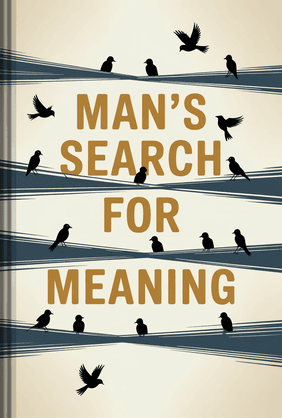
Man's Search for Meaning
Viktor E. Frankl
44 Duration8 Key Points4.6 RateBeyond Order Review: Is It Worth Your Time?
If you are looking for a beyond order review to decide whether to buy the physical copy or download it on Audible, the answer depends on your learning style.
Who should skip the book?
If you get easily bogged down by heavy mythological references, deep dives into Mesopotamian history, or lengthy clinical psychology case studies, the 400-page book might test your patience. The core actionable advice is fully captured in this guide.
If you get easily bogged down by heavy mythological references, deep dives into Mesopotamian history, or lengthy clinical psychology case studies, the 400-page book might test your patience. The core actionable advice is fully captured in this guide.
For those who want the deeper context Peterson provides without committing to a 400-page read, there are ways to get the key insights from this and other complex books much faster.

Absorb the core arguments from Jordan Peterson and other profound thinkers in quick, 15-minute audio or text summaries.

Download LeapAhead App now
Who should buy the book?
If you absorb information best through narrative and storytelling, you will find massive value in the unabridged version. Peterson excels at weaving his clinical experiences into his philosophy. Hearing the detailed stories of his patients battling schizophrenia or severe depression provides a profound context that a summary simply cannot replace. You can easily pick up a copy at Barnes & Noble or on Amazon to keep on your shelf as a dense, psychological reference manual.
If you absorb information best through narrative and storytelling, you will find massive value in the unabridged version. Peterson excels at weaving his clinical experiences into his philosophy. Hearing the detailed stories of his patients battling schizophrenia or severe depression provides a profound context that a summary simply cannot replace. You can easily pick up a copy at Barnes & Noble or on Amazon to keep on your shelf as a dense, psychological reference manual.
Ultimately, Beyond Order serves as the perfect counterweight to 12 Rules for Life. It prevents the self-improvement junkie from becoming an authoritarian perfectionist.
Understanding where this book fits within Peterson's broader intellectual journey provides even greater context. His works often build on each other, from dense academic explorations to these more accessible rules for living. For readers wanting a complete overview, this is an essential next step.
Feeling inspired but also overwhelmed by the long reading list in this summary? There's a practical way to absorb these powerful ideas without the "to-read" pile growing even taller.
Turn your reading list into actionable knowledge by listening to summaries of these essential self-improvement books during your commute or workout.
Download LeapAhead App now
There is truly no substitute for diving into the complete, unabridged text to absorb the full weight of these psychological frameworks. While this summary gives you a solid game plan, Peterson's deep dives into clinical case studies, cultural myths, and historical precedents are what make his arguments so compelling. If you are ready to stop playing it safe, embrace a little constructive chaos, and push your personal growth to the next level, grabbing your own copy is a smart investment. Add this essential read to your library to fully master the balance between structure and the unknown.

Beyond Order
Jordan B. Peterson
40 Duration9 Key Points4.6 RateFAQ
Do I need to read the first book before reading Beyond Order?
No. While they complement each other perfectly, both books function as standalone works. The first book focuses on establishing baseline discipline (order), while this one focuses on navigating the unpredictable elements of life (chaos).
No. While they complement each other perfectly, both books function as standalone works. The first book focuses on establishing baseline discipline (order), while this one focuses on navigating the unpredictable elements of life (chaos).
What is the main difference between "12 Rules for Life" and "Beyond Order"?
The first book is defensive. It teaches you how to stop ruining your life through bad habits and poor posture. Beyond Order is offensive. It teaches you how to engage with the unknown, take on massive responsibilities, and find meaning through creativity and courage.
The first book is defensive. It teaches you how to stop ruining your life through bad habits and poor posture. Beyond Order is offensive. It teaches you how to engage with the unknown, take on massive responsibilities, and find meaning through creativity and courage.
Are these rules practical for everyday corporate life?
Absolutely. Rules like "Notice that opportunity lurks where responsibility has been abdicated" and "Do not hide unwanted things in the fog" are direct blueprints for career advancement. They teach you to tackle the hard projects no one else wants and confront workplace conflicts before they escalate.
Absolutely. Rules like "Notice that opportunity lurks where responsibility has been abdicated" and "Do not hide unwanted things in the fog" are direct blueprints for career advancement. They teach you to tackle the hard projects no one else wants and confront workplace conflicts before they escalate.
Is Beyond Order too philosophical or hard to apply?
Peterson's writing style is dense and heavily relies on ancient myths and clinical psychology. However, the core actions required by the rules—such as fixing up your room, communicating honestly with your spouse, and writing down painful memories—are entirely practical and grounded in everyday reality.
Peterson's writing style is dense and heavily relies on ancient myths and clinical psychology. However, the core actions required by the rules—such as fixing up your room, communicating honestly with your spouse, and writing down painful memories—are entirely practical and grounded in everyday reality.