

You are sitting in a sterile hospital waiting room, staring at a deeply offensive beige carpet while your world quietly falls apart. Traditional clinical psychology advises you to sit with your heavy feelings. David Sedaris tells you to focus on the absurdly aggressive tone of the nurse’s sneakers or the terrible 1980s soft rock playing on the overhead speakers.

When life serves up a tragedy—a terminal diagnosis, a spectacular career failure, or a family blowout during Thanksgiving—we are conditioned to process it with quiet grace. But grace is exhausting. Sometimes, leaning heavily into David Sedaris dark humor is the only practical way to get out of bed. It is not about pretending the pain does not exist. It is about actively stripping the trauma of its paralyzing power.
The Psychology Behind the Punchline
Why do we laugh when we actually want to scream? It comes down to agency and control.
When you are stuck in an unpredictable nightmare, you lose your sense of control. You become a passive participant in your own misery. Using humor to cope with trauma completely flips that power dynamic. It is a psychological defense mechanism known as cognitive reappraisal. You stop being the helpless victim of the story and instantly become its narrator, director, and critic.

If you browse the psychology section at Barnes & Noble or scroll through Amazon reviews for self-help books, you will find hundreds of titles demanding you "do the emotional work." Yet, some of the most effective coping mechanisms in literature do not come from licensed therapists. They come from essayists and comedians who understand that humans process severe emotional pain best when it is packaged with a sharp punchline.
A joke requires a specific structure: a setup, tension, and a release. Trauma operates similarly, but it often traps us in the tension phase indefinitely. By actively searching for the punchline in a dark situation, your brain is forced to process the event, categorize the absurdity, and release the emotional tension. You cannot laugh and panic at the exact same time.
If you are fascinated by the actual science of why a well-timed joke can rewire your brain during a crisis, exploring the clinical research behind this phenomenon is incredibly validating. Stanford researchers have mapped out exactly how humor acts as a powerful psychological tool for building emotional resilience. For a deeper understanding of why leaning into comedy might be your smartest defense mechanism, this insightful read connects the dots between laughter and healing.

Humor, Seriously
Dr. Jennifer Aaker, Naomi Bagdonas
 18 Duration
 7 Key Points
 4.4 Rate
If your to-read pile of self-help and humor books is starting to feel overwhelming, finding the time to actually get through them can be the biggest challenge.


Absorb the core ideas from bestselling authors on psychology and resilience in just 15-minute audio or text summaries, so you can learn without the time pressure.
 LeapAhead
Laughing at the Unbearable: David Sedaris on Grief
Nowhere is this survival strategy more evident than when examining David Sedaris on grief. In his collection Calypso—a massive hit across Apple Books and Audible—he tackles subjects that would normally mandate a trigger warning: the suicide of his youngest sister, his father’s aggressive hoarding, and his own aging body.
He does not sanitize the ugliness of death. Instead, he zeroes in on the bizarre, inappropriate details surrounding it. He writes about shopping for clothes right after receiving devastating family news, or hyper-fixating on a snapping turtle with a tumor swimming near his beach house (which he aptly named the "Sea Section").
This is not a distraction from grief; it is a highly calibrated processing tool. Grief is massive, formless, and terrifying. You cannot fight a formless shadow. But you can fight, or at least mock, the ridiculous logistical realities of death.
When you read his essays, you realize he is offering a masterclass in how to grieve without losing your mind. He permits you to feel furious, petty, and inappropriately amused during the darkest weeks of your life. Sedaris shows us that you can profoundly mourn a loved one while simultaneously judging their terrible taste in furniture. The human brain is expansive enough to hold both profound sadness and sharp comedy.
The complex, often fraught relationships within his family are a recurring wellspring for his humor. His essays offer a masterclass in navigating difficult family bonds with wit and a sharp eye for absurdity.

While his later works offer a brilliant look at how he processes the heavy grief of adulthood, exploring his earlier essays provides a foundational masterclass in how to find the absurd in our most uncomfortable experiences. If you want to see exactly how he transforms painful memories, family chaos, and personal insecurities into pure, cathartic comedy, diving into one of his most celebrated collections is the perfect next step.

Me Talk Pretty One Day
David Sedaris
17 Duration6 Key Points4.6 RateThe Field Guide: David Sedaris Observing Human Behavior
The secret engine behind this brand of resilience is emotional detachment. You can see this mechanism clearly when studying David Sedaris observing human behavior. He navigates his own disastrous life with the cold, detached fascination of an alien anthropologist sent to Earth to study a deeply flawed species.
When a family argument breaks out, he does not just feel the anger; he observes the exact phrasing his opponent uses. When waiting in line at a local Target behind someone screaming at a cashier over a two-dollar coupon, he does not just feel annoyed; he catalogues the interaction.
To apply this to your own life, you must adopt the "Observer Effect." In quantum mechanics, the act of observing a phenomenon changes the phenomenon itself. In psychology, stepping outside of your own emotional breakdown to observe the specific details of the room alters the intensity of your panic.

Instead of thinking, "My life is over and everything is awful," the Sedaris method trains you to think, "My life is currently a disaster, and it is almost 100 degrees Fahrenheit outside, yet the man yelling at me is inexplicably wearing a heavy wool turtleneck."
The focus shifts. The panic drops. The comedy emerges.
This shift from participant to observer is central to his entire creative process. It's how he transforms personal anecdotes into universally relatable and hilarious stories.
David Sedaris is not the only author who uses this detached, observational method to survive a chaotic reality. If you appreciate the art of stepping outside of a personal meltdown to document the sheer absurdity of life, you will love other writers who share this exact survival tactic. Jenny Lawson applies this unapologetically dark humor to her own severe battles with trauma and anxiety, creating a hilariously relatable roadmap for coping with the unthinkable.

Let's Pretend This Never Happened
Jenny Lawson
42 Duration9 Key Points4.5 RateHow to Apply Observational Humor to Your Own Life
You do not need an audiobook deal or a literary agent to use these psychological tools. You just need to change the way you record your daily experiences. Here is how you actively build this habit:
1. Start a "Ugly Details" Journal
Whenever you hit a crisis point, force your brain to find three absurd, ugly, or mundane details in your immediate environment. Buy a cheap pocket notebook. When you are sitting in the auto repair shop facing a $2,000 bill you cannot afford, write down the bizarre conversation happening between the mechanics. Documenting the absurdity anchors you to reality and stops your brain from spiraling into catastrophic worst-case scenarios.
2. Reframe the Tragedy as a Pitch
When recounting a horrible day to a friend, change your delivery. Stop treating it as a tragedy and start treating it as a stand-up routine or a rough draft for an essay. Force yourself to find the narrative beats. How did the disaster start? What was the most ridiculous thing said? What was the ironic twist? By forcing your trauma into a narrative structure, you actively command the memory rather than letting the memory command you.
3. Embrace Inappropriate Honesty
Dark comedy thrives on the things we are not supposed to say out loud. If you are exhausted by caring for an aging parent, admit the ugly, exhausted thoughts. Acknowledge the petty grievances. Toxic positivity demands you "look on the bright side" and suppress your real feelings. Dark humor allows you to look directly into the void, acknowledge how terrible it is, and crack a joke about the smell.
Sometimes, the best way to master this habit of documenting the dark, ugly details is to read the journals of someone who did it while working in a genuinely traumatic environment. Adam Kay's secret diaries from his time as an exhausted doctor on the hospital front lines perfectly illustrate how pitch-black, inappropriate humor can serve as the ultimate defense mechanism against daily heartbreak. It is a brilliant example of how to frame your own daily struggles into sharp, observational prose.
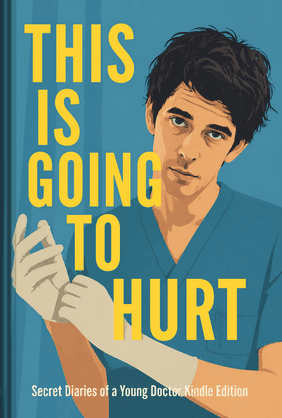
This is Going to Hurt
Adam Kay
48 Duration8 Key Points4.5 RateReading the work of observational masters like Sedaris and Kay is a great way to learn, but it's hard to make progress on your reading list when you're exhausted after a long day.
You can listen to the key insights from these books during your commute or workout, making it easy to build resilience without needing to find extra hours in your day.
LeapAheadThe Risks: When Dark Humor Fails
While this is a powerful coping strategy, it is not foolproof. There is a fine line between using comedy as a window and using it as a brick wall.
The Avoidance Trap:
If you make a joke immediately every single time a real emotion surfaces, you are no longer processing; you are deflecting. Dark humor works best when you use it to make the pain manageable enough to look at, not to pretend the pain does not exist.
If you make a joke immediately every single time a real emotion surfaces, you are no longer processing; you are deflecting. Dark humor works best when you use it to make the pain manageable enough to look at, not to pretend the pain does not exist.
The Cruelty Mistake:
Effective observational comedy punches up or punches inward. It highlights the absurdity of the universe, the awkwardness of the human condition, or your own ridiculous flaws. If your humor is exclusively used to mock people who are suffering more than you are, you are not building resilience. You are just being mean.
Effective observational comedy punches up or punches inward. It highlights the absurdity of the universe, the awkwardness of the human condition, or your own ridiculous flaws. If your humor is exclusively used to mock people who are suffering more than you are, you are not building resilience. You are just being mean.
Dark comedy is a private survival tool first, and a public performance second. It is the armor you wear when the world demands you drive 500 miles through a snowstorm to deal with a family emergency. It keeps you warm. It keeps you sane.
Ultimately, Sedaris's work shows us that humor is more than just a defense mechanism; it's a profound tool for understanding ourselves and the world. His essays are filled with wisdom gleaned from life's most awkward and painful moments.
FAQ
Is dark humor a healthy coping mechanism?
Yes, when used correctly. Psychologists refer to this as cognitive reappraisal. It allows individuals to take a step back, view a highly stressful situation from a different angle, and reduce the immediate emotional threat. It provides a sense of control over uncontrollable circumstances.
Yes, when used correctly. Psychologists refer to this as cognitive reappraisal. It allows individuals to take a step back, view a highly stressful situation from a different angle, and reduce the immediate emotional threat. It provides a sense of control over uncontrollable circumstances.
Does using humor mean I am avoiding my feelings?
Not necessarily. Humor becomes avoidance only if you use it to completely shut down conversations about your feelings. If you use dark comedy to take the edge off a painful reality so you can slowly process it without being overwhelmed, it is a highly adaptive processing tool.
Not necessarily. Humor becomes avoidance only if you use it to completely shut down conversations about your feelings. If you use dark comedy to take the edge off a painful reality so you can slowly process it without being overwhelmed, it is a highly adaptive processing tool.
How do I know if my dark humor is crossing a line?
The rule of thumb is to look at the target of the joke. If the humor targets the absurdity of the situation, the unfairness of life, or your own reaction to stress, it is healthy. If the humor is designed to hurt, shame, or belittle someone else’s pain, it has crossed the line from a coping mechanism into hostility.
The rule of thumb is to look at the target of the joke. If the humor targets the absurdity of the situation, the unfairness of life, or your own reaction to stress, it is healthy. If the humor is designed to hurt, shame, or belittle someone else’s pain, it has crossed the line from a coping mechanism into hostility.
Can I learn to be observant like David Sedaris if I am not naturally funny?
Absolutely. You do not need to be a comedian to benefit from this. The goal is observation, not performance. Simply practicing the act of noticing weird, out-of-place details during stressful moments will create the psychological distance you need, even if you never tell the joke to anyone else.
Absolutely. You do not need to be a comedian to benefit from this. The goal is observation, not performance. Simply practicing the act of noticing weird, out-of-place details during stressful moments will create the psychological distance you need, even if you never tell the joke to anyone else.