

You are driving on the freeway, entirely relaxed. Suddenly, another car cuts you off. You hit the brakes. Within seconds, a massive wave of rage overtakes you. Your heart pounds, your thoughts race with aggressive scenarios, and you stay angry for the next two hours. The actual event lasted two seconds, but the emotional hijacking ruined your morning.
This out-of-proportion reaction is not just a bad mood. It is not your personality. In spiritual psychology, this points directly to the Eckhart Tolle pain body. If you frequently find yourself swept away by heavy sadness, sudden anger, or an unexplainable urge for conflict, you are likely experiencing a pain-body activation.
To break free from this cycle, you need to understand the mechanics of this emotional residue and learn how to separate your true identity from your transient feelings.

What is the Pain Body?
If you are asking exactly what is the pain body, think of it as a semi-autonomous energy form that lives inside you. It is made up of the remnants of unexpressed, unacknowledged, or unresolved emotional pain from your past.
Every time you experience a negative emotion—fear, anger, grief, or resentment—and fail to fully process it in the moment, it leaves behind a residue. Over the years, these residues merge. They form an invisible entity made entirely of negative emotion.

Tolle describes the pain-body as having two distinct stages: dormant and active.
When dormant, you might feel perfectly fine, rational, and at peace. Depending on the density of your specific pain-body, this dormant stage can last for days, weeks, or even months.
When active, the pain-body takes over your internal system. It uses your mind to generate negative thoughts and uses your physical body to manifest heavy emotional energy. It wakes up when it gets hungry, and its only food is more negative energy. This is why, during an episode, you might actually crave drama, seek an argument with your partner, or aggressively dig into pessimistic news online.
The Ego and the Pain-Body Connection
You cannot understand the pain-body without understanding the mind's role in sustaining it. For anyone needing the Eckhart Tolle ego explained simply: the ego is the false sense of self created by your unobserved mind.
Your ego consists of your continuous stream of thoughts, your personal history, your self-image, and your roles (the successful professional, the victim, the misunderstood artist). The ego thrives on separation, conflict, and a constant need to be "right."
The relationship between the ego and the pain-body is symbiotic. The ego represents the mental aspect of this dysfunction, while the pain-body represents the emotional aspect.
When the pain-body awakens, it immediately connects to your mind. It hijacks your thoughts. If you feel a wave of anger (pain-body), your mind (ego) will instantly start serving up angry thoughts, analyzing who wronged you, and plotting revenge. The pain-body feeds on these negative thoughts to grow stronger, and the ego uses the intense emotion to justify its rigid beliefs.

This cycle is the central conflict in the power of now ego vs true self. Your true self is the silent, observing presence behind your thoughts. Your true self does not need drama to exist. The ego, however, is terrified of the present moment. It needs problems, past grievances, and future anxieties to maintain its identity. When you believe that the voice in your head is who you are, you are trapped in the ego, making you a defenseless host for the pain-body.
If you're trying to grasp exactly how this dynamic plays out, going straight to the source is your best move. Eckhart Tolle’s foundational work dives deeply into how the ego sabotages our peace and keeps us tethered to past trauma. It’s a quintessential guide for learning how to anchor yourself in the present moment and sever the ties between your true identity and your mind's incessant chatter.
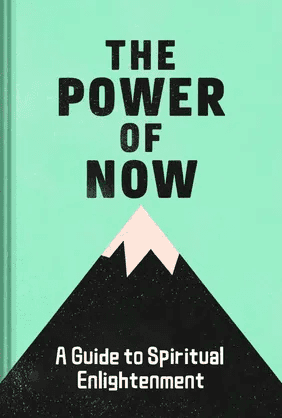
The Power of Now
Eckhart Tolle
 36 Duration
 9 Key Points
 4.6 Rate
While diving into the full text is rewarding, finding the time and focus for such a deep book can be challenging. If you want to start absorbing these powerful concepts right away, an app can help.


LeapAhead

Grasp the core ideas of Eckhart Tolle's work and other profound books in 15-minute summaries, perfect for understanding complex spiritual concepts on a busy schedule.
Signs Your Pain-Body is Awake
To stop feeding this emotional entity, you first need to recognize when it activates. The pain-body is highly deceptive. When it wakes up, it tricks you into believing that its dark, heavy energy is actually you.
Here are the clearest indicators that your pain-body has taken the wheel:
1. Out-of-Proportion Reactions
The trigger is often minor—a delayed text message, a clumsy comment from a coworker, or a minor inconvenience at the grocery store. However, your emotional response is explosive. The present event merely touches an old wound, and you react to the past, not the present.
2. A Compulsion to Argue
You will notice a strong, almost physical urge to initiate a conflict. If you are in a relationship, your pain-body will know exactly what to say to trigger your partner's pain-body. Once both are activated, they feed off each other in a destructive, exhausting loop of accusations and defense mechanisms.
3. Physical Heaviness or Tension
The pain-body is not just abstract psychology; it is deeply physiological. You might feel a tight knot in your stomach, a constriction in your chest, or a nervous buzzing in your arms.
Understanding how emotional pain takes up physical residence in our bodies is a game-changer. When we experience trauma or severe stress, it isn’t just logged in our memory; our nervous system holds onto it, manifesting as that heavy, buzzing tension you feel during a flare-up. If you want to explore the fascinating science behind how our physical biology traps unresolved emotional wounds and how to gently release them, this next read is an absolute must.
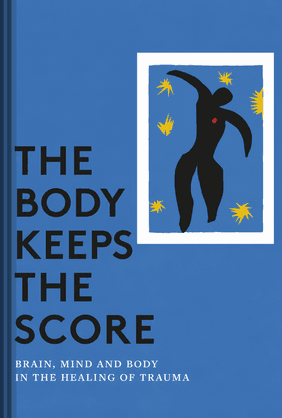
The Body Keeps The Score
Bessel Van Der Kolk
32 Duration10 Key Points4.5 Rate4. Addiction to Unhappiness
When the pain-body is active, you do not want to feel better. If someone tries to cheer you up or offers a logical solution to your problem, you will reject it angrily. The pain-body wants to dwell in the dark. It actively searches your memory banks for sad or infuriating events to sustain its vibration.
How to Dissolve the Pain Body in Daily Life
You cannot fight the pain-body. Fighting it means resisting it, and resistance creates more negative energy, which only feeds it further. You also cannot analyze it away by spending hours figuring out which childhood trauma caused it.
Learning how to dissolve the pain body requires a shift in consciousness. You must move from being the thinker of your thoughts to the observer of your internal state. Here is the practical framework to do this.
Step 1: Catch It Early Through Awareness
The moment you feel a negative emotion arising—irritation, impatience, gloom—catch it. Do not let it sneak into your mind unnoticed. Name it silently to yourself: "My pain-body is waking up."
By simply acknowledging its presence, you step out of the emotion and into the position of the observer. You create distance.
Step 2: Shine the Light of Presence
Tolle emphasizes that the pain-body cannot survive the light of conscious presence. Once you realize it is active, keep your attention on the feeling inside your body.
Feel the tightness in your chest or the heat in your face. Observe it as a scientist would observe a chemical reaction. Do not judge the feeling as "bad." Do not criticize yourself for having it. Just watch it.
When you observe the pain-body, you cut the link between the emotion and your thinking mind.

Step 3: Refuse to Follow the Thoughts
This is the hardest but most critical step. The pain-body will desperately try to pull your attention up into your head. It wants you to think about the person who wronged you or the unfairness of your situation.
You must recognize that your thoughts are currently compromised. They are not rational; they are generated by emotional pain. Refuse to let the emotion turn into a story. Keep dragging your attention back down into your physical body. Focus purely on the sensation.
Without the fuel of your negative thoughts, the pain-body will eventually run out of energy. It will subside and return to its dormant state.
Step 4: Accept the Process
Dissolving the pain-body is not a one-time event. Every time you observe it without identifying with it, it loses a little bit of its density. Over time, its episodes will become shorter, less frequent, and less intense. It may never entirely disappear, but it will lose its power to hijack your life. It will just become a passing sensation that you calmly watch come and go.
Stepping back and becoming the silent observer of your own mind takes practice, but it's the ultimate key to emotional freedom. If you are looking for a practical, profound guide to detaching from your inner monologue and letting go of the heavy emotional baggage you've been lugging around, this book beautifully complements Tolle's teachings. It offers incredibly clear analogies that make the process of stepping outside your ego feel entirely within reach.

The Untethered Soul
Michael A. Singer
26 Duration9 Key Points4.6 RateThe Collective Pain-Body
It is also vital to realize that you carry more than just your personal trauma. Tolle points out that humanity shares a collective pain-body, accumulated through thousands of years of warfare, slavery, disease, and cruelty.
Certain demographics carry a heavier collective pain-body. For instance, Tolle often speaks of the female pain-body, which carries the collective memory of the suppression of women, physical abuse, and exploitation over millennia. This can sometimes activate collectively, notably manifesting as intense emotional turbulence right before menstruation.
Similarly, entire nations or races carry collective pain-bodies based on their historical traumas. Recognizing this helps you detach. When overwhelming grief or rage hits you, realize it might not even be strictly "yours." It is the human condition moving through you. Your only job is to remain conscious and not let it dictate your behavior.
The realization that you are carrying emotional weight that didn't even originate with you can be incredibly validating. We often inherit trauma, anxiety, and deeply ingrained emotional patterns from our parents and grandparents, passed down through generations like a physical trait. If you're ready to unpack your family's history and break these inherited cycles of suffering, this groundbreaking book provides a practical roadmap for identifying and healing those hidden generational wounds.
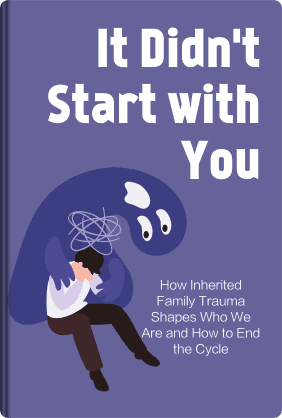
It Didn't Start with You
Mark Wolynn
21 Duration8 Key Points4.8 RateMoving Forward: From Identification to Freedom
The next time you are triggered, remember that you have a choice. You can fall asleep, let the ego take over, and act out the scripts of your old trauma. Or, you can take a deep breath, root your attention in your physical body, and quietly watch the storm pass.
You are not your sadness. You are not your anger. You are the awareness behind them. Understanding this distinction is the only real path to emotional freedom.
Exploring these transformative ideas is a powerful step, but it's easy to feel overwhelmed by a growing reading list. If you're looking for a way to absorb the key insights from these books and more, a learning app can be a great place to start.
LeapAhead
Turn your commute or break into a learning opportunity by listening to key insights from bestselling self-improvement books, helping you build a consistent habit without the overwhelm.
FAQ
Can the pain-body ever be completely destroyed?
For the vast majority of people, the pain-body is never entirely destroyed. However, through continuous conscious observation, it loses its density and its ability to control you. It becomes a very weak energy field that might occasionally surface, but it will no longer hijack your thoughts or behavior.
For the vast majority of people, the pain-body is never entirely destroyed. However, through continuous conscious observation, it loses its density and its ability to control you. It becomes a very weak energy field that might occasionally surface, but it will no longer hijack your thoughts or behavior.
Is the pain-body the same as clinical depression?
The pain-body is a spiritual and psychological concept regarding accumulated emotional pain, whereas clinical depression is a medical diagnosis often involving brain chemistry and prolonged psychological distress. While an active pain-body can trigger severe depressive episodes and negative thought loops, clinical depression may require professional therapy and medical intervention alongside spiritual practices.
The pain-body is a spiritual and psychological concept regarding accumulated emotional pain, whereas clinical depression is a medical diagnosis often involving brain chemistry and prolonged psychological distress. While an active pain-body can trigger severe depressive episodes and negative thought loops, clinical depression may require professional therapy and medical intervention alongside spiritual practices.
Why does my pain-body activate more around my family?
Your family members know your deepest triggers because they likely helped shape your early emotional environment. Additionally, families often share a specific family pain-body. When one family member's pain-body activates, it immediately seeks out the negative energy of another's, leading to familiar, repetitive arguments that seem impossible to stop.
Your family members know your deepest triggers because they likely helped shape your early emotional environment. Additionally, families often share a specific family pain-body. When one family member's pain-body activates, it immediately seeks out the negative energy of another's, leading to familiar, repetitive arguments that seem impossible to stop.
How do I deal with someone else's active pain-body?
The most effective way to handle someone else's active pain-body is to remain completely present and unreactive. Do not argue with them, as their pain-body is looking for resistance to feed on. Listen without judgment, do not take their accusations personally, and maintain your own inner peace. Often, your lack of reaction will starve their pain-body of the fuel it needs.
The most effective way to handle someone else's active pain-body is to remain completely present and unreactive. Do not argue with them, as their pain-body is looking for resistance to feed on. Listen without judgment, do not take their accusations personally, and maintain your own inner peace. Often, your lack of reaction will starve their pain-body of the fuel it needs.