

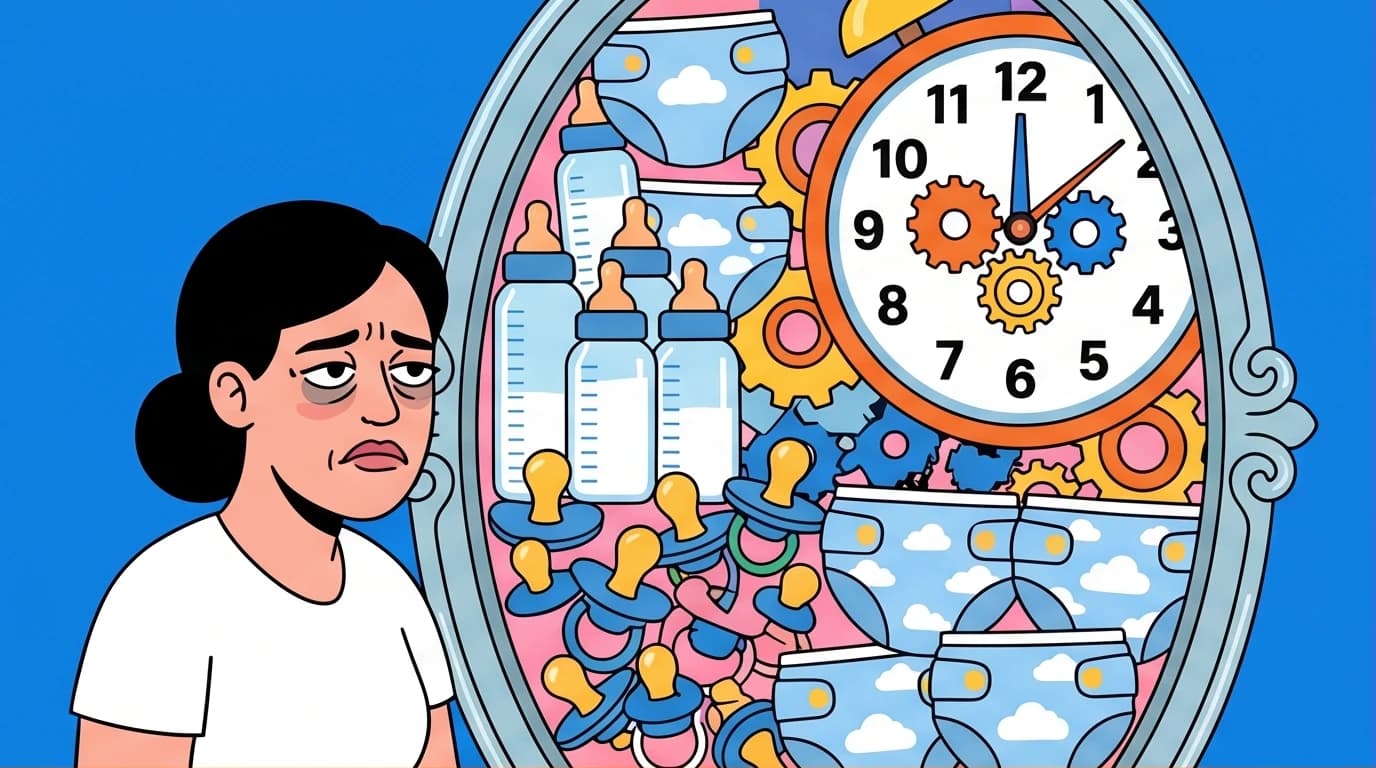
You look in the mirror and barely recognize the woman looking back. Between the endless diaper changes, school drop-offs, and pediatrician appointments, your entire existence seems to have collapsed into a single, demanding title: Mom. You love your kids fiercely, yet a quiet, persistent thought keeps echoing in your exhausted mind: Where did I go?
This profound sense of erasure is not a personal failure. It is the reality of losing identity in motherhood, a psychological phenomenon that almost no one warns you about at the baby shower.
When you give birth or adopt a child, you don't just bring a new life into the world; you birth a completely new version of yourself. Navigating this transition requires more than just a bubble bath or a rare trip to Target alone. It requires a deliberate, psychological approach to piecing your individuality back together.
The Psychology of the Identity Crisis After Having a Baby
Society conditions us to view motherhood as an entirely fulfilling destination. When it suddenly feels like a heavy, restrictive coat, the immediate reaction is intense guilt. To understand why you feel so lost, you have to understand the science of what you are actually going through.
Matrescence: The Developmental Phase No One Talks About
In the 1970s, medical anthropologist Dana Raphael coined the term "matrescence" to describe the physical, psychological, and emotional transition of becoming a mother.
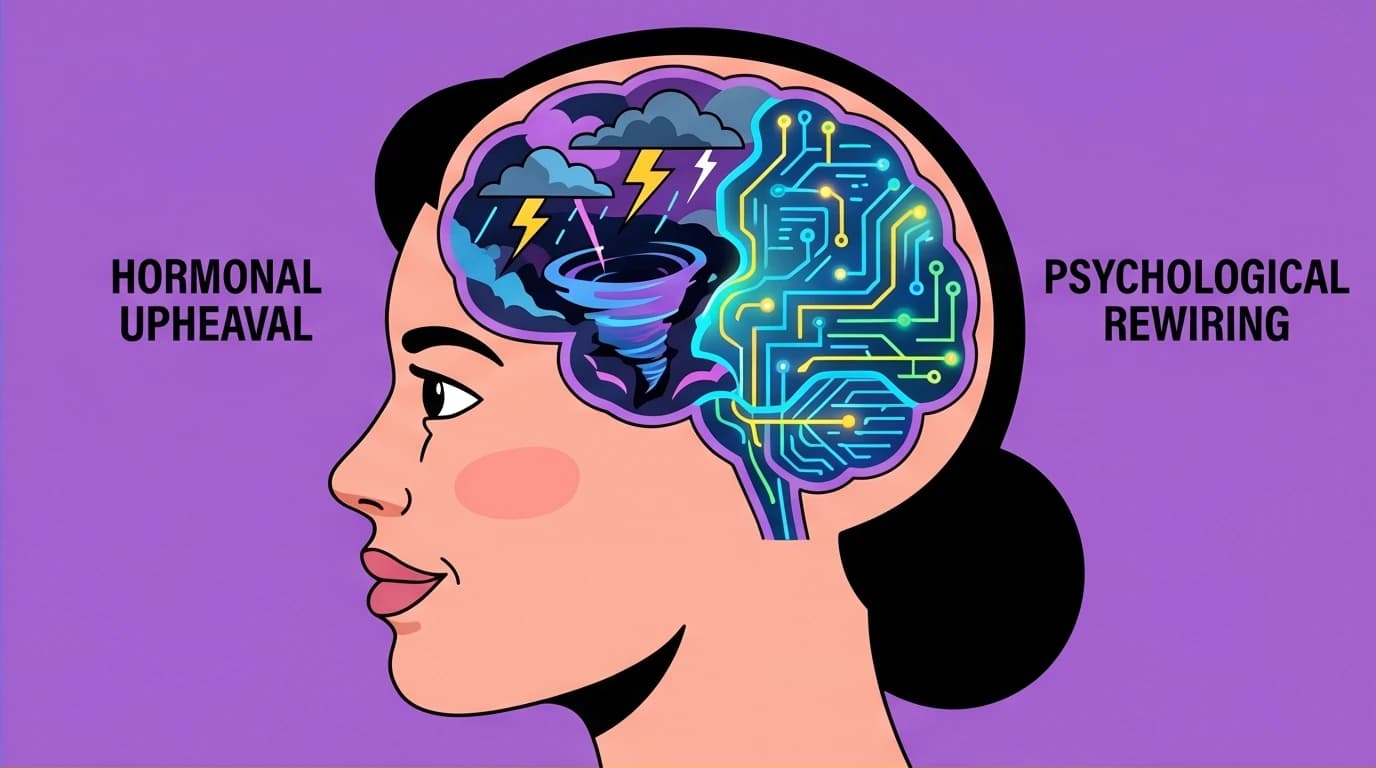
Think of adolescence. When a teenager goes through puberty, we expect them to be moody, confused, and prone to identity crises. Matrescence is the exact same level of biological and psychological upheaval. Your hormones crash, your brain structure actually alters (specifically in areas related to empathy and anxiety), and your social standing completely shifts. Expecting to gracefully step into motherhood without an identity crisis is like expecting a teenager to wake up one day as a fully functioning adult with zero growing pains.
Cognitive Overload and Ego Depletion
You feel empty because you are running on empty. The mental load of motherhood—remembering allergy medications, organizing winter clothes, tracking milestones—consumes massive amounts of cognitive bandwidth. Psychologists call this "ego depletion." When your daily energy is entirely allocated to keeping another human alive and thriving, the energy required to maintain your own hobbies, friendships, or career aspirations drops to zero. You haven't lost your personality; it is simply buried under administrative fatigue.
If the concept of "ego depletion" resonates with you, it might be time to take a hard look at the invisible administrative work you're carrying. When you’re managing the entire mental load of a household, it’s practically impossible to have energy left over for your own identity. Eve Rodsky tackles this exact issue head-on, offering a completely brilliant, practical system for divvying up domestic responsibilities so you can finally reclaim some cognitive bandwidth. It’s a game-changer for overwhelmed American moms trying to find space to breathe.
Fair Play
Eve Rodsky
 27 Duration
 10 Key Points
 4.5 Rate
Why Losing Identity in Motherhood Fuels the Guilt Trap
The biggest barrier to finding yourself after motherhood is the pervasive myth of the "selfless mother." American culture heavily romanticizes the idea that a good mother sacrifices everything for her children.
If you believe that narrative, then taking an hour to read a book, work on a personal project, or simply stare at the wall feels like stealing time from your child. This leads to a destructive cycle:
- You crave time for yourself.
- You take a moment for yourself.
- You feel intense guilt for not doing laundry or playing with your kid.
- You abandon your personal time and return to the mom role, feeling even more resentful and exhausted.
This cycle is particularly difficult for mothers who are also navigating professional life. The pressure to excel in a career while maintaining a household can amplify feelings of guilt and inadequacy.
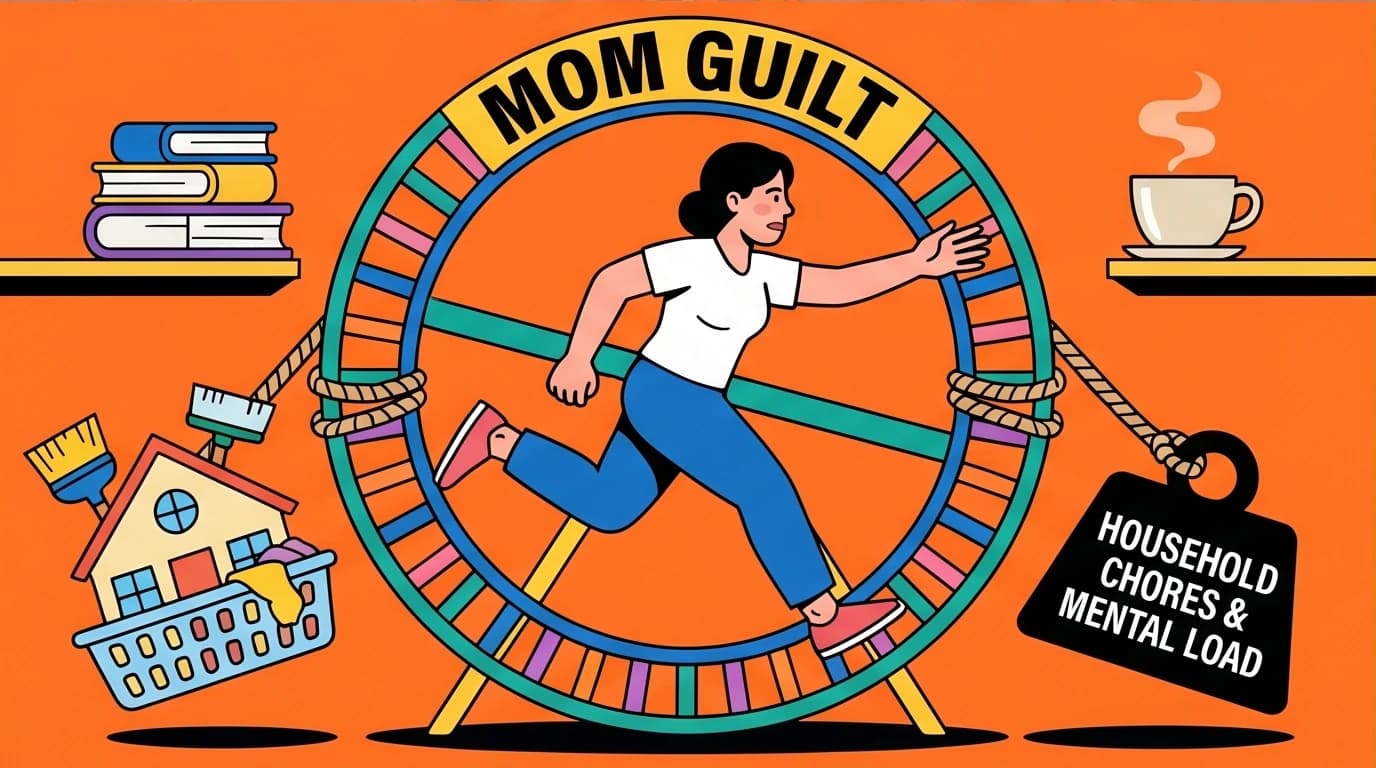
To break this cycle, you must reframe your definition of a good mother. A child does not need a martyr. A child needs a regulated, multi-dimensional human being who models what it looks like to live a full life. Your personal joy is not a betrayal of your family; it is a prerequisite for sustaining your ability to care for them.
Unlearning the "martyr mom" narrative is often the hardest part of matrescence. Society hands us an impossible script, telling us that completely abandoning our own needs is the ultimate sign of good parenting. If you're struggling to let go of that deeply ingrained mom guilt, Glennon Doyle’s phenomenal memoir is a must-read. She beautifully dismantles the cultural expectations placed on women and mothers, offering a fierce, empowering roadmap for how to stop pleasing everyone else and start living a wildly authentic life for yourself.

Untamed
Glennon Doyle
40 Duration8 Key Points4.3 RateBuilding a library of inspiring reads can be a powerful tool in this journey. If you're looking for more titles to add to your list, we have some great recommendations.
If your bookshelf is full of powerful books like this that you simply don't have the energy to get through, there are ways to absorb their core ideas without the guilt of another unfinished task.


Catch up on must-read books on motherhood and self-discovery by listening to their key ideas in just 15 minutes, turning "reading debt" into personal growth.
 LeapAhead
Mindset Shifts: How to Find Yourself as a Mom
You cannot out-organize an identity crisis. Color-coded planners and new morning routines will fail if you do not shift the way you view your own worth.
Stop Trying to Go "Back"
Many women desperately try to claw their way back to their pre-baby selves. They want their old body, their old freedom, and their old unbothered mindset.
You cannot go back. The woman you were before kids no longer exists, and grieving her is entirely valid. Give yourself permission to mourn the spontaneous weekend trips, the unbroken nights of sleep, and the luxury of only worrying about yourself. Once you stop fighting to resurrect a ghost, you can channel your energy into getting to know the new woman you have become. She is different, but she is far more resilient.
Detach Your Worth from Productivity
Motherhood often reduces our sense of self to a checklist. Did they eat vegetables? Are the bottles sanitized? Did we do a sensory activity today?
When your identity is tied to your daily productivity as a mother, any perceived failure (a tantrum at the grocery store, an unmade bed) feels like a personal flaw. You must separate your inherent value from your output. You are worthy of taking up space, having opinions, and pursuing interests simply because you exist, not because you successfully managed a toddler's meltdown.
Releasing the pressure to be productive around the clock is easier said than done, especially in a culture that glorifies the hustle. If you find yourself measuring your self-worth by how many chores you crossed off the to-do list or how perfectly you executed a Pinterest-worthy craft, you might need a gentle reminder to slow down. Shauna Niequist writes beautifully about leaving behind the frantic, exhausting chase for perfection. Her insights are a soothing balm for any mom who wants to trade burnout for genuine, messy connection.

Present Over Perfect
Shauna Niequist
15 Duration6 Key Points4.3 RatePractical Strategies for Rediscovering Yourself After Kids
Action without overwhelming yourself is key. You do not need large, uninterrupted blocks of time to rebuild your identity. You need consistency and intention.
1. Harness the Power of "Micro-Moments"
When you have zero free time, the concept of a hobby feels insulting. Instead of looking for hours, look for pockets of 10 to 15 minutes.
- Instead of scrolling social media while trapped under a sleeping baby, open the Kindle app on your phone and read one chapter of a thriller.
- Listen to an Audible book or a niche podcast while sitting in the school drop-off car line.
- Keep a sketchbook or a journal on the kitchen counter. Write one sentence or doodle for two minutes while the coffee brews.

These micro-moments act as anchors to your non-mom identity. They remind your brain that you still have interests outside of the current developmental leap your baby is going through.
And for those moments when even a single chapter feels too demanding, an app can help you absorb the core wisdom from a book in the time it takes to drink your coffee.
Listen to 15-minute summaries of bestselling books on psychology and self-improvement, designed to fit into the small pockets of time you have as a busy mom.
LeapAheadWhen you're in the thick of raising kids, the idea of completely overhauling your routine to "find yourself" feels laughable. That’s exactly why the micro-moment strategy works—it requires almost zero activation energy. If you want to dive deeper into how incredibly small actions can rebuild your identity over time, behavioral scientist BJ Fogg has the perfect framework. His approach proves that you don't need huge chunks of free time or massive amounts of willpower to create meaningful, lasting changes in your daily life.
Tiny Habits
BJ Fogg, Ph.D.
40 Duration8 Key Points4.7 Rate2. Reclaim Your Digital and Physical Environment
Your environment constantly triggers your mom-mode. If your Instagram feed is exclusively parenting influencers telling you how to organize sensory bins, your identity crisis will deepen. Unfollow accounts that make you feel inadequate. Curate your feed to reflect your actual interests—interior design, true crime, tech news, or hiking.
Physically, claim one small space in your home that is entirely yours and completely off-limits to kids' toys. It doesn't have to be a whole room. It can be one shelf, one corner of a desk, or a specific chair where you keep your favorite pens and a book from Barnes & Noble. Protecting that small physical space is a psychological boundary that declares: I exist here.
3. Speak About Things Other Than Your Kids
This sounds simple but is incredibly difficult in practice. When you catch up with friends, make a hard rule: only ten minutes of kid talk. After that, force yourself to discuss other topics. Talk about a documentary you watched, a bizarre news story, a work challenge, or an article you read.
At first, you might draw a blank. You might realize you haven't consumed any adult media in months. That uncomfortable realization is the catalyst you need to start engaging with the adult world again.
4. Practice "Strategic Underachieving"
To make room for your identity, something else has to drop. You cannot be the perfect employee, the perfect wife, the perfect mother, and a fulfilled individual all at once.
Choose areas where you are willing to lower your standards. Let the laundry sit in the basket for an extra day. Serve frozen chicken nuggets for dinner twice a week without a shred of guilt. Say no to volunteering at the school bake sale. Reallocate the time and energy you saved from those lowered expectations directly into yourself.
Learning to say no and protect your energy is a crucial skill for avoiding exhaustion. These actions are the foundation of healthy boundaries, which are essential for long-term well-being.
The Journey Forward
Finding yourself after motherhood is not a sudden epiphany; it is a slow, deliberate practice of integration. You are blending the fierce, unconditional love you have for your children with the unique passions, quirks, and ambitions that make you you.
You will have days where the balance feels impossible, and the guilt creeps back in. When that happens, remember that taking care of your identity is taking care of your family. A mother who knows who she is, who guards her own joy, and who forgives her own imperfections is the greatest role model a child could ever ask for.
FAQ
Is it normal to regret having kids during an identity crisis?
Yes. Experiencing fleeting feelings of regret or deep nostalgia for your pre-baby life is a very common, albeit taboo, part of matrescence. It does not mean you do not love your children or that you are a bad mother. It simply means you are overwhelmed and grieving your loss of autonomy. Acknowledge the feeling without judging yourself for it.
How do I find time for myself when I have zero help and a demanding partner?
Start with boundaries rather than time blocks. Have a direct conversation with your partner about the invisible mental load. Shift from "asking for help" to "assigning ownership." Your partner doesn't need to "babysit" while you rest; they need to parent. If you are a single mom or genuinely have zero support, lean entirely into micro-moments. Use the 15 minutes after they fall asleep purely for something you enjoy, not for chores.
Will I ever feel like my old self again?
You will not feel exactly like your old self, and that is actually a positive thing. The goal of rediscovering yourself after kids isn't regression; it's evolution. You will eventually feel like a whole, distinct person again, but this new version of you will be shaped by the immense strength, patience, and perspective that motherhood demands. Give yourself the grace to meet this new woman on her own terms.