


You are staring at graduation, or perhaps sitting at a dead-end entry-level desk, wondering what you are actually supposed to do with your life. The pressure to make the perfect choice right now feels paralyzing, and you are terrified of wasting years on a trajectory you will end up hating. You don't just want a paycheck; you need a clear direction that aligns with who you are, without leading to burnout in five years.
Finding the right career is not about taking a single magic personality quiz. It requires treating your professional life like a research project. You need to gather data about yourself, analyze the market, and run low-risk experiments. Here is the exact framework to help you figure out your next move.
Phase 1: The Self-Audit (Data Collection)
Before looking outward at job boards, you must look inward. Most people skip this phase, jump straight into sending out resumes, and wonder why they feel miserable two years later. You need to identify your raw materials.

Map Your Natural Inclinations
Grab a pen and organize your thoughts into three distinct columns:
- Effortless Skills: What do people consistently ask you for help with? Maybe you are the person who naturally fixes everyone's tech issues, or perhaps you are the one who mediates arguments in your friend group.
- Energy Creators: What tasks make you lose track of time? This could be organizing complex data, designing a presentation color palette, or writing convincing arguments.
- Energy Drainers: Be brutally honest about what you hate. If staring at a spreadsheet for hours makes you want to quit on the spot, you need to know that before applying for a financial analyst role.
Define Your Lifestyle Dealbreakers
A job title means nothing if the daily reality of the role makes you miserable. Ask yourself what you require from your lifestyle:
- Do you need a strict 9-to-5 schedule to pursue outside hobbies, or do you thrive in high-stakes, 60-hour workweeks?
- Are you comfortable moving across the country, or driving hundreds of miles a week for sales meetings?
- Do you need the stability of a corporate environment, or do you prefer the chaotic flexibility of a startup?
If you want to know what career is right for me, you first have to know what lifestyle is right for you. A traveling consultant makes great money, but if you hate living out of a suitcase and sleeping in different hotel rooms every week, it is the wrong choice.
For those who want a structured way to begin this self-audit, a well-designed assessment can be an excellent starting point for uncovering your core strengths and matching them to potential job families.
If you're struggling to accurately pinpoint your natural strengths and lifestyle needs, taking a deeper look at your personality type can be incredibly eye-opening. Rather than relying on guesswork to figure out your next career move, you can use established frameworks to see which professional environments you're actually wired to thrive in. For a structured approach to mapping your personal traits to real-world job paths, this comprehensive guide uses personality secrets to help you uncover the career you were quite literally built for.

Do What You Are — Discover the Perfect Career for You Through the Secrets of Personality Type
Paul D. Tieger, Barbara Barron, Kelly Tieger
 40 Duration
 9 Key Points
 4.8 Rate
Phase 2: Exploring Career Options
Once you know your strengths and dealbreakers, it is time to look at what the market actually offers.
Brainstorming Without Boundaries
Start by consuming content about different industries. Browse the business and career sections on Goodreads. Listen to podcasts on Audible interviewing professionals from various fields. Read autobiographies of people whose lives you admire. At this stage, write down any job title that sparks even a tiny bit of interest.
To make this research phase more efficient, you can absorb the core ideas from influential business books and biographies in minutes rather than weeks.


LeapAhead

Get key insights from bestselling career books and autobiographies in just 15 minutes, helping you quickly explore dozens of industries and potential roles.
Applying the Reality Filter
Now, take that massive list of career options and filter it through brutal market reality. In the United States, the Bureau of Labor Statistics (BLS.gov) is your best friend. Look up the roles on your list and check two specific metrics:
- Job Outlook: Is this industry growing or shrinking over the next ten years?
- Median Pay: Does this salary support the lifestyle you outlined in Phase 1?

You might realize that a highly appealing creative job simply does not pay enough to cover your target living expenses, or that a high-paying tech role requires another four years of expensive schooling you are not willing to do. Cross out the options that fail your reality filter.
If your reality filter reveals that a four-year degree isn't part of your immediate plan, it's worth exploring the many lucrative opportunities available. You might be surprised to learn about some of the highest paying jobs that don't require a traditional college degree.
Filtering out career options that don't match your financial or educational reality can sometimes feel a bit discouraging. If you're feeling stuck during this brainstorming phase, it helps to approach your life like a Silicon Valley design project. By applying design thinking—a method normally used to create innovative tech products—you can prototype different versions of your future without having to commit blindly. This highly praised methodology, born out of a popular Stanford University class, is a fantastic resource for building a joyful and well-paying career from scratch.

Designing Your Life
Bill Burnett, Dave Evans
27 Duration10 Key Points4.4 RatePhase 3: Actionable Career Planning Steps
You cannot figure out your life entirely on paper. To make a confident decision, you have to get out of your head and interact with the real world. Follow these career planning steps to test your remaining options.
Step 1: Conduct Informational Interviews
An informational interview is a 20-minute conversation with someone who currently holds the job you want. You are not asking for a job; you are asking for the truth.
Find professionals on LinkedIn or through your university alumni network. Send a direct, polite message:
"Hi [Name], I am currently exploring career options in [Industry] and I really admire your trajectory at [Company]. Would you have 15 minutes for a quick virtual coffee chat? I would love to hear what your day-to-day is actually like."
"Hi [Name], I am currently exploring career options in [Industry] and I really admire your trajectory at [Company]. Would you have 15 minutes for a quick virtual coffee chat? I would love to hear what your day-to-day is actually like."
When you get them on the phone, ask the hard questions: What is the worst part of your job? What surprised you most about this industry? If you had to start over today, would you choose this path again?
Reaching out to professionals for an informational interview can feel intimidating, but building a network is arguably the most critical step in transitioning into a new field. Often, the barrier between you and your dream job isn't your resume—it's simply that you aren't in the right room with the right people. If you want a proven strategy for getting noticed and making genuine connections with industry veterans who can open doors for you, this practical networking guide will show you exactly how to position yourself for success.
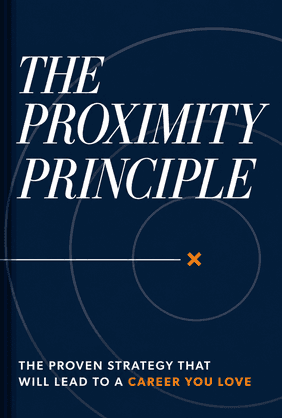
The Proximity Principle
Ken Coleman and Dave Ramsey
26 Duration8 Key Points4.6 RateStep 2: Consume Hyper-Specific Industry Content
Before you commit to a degree or a drastic pivot, immerse yourself in the daily conversations of that industry. Find the subreddits, Discord servers, and niche newsletters where these professionals complain, share wins, and discuss trends. If you find their daily problems incredibly boring, you will likely find the job boring.
Step 3: Run Micro-Experiments
Never make a massive career leap without a small test.
- If you think you want to be a software engineer, do not immediately enroll in a $15,000 bootcamp. Spend a weekend building a basic website first.
- If you want to work in marketing, offer to run the social media account for a local small business for a month.
- Look for job shadowing opportunities where you can quietly observe a professional for a day or two.
Micro-experiments expose you to the grind behind the glory. Everyone wants the prestige of being an author whose books sell out at Barnes & Noble or Amazon, but few actually enjoy the isolating process of writing and editing for months on end.
The 3-Circle Framework for Final Decisions
If you are still stuck between two or three paths, visualize a Venn diagram with three circles. Your ideal career path sits directly in the center of these three elements:
- Competence: You are good at it, or you have the clear capacity to become good at it.
- Engagement: The daily tasks hold your attention and align with your core values.
- Economic Value: People are willing to pay a fair market rate for it.

If you have competence and economic value but no engagement, you will get rich but burn out. If you have engagement and competence but no economic value, you have a great hobby, not a career. You need all three to sustain a long-term professional trajectory.
Balancing competence, engagement, and economic value often challenges the traditional American advice to "just follow your passion." In fact, relying solely on passion is a notorious trap that leaves many young professionals frustrated and underpaid. Instead of trying to find a job that perfectly matches your pre-existing interests, a smarter strategy is to build rare, valuable skills that give you the leverage to design a working life you love. If you want to dive deeper into why skill-building trumps passion-following, this thought-provoking read will completely reframe how you approach your long-term career trajectory.

So Good They Can't Ignore You
Cal Newport
22 Duration9 Key Points4.6 RateCommon Pitfalls to Avoid
As you navigate this process, watch out for the mental traps that cause young professionals to make poor decisions.
Chasing the Title Instead of the Task
People often fall in love with a noun ("I want to be a CEO," "I want to be a Producer") without considering the verbs. A CEO spends their day managing personnel disputes, looking at financial models, and putting out fires. A producer spends hours coordinating schedules and managing budgets. Choose a career based on the verbs you want to do every day, not the noun you want on your business card.
People often fall in love with a noun ("I want to be a CEO," "I want to be a Producer") without considering the verbs. A CEO spends their day managing personnel disputes, looking at financial models, and putting out fires. A producer spends hours coordinating schedules and managing budgets. Choose a career based on the verbs you want to do every day, not the noun you want on your business card.
Following Someone Else’s Blueprint
Your parents, professors, and peers all have opinions on what constitutes a "good" job. Often, their advice is based on what worked twenty years ago, or what provides them with social status. You are the one who has to wake up at 6:00 AM every Monday to do the work. Do not inherit someone else's definition of success.
Your parents, professors, and peers all have opinions on what constitutes a "good" job. Often, their advice is based on what worked twenty years ago, or what provides them with social status. You are the one who has to wake up at 6:00 AM every Monday to do the work. Do not inherit someone else's definition of success.
Waiting for 100% Certainty
You will never be completely sure. Choosing a career path is an educated guess based on the best data you currently have. Action creates clarity. Pick a direction that satisfies your current criteria, commit to it fully for a few years, and trust that you can pivot later if your goals change.
You will never be completely sure. Choosing a career path is an educated guess based on the best data you currently have. Action creates clarity. Pick a direction that satisfies your current criteria, commit to it fully for a few years, and trust that you can pivot later if your goals change.
This ability to pivot is crucial. If you find yourself needing to make a change down the line, having a clear strategy will be your most valuable asset.
The key to a successful career is continuous learning, but it can be hard to find the energy after a long workday.
LeapAhead
Turn your commute or workout into productive learning time with 15-minute audio summaries of books on leadership, communication, and other vital career skills.
FAQ
What if I choose the wrong career path?
Choosing a "wrong" path is highly common and rarely permanent. The skills you acquire in your first few jobs—communication, project management, problem-solving—are highly transferable. If you realize you made a mistake, you can leverage that experience to pivot into a new industry. No experience is entirely wasted.
Choosing a "wrong" path is highly common and rarely permanent. The skills you acquire in your first few jobs—communication, project management, problem-solving—are highly transferable. If you realize you made a mistake, you can leverage that experience to pivot into a new industry. No experience is entirely wasted.
Should I follow my passion or focus on salary?
Neither extreme works well. Following pure passion often leads to financial stress if there is no market demand. Focusing solely on salary usually leads to severe burnout and a mid-career crisis. Aim for the intersection: find a field you find interesting enough to stay engaged in, which also meets your practical financial needs.
Neither extreme works well. Following pure passion often leads to financial stress if there is no market demand. Focusing solely on salary usually leads to severe burnout and a mid-career crisis. Aim for the intersection: find a field you find interesting enough to stay engaged in, which also meets your practical financial needs.
Is it too late to change my mind if I already picked a college major?
No. A significant percentage of college graduates work in fields entirely unrelated to their degrees. Employers care far more about your actual skills, internship experiences, and ability to learn than the specific title of your diploma. You can pivot by acquiring specific certifications or taking entry-level roles in your new desired field.
No. A significant percentage of college graduates work in fields entirely unrelated to their degrees. Employers care far more about your actual skills, internship experiences, and ability to learn than the specific title of your diploma. You can pivot by acquiring specific certifications or taking entry-level roles in your new desired field.
Are career aptitude tests actually accurate?
Tests like the Myers-Briggs or Strong Interest Inventory can provide a helpful starting point by highlighting traits you might not have noticed about yourself. However, they are not fortune tellers. Use them to brainstorm potential industries, but rely on real-world testing, informational interviews, and actual market data to make your final decision.
Tests like the Myers-Briggs or Strong Interest Inventory can provide a helpful starting point by highlighting traits you might not have noticed about yourself. However, they are not fortune tellers. Use them to brainstorm potential industries, but rely on real-world testing, informational interviews, and actual market data to make your final decision.