

You are standing at the edge of the room, gripping a cold drink, watching groups of people chat effortlessly. The thought of breaking into a circle or approaching a stranger feels like climbing a steep mountain. You want to connect, but your social battery drains just thinking about the forced small talk and the agonizing silence that might follow.

You are not broken, and you do not need to fake an extroverted personality to survive a social event. The traditional advice of "just put yourself out there" or "walk up and introduce yourself" is designed for people wired differently than you.
Starting a conversation should not feel like a theatrical performance. It requires a strategic shift. You need methods that align with your natural temperament—tactics that lower the psychological stakes and keep you feeling safe.
The Psychology of Introverted Social Energy
Before you learn what to say, you must understand why socializing feels so heavy. Introverts process social stimuli through a longer, more complex neural pathway associated with acetylcholine, a neurotransmitter linked to deep thinking and internal focus. Extroverts, conversely, rely heavily on a dopamine-driven reward system. A loud, crowded room gives them a hit of energy. For you, it is sensory overload.

When you add the fear of judgment to this biological baseline, the cognitive load doubles. You are not just processing the environment; you are actively worrying about your performance.
Overcoming social anxiety starts with radical acceptance. Stop fighting your biology. Your goal is not to become the loudest voice in the room. Your goal is to make one or two genuine connections using the least amount of energy possible.
If you want to dive deeper into why your brain is wired this way, understanding the science behind your temperament can be incredibly validating. Society often champions loud, outgoing behavior, but there is immense, untapped power in a quieter approach to life. For a transformative look at how your natural disposition is actually your greatest asset in a noisy world, I highly recommend checking out this essential read on the subject.
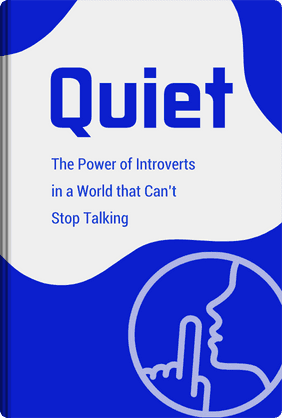
Quiet
Susan Cain
 40 Duration
 7 Key Points
 4.6 Rate
Reading a book like Quiet is a powerful step, but finding the energy for a full book can be tough when you already feel drained. If you want to absorb these ideas without the heavy lifting, an app can help.


Get the core insights from essential books on introversion in just 15 minutes, perfect for learning new skills without depleting your social battery.
 LeapAhead
The Core Strategy: Become the Interviewer
Introverts possess a superpower that extroverts often lack: deep listening. You notice details. You process information thoroughly. You can use this to your advantage by shifting the spotlight.

People love talking about themselves and their opinions. When figuring out how to talk to people when you are shy, the golden rule is to let them do the heavy lifting. You initiate the spark, and you let them provide the fuel. This reduces your need to constantly generate new topics, preserving your social battery.
Low Energy Conversation Starters
Forget clever opening lines. The most effective approach is rooted in shared reality. You are both in the same room, experiencing the same event. Use that. Here are highly effective, low energy conversation starters divided into three distinct categories.
1. The Shared Environment Observation
Comment on something immediately visible or experiential to both of you. This is completely neutral territory and carries zero risk of personal rejection.
- "Is it just me, or is it freezing in here? It feels like it's 50 degrees."
- "The line for the coffee is brutal. Have you tried the roast here yet?"
- "The acoustics in this hall are really something. I could barely hear the speaker from the back row. How was it from your seat?"
These statements are invitations. If the person gives a one-word answer ("Yeah"), they might not be open to chatting, and you can comfortably disengage. If they agree and add their own thought ("I know, I wish I brought a sweater!"), the door is open.
2. The Micro-Favor Request
Psychologically, people feel validated when asked for minor, non-intrusive help. The "Ben Franklin effect" shows that doing a small favor for someone actually makes the helper like the person they are helping.
- "Do you happen to know where they moved the schedule board?"
- "I'm trying to figure out this coffee machine. Have you gotten it to work?"
- "Mind if I grab that empty chair next to you?" (Followed by a simple, "I'm [Your Name], by the way," once seated).
3. The Prop Anchor
Introverts are naturally observant. Look for "props"—items people bring with them that signal their interests. Books, unique glasses, a specific piece of technology, or a graphic t-shirt are all excellent anchors.
- "I noticed you're reading a paperback. I usually just use my Kindle to save space. Is that one worth adding to my Goodreads list?"
- "That’s a really interesting lapel pin. Is there a story behind it?"
- "I see you're using the new tablet. I was looking at that on Amazon last week. How does it handle for taking notes?"
Mastering these low-pressure openings takes practice, but once you realize that small talk is just a bridge to deeper connections, it feels a lot less intimidating.
If you are tired of awkward silences and want to build a toolkit of reliable, natural-sounding ways to navigate everyday interactions, there are some great resources out there. For actionable advice on bypassing the dreaded "weather talk" and fostering genuine dialogue without feeling fake, this guide is an excellent next step.

Better Small Talk
Patrick King
43 Duration8 Key Points4.4 RateIntrovert Networking Tips for Professional Settings
Corporate events, industry conferences, and mixers are notorious for inducing dread. Navigating these spaces requires a specific tactical approach.
Arrive early. Walking into a room of 100 people already grouped into tight circles is a nightmare scenario for an introvert. If you arrive early, when there are only 10 people in the room, the dynamic is entirely different. You can comfortably chat with the organizers or the first few attendees. As the room fills up, people will naturally gravitate toward you because you are already established in the space.
Stand near the traffic, but not in it. The food station or the coffee bar are natural conversation zones. Stand near the end of the buffet line or the drink station. You have a built-in topic (the food) and a natural time limit (once they get their food, they move on).
The Wingman Strategy. Find someone who looks exactly like you feel—someone standing alone, scanning their phone, or hovering near the perimeter. Approaching another solo attendee is much easier than breaking into a group of three. Walk up and say, "I always find these events a little overwhelming. Mind if I stand here and avoid the crowd with you for a minute?" Honesty is incredibly disarming and often a massive relief to the other person.
Surviving corporate mixers and professional networking events does not mean you have to morph into an aggressive salesperson. In fact, many of the most successful executives in the United States use their quiet, observant nature to build trust and influence behind the scenes. If you want to learn how to leverage your unique strengths to command a room—without shouting over everyone else—this insightful resource offers a fantastic blueprint for thriving in the business world.

The Introverted Leader
Jennifer B. Kahnweiler
46 Duration9 Key Points4.4 RateThe "If-Then" Framework for Social Paralysis
When your mind goes blank, panic sets in. To prevent this, use an "If-Then" psychological framework. This reduces the cognitive processing required in the moment because you have already made the decisions beforehand.
- IF someone asks, "What do you do?" THEN I will give my one-sentence pre-planned answer, and immediately ask, "What about your line of work?"
- IF a conversation stalls for more than five seconds, THEN I will ask, "What’s the highlight of your week been so far?"
- IF I feel my heart racing and my face getting hot, THEN I will excuse myself to the restroom to reset.
Having this mental script acts as a safety net. You do not have to invent responses on the fly. You simply execute the pre-planned action.
Social paralysis usually stems from our own internal monologue spinning out of control. When you constantly second-guess every word you say or agonize over how others perceive you, it drains your social battery before you even walk through the door. To truly feel comfortable at events, you need to quiet that inner critic. For practical techniques to break the cycle of endless rumination and ease your social anxiety, I strongly suggest picking up this helpful book.

Stop Overthinking
Nick Trenton
50 Duration9 Key Points4.5 RateManaging the Exit Strategy
A primary reason introverts fear starting conversations is the dread of getting trapped in them. If you do not know how to leave gracefully, you will avoid engaging entirely. Having an exit strategy is just as important as knowing how to start a conversation as an introvert.

You do not need an elaborate excuse. People at social events expect conversations to be brief and fluid. Use natural transitions to step away cleanly.
- The Biological Need: "It’s been great hearing about your project. I’m going to go grab a refill on my water."
- The Venue Anchor: "I want to make sure I check out the exhibits in the next room before they close. It was wonderful meeting you."
- The Wingman Pass: "Have you met Sarah? She works in a similar field to yours. I’ll let you two connect while I go say hi to the host."
Deliver the exit line with a warm smile and a slight step backward. You are not rejecting them; you are simply navigating the event.
Lowering the Stakes of Success
Your success at a social gathering is not measured by the number of business cards you collect or the volume of laughs you generate. Success is honoring your boundaries while leaving a positive, quiet impression.
You do not have to be the life of the party. Being the calm, grounded, attentive person in the corner is a highly attractive quality. People are drawn to safety and active listeners. By relying on your natural observation skills, asking simple environment-based questions, and giving yourself full permission to leave when your battery blinks red, you transform socializing from a threat into a manageable, even rewarding, experience.
At the end of the day, successfully navigating social events as an introvert comes down to honoring your own limits. Knowing when to step away, say no to an invitation, or wrap up a draining conversation is essential for your mental health. If you struggle with people-pleasing or feel guilty when you need to recharge alone, learning to set unapologetic limits is life-changing. This fantastic book provides the exact tools you need to protect your peace and preserve your energy.

Set Boundaries, Find Peace
Nedra Glover Tawwab
29 Duration10 Key Points4.5 RateAll these books provide a roadmap for thriving as an introvert, but it's easy for that reading list to feel like another source of pressure. If you want to absorb the key lessons from these books without the time commitment, there's a more modern way to learn.
Turn your commute or workout into learning time by listening to summaries of bestselling books on communication and self-improvement in just 15 minutes.
LeapAheadFAQ
What if my mind goes entirely blank after the first sentence?
Fall back on the simplest conversational tool: mirroring. Repeat the last one or two words the person said as a question. If they say, "I just drove in from Chicago," you say, "From Chicago?" This prompts them to keep talking and gives your brain a few seconds to catch up and regulate your nervous system.
Fall back on the simplest conversational tool: mirroring. Repeat the last one or two words the person said as a question. If they say, "I just drove in from Chicago," you say, "From Chicago?" This prompts them to keep talking and gives your brain a few seconds to catch up and regulate your nervous system.
Is there a difference between being introverted and having social anxiety?
Yes. Introversion is a personality trait related to how you recharge energy (introverts recharge alone, extroverts recharge around others). Social anxiety is a mental health condition characterized by an intense fear of being judged or negatively evaluated. You can be an introvert without social anxiety, but many introverts develop it because society often pressures them to act like extroverts.
Yes. Introversion is a personality trait related to how you recharge energy (introverts recharge alone, extroverts recharge around others). Social anxiety is a mental health condition characterized by an intense fear of being judged or negatively evaluated. You can be an introvert without social anxiety, but many introverts develop it because society often pressures them to act like extroverts.
How do I handle the awkward silence?
Reframe the silence. Not every gap in dialogue is awkward; sometimes it is just a natural pause. Instead of rushing to fill it with filler words, take a slow breath, take a sip of your drink, and simply observe. If the pause stretches too long, use a pivot question like, "So, what are you looking forward to this weekend?"
Reframe the silence. Not every gap in dialogue is awkward; sometimes it is just a natural pause. Instead of rushing to fill it with filler words, take a slow breath, take a sip of your drink, and simply observe. If the pause stretches too long, use a pivot question like, "So, what are you looking forward to this weekend?"
How long do I need to stay in a conversation to be polite?
There is no strict timer, but a standard introductory chat at a networking event or party usually lasts 3 to 5 minutes. Once you have exchanged names, established a brief connection regarding what you do or why you are there, and exchanged one or two pleasantries, you are entirely free to use an exit strategy and move on.
There is no strict timer, but a standard introductory chat at a networking event or party usually lasts 3 to 5 minutes. Once you have exchanged names, established a brief connection regarding what you do or why you are there, and exchanged one or two pleasantries, you are entirely free to use an exit strategy and move on.