


You are staring at your laptop screen, exhausted by a job that pays well but means absolutely nothing to you. Or maybe you are hustling in a field you love, but the financial stress is becoming impossible to ignore. You need a structural tool to fix this disconnect without making reckless, impulsive decisions.
Decoding the Anatomy of Work
The concept of Ikigai translates roughly to "a reason for being." Forget the philosophical fluff. For professionals navigating the modern economy, it is a strict diagnostic tool. It forces you to look at four intersecting circles.
To achieve an Ikigai career, your work must satisfy four specific criteria:
- What you love: Activities that put you in a flow state.
- What you are good at: Skills you have mastered through repetition and practice.
- What the world needs: Problems other people or companies are desperate to solve.
- What you can be paid for: A viable market demand willing to exchange dollars for your output.
When you only intersect two of these circles, you fall into specific psychological traps. This is where the overlapping areas of passion mission vocation profession come into play.
- Passion (Love + Good at): You enjoy it, and you are highly skilled. But if nobody needs it or pays for it, it remains a hobby.
- Mission (Love + Needs): You are doing impactful work. You feel fulfilled, but without a financial engine, you will eventually burn out.
- Vocation (Needs + Paid): You are doing something useful and getting a paycheck, but you lack the natural skill or love for it. Imposter syndrome and boredom thrive here.
- Profession (Good at + Paid): The classic "golden handcuffs" scenario. You make a great salary in a corporate job you excel at, but you feel completely empty inside.

Most mid-career burnout stems from living entirely within the "Profession" overlap. You are paid well to do something you are good at, but the lack of passion and mission makes every Monday morning dreadful.
If you find yourself nodding along to the reality of the "golden handcuffs," diving deeper into the origins of this philosophy can be incredibly eye-opening. To truly grasp how the people of Okinawa, Japan, master this balance for a long, joyful life, there is one definitive guide you should add to your nightstand. It strips away the corporate jargon and offers a refreshing, holistic look at weaving purpose into your daily routine, even if you are miles away from a Zen garden.

Ikigai
Héctor García, Francesc Miralles
 29 Duration
 9 Key Points
 4.7 Rate
Applying Ikigai to Work: The Diagnostic Audit
You cannot fix your career until you know exactly what is broken. Applying Ikigai to work starts with a brutal self-audit. Do not hand in your resignation letter yet. Grab a notebook and score your current job from 1 to 10 in all four categories.
- Do I enjoy the daily tasks? (Love)
- Am I in the top 20% of performers here? (Good at)
- Does this work solve a real problem? (Needs)
- Is my compensation fair and sustainable? (Paid)
Identify your lowest score. That is your immediate action zone.

If your "Paid" score is a 9 but your "Love" score is a 2, you do not necessarily need to change industries. You might just need to change your daily tasks. Can you pivot to a different department? Can you manage projects instead of doing the raw data analysis? Fix the low score before you nuke the entire career path.
Auditing your current job is just the first step; the real magic happens when you start prototyping your next move. If you are struggling to figure out exactly how to pivot without blowing up your life, you might want to look at your career through the lens of a Silicon Valley designer. There is a phenomenal framework born out of Stanford University that teaches you how to map out multiple viable career paths, test the waters, and build a professional life that actually works for you.

Designing Your Life
Bill Burnett, Dave Evans
27 Duration10 Key Points4.4 RateStrategic Moves: Ikigai for Career Change
If your audit reveals that your current trajectory is fundamentally broken, you need a career change. Using Ikigai for career change minimizes the financial risk associated with pivoting.
Step 1: Anchor to your strengths and market demand.
Never transition based purely on passion. That is a fast track to bankruptcy. Look at your "Good at" and "Paid for" circles. What transferable skills do you possess? If you are a high-level corporate accountant burned out by Wall Street, your financial modeling skills are highly valuable.
Never transition based purely on passion. That is a fast track to bankruptcy. Look at your "Good at" and "Paid for" circles. What transferable skills do you possess? If you are a high-level corporate accountant burned out by Wall Street, your financial modeling skills are highly valuable.
Step 2: Map the pivot toward purpose.
Take those strong financial skills and point them at a sector you actually care about. Maybe that means becoming a CFO for a renewable energy startup or a large non-profit. You keep the high-income skill, but you swap the environment to satisfy the "Love" and "Needs" circles.
Take those strong financial skills and point them at a sector you actually care about. Maybe that means becoming a CFO for a renewable energy startup or a large non-profit. You keep the high-income skill, but you swap the environment to satisfy the "Love" and "Needs" circles.
Step 3: Close the skill gap.
Sometimes you know what the world needs and what you love, but you are simply not good enough at it yet to demand top market pay. Your immediate goal is aggressive upskilling. Buy the technical books on Amazon, take the weekend courses, listen to industry leaders on Audible. Earn the right to get paid for your passion.
Sometimes you know what the world needs and what you love, but you are simply not good enough at it yet to demand top market pay. Your immediate goal is aggressive upskilling. Buy the technical books on Amazon, take the weekend courses, listen to industry leaders on Audible. Earn the right to get paid for your passion.
But aggressively upskilling with a long reading list can feel daunting when you're already juggling a demanding job. If you want to absorb the core ideas from essential career and business books but are short on time, a microlearning approach can be a game-changer.

Get the key insights from career-building books in 15-minute audio or text formats, helping you close your skill gap without the burnout.

Download LeapAhead App now

The Ikigai Business Concept
Entrepreneurs face a different set of challenges. The Ikigai business concept flips the model from personal career management to venture validation.
A business fails if it lacks any of the four pillars.
- A product you love but nobody needs: You built a vanity project.
- A product the world needs but you cannot monetize: You built a charity, not a business.
- A high-margin product you hate selling: You just built yourself a miserable job.
To build a sustainable venture, map your business model against the matrix. Silicon Valley is littered with startups that found a market need and a monetization strategy but failed because the founders burned out from a lack of genuine passion for the problem. Conversely, many lifestyle businesses fail because the founders prioritize their own joy over actual consumer demand. A true Ikigai business solves a painful problem for a specific demographic, utilizes the founder's unique unfair advantage, and operates on a highly profitable model.
Validating a business model against the Ikigai matrix requires ruthless testing and adaptation. You cannot afford to pour thousands of dollars and months of your life into a product that nobody actually wants to buy. If you want to learn how to rapidly test your ideas, pivot away from failures, and find that sweet spot between your passion and actual market demand, there is a legendary methodology you need to master. It is the exact playbook countless American entrepreneurs use to build profitable, purpose-driven companies from the ground up.
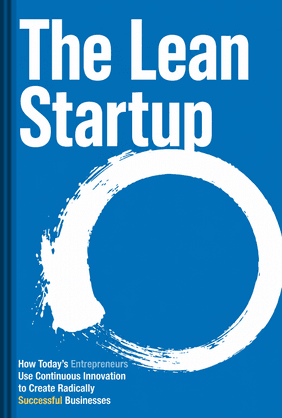
The Lean Startup
Eric Ries
45 Duration8 Key Points4.5 RateCommon Traps to Avoid
The Myth of One True Calling
You do not have a single, predestined Ikigai waiting to be discovered. You have multiple potential Ikigais depending on the season of your life. What aligns your four circles at age 25 will likely look very different at age 45. Expect your framework to evolve.
You do not have a single, predestined Ikigai waiting to be discovered. You have multiple potential Ikigais depending on the season of your life. What aligns your four circles at age 25 will likely look very different at age 45. Expect your framework to evolve.
The Perfectionism Paralysis
Your job does not have to provide 100% of your Ikigai from day one. You can build it through a portfolio approach. You might work a 9-to-5 that satisfies the "Paid" and "Good at" circles, while running a dedicated side hustle or volunteering on weekends to fulfill the "Love" and "Needs" circles. Over time, you merge them.
Your job does not have to provide 100% of your Ikigai from day one. You can build it through a portfolio approach. You might work a 9-to-5 that satisfies the "Paid" and "Good at" circles, while running a dedicated side hustle or volunteering on weekends to fulfill the "Love" and "Needs" circles. Over time, you merge them.
Ignoring Market Realities
"Follow your passion and the money will follow" is terrible advice. The market does not care about your passion. The market only pays for value. Always anchor your career decisions in reality. You must be exceptionally good at what you do to force the market to pay you for your passion.
"Follow your passion and the money will follow" is terrible advice. The market does not care about your passion. The market only pays for value. Always anchor your career decisions in reality. You must be exceptionally good at what you do to force the market to pay you for your passion.
The harsh reality is that the advice to simply "follow your passion" is notoriously flawed if you do not have the rare and valuable skills to back it up. If you want to understand exactly how competence generates career leverage, there is a phenomenal book that completely debunks the passion hypothesis. It argues that true professional satisfaction does not come from finding a magical calling, but rather from putting in the grueling hours to become undeniable in your field. It is a mandatory read before you make your next major career move.

So Good They Can't Ignore You
Cal Newport
22 Duration9 Key Points4.6 RateWith a list of powerful books like these, the challenge often isn't knowing what to read, but finding the time to actually read it. If you want to get a head start on these transformative ideas, you can begin by absorbing their core concepts first.
Tackle your career reading list by listening to the key ideas from influential books in minutes, helping you find your Ikigai without the overwhelm.
Download LeapAhead App now
Whether you're changing careers or building a business from scratch, these frameworks are powerful. But remember, the core philosophy of Ikigai is about more than just work—it's about a way of life. The daily habits and mindset shifts are just as important as the big strategic moves.
FAQ
Can my Ikigai change over time?
Yes. As you acquire new skills, as market demands shift, and as your personal interests evolve, your intersection will move. Re-evaluate your four circles every two to three years.
Yes. As you acquire new skills, as market demands shift, and as your personal interests evolve, your intersection will move. Re-evaluate your four circles every two to three years.
What if I do not know what my passion is?
Stop looking for a lightning bolt of inspiration. Passion usually follows competence. Pick a complex skill that has high market demand, work hard to become exceptionally good at it, and you will often find that you start loving the process of being an expert.
Stop looking for a lightning bolt of inspiration. Passion usually follows competence. Pick a complex skill that has high market demand, work hard to become exceptionally good at it, and you will often find that you start loving the process of being an expert.
Do I have to quit my job to find my Ikigai?
Absolutely not. Job crafting is highly effective. You can negotiate your responsibilities to spend more time on tasks you enjoy and excel at, organically shifting your current role closer to your ideal state without giving up your standard benefits and paycheck.
Absolutely not. Job crafting is highly effective. You can negotiate your responsibilities to spend more time on tasks you enjoy and excel at, organically shifting your current role closer to your ideal state without giving up your standard benefits and paycheck.
Is the Ikigai framework realistic for entry-level workers?
It is a compass, not a starting line. Entry-level workers rarely have the leverage to demand high pay for their passions. Your early career should focus heavily on expanding the "What you are good at" circle. Competence generates the leverage you need to design your ideal career later.
It is a compass, not a starting line. Entry-level workers rarely have the leverage to demand high pay for their passions. Your early career should focus heavily on expanding the "What you are good at" circle. Competence generates the leverage you need to design your ideal career later.