

You just finished reading Ikigai: The Japanese Secret to a Long and Happy Life, or maybe you saw it trending on Goodreads and Apple Books. You know the core message: find the intersection of what you love, what you are good at, what the world needs, and what you can get paid for. But when you sit down with your journal, try to draft a social media post, or simply need a quick mental reset, you cannot remember the exact phrasing. You do not need another summary of the book. You need the actual words.

Let's cut straight to the text. Here are the most impactful Ikigai quotes, categorized so you can easily find the right words to share, reflect on, or apply to your own life today.
Finding Your Reason for Being
The entire premise of the book revolves around discovering your unique purpose. These quotes capture the essence of what an "ikigai" actually is and why you need one to wake up with energy every morning.
- "Our ikigai is different for all of us, but one thing we have in common is that we are all searching for meaning. When we spend our days feeling connected to what is meaningful to us, we live more fully."
- "There is a passion inside you, a unique talent that gives meaning to your days and drives you to share the best of yourself until the very end. If you don't know what your ikigai is yet, as Viktor Frankl says, your mission is to discover it."
- "He who has a why to live for can bear with almost any how." (A quote from Nietzsche, famously referenced within the book to explain the psychological foundation of ikigai).
- "Life is not a problem to be solved. Just remember to have something that keeps you busy doing what you love while being surrounded by the people who love you."
How to use these: Write the second quote on the first page of a new notebook. It serves as a constant reminder that searching for your purpose is not a heavy burden, but an active, lifelong mission.
While these quotes offer powerful inspiration, the journey to self-discovery can feel abstract. If you're ready to move from reflection to action, having a structured framework can make all the difference.
Did you catch the reference to Viktor Frankl in that last quote? The authors of Ikigai drew heavy inspiration from Frankl's groundbreaking work on logotherapy—the psychological concept that human beings are fundamentally driven by the discovery of meaning in their lives. If you are struggling to pinpoint your own unique purpose, stepping back to read Frankl’s firsthand experiences and psychological insights can be incredibly powerful. It is an absolute must-read for anyone on a journey to find deeper significance in their everyday struggles and triumphs.
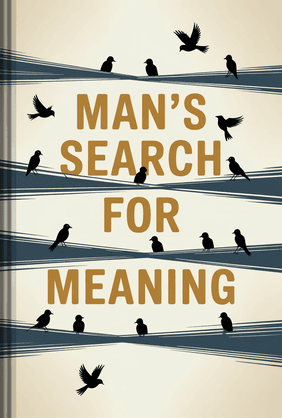
Man's Search for Meaning
Viktor E. Frankl
 44 Duration
 8 Key Points
 4.6 Rate
If you want to absorb the powerful lessons from foundational books like these but struggle to find the time, an app that distills the core ideas can be a great way to start.


Grasp the key insights from profound books like Man's Search for Meaning in just 15 minutes, perfect for when you're short on time but hungry for knowledge.
 LeapAhead
Ikigai Quotes on Happiness and Flow
We often overcomplicate happiness. One of the strongest takeaways from the text is how happiness ties directly to action, not just end results. If you are looking for Ikigai quotes on happiness, these passages highlight the concept of "flow"—losing yourself in a task you love.

- "The happiest people are not the ones who achieve the most. They are the ones who spend more time than others in a state of flow."
- "In order to achieve this optimal experience, we have to focus on increasing the time we spend on activities that bring us to this state of flow, rather than allowing ourselves to get caught up in activities that offer immediate pleasure."
- "Concentrating on one thing at a time may be the single most important factor in achieving flow."
- "We are what we repeatedly do. Excellence, then, is not an act but a habit." (Aristotle, heavily referenced in the book's chapter on mastery and flow).
Notice the pattern here. Happiness requires focus. In an era of constant notifications and heavy multitasking, true joy comes from doing one simple thing extremely well. Whether you are painting, coding, or organizing your garage, bringing your full attention to the task is where happiness lives.
If the concept of losing yourself in a meaningful task resonates with you, you might want to explore the psychology behind it more deeply. While the quotes above touch on the beauty of staying present in your daily rituals, there is an entire science dedicated to this exact state of mind. If you are looking to cultivate that deep, effortless focus in your work, hobbies, and everyday routines, checking out the foundational research on optimal experience is a brilliant next step. It will completely change how you approach productivity and happiness.

Flow
Mihaly Csikszentmihalyi
37 Duration8 Key Points4.5 RateMastering Mindfulness: Living in the Present Moment
Anxiety usually lives in the future, and regret lives in the past. The authors spent time in Okinawa observing centenarians who simply do not stress about things outside their control. These quotes hit hard if you need to ground yourself.

- "Stop regretting the past and fearing the future. Today is all you have. Make the most of it. Make it worth remembering."
- "Walk slowly and you'll go far."
- "Being in a hurry is inversely proportional to quality of life. As the old saying goes, 'Walk slowly and you'll go far.' When we leave urgency behind, life and time take on new meaning."
- "Focus on enjoying your daily rituals, using them as tools to enter a state of flow. Don't worry about the outcome—it will come naturally."
The takeaway: American hustle culture often demands we run at a hundred miles an hour. These quotes offer a sharp counter-narrative. When you feel the pressure to constantly produce, pull out the quote about leaving urgency behind. Let it reset your internal pacing.
Standout Héctor García Quotes
As the co-author, Héctor García brings a specific observational lens to the book. His reflections often bridge the gap between traditional Japanese wisdom and modern, fast-paced living. If you are looking for Héctor García quotes that distill complex philosophy into direct advice, focus on these:
- "To build a healthy lifestyle, you must recognize that your mind and body are tightly connected. A calm mind leads to a resilient body."
- "We must learn to turn off the autopilot that steers us in an endless loop and take control of our own navigation."
- "Everything can be taken from a man but one thing: the last of the human freedoms—to choose one's attitude in any given set of circumstances." (Drawing directly from logotherapy principles integrated into his writing).
García emphasizes agency. You cannot always control your environment—your boss, the economy, or the weather—but you can completely control your reaction and your daily habits.
The 10 Rules of Ikigai (Best Quotes from Ikigai Book)
At the end of the book, the authors summarize their findings from the long-lived residents of Ogimi, Okinawa, into ten distinct rules. These serve as the best quotes from Ikigai book if you want actionable, daily guidelines. They are practically formatted for sticky notes on your fridge or bathroom mirror.
- Stay active; don't retire. "Those who give up the things they love doing and do well lose their purpose in life."
- Take it slow. "When we leave urgency behind, life and time take on new meaning."
- Don't fill your stomach. "According to the 80 percent rule, in order to stay healthier longer, we should eat a little less than our hunger demands."
- Surround yourself with good friends. "Friends are the best medicine, there for confiding worries over, sharing stories with, and getting advice."
- Get in shape for your next birthday. "Water moves; it is at its best when it flows fresh and doesn't stagnate."
- Smile. "A cheerful attitude is not only relaxing—it also helps make friends."
- Reconnect with nature. "Though most people live in cities these days, human beings are made to be part of the natural world. We should return to it often to recharge our batteries."
- Give thanks. "To your ancestors, to nature, which provides you with the air you breathe and the food you eat, to your friends and family."
- Live in the moment. "Stop regretting the past and fearing the future. Today is all you have."
- Follow your ikigai. "There is a passion inside you, a unique talent that gives meaning to your days."
These ten principles provide a fantastic blueprint for a life of meaning. To see how they can be integrated into your morning, work, and evening habits, it helps to see them in action.
Longer Ikigai Book Excerpts for Deep Reflection
Sometimes a single sentence does not carry enough weight. If you are leading a book club, writing a substantive blog post, or preparing a presentation, you need context. Here are two of the most powerful, longer Ikigai book excerpts.
On the concept of "Moai" (Community):

"It is customary in Okinawa to form close bonds within local communities. A moai is an informal group of people with common interests who look out for one another. For many, serving the community becomes part of their ikigai. The moai goes beyond just socializing; it provides emotional and even financial support when a member is in need. This feeling of belonging and support gives the individual a sense of security and helps increase life expectancy."
On handling stress and the modern lifestyle:
"Many people seem older than they are. Research into the causes of premature aging has shown that stress has a lot to do with it. The American Institute of Stress investigated this process and concluded that most health problems are caused by stress. It is a modern epidemic... The trick is to keep the mind active and adaptable. Just as a lack of physical exercise has negative effects on our bodies, a lack of mental exercise is bad for us."
These excerpts remind us that finding purpose is not just an isolated, internal journey. It requires building a real-world community and actively managing the physical toll that stress takes on our bodies.
The stories of the Okinawan centenarians and their "moai" support groups are often the most fascinating parts of this philosophy. If you are captivated by how environment, community, and daily habits contribute to a long, joyful life, there is so much more to uncover about the world's longest-living populations. Expanding your reading to explore other global regions where people consistently live past one hundred years old will give you even more practical, life-extending habits to adopt right in your own neighborhood.

The Blue Zones
Dan Buettner
28 Duration11 Key Points4.7 RateHow to Apply These Quotes Today
Reading quotes feels good, but applying them changes your routine. Here are three direct ways to utilize this Ikigai quotes collection:
- Morning Journal Prompts: Do not just write a quote down. Write the quote, and then answer a specific question underneath it. For example, write down "Walk slowly and you'll go far," and then ask yourself: What is one task today I am rushing through that I need to slow down and actually enjoy?
- The "80 Percent" Visual Cue: The concept of Hara Hachi Bu (eating until you are 80% full) is hard to remember when you are staring at a massive restaurant portion. Keep the quote "Don't fill your stomach" mentally tied to your dining table. Stop when you feel satisfied, not when you feel stuffed.
- Social Media & Community Building: Share the quote about Moai (community) on your feed, but pair it with a real-life action. Invite three friends out for coffee or a walk in the park. Use the wisdom to physically pull people together.
Finding your Ikigai is not a lightning-bolt moment where the sky opens up and hands you a career path. It is a slow, intentional process of matching what you love doing with what the world actually needs. Let these words anchor you as you figure that out.
While journaling and community building are fantastic starting points, there is simply no substitute for reading the source material in its entirety. If you have been relying on quotes and summaries up until now, consider adding the complete book to your nightstand. It provides the full interviews, cultural context, and gentle encouragement you need to start implementing these life-changing concepts into your own busy lifestyle. Grabbing a physical copy makes it infinitely easier to highlight your own favorite passages.

Ikigai
Héctor García, Francesc Miralles
29 Duration9 Key Points4.7 RateAnd for those days when you're too busy for a full chapter, you can still build a consistent learning habit by listening to the key insights from these books during your commute or workout.
Listen to the main takeaways from Ikigai and thousands of other non-fiction books, helping you apply life-changing wisdom in just 15 minutes a day.
LeapAheadFAQ
What is the main message of the book Ikigai?
The main message is that everyone has an "ikigai"—a reason to jump out of bed in the morning. By combining your passion, mission, vocation, and profession, and by living a slow, community-focused, mindful life, you can achieve deep happiness and longevity.
The main message is that everyone has an "ikigai"—a reason to jump out of bed in the morning. By combining your passion, mission, vocation, and profession, and by living a slow, community-focused, mindful life, you can achieve deep happiness and longevity.
What are the 4 main rules of finding your Ikigai?
While the book lists 10 rules for living well, the core framework for finding your Ikigai consists of four intersecting circles: 1) What you love, 2) What you are good at, 3) What the world needs, and 4) What you can be paid for. Finding the center of these four elements is the key to personal and professional fulfillment.
While the book lists 10 rules for living well, the core framework for finding your Ikigai consists of four intersecting circles: 1) What you love, 2) What you are good at, 3) What the world needs, and 4) What you can be paid for. Finding the center of these four elements is the key to personal and professional fulfillment.
Who is the real author of the Ikigai book?
The most famous and widely read version, Ikigai: The Japanese Secret to a Long and Happy Life, was co-authored by Héctor García and Francesc Miralles. They traveled together to Okinawa, Japan, to interview centenarians and document their lifestyle and mindset.
The most famous and widely read version, Ikigai: The Japanese Secret to a Long and Happy Life, was co-authored by Héctor García and Francesc Miralles. They traveled together to Okinawa, Japan, to interview centenarians and document their lifestyle and mindset.
Why is flow so important in Ikigai?
Flow is the state in which people are so involved in an activity that nothing else seems to matter. The authors emphasize flow because it anchors you entirely in the present moment, eliminating anxiety about the future and regret about the past. Constant micro-moments of flow lead directly to a high quality of life.
Flow is the state in which people are so involved in an activity that nothing else seems to matter. The authors emphasize flow because it anchors you entirely in the present moment, eliminating anxiety about the future and regret about the past. Constant micro-moments of flow lead directly to a high quality of life.