

You know the feeling. You are sitting in a glass-walled conference room in an open-plan office. Ideas are bouncing around like ping-pong balls. The loudest voices are dominating the room, often repeating what has already been said just to be heard. You have the solution, but by the time you find the right moment to interject, the conversation has moved on.

For decades, the American corporate world has run on the "Extrovert Ideal." We are told that strong leaders are charismatic, gregarious, and naturally dominant. If you prefer to think before you speak, you are often told you lack executive presence.
This is fundamentally untrue. Introvert leadership Susan Cain has redefined how we view quiet professionals. The traits naturally inherent to introverts—deep focus, careful analysis, and high empathy—are precisely the skills required to lead modern, complex teams. You do not need a personality transplant to get promoted. You just need a different playbook.
Before diving into the specific strategies, it's crucial to understand the foundational principles that define this personality type.
The Extrovert Ideal vs. Quiet Book Leadership
In her groundbreaking research, Susan Cain exposed a massive bias in how businesses structure work. From open office floor plans designed for "collaboration" to non-stop brainstorming sessions, the environment is built for people who process information out loud.
However, quiet book leadership principles reveal a different reality. Introverted leaders often outperform extroverted leaders when managing proactive employees. While extroverts might unintentionally dominate discussions and shut down ideas, introverted leaders excel at listening, validating, and synthesizing input. They let their teams shine.
The goal is not to beat extroverts at their own game. The goal is to change the rules of engagement. You must lean into your natural disposition rather than fighting it.
For a deeper understanding of the research and stories that form the basis of this leadership style, Cain's book is the essential starting point.
If there is one definitive manual for navigating the corporate world as an introvert, it is the very book that sparked this workplace revolution. Susan Cain’s groundbreaking work dismantles the "Extrovert Ideal" and provides the scientific backing to prove why quiet leaders are often the most effective. If you have ever felt like your reserved nature is a liability, this read will fundamentally shift your perspective and give you the confidence to lead authentically.

Quiet
Susan Cain
 40 Duration
 7 Key Points
 4.6 Rate
How Introverts Succeed in Business: The Tactical Playbook
Rethinking your approach to daily corporate interactions is the first step. Here is exactly how introverts succeed in business without burning out.
1. Master the Loud Meeting with "Pre-Wiring"
Introverts process internally. When hit with a surprise question, your brain needs a second to organize the answer. Extroverts, conversely, think out loud. To bridge this gap, you must rely on preparation.
- Pre-wire the room: Before a major meeting, pitch your core ideas to key stakeholders one-on-one. Secure their buy-in over a quiet cup of coffee or a quick Slack huddle. When the big meeting happens, you already have allies in the room ready to support your point.
- Speak in the first five minutes: Break your own ice early. Ask a clarifying question, agree with a good point, or set the agenda. Once you hear your own voice in the room, it becomes mentally easier to chime in later when the stakes are higher.
- The power of the pause: When asked a tough question, do not rush. Say, "That is an excellent question. Let me think about that for a second." A deliberate pause projects confidence and authority.

2. Leverage Introvert Communication Skills
You do not have to be a charismatic orator to be a highly effective communicator. Introvert communication skills are rooted in clarity, synthesis, and observation.
- Dominate asynchronous communication: If you are an introvert, you probably write better than you speak. Companies like Amazon have famously banned PowerPoint in favor of six-page written memos. Champion this approach. Use well-structured emails, detailed strategy docs, and concise Slack messages to steer projects. Your deep-thinking abilities shine in written formats.
- Become the ultimate synthesizer: In a chaotic meeting where everyone is talking over each other, wait for a lull. Then, summarize the discussion. "It sounds like we have two main concerns here: budget constraints and timeline risks. Am I hearing that correctly?" Synthesizing is a massive power move. It positions you as the objective leader of the conversation without requiring you to shout.
- Ask high-leverage questions: Instead of trying to have all the answers, be the person who asks the most insightful questions. Questions control the direction of a conversation just as effectively as statements.
One of the greatest advantages you have as an introverted leader is your natural inclination to listen rather than speak. You can supercharge this strength by mastering the art of asking the right questions at exactly the right time. Michael Bungay Stanier offers a brilliant, highly practical framework for leaders who want to say less and ask more. It is an essential read for anyone looking to guide conversations and empower their team without needing to be the loudest voice in the room.

The Coaching Habit
Michael Bungay Stanier
40 Duration7 Key Points4.5 Rate3. Redefine Networking
The idea of walking into a hotel ballroom with a generic nametag to hand out business cards is an introvert’s nightmare. Scrap that model.
Network through depth, not breadth. Focus on building deep, one-on-one relationships. Invite a colleague from another department for a virtual coffee. Reach out to someone whose article you read on LinkedIn. A network of five deep, mutually respectful professional relationships is vastly more powerful than 50 superficial acquaintances.
Redefining how you network can take the anxiety out of building your professional circle. Since introverts thrive in one-on-one, meaningful conversations rather than crowded ballrooms, learning how to foster genuine relationships is a game-changer. Susan McPherson’s approach to networking centers entirely on intentionality and depth over superficial business-card exchanges. Her methodology aligns perfectly with the introverted desire for authentic connection, helping you build a powerful, supportive network without the exhaustion of small talk.

The Lost Art of Connecting
Susan McPherson
18 Duration6 Key Points4.7 RateSurviving the Quiet Susan Cain Workplace Environment
The physical environment can drain your energy faster than the work itself. The typical modern office setup—or a calendar packed with back-to-back Zoom calls—is toxic for introverts. Managing the Quiet Susan Cain workplace dynamic requires ruthless boundary setting.
Guard Your Social Battery
Your energy is a finite resource. Treat it like a financial budget.
- Block recovery time: If you have a high-stakes presentation at 10 AM, block out 11 AM to 12 PM on your calendar. Make it private. Use that hour for deep work, reading, or simply decompressing.
- Decline without guilt: Not every meeting requires your presence. Get comfortable asking, "Can I contribute to this via email?" or "Is my attendance critical for this sync?"
- Designate deep work zones: If you work in an open office, invest in high-quality noise-canceling headphones. Book small huddle rooms just for yourself when you need to focus. If you work remotely, turn off video on specific calls to reduce cognitive load.
Protecting your energy and cognitive load in an open-plan office isn't just about avoiding burnout; it is about preserving your ability to produce high-level strategic work. Cal Newport’s philosophy on focus provides a perfect blueprint for introverts who need to tune out workplace distractions. By implementing his strategies for blocking out noise and carving out dedicated time for intense concentration, you can turn your introverted tendency for deep focus into your most valuable professional asset.
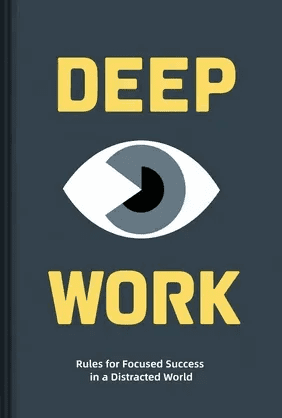
Deep Work
Cal Newport
47 Duration8 Key Points4.6 RateWith a reading list full of powerful books like these, the biggest challenge can be finding the mental energy to get through them, especially after a draining day. For those who want to absorb these key ideas in a more manageable way...


This app distills bestselling books on leadership and focus into 15-minute summaries, so you can keep learning on your commute or during a quiet break without depleting your social battery.
 LeapAhead
Dangerous Traps Quiet Leaders Must Avoid
Navigating leadership as an introvert comes with specific pitfalls. Recognize these early so you don't derail your progress.
The "Fake It Till You Make It" Burnout
Putting on an extrovert mask for eight hours a day is unsustainable. It leads to severe burnout and makes you resent your job. You can turn up your energy for a specific 30-minute presentation, but you must retreat to your baseline afterward. Authenticity builds far more trust than a forced, overly enthusiastic persona.

Putting on an extrovert mask for eight hours a day is unsustainable. It leads to severe burnout and makes you resent your job. You can turn up your energy for a specific 30-minute presentation, but you must retreat to your baseline afterward. Authenticity builds far more trust than a forced, overly enthusiastic persona.
Confusing Introversion with Passivity
Being an introvert means you get energy from within. It does not mean you are a pushover. You must still hold your ground, deliver tough feedback, and advocate for your team. You will simply do it calmly, privately, and systematically, rather than making a public spectacle.
Being an introvert means you get energy from within. It does not mean you are a pushover. You must still hold your ground, deliver tough feedback, and advocate for your team. You will simply do it calmly, privately, and systematically, rather than making a public spectacle.
Waiting to be Noticed
Introverts often believe that if they just put their heads down and do excellent work, management will notice and reward them. In American corporate culture, this rarely happens. You must make your invisible work visible. Send weekly update emails. Document your team's wins. Share your strategic insights in the company channel. You can brag quietly.
Introverts often believe that if they just put their heads down and do excellent work, management will notice and reward them. In American corporate culture, this rarely happens. You must make your invisible work visible. Send weekly update emails. Document your team's wins. Share your strategic insights in the company channel. You can brag quietly.
Putting all this advice into practice requires consistent learning, but finding the energy to read after a draining day at the office can be a challenge. For a more sustainable approach to professional growth...
Stay on top of leadership strategies by listening to key insights from bestselling books in just 15 minutes, an ideal way to keep growing when your social battery is low.
LeapAheadFAQ
How do I handle impromptu questions from senior executives?
Do not panic and do not guess. Buy time with phrases like, "That is a complex issue. I want to pull the exact data before giving you a definitive answer. I will follow up by 3 PM." This shows respect for accuracy and keeps you in control, playing to your strength of careful analysis.
Do not panic and do not guess. Buy time with phrases like, "That is a complex issue. I want to pull the exact data before giving you a definitive answer. I will follow up by 3 PM." This shows respect for accuracy and keeps you in control, playing to your strength of careful analysis.
Can an introverted manager successfully lead a team of highly extroverted people?
Yes. Introverts are actually uniquely equipped to manage extroverts. Because you are not competing for the spotlight, you can give your extroverted team members the runway they need to pitch ideas and take initiative. Your role becomes the strategic anchor—guiding their energy, keeping the team focused, and stepping in privately to course-correct when necessary.
Yes. Introverts are actually uniquely equipped to manage extroverts. Because you are not competing for the spotlight, you can give your extroverted team members the runway they need to pitch ideas and take initiative. Your role becomes the strategic anchor—guiding their energy, keeping the team focused, and stepping in privately to course-correct when necessary.
Will I hit a ceiling in my career if I refuse to act like an extrovert?
No. Many top executives and founders (Bill Gates, Warren Buffett, Rosa Parks) are documented introverts. What holds quiet professionals back is not their introversion, but a lack of visibility. As long as you actively communicate your strategic value—through writing, one-on-ones, and well-timed meeting contributions—your quiet demeanor will be viewed as executive gravitas, not weakness.
No. Many top executives and founders (Bill Gates, Warren Buffett, Rosa Parks) are documented introverts. What holds quiet professionals back is not their introversion, but a lack of visibility. As long as you actively communicate your strategic value—through writing, one-on-ones, and well-timed meeting contributions—your quiet demeanor will be viewed as executive gravitas, not weakness.