


You have watched the university lectures, digested 12 Rules for Life, and now you want to go to the source. The problem is obvious: the intellectual landscape Peterson draws from is massive. Diving blindly into heavy Russian literature or dense psychoanalytic theory without a roadmap usually leads to burnout. You do not just want a random pile of books from Barnes & Noble; you want the exact texts that shaped a specific worldview, and you need to know how to tackle them without getting overwhelmed.
To understand human behavior, the capacity for malevolence, and the search for meaning, you have to read the masters. This guide breaks down the core books recommended by Jordan Peterson, explaining exactly why they matter and how you can systematically read them to upgrade your own mind.
Of course, before diving into the complex works that influenced him, it's essential to have a firm grasp of Peterson's own foundational arguments. If you need a refresher on his most accessible work, it's worth revisiting his key principles.
What Does Jordan Peterson Read? The Four Pillars of Thought
People constantly ask, "what does Jordan Peterson read to build such a robust framework of the world?" The answer lies in his strict diet of historically significant, conceptually dense material. He completely ignores modern, superficial self-help trends. Instead, his library is built on four massive pillars:
- Clinical Psychology & Psychoanalysis: Understanding the unconscious mind, archetypes, and the shadow.
- Classic Literature: Exploring complex moral landscapes and human nature through fiction.
- History of Totalitarianism: Studying the atrocities of the 20th century to understand how ordinary people become capable of terrible things.
- Philosophy & Neuroscience: Bridging the gap between ancient wisdom, existential dread, and modern biology.
When you look at the books recommended by Jordan Peterson, you are looking at a diagnostic manual for the human soul. They are designed to make you realize your own potential for both good and evil, forcing you to organize your life with intention.
This diagnostic approach is most deeply explored in his first, and arguably most complex, book. It lays the psychoanalytic groundwork for everything that followed, explaining the architecture of belief itself.
Before you dive headfirst into the heavy academic pillars of history and psychoanalysis, it is crucial to ensure you have internalized Peterson's foundational framework. If you only know his work through YouTube clips or soundbites, you might be missing the structured arguments that tie his expansive philosophies together. Grabbing his benchmark guide is the best way to bridge the gap between abstract academic theory and actionable daily habits. It sets the perfect baseline for the tougher, more complex reads ahead.

12 Rules For Life
Jordan B. Peterson
 30 Duration
 8 Key Points
 4.6 Rate
The Core Jordan Peterson Book Recommendations
Below is the definitive breakdown of the most critical texts Peterson cites repeatedly, categorized by subject to help you structure your reading.
Literature and Fiction: Mapping the Human Soul
Peterson often argues that great fiction is more "true" than non-fiction because it distills universal human experiences into archetypal stories.
Crime and Punishment by Fyodor Dostoevsky
Dostoevsky is arguably the most referenced author in Peterson’s lectures. Crime and Punishment follows Raskolnikov, a poor student who convinces himself he is an extraordinary man above the law, justifying a brutal murder. The book is a psychological thriller that dismantles the idea of rational utopianism. It proves that humans cannot simply invent their own moral codes without facing severe psychological consequences.
Dostoevsky is arguably the most referenced author in Peterson’s lectures. Crime and Punishment follows Raskolnikov, a poor student who convinces himself he is an extraordinary man above the law, justifying a brutal murder. The book is a psychological thriller that dismantles the idea of rational utopianism. It proves that humans cannot simply invent their own moral codes without facing severe psychological consequences.
The Brothers Karamazov by Fyodor Dostoevsky
Considered Dostoevsky’s masterpiece, this novel tackles the intense debate between faith, doubt, reason, and free will. The chapter titled "The Grand Inquisitor" is a standalone masterpiece that Peterson frequently assigns to his students. It challenges the reader to look at the immense suffering in the world and still find a way to live a noble life.
Considered Dostoevsky’s masterpiece, this novel tackles the intense debate between faith, doubt, reason, and free will. The chapter titled "The Grand Inquisitor" is a standalone masterpiece that Peterson frequently assigns to his students. It challenges the reader to look at the immense suffering in the world and still find a way to live a noble life.
Brave New World by Aldous Huxley
While George Orwell warned of a totalitarian state ruled by fear, Huxley warned of a society ruled by pleasure. Peterson highlights this book to illustrate how a population can be enslaved by their own desires, trading freedom for comfort, entertainment, and endless distraction.
While George Orwell warned of a totalitarian state ruled by fear, Huxley warned of a society ruled by pleasure. Peterson highlights this book to illustrate how a population can be enslaved by their own desires, trading freedom for comfort, entertainment, and endless distraction.
Clinical Psychology: Confronting the Unconscious
To understand Peterson’s clinical perspective, you have to read the pioneers of psychoanalysis. These books require focus, but the payoff is a profound understanding of your own mind.
Modern Man in Search of a Soul by Carl Jung
If you want to understand the concept of the "Shadow" or the collective unconscious, start here. Jung is notoriously difficult to read, but this book is a collection of essays designed for the general public. It covers dream analysis, the spiritual problem of modern times, and the integration of the darker parts of our personality.
If you want to understand the concept of the "Shadow" or the collective unconscious, start here. Jung is notoriously difficult to read, but this book is a collection of essays designed for the general public. It covers dream analysis, the spiritual problem of modern times, and the integration of the darker parts of our personality.
Man’s Search for Meaning by Viktor Frankl
A profoundly impactful book written by a psychiatrist who survived the Nazi concentration camps. Frankl observed that the prisoners who survived were not necessarily the physically strongest, but those who retained a sense of meaning. This is the cornerstone of Peterson’s assertion that taking on responsibility and finding meaning is the only viable antidote to the suffering inherent in life.
A profoundly impactful book written by a psychiatrist who survived the Nazi concentration camps. Frankl observed that the prisoners who survived were not necessarily the physically strongest, but those who retained a sense of meaning. This is the cornerstone of Peterson’s assertion that taking on responsibility and finding meaning is the only viable antidote to the suffering inherent in life.
The Denial of Death by Ernest Becker
This Pulitzer Prize-winning book argues that human civilization is essentially an elaborate, symbolic defense mechanism against the knowledge of our own mortality. Peterson uses Becker's concepts to explain why people cling so violently to their belief systems and ideologies.
This Pulitzer Prize-winning book argues that human civilization is essentially an elaborate, symbolic defense mechanism against the knowledge of our own mortality. Peterson uses Becker's concepts to explain why people cling so violently to their belief systems and ideologies.
While diving into clinical psychology can often feel dry or overly academic, some works transcend their scientific roots to become profound meditations on the human spirit. Viktor Frankl’s firsthand account of surviving the Holocaust is not just a cornerstone of Peterson's worldview; it is a mandatory read for anyone seeking purpose in the face of inevitable suffering. If you are going to add just one psychological text to your nightstand this week, this powerful exploration of resilience and personal responsibility should absolutely be it.
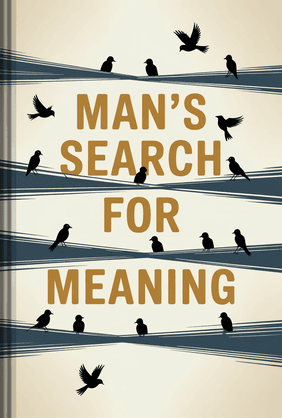
Man's Search for Meaning
Viktor E. Frankl
44 Duration8 Key Points4.6 RateHistory: The Capacity for Atrocity
Peterson insists that to be a fully developed, moral person, you must realize that you are biologically and psychologically no different from the people who committed the worst atrocities of the 20th century.

The Gulag Archipelago by Aleksandr Solzhenitsyn
This is perhaps the most important entry on the entire Jordan Peterson reading list. Solzhenitsyn secretly documented the horrors of the Soviet forced labor camp system. Peterson credits this massive three-volume historical masterpiece with bringing down the intellectual credibility of communism. The central thesis—that the line dividing good and evil cuts directly through the heart of every human being—is the foundation of Peterson’s personal responsibility ethos.
This is perhaps the most important entry on the entire Jordan Peterson reading list. Solzhenitsyn secretly documented the horrors of the Soviet forced labor camp system. Peterson credits this massive three-volume historical masterpiece with bringing down the intellectual credibility of communism. The central thesis—that the line dividing good and evil cuts directly through the heart of every human being—is the foundation of Peterson’s personal responsibility ethos.
Ordinary Men by Christopher R. Browning
A terrifying historical account of Reserve Police Battalion 101 during WWII. It details how a group of middle-aged, working-class men from Hamburg—who were not fanatic Nazis—were slowly conditioned to participate in mass executions. It destroys the myth that only "monsters" commit evil, serving as a grim warning about the dangers of group conformity.
A terrifying historical account of Reserve Police Battalion 101 during WWII. It details how a group of middle-aged, working-class men from Hamburg—who were not fanatic Nazis—were slowly conditioned to participate in mass executions. It destroys the myth that only "monsters" commit evil, serving as a grim warning about the dangers of group conformity.
The Road to Wigan Pier by George Orwell
Before writing 1984, Orwell spent time living among the impoverished coal miners in Northern England. Peterson recommends this book for its second half, where Orwell delivers a piercing critique of middle-class socialism, noting that many political ideologues are driven more by a hatred of the rich than a genuine love for the poor.
Before writing 1984, Orwell spent time living among the impoverished coal miners in Northern England. Peterson recommends this book for its second half, where Orwell delivers a piercing critique of middle-class socialism, noting that many political ideologues are driven more by a hatred of the rich than a genuine love for the poor.
Understanding the darkest chapters of history is essential, but it is equally important to examine how everyday economic struggles shape our political ideologies. George Orwell’s brilliant documentation of the British working class perfectly captures the psychological roots of societal resentment and ideological blindness that Peterson so often warns about. By examining these harsh historical realities, you can learn to spot the fine line between genuine compassion for the disadvantaged and hidden animosity toward the successful. It is a sobering but deeply necessary read.

The Road to Wigan Pier
George Orwell
15 Duration7 Key Points5 RatePhilosophy and Neuroscience: The Architecture of Reality
Beyond Good and Evil by Friedrich Nietzsche
Nietzsche foresaw the collapse of traditional religious frameworks in the West and predicted the rise of nihilism and totalitarian ideologies. Peterson relies heavily on Nietzsche’s critique of morality and his demand that individuals must create their own values through immense struggle.
Nietzsche foresaw the collapse of traditional religious frameworks in the West and predicted the rise of nihilism and totalitarian ideologies. Peterson relies heavily on Nietzsche’s critique of morality and his demand that individuals must create their own values through immense struggle.
Affective Neuroscience by Jaak Panksepp
To ground his psychological theories in hard science, Peterson turns to Panksepp. This book details the biological emotional systems shared by all mammals (such as PLAY, PANIC/GRIEF, and FEAR). It provides the empirical evidence for why ancient myths and behavioral archetypes actually map onto human brain chemistry.
To ground his psychological theories in hard science, Peterson turns to Panksepp. This book details the biological emotional systems shared by all mammals (such as PLAY, PANIC/GRIEF, and FEAR). It provides the empirical evidence for why ancient myths and behavioral archetypes actually map onto human brain chemistry.
As you bridge the gap between raw neuroscience and existential philosophy, you must eventually grapple with the moral voids left by modern secularism. Friedrich Nietzsche’s prophetic warnings about the consequences of abandoning traditional values form the absolute bedrock of Peterson’s philosophical arguments. Navigating this dense, paradigm-shifting text will challenge your deepest assumptions about morality, truth, and human nature. If you are ready to rigorously test your intellectual boundaries and understand the philosophical roots of our current ideological struggles, this classic is an indispensable challenge.
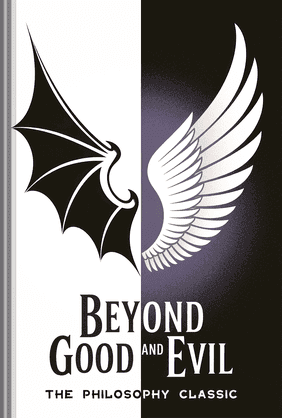
Beyond Good and Evil
Friedrich Nietzsche
32 Duration11 Key Points4.5 Rate
How to Tackle the Jordan Peterson Great Books Curriculum
Looking at a stack of Dostoevsky, Jung, and Solzhenitsyn on your desk can paralyze you. If you attempt to read these Jordan Peterson great books with a casual mindset, you will likely abandon them. Here is a realistic, step-by-step strategy to absorb this dense material.
1. Start with the Accessible Narratives
Do not start with Carl Jung. Start with books driven by strong human narratives.
- Action: Pick up Man’s Search for Meaning or Ordinary Men. Both are relatively short, deeply gripping, and offer immediate perspective shifts. You can easily finish either of these over a single weekend.
2. Utilize Audiobooks for Heavy Friction Books
Not everyone has the time to sit and read a 700-page Russian novel.
- Action: Use Audible or Apple Books for narrative-heavy classics like Crime and Punishment or The Brothers Karamazov. Professional narrators bring the intense dialogue to life, making it much easier to track the complex character names and philosophical debates during your daily commute.
3. Use Microlearning to Absorb Core Ideas
For many, the biggest barrier to entry for a list like this is the sheer density of the material. A microlearning app can act as an invaluable primer.
- Action: Use a service like LeapAhead to get 15-minute audio and text summaries of key non-fiction books on this list and in related fields. While a summary can't replace the experience of reading The Gulag Archipelago in its entirety, it can distill the core arguments and historical context, making the full text far less intimidating. This method is perfect for absorbing foundational concepts during a commute or workout, building a scaffold of knowledge before you commit to the deep dive. The main limitation, of course, is that summarized content may not satisfy a desire for full academic depth, but as a starting point, it's exceptionally powerful.


LeapAhead

Get the key insights from dense non-fiction books on psychology and history in just 15 minutes. Build your intellectual foundation before tackling the classics.
4. Read Actively, Not Passively
Philosophy and clinical psychology require active engagement. You cannot speed-read Nietzsche.
- Action: Buy physical copies from Amazon or your local bookstore. Keep a pen in your hand. Underline passages that make you uncomfortable or challenge your current worldview. Write your objections in the margins. Peterson himself advises reading a paragraph and then looking away to summarize what you just read in your own words.
5. Break Down the Monoliths
The Gulag Archipelago is an authorized abridged version (around 500 pages) which Peterson wrote the forward for. Start with the abridged version rather than the three-volume, 2,000-page set. Get the core message first, and if you are completely captivated, you can always upgrade to the full historical text later.
Why This Reading List Matters Today
We live in an era of rapid technological change, political polarization, and short attention spans. The algorithm feeds us exactly what we want to hear, creating comfortable echo chambers.

The books on this list do the exact opposite. They are abrasive. They force you to look at the darkest parts of human history and the most uncomfortable realities of your own psychology. But by confronting these texts, you build cognitive resilience. You stop falling for cheap ideological tricks. You learn to articulate your thoughts, understand the weight of your actions, and take absolute responsibility for your life.
LeapAhead
Start building intellectual resilience by learning from the world's best non-fiction, one 15-minute summary at a time.
Whether you are a college student trying to find your footing or a professional looking to deepen your understanding of the world, committing to this reading list is one of the highest-return investments you can make in your own intellect.
After exploring the intellectual traditions that shaped his worldview, you might be curious about how to approach his own published works chronologically. Understanding the progression of his ideas from his early academic work to his more recent books provides valuable context.
FAQ
Are these books too difficult for a casual reader?
Some of them are challenging, yes. Authors like Carl Jung and Friedrich Nietzsche write in dense, academic, or highly stylized prose. However, books like Man's Search for Meaning or Brave New World are highly accessible. The key is to start with the narrative-driven books and slowly build your reading stamina before tackling psychoanalysis or heavy philosophy.
Some of them are challenging, yes. Authors like Carl Jung and Friedrich Nietzsche write in dense, academic, or highly stylized prose. However, books like Man's Search for Meaning or Brave New World are highly accessible. The key is to start with the narrative-driven books and slowly build your reading stamina before tackling psychoanalysis or heavy philosophy.
Which book should I read first if I only have time for one?
If you can only read one book right now, pick up Man's Search for Meaning by Viktor Frankl. It perfectly captures Peterson's core message about responsibility, suffering, and the necessity of finding a purpose, all grounded in a deeply moving real-world historical context.
If you can only read one book right now, pick up Man's Search for Meaning by Viktor Frankl. It perfectly captures Peterson's core message about responsibility, suffering, and the necessity of finding a purpose, all grounded in a deeply moving real-world historical context.
Where can I find the complete "Great Books" list Peterson talks about?
Peterson frequently references his own curated lists on his official website and often points to the traditional "Great Books of the Western World" curriculum. The titles detailed in this article represent the most frequently cited and clinically relevant books he uses to build his psychological framework.
Peterson frequently references his own curated lists on his official website and often points to the traditional "Great Books of the Western World" curriculum. The titles detailed in this article represent the most frequently cited and clinically relevant books he uses to build his psychological framework.
Does Peterson recommend reading physical books or audiobooks?
While Peterson is a strong advocate for writing notes in the margins of physical books to aid memory and comprehension, he frequently praises audiobooks as a massive technological advantage. Listening to unabridged classics on Audible or Apple Books is a highly effective way to consume complex literature, especially if you have a long commute or a busy schedule.
While Peterson is a strong advocate for writing notes in the margins of physical books to aid memory and comprehension, he frequently praises audiobooks as a massive technological advantage. Listening to unabridged classics on Audible or Apple Books is a highly effective way to consume complex literature, especially if you have a long commute or a busy schedule.