


You hit a wall. A major project at work collapses, a relationship ends in betrayal, or a sudden health crisis shatters your routine. In these moments, feeling paralyzed by the sheer unfairness of life is a natural response. You might want to retreat, stay quiet, and just let the storm pass.
But perspective changes everything. When you look at a fifteen-year-old girl who faced a literal life-or-death threat simply because she wanted to sit in a classroom and read a book, the lens through which you view your own obstacles begins to shift. Extracting life lessons from Malala Yousafzai isn't about comparing your struggles to hers or minimizing your pain. It is about borrowing her psychological blueprint. It is about learning how to stand back up, reclaim your voice, and turn your deepest wounds into your greatest sources of strength.
Here is exactly how you can apply her mindset to your own personal growth journey.
How Did Malala Show Courage When the Stakes Were Absolute?
When people think of bravery, they often picture a complete absence of fear. They imagine someone charging into battle with a calm heart and a steady hand. Malala shatters this myth.
If you are wondering how did Malala show courage in the face of the Taliban, the answer is surprisingly grounded: she spoke up while she was terrified. She did not possess a magical shield against anxiety. She wrote blog posts for the BBC under a pseudonym. She spoke to local journalists. She continued to walk to school knowing the risks. Her courage was a calculated, daily choice to prioritize her purpose over her panic.
Redefining Bravery for Your Everyday Life
You likely aren't facing armed extremists on your morning commute, but fear manifests in deeply personal ways. It is the fear of speaking up in a hostile boardroom. It is the fear of leaving a toxic relationship. It is the fear of launching a business when your bank account is running low.
To apply Malala's brand of courage, you have to stop waiting for the fear to go away. Fear is biological; courage is a decision. The next time you are afraid to have a difficult conversation or pitch a risky idea at work, acknowledge the adrenaline rushing through your body. Recognize it. Then, act anyway. Courage is a muscle that only grows when you put it under tension.
If you are struggling to take that first terrifying step—whether it is speaking up in a high-stakes meeting or setting a necessary boundary—you do not have to wait for your anxiety to magically disappear. In fact, expecting to feel completely confident before you act is a trap that keeps millions of people stuck. If you want to learn how to actively push through that paralyzing doubt and build your courage muscle daily, Feel the Fear and Do It Anyway is an absolute must-read. This classic guide provides highly practical, psychological tools for making powerful decisions even when your heart is racing.

Feel the Fear and Do It Anyway
Susan Jeffers PhD and Hay House
 23 Duration
 7 Key Points
 4.7 Rate
The Anatomy of Malala Yousafzai Resilience
Surviving a gunshot to the head is a medical miracle. What happened next is a masterclass in mental endurance. The Malala Yousafzai resilience we witnessed post-2012 was not an automatic bounce-back. It was a grueling process of physical rehabilitation in Birmingham, waking up in a strange country, and facing a radically altered life trajectory.
The events that tested her resilience are part of a remarkable and challenging journey. To fully grasp the context behind her recovery and activism, it's helpful to understand the key moments that shaped her.
Resilience is frequently misunderstood as just "toughing it out." Malala demonstrates that real resilience is about adaptability and post-traumatic growth. She didn't just try to get her old life back; she used her trauma as a launchpad for a new, larger mission.
Turning Setbacks into Stepping Stones
When you face a severe setback—maybe you were laid off from a job you loved or a business venture went bankrupt—the natural instinct is to mourn the loss of what you had. Allow yourself that grief. But eventually, you must ask yourself the resilient question: What does this make possible?
Malala lost her quiet life in the Swat Valley, but that loss made a global education movement possible. When you hit rock bottom, you are standing on a solid foundation to rebuild. Reframe your failures. If a door slams shut, do not spend your life staring at the knob. Turn around and look at the new hallway you are standing in.
If Malala's ability to transform a horrifying personal tragedy into a global movement inspires you, the best way to understand her unshakeable mindset is to hear her story in her own words. While articles can distill her life lessons, reading her full autobiography offers a deeply personal look at the resilient family dynamic, cultural context, and raw determination that shaped her. I Am Malala is not just a memoir about surviving a Taliban attack; it is a profound exploration of how an ordinary teenager found the extraordinary strength to fight for her basic human rights.
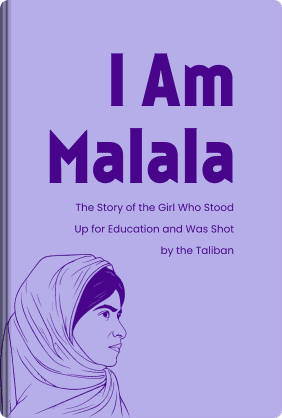
I Am Malala
Malala Yousafzai & Christina Lamb
47 Duration9 Key Points3.6 Rate
Radical Forgiveness as a Tool for Personal Freedom
One of the most striking life lessons from Malala Yousafzai is her stance on her attackers. She has repeatedly stated that she holds no desire for revenge against the men who shot her. "My mind is completely free," she once said.
This is the concept of radical forgiveness. It is crucial to understand that forgiveness in this context is not about absolving the guilty or saying what they did was okay. It is a highly selfish, protective act. Holding onto hatred is like drinking poison and expecting the other person to die. Malala realized that if she harbored resentment, the Taliban would continue to control her mind long after they failed to take her life.
Dropping the Weight of Resentment
Think about the grudges you carry. Maybe an old boss took credit for your work, or a friend betrayed your trust. You might spend hours replaying these scenarios in the shower, winning imaginary arguments against people who aren't even in the room.
That anger consumes your cognitive bandwidth. It drains the energy you need to build your own future. By practicing radical forgiveness, you evict toxic people from your mental real estate. You don't have to invite them over for dinner, and you don't have to trust them again. You just have to let go of the desire to see them suffer. Free up your mind to focus entirely on your own growth.
Mastering this kind of radical forgiveness is incredibly difficult when you feel entirely justified in your anger. If you find yourself holding onto toxic resentment and want to genuinely free your mind from the people who have wronged you, The Choice is a phenomenal resource. Written by Dr. Edith Eva Eger, a prominent clinical psychologist and Holocaust survivor, this profoundly moving book illustrates how we can all escape the mental prisons we construct for ourselves. It serves as a powerful reminder that while we cannot control what happens to us, we completely control how we heal from it.
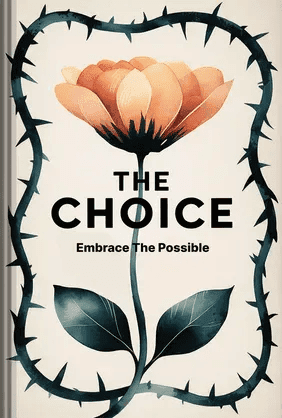
The Choice
Dr. Edith Eva Eger
37 Duration8 Key Points4.7 Rate
What Can We Learn from Malala About the Power of Voice?
In a noisy world filled with social media influencers and 24/7 news cycles, it is easy to feel like your single voice does not matter. What can we learn from Malala in this regard? We learn that authenticity cuts through the noise.
Before she was a global icon speaking at the United Nations, Malala was just a middle schooler keeping a diary. She did not wait for a massive platform to start advocating for girls' education. She used the tools she had at the moment.
Start Small, Speak Loud
You do not need a million followers to create a ripple effect. Your voice matters in your immediate environment. It matters when you stand up against an unfair policy at your local school board meeting. It matters when you advocate for a quieter colleague during a team meeting.
Never underestimate the compound effect of speaking your truth. If you see a problem in your community or your workplace, do not wait for a designated leader to fix it. Articulate the problem clearly and respectfully. Your willingness to say out loud what everyone else is thinking in silence is often the catalyst needed for real change.
Her journey from a young blogger to a global advocate demonstrates a unique and powerful approach to changing the world, showcasing a distinct style of activism.
Understanding the Malala Yousafzai Impact Through Lifelong Learning
If you want to measure the Malala Yousafzai impact, you cannot just look at the Nobel Peace Prize or her international fund. You have to look at her core philosophy: education is the ultimate weapon against oppression, ignorance, and poverty. "One child, one teacher, one book, and one pen can change the world," she famously stated.
This powerful statement is just one of many that encapsulates her profound wisdom and unwavering resolve. Her words continue to fuel the global movement for education and human rights.
She fought for the right to read, study, and think critically. In the United States, education is often taken for granted. We treat high school and college as mandatory checkboxes rather than privileges.
Arm Yourself with Knowledge
How do you honor this lesson in your own life? Make a relentless commitment to continuous self-education. Your formal schooling might be over, but your education should never stop.
Read deeply and widely. Whether you are picking up a biography at a local Barnes & Noble, listening to non-fiction on Audible during your commute, or taking an online course to upgrade your skills—treat knowledge as your greatest asset. When you face adversity, it is your internal library of mental models, historical context, and critical thinking skills that will pull you through. Knowledge makes you unshakeable. It gives you the color and context needed to understand complex problems rather than reacting to them blindly.
If you're inspired to make lifelong learning a habit but struggle to find the time for full books during a busy week, there are ways to get started.

Absorb the core ideas from world-changing books on courage and resilience in just 15 minutes, turning your commute or break into a powerful learning session.

Download LeapAhead App now
Understanding the true privilege of education often requires seeing what happens when it is deliberately withheld. If you want a striking, modern example of how self-education can help you break free from an oppressive environment and completely rewrite your future, add Educated to your reading list. Tara Westover’s breathtaking memoir chronicles her journey from growing up in a radical, survivalist family with zero formal schooling in rural Idaho to ultimately earning a PhD from Cambridge University. It perfectly mirrors Malala's core belief: that access to knowledge is the single most transformative tool a human being can possess.
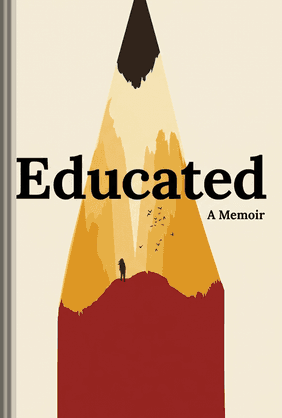
Educated
Tara Westover
25 Duration8 Key Points4.5 RateIntegrating Malala's Lessons into Your Daily Routine
Reading about these concepts is one thing; organizing your life around them is another. To truly absorb these life lessons from Malala Yousafzai, you need to implement micro-habits.
- Practice Micro-Courage: Once a week, do something that makes you slightly uncomfortable. Initiate a tough conversation, publish a piece of writing, or set a firm boundary with a demanding client.
- Audit Your Resentments: Write down the names of people you are harboring anger toward. Next to each name, write down exactly how holding onto that anger benefits you. You will quickly realize it doesn't. Consciously decide to drop the grudge.
- Invest in Your Mind: Dedicate just 20 minutes a day to learning something entirely outside of your comfort zone.
Making that 20-minute daily learning habit stick is often the hardest part, especially when you're exhausted after a long day.
LeapAhead helps you build a consistent learning routine by distilling key insights from nonfiction books into quick, digestible audio or text sessions that fit any schedule.
Download LeapAhead App now
Malala did not choose her trauma, but she masterfully chose her response. You have the exact same agency in your life. When the world pushes against you, push back with intelligence, unyielding courage, and a heart free of hate.
FAQ
What is Malala Yousafzai's most famous quote?
Her most widely recognized quote is from her 2013 speech at the United Nations: "One child, one teacher, one book, and one pen can change the world." This perfectly encapsulates her belief that education is the most powerful tool for dismantling oppression and creating global change.
Her most widely recognized quote is from her 2013 speech at the United Nations: "One child, one teacher, one book, and one pen can change the world." This perfectly encapsulates her belief that education is the most powerful tool for dismantling oppression and creating global change.
How can I practice courage like Malala in my daily life?
You practice courage by taking action alongside your fear, rather than waiting for the fear to disappear. Start small: voice an unpopular but necessary opinion at work, stand up for a marginalized coworker, or take a financial or creative risk you have been putting off. Courage is a habit built through repeated exposure to discomfort.
You practice courage by taking action alongside your fear, rather than waiting for the fear to disappear. Start small: voice an unpopular but necessary opinion at work, stand up for a marginalized coworker, or take a financial or creative risk you have been putting off. Courage is a habit built through repeated exposure to discomfort.
Why did Malala forgive the people who attacked her?
Malala chose radical forgiveness because she realized that holding onto hatred would mean the Taliban still controlled her emotions. By forgiving them, she freed her mind to focus entirely on her mission for global education. It was a strategic, empowering choice to protect her own peace and purpose.
Malala chose radical forgiveness because she realized that holding onto hatred would mean the Taliban still controlled her emotions. By forgiving them, she freed her mind to focus entirely on her mission for global education. It was a strategic, empowering choice to protect her own peace and purpose.
What is the Malala Fund and how does it relate to her impact?
The Malala Fund is an international non-profit organization she co-founded to advocate for girls' education. It represents the tangible, structural side of the Malala Yousafzai impact, moving beyond her personal story to actively fund local education activists and hold leaders accountable for providing 12 years of free, safe learning for all girls.
The Malala Fund is an international non-profit organization she co-founded to advocate for girls' education. It represents the tangible, structural side of the Malala Yousafzai impact, moving beyond her personal story to actively fund local education activists and hold leaders accountable for providing 12 years of free, safe learning for all girls.