

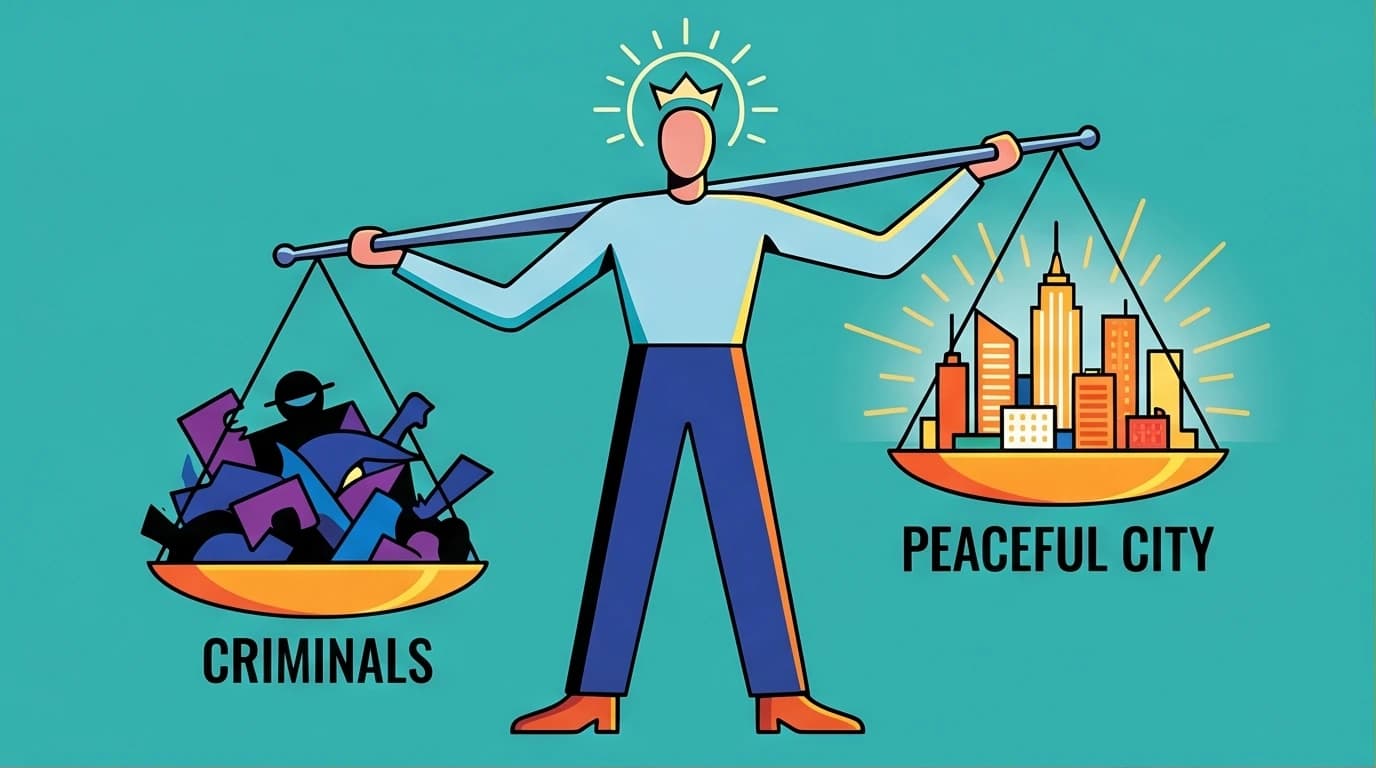
You watch global crime rates plummet by 70%. Wars stop. The innocent sleep soundly. Then, an uncomfortable thought creeps into your mind: is he actually making the world a better place?
This discomfort is the defining psychological hook of Death Note. The narrative forces you to weigh the undeniable statistical results of a safer world against the horrific reality of mass execution without trial. We are not just watching a psychological thriller; we are participating in a live-fire exercise of classical ethical philosophy.
To understand the mechanics of this debate, we have to strip away the supernatural elements and look at the bare bones of the moral frameworks at play.
Dissecting Death Note Utilitarianism
Utilitarianism, popularized by philosophers like Jeremy Bentham and John Stuart Mill, judges the morality of an action entirely by its consequences. If an action maximizes overall happiness and minimizes suffering for the greatest number of people, it is morally right.
Light’s crusade is the textbook definition of this theory taken to a militant extreme. He identifies crime and the fear of crime as the primary sources of human suffering. By eliminating the perpetrators, he mathematically reduces net suffering.
This specific brand of Death Note utilitarianism relies on a massive, calculated trade-off. Light absorbs the personal moral stain of murder so that honest citizens can live without fear. In his own eyes, he is a martyr for the greater good. He views the notebook not as a weapon of malice, but as an instrument of necessary utility. The math is simple: kill one murderer, save ten future victims.
If diving into the ethical math of Bentham and Mill has sparked your curiosity about the foundational ideas that shape our world, you might want to explore the broader landscape of ethical thought. For those looking to understand the roots of utilitarianism and the major thinkers who paved the way for these complex moral debates, a comprehensive overview can be incredibly rewarding. It is a fantastic way to see how these classic theories evolved long before they were tested in modern pop culture.

The Trap of "Ends Justify the Means Ethics"
The fatal flaw in utilitarian calculations is execution. When you measure morality only by the finish line, the journey there loses all ethical constraints.
This introduces the concept of Machiavellianism and ends justify the means ethics. Light starts by targeting convicted, violent criminals broadcast on national television. The logic feels somewhat contained. But mathematical morality is a slippery slope.
When law enforcement—individuals who are objectively "good" by society's standards—attempts to stop him, they become obstacles to global peace. Under a strict utilitarian framework managed by a flawed human, anyone hindering the "greater good" becomes a justifiable target. Light murders FBI agents, police officers, and eventually manipulated innocents.
Here is the exact point where the philosophy collapses: subjective arbitration. Utilitarianism requires an objective measure of "good." Light appoints himself the sole arbiter of that measure. His actions transition from systematic utility to ego-driven tyranny. He is no longer just eliminating threats to society; he is eliminating threats to himself.
Light’s descent from a well-intentioned vigilante to a ruthless dictator is a classic study in Machiavellian strategy. When the ultimate goal becomes so paramount that any action is justified to achieve it, the human cost is often devastating. If you are fascinated by the real-world mechanics of absolute power, political manipulation, and the cold logic of leadership devoid of traditional morality, exploring the original blueprint for this kind of ruthless pragmatism is an absolute must.

The Prince
Niccolò Machiavelli
 38 Duration
 7 Key Points
 4.3 Rate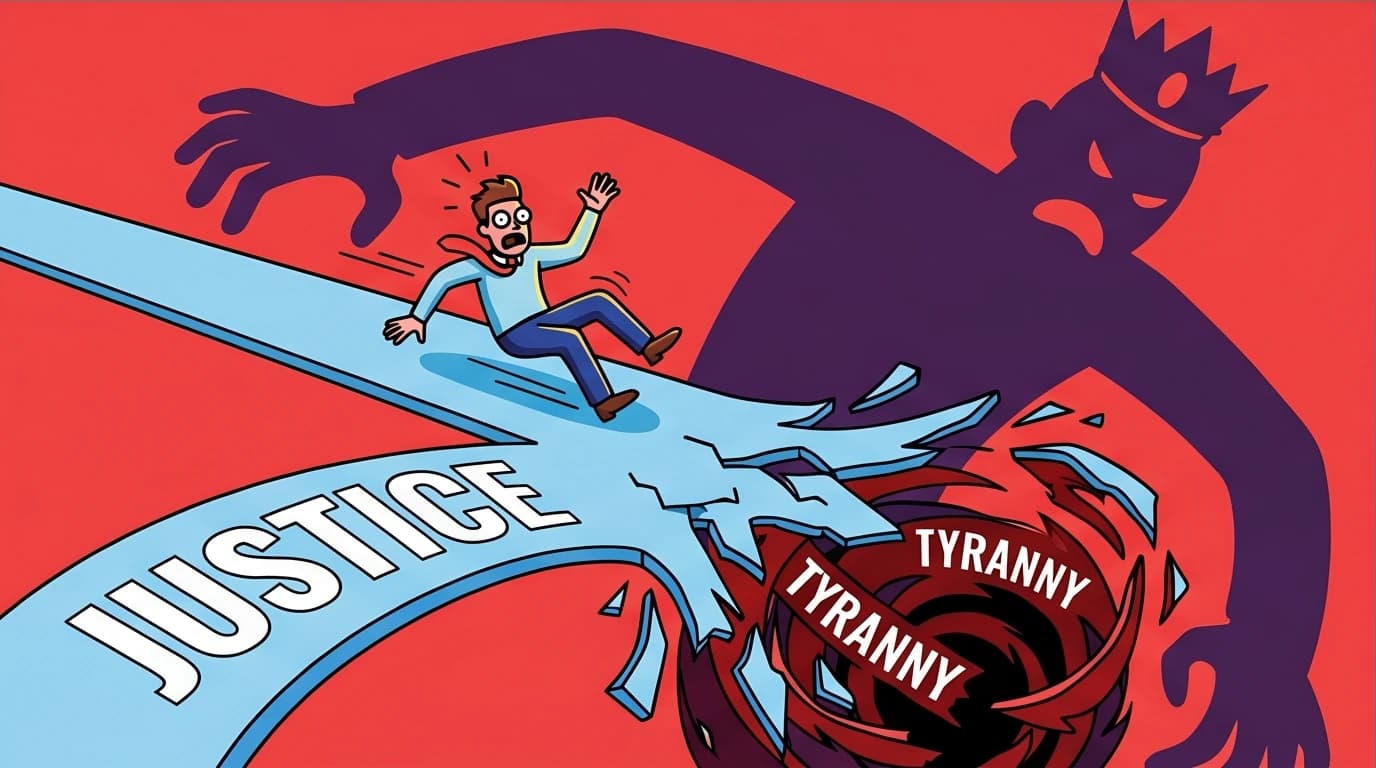
The Deontological Counterweight
You cannot analyze this worldview without looking at its exact opposite, represented by the detective L.
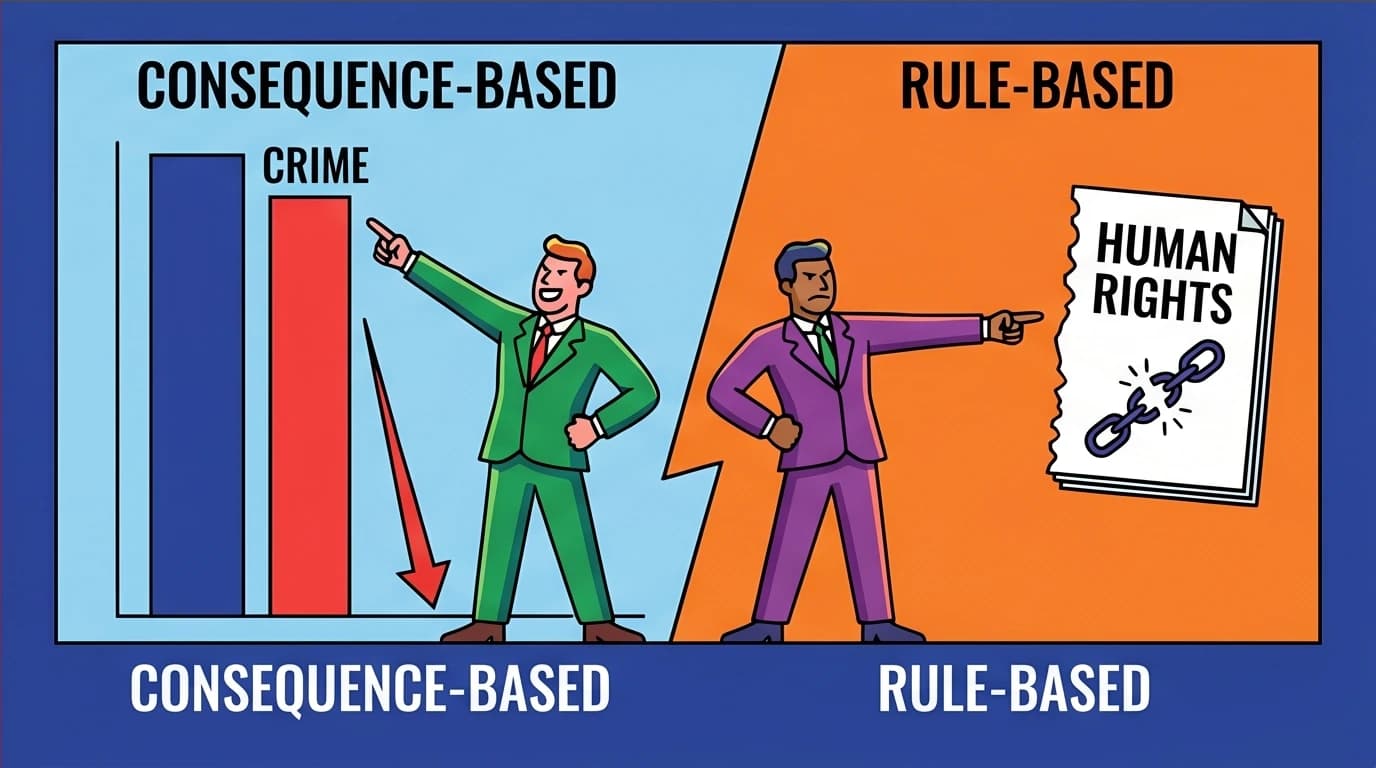
L operates largely on deontology, an ethical framework heavily associated with Immanuel Kant. Deontology argues that morality is based on rules and duties, independent of the consequences. Kant’s "categorical imperative" suggests you should only act according to rules that you would want to become universal laws.
For L, murder is inherently wrong. It does not matter if killing a serial killer prevents future crimes; the act of murder itself violates a fundamental moral duty. You cannot build a just society using inherently unjust methods.
This collision of frameworks creates the profound moral ambiguity that keeps philosophy buffs debating the series years later. Light looks at the future and sees a peaceful utopia. L looks at the present and sees a serial killer violating human rights. Both are completely logically consistent within their own chosen philosophical frameworks.
L’s unwavering commitment to rules and duties over immediate consequences provides the perfect philosophical foil to Light’s worldview. This strict adherence to universal moral laws is heavily anchored in Immanuel Kant’s groundbreaking work. If you find yourself siding with L and want to dig deeper into the rigid, rule-based ethics that argue some lines should simply never be crossed, exploring Kant's original texts will give you a profound appreciation for this side of the debate.
Kant's work is foundational but famously dense. For those who want to grasp the core arguments from these philosophical giants without getting bogged down in complex original texts, there are more modern ways to get started.

Grasp the key arguments from dense philosophical texts by thinkers like Kant and Mill in easy-to-digest 15-minute summaries you can read or listen to.

Download LeapAhead App now
So, Was Light Yagami Right?
Ask any deep thinker if the executioner of Tokyo was justified, and you will get a masterclass in hesitation. If you type "was Light Yagami right" into a search bar, you are looking for a definitive verdict on an unsolvable equation.
From a purely macro-statistical standpoint, a ruthless act-utilitarian might argue he was right. He stopped wars. He drastically reduced violent crime. He achieved the outcome he promised.
However, applied philosophy requires looking at the sustainability of the system and the integrity of the moral agent. Light's system relies entirely on totalitarian terror. The peace he creates is not born of a sudden shift in human morality; it is born of the constant, looming threat of instant death. A society paralyzed by fear is not a truly happy society, which ironically violates the core tenet of utilitarianism (maximizing genuine human happiness).
Furthermore, no human mind can withstand the psychological erosion of absolute power. Light’s god complex proves that a single individual cannot objectively manage the life and death of billions without their own ego contaminating the judgment. He wasn't right, because his version of justice was ultimately a dictatorship disguised as salvation.
Ultimately, Light’s downfall wasn't just a failure of his philosophical model—it was a catastrophic failure of his own ego. The belief that one person possesses the sheer brilliance and objective clarity to act as a god is a dangerous psychological delusion. If you are intrigued by how unchecked arrogance and absolute power can erode even the sharpest minds, examining the destructive nature of ego is incredibly eye-opening. It serves as a powerful real-world reminder that our greatest enemy is often our own hubris.
Ego Is the Enemy
Ryan Holiday
18 Duration7 Key Points4.6 RateThe debate between Light and L is a crash course in ethics. If you're intrigued by the big ideas in the books mentioned here but struggle to find the time to read them all, a summary app can be a great way to explore these concepts efficiently.
Turn your commute into a philosophy lesson by absorbing the main ideas from these classic texts and more in just a few minutes each day.
Download LeapAhead App now
FAQ
What specific philosophical theory best describes Light Yagami?
He is best described as an extreme Act Utilitarian with Machiavellian traits. He believes the morality of an action is determined solely by its ability to produce a specific positive outcome (a crime-free world), and he is willing to use deceit, manipulation, and murder to achieve that outcome.
He is best described as an extreme Act Utilitarian with Machiavellian traits. He believes the morality of an action is determined solely by its ability to produce a specific positive outcome (a crime-free world), and he is willing to use deceit, manipulation, and murder to achieve that outcome.
Why do so many viewers agree with his actions at the beginning?
People naturally crave justice and safety. When the legal justice system fails—letting murderers walk free due to loopholes or lack of evidence—vigilante justice feels like a rational corrective measure. Viewers initially agree with him because his early targets represent universal, undeniable evil.
People naturally crave justice and safety. When the legal justice system fails—letting murderers walk free due to loopholes or lack of evidence—vigilante justice feels like a rational corrective measure. Viewers initially agree with him because his early targets represent universal, undeniable evil.
What is the philosophical difference between Light and L?
Light follows consequentialism (utilitarianism), believing that a peaceful world justifies the act of killing. L aligns more with deontology, believing that the rules of justice and due process must be upheld regardless of the immediate consequences, and that murder remains a crime no matter the motive.
Light follows consequentialism (utilitarianism), believing that a peaceful world justifies the act of killing. L aligns more with deontology, believing that the rules of justice and due process must be upheld regardless of the immediate consequences, and that murder remains a crime no matter the motive.