


You browse Goodreads or scroll through social media looking for something profound to articulate how you feel, only to hit a wall of hollow clichés. Most modern relationship advice treats love like a fleeting emotion, a fairy tale, or a transaction. When you are grappling with the real, complex weight of human connection, platitudes fall short. You need thinkers who treated love as a rigorous discipline.
To understand love is to understand the human condition. Philosophers, psychologists, and cultural critics have spent centuries deconstructing why we attach, how we project our egos onto others, and what it actually takes to sustain authentic intimacy.
Here is a curated exploration of the mechanics of human connection, broken down by the schools of thought that map our minds.
While these philosophical deep dives offer a framework for understanding love, sometimes a simple, powerful quote can crystallize your feelings. For more direct wisdom on navigating partnerships, the right words can make all the difference.
The Meaning of Love Quotes: Existentialism and the Authentic Self
Existentialists do not view love as destiny. They see it as a radical choice. If you are looking for the true meaning of love quotes, the existential framework offers a stark, freeing perspective: love is something we build, not something we passively fall into. It requires two people to maintain their individual freedom while choosing to merge their lives.
"Authentic love must be founded on reciprocal recognition of two freedoms; each lover would then experience himself as himself and as the other: neither would abdicate his transcendence, neither would be mutilated."
— Simone de Beauvoir
— Simone de Beauvoir
De Beauvoir destroys the romanticized idea of "completing" one another. If you need someone to complete you, you are using them to justify your own existence. Authentic love happens when two whole, independent people choose each other without sacrificing their autonomy.

"One must learn to love. This is what happens to us in music: first one has to learn to hear a figure and melody at all... then it requires exertion and good will to tolerate it in spite of its strangeness... Finally there comes a moment when we are used to it, when we expect it, when we sense that we should miss it if it were missing."
— Friedrich Nietzsche
— Friedrich Nietzsche
Nietzsche frames love as an acquired taste and a practiced skill. We are not born knowing how to love someone's flaws. We have to train ourselves to see the beauty in another person's strangeness.
"Love is not a feeling to be completely given way to, but a decision, a judgment, a promise. If love were only a feeling, there would be no basis for the promise to love each other forever."
— Erich Fromm
— Erich Fromm
While Fromm bridges philosophy and psychology, his existential weight is undeniable. Feelings fade. If a marriage or long-term partnership relies solely on the emotion of love, it will collapse. Love is an executive decision you make daily.
If you're ready to stop waiting to simply "fall" in love and want to start practicing it intentionally, exploring Erich Fromm’s work is a must. His classic psychological and philosophical framework breaks down exactly why our modern obsession with the feeling of romance often leads to failure. Instead, he treats love as an active skill that requires effort, discipline, and profound self-awareness. For readers who want to build a relationship that can withstand the realities of life, this foundational book is the perfect starting point to rethink your approach to human connection.

The Art of Loving
Erich Fromm
 19 Duration
 7 Key Points
 4.7 Rate
Psychology of Love Quotes: Attachment, Ego, and Action
Moving from abstract philosophy to the human mind, psychoanalysts and psychologists deconstruct how we attach to others. The psychology of love quotes often exposes our hidden motives. We frequently mistake our own ego, anxiety, or trauma responses for love. Recognizing the psychological machinery behind our affections is the first step toward mature intimacy.
"The meeting of two personalities is like the contact of two chemical substances: if there is any reaction, both are transformed."
— Carl Jung
— Carl Jung
Jung reminds us that real love is disruptive. You cannot walk out of a genuine connection as the exact same person who walked into it. Intimacy forces you to confront your shadow—the suppressed, darker parts of your psyche that your partner inevitably mirrors back to you.

"Love is the free exercise of choice. Two people love each other only when they are quite capable of living without each other but choose to live with each other."
— M. Scott Peck
— M. Scott Peck
In his landmark book The Road Less Traveled, Peck defines love as the will to extend oneself for the spiritual growth of another. Dependency is not love. If you cannot survive without your partner, you are a parasite, not a lover. True psychological love requires total self-sufficiency coupled with a deliberate choice to connect.
If this concept of spiritual growth and self-sufficiency strikes a chord with you, reading M. Scott Peck’s landmark text is an absolute must. As referenced above, he completely dismantles the toxic fairy-tale narrative that a partner should "complete" you. Instead, he provides a rigorous, no-nonsense roadmap for taking responsibility for your own psychological maturity. It’s an eye-opening resource for anyone who wants to stop confusing emotional dependency with authentic love and start building a genuinely healthy, choice-driven partnership.
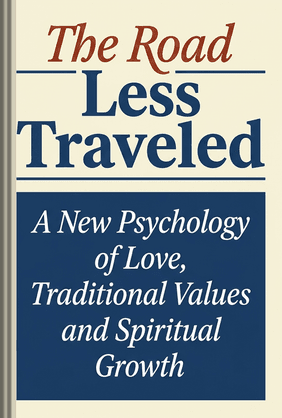
The Road Less Traveled
M. Scott Peck, M.D.
43 Duration7 Key Points4.5 Rate"Love is an action, never simply a feeling."
— bell hooks
— bell hooks
Cultural critic bell hooks analyzed the psychology of societal love in All About Love. She argued that viewing love as a noun leaves us powerless. When we redefine love as a verb—an action we take, characterized by care, affection, recognition, respect, commitment, and trust—we take responsibility for how we treat others.
To expand on this idea of love as a continuous verb rather than a static noun, cultural critic bell hooks offers an incredibly vital perspective. Expanding on the ideas she outlined above, her work takes a hard look at how society teaches us a flawed, disempowering version of intimacy. If you are ready to trade passive romance for a dynamic relationship characterized by mutual respect, active care, and radical honesty, her groundbreaking manifesto is a must-read for your bedside table.

All About Love
bell hooks
44 Duration8 Key Points4.6 RateThe psychological perspective consistently highlights that healthy love for another begins with a solid foundation of self-acceptance and inner strength. Before you can extend yourself for another's growth, you must first tend to your own.
Stoic Quotes on Love: Navigating Attachment and Impermanence
How do you love someone fiercely while knowing you might lose them to time, change, or mortality? The Stoics tackled this paradox directly. Stoic quotes on love teach us to love with profound appreciation but without desperate, clinging attachment. They focus on the dichotomy of control: you cannot control your partner, but you can control your own character in the relationship.
"If you are kissing your child or wife, say that it is a human being whom you are kissing, for when the wife or child dies, you will not be disturbed."
— Epictetus
— Epictetus
To modern ears, this sounds cold. In reality, it is a call to intense presence. Epictetus is not telling you to love your family less; he is urging you to realize how fragile life is. When you accept that the people you love are mortal, you stop taking them for granted. You love them better today because tomorrow is not guaranteed.

"He who is brave is free. We must love people knowing they are not ours to keep."
— Seneca
— Seneca
You do not own your partner. Jealousy and possessiveness stem from the illusion of ownership. The Stoic loves bravely by accepting that the universe can retract its gifts at any moment. Your job is to appreciate the person while they are in your life, not to imprison them.
"Accept the things to which fate binds you, and love the people with whom fate brings you together, but do so with all your heart."
— Marcus Aurelius
— Marcus Aurelius
The Roman Emperor understood that true love requires total commitment to the present reality, without wishing for a different set of circumstances. Love the actual person in front of you, not the idealized version of them you built in your head.
To truly internalize this Stoic approach to love and attachment, going straight to the source is highly recommended. Marcus Aurelius never intended for his personal journal to be published, which makes his private reflections on duty, impermanence, and human connection all the more profound. Reading his unedited thoughts offers an incredibly grounding perspective for anyone struggling with relationship anxiety or the fear of loss. It’s an essential handbook for learning how to appreciate the people in your life without letting your ego or need for control take the wheel.
Meditations
Marcus Aurelius
34 Duration7 Key Points4.6 RateThis Stoic approach of loving bravely while accepting impermanence is not just for maintaining relationships—it's also a crucial mindset for navigating their end. Learning to let go with grace is a profound act of strength.
Deep Philosophical Quotes About Love from Eastern Thought
Eastern philosophy often strips away the Western focus on the individual ego, framing love as a state of deep presence and non-dualism. These deep philosophical quotes about love shift the focus from acquisition to observation and mutual liberation.
"Being deeply loved by someone gives you strength, while loving someone deeply gives you courage."
— Lao Tzu
— Lao Tzu
The founder of Taoism points to the dual nature of love as both an anchor and a catalyst. Receiving love secures your foundation; giving love demands vulnerability and risk.
"To love without knowing how to love wounds the person we love."
— Thich Nhat Hanh
— Thich Nhat Hanh
The late Zen master emphasized that good intentions are not enough. Love requires understanding. If you offer a plant too much water, it will die. You must understand the specific needs of the person you love, which requires setting aside your own assumptions and simply paying attention.
If the Eastern philosophical perspective resonates with you, learning how to put this mindful approach into practice is the logical next step. The late Zen master Thich Nhat Hanh beautifully translated these complex ideas of non-dualism and active presence into simple, actionable habits. His gentle guidance helps you slow down, remove the ego from your interactions, and truly see your partner's specific needs. If you want to stop operating on autopilot and start cultivating a deeply aware, compassionate connection with the people you care about most, this short yet incredibly impactful read is exactly what you need.

How to Love
Thich Nhat Hanh and Jason DeAntonis
24 Duration8 Key Points4.5 RateIf you’re feeling inspired by all these philosophical deep dives but aren't sure where to find the time to read the full texts, there are ways to get the core insights faster.

Absorb the core ideas on love and connection from great thinkers like Fromm, hooks, and Aurelius, even when you're too busy for the full books.

Download LeapAhead App now
How to Apply These Insights to Modern Relationships
Reading about the philosophy of love is only useful if it changes your behavior. Here is how to operationalize these ideas:
- Audit Your Expectations: Are you looking for a partner to "fix" your life? De Beauvoir and Peck warn against this. Write down what you expect from a partner and cross out anything that is actually your own responsibility to fulfill.
- Practice Stoic Appreciation: Once a week, mentally visualize losing your partner. It sounds morbid, but this Stoic exercise (Negative Visualization) instantly strips away petty resentments and reignites deep gratitude for their presence.
- Redefine Your Vows: If you are writing wedding vows, skip the promises of "effortless forever." Use these frameworks to promise actual actions. Promise to recognize their freedom, to aid their spiritual growth, and to choose them even when the feeling fades.
FAQ
What is the most philosophical quote about love?
While highly subjective, Erich Fromm’s assertion in The Art of Loving is widely considered a foundational philosophical truth: "Love is an activity, not a passive affect; it is a 'standing in,' not a 'falling for.'" It perfectly dismantles the modern myth that love is something that just happens to you.
While highly subjective, Erich Fromm’s assertion in The Art of Loving is widely considered a foundational philosophical truth: "Love is an activity, not a passive affect; it is a 'standing in,' not a 'falling for.'" It perfectly dismantles the modern myth that love is something that just happens to you.
Did the Stoics actually believe in romantic love?
Yes, but they categorized it as a "preferred indifferent." This means they valued deep, committed relationships and believed in acting virtuously toward a partner, but they refused to let their baseline happiness depend entirely on another person, recognizing that human lives are fragile and impermanent.
Yes, but they categorized it as a "preferred indifferent." This means they valued deep, committed relationships and believed in acting virtuously toward a partner, but they refused to let their baseline happiness depend entirely on another person, recognizing that human lives are fragile and impermanent.
How does psychology differentiate between love and infatuation?
Psychology defines infatuation as a biologically driven, temporary state characterized by idealization and obsession. It is effortless and ego-driven. Love, conversely, is defined as a sustained action and a choice that persists after the infatuation chemicals (like dopamine and oxytocin) return to baseline.
Psychology defines infatuation as a biologically driven, temporary state characterized by idealization and obsession. It is effortless and ego-driven. Love, conversely, is defined as a sustained action and a choice that persists after the infatuation chemicals (like dopamine and oxytocin) return to baseline.
Where can I find more books on the psychology and philosophy of love?
For deeper reading, pick up Erich Fromm's The Art of Loving, bell hooks' All About Love, or Alain de Botton's Essays in Love. You can easily find these titles on Amazon, download them on Audible for your commute, or pick them up at your local Barnes & Noble.
For deeper reading, pick up Erich Fromm's The Art of Loving, bell hooks' All About Love, or Alain de Botton's Essays in Love. You can easily find these titles on Amazon, download them on Audible for your commute, or pick them up at your local Barnes & Noble.