


The alarm goes off. Before your feet even hit the floor, your brain is already racing. Unread emails, endless to-do lists, and a stressful commute loom ahead. You feel ten steps behind before the day has even started. You are not alone in this morning anxiety loop. When you wake up reacting to the world, you surrender your peace.
Taking control of your morning changes the trajectory of your entire day. You do not need an extensive, two-hour wellness routine to find grounding. You just need intention.
Why Daily Morning Affirmations Work
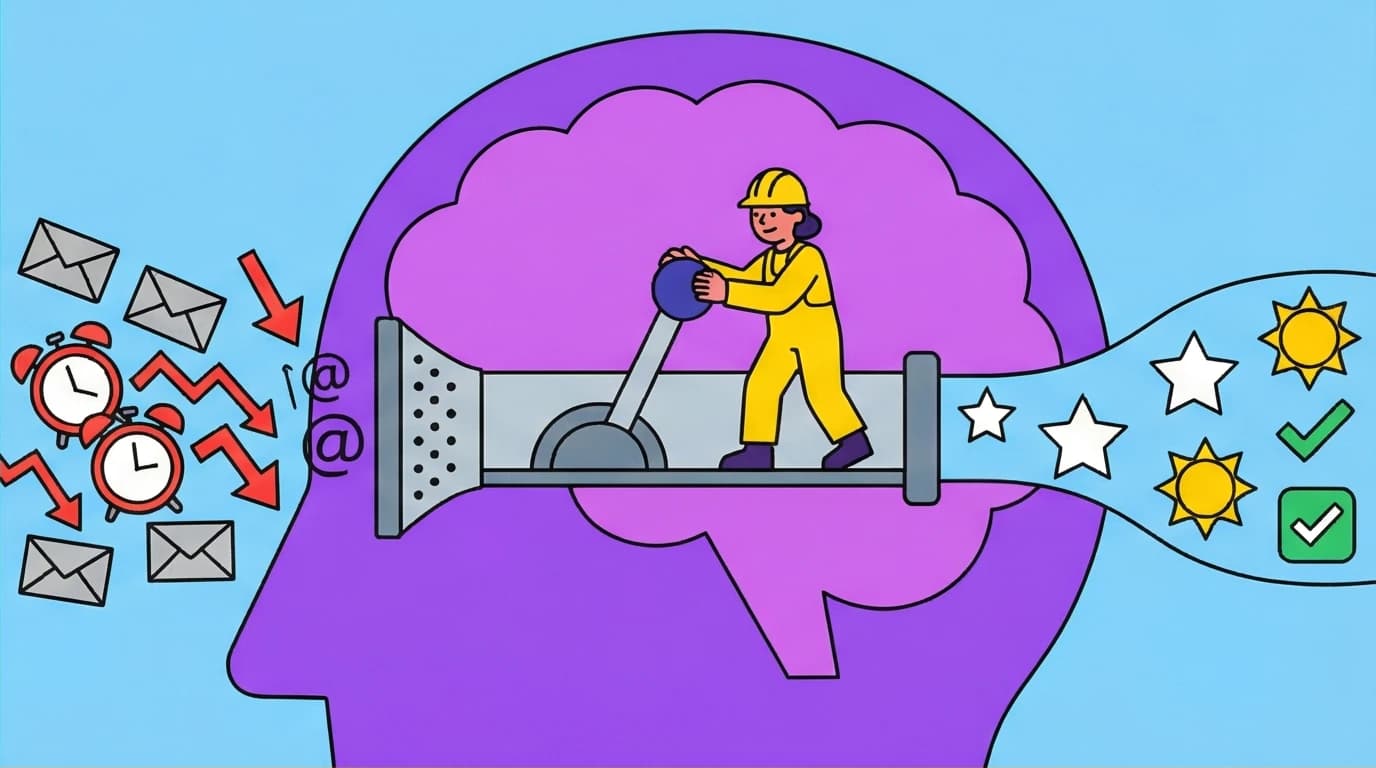
Your brain has a built-in filter called the Reticular Activating System (RAS). It decides what information gets noticed and what gets ignored. If you wake up thinking, "Today is going to be incredibly stressful," your RAS will spend the day searching for evidence to prove you right. You will notice every traffic jam, every rude coworker, and every spilled cup of coffee.
Practicing daily morning affirmations flips this filter. When you intentionally speak words of calm and confidence, you train your brain to spot opportunities, solutions, and moments of joy. It is not magic. It is basic neuroscience. You are interrupting the default pattern of anxiety and actively choosing your mindset.
In addition to personal affirmations, surrounding yourself with uplifting words can amplify your morning routine. For a curated list of powerful messages to kickstart your day, these quotes can provide an external source of inspiration.
Understanding the neuroscience behind your brain's Reticular Activating System is just the beginning. If you are ready to completely overhaul how you start your day, The Miracle Morning by Hal Elrod is an absolute game-changer. Elrod breaks down a straightforward, highly effective routine designed to help you wake up with more energy, motivation, and focus. It is the perfect companion for anyone looking to structure their mornings intentionally before the demands of the outside world take over.

The Miracle Morning
Hal Elrod
 41 Duration
 10 Key Points
 4.6 Rate
If finding the time to read a full book feels like just another demand on your already-packed morning schedule, you're not alone.


LeapAhead helps you grasp the core ideas from bestselling books like this one in just 15 minutes, making it easy to learn and grow even on your busiest days.
 LeapAhead
The Best Positive Morning Affirmations for Your Routine
Depending on what you are facing today, your mind requires different anchors. Here are highly effective affirmations categorized by the specific mental shift you need.
For Unshakeable Confidence
When you have a massive presentation, a difficult conversation, or you simply doubt your own abilities, use these statements to anchor your self-worth.
- I am fully equipped to handle whatever comes my way today.
- My voice matters, and my contributions are valuable.
- I do not need to be perfect to be worthy of respect and success.
- I trust my intuition to make the right decisions for myself.
- I am stepping into my power and leaving self-doubt behind.
Morning Quotes for Mental Health & Anxiety Relief
If you wake up with a tight chest or racing thoughts, your nervous system needs safety. These morning quotes for mental health are designed to soothe your stress response.
- I am safe right here, in this exact moment.
- I release the need to control things outside of my hands.
- My anxiety does not dictate the outcome of my day.
- I give myself permission to pause and take a deep breath whenever I need it.
- Today, I choose peace over perfection.
Positive Mindset Quotes for Work & Productivity
When your schedule is packed and the workload feels heavy, you need focus and energy. Use these positive mindset quotes to shift from feeling overwhelmed to feeling capable.
- I focus on one task at a time and do it well.
- I have the energy and clarity to accomplish my goals today.
- Challenges are simply opportunities to sharpen my skills.
- I manage my time effectively and respect my own boundaries.
- I am capable of doing hard things without burning myself out.
To carry this focused energy into the workweek, especially on a Monday morning, a dose of targeted motivation can make all the difference.
Self-Care Morning Quotes to Protect Your Energy
Your energy is a finite resource. If you are a chronic people-pleaser or constantly giving to others, use these self-care morning quotes to build a protective shield around your time.
- I honor my limits and comfortably say "no" to things that drain me.
- Taking care of myself is productive.
- I choose to surround myself with people and environments that uplift me.
- My energy is sacred, and I am careful about where I invest it.
- I deserve the same compassion I freely give to others.
Affirming your boundaries in the mirror is a powerful first step, but enforcing them at the office or with family members is where the real work begins. If you frequently struggle with people-pleasing, overcommitting, or feeling guilty when you protect your time, Set Boundaries, Find Peace by Nedra Glover Tawwab is a must-read. As a licensed therapist, Tawwab provides clear, actionable scripts to help you comfortably say "no" and reclaim your sacred energy without the accompanying guilt trip.

Set Boundaries, Find Peace
Nedra Glover Tawwab
29 Duration10 Key Points4.5 Rate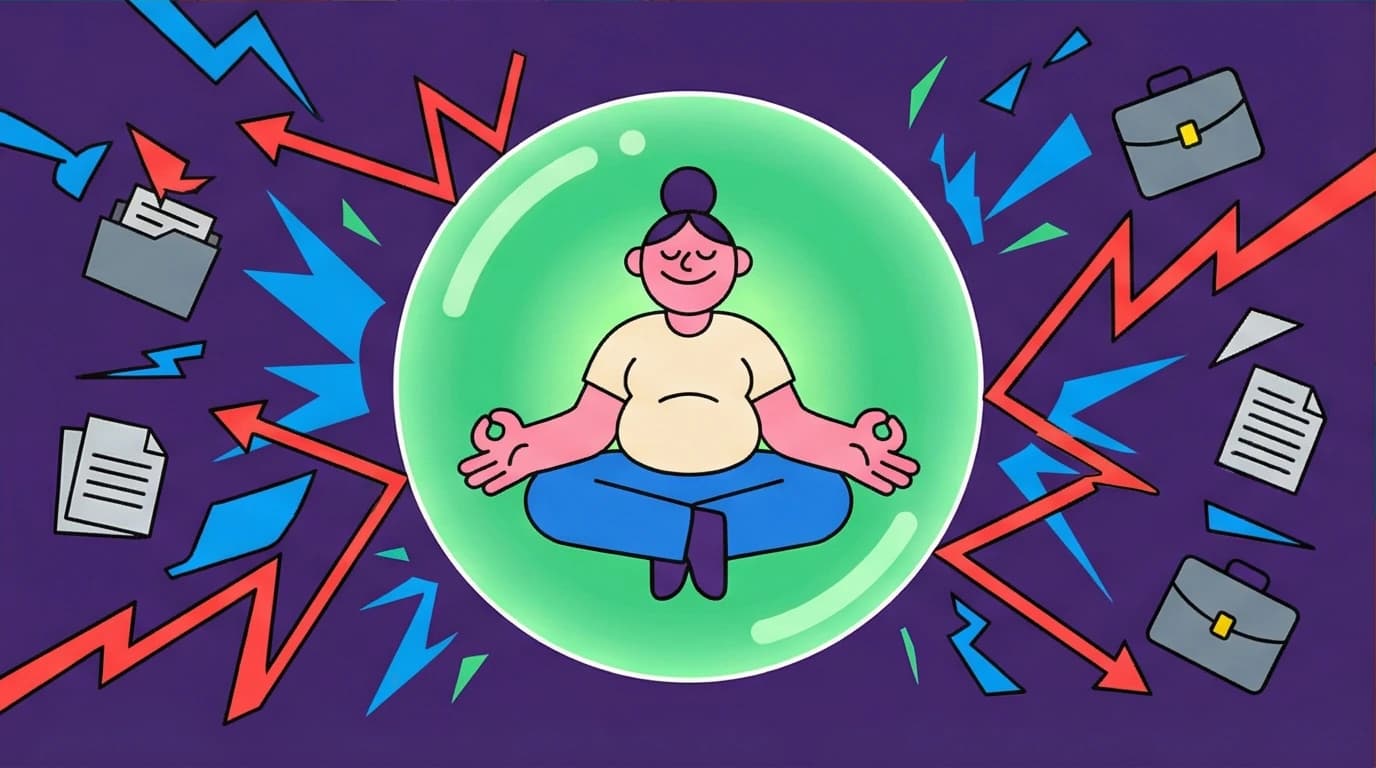
How to Make Affirmations Actually Work
Reading a list of quotes will not change your life. You have to integrate them into your nervous system. Here is the exact blueprint to make your affirmations stick.
1. Habit Stacking
Do not try to find "extra time" in your morning. You do not have any. Instead, tie your affirmations to a habit you already do on autopilot.
- The Mirror Method: While brushing your teeth, look yourself directly in the eyes and repeat your chosen statements in your head.
- The Coffee Ritual: While your coffee is brewing, ignore your phone. Stand in the kitchen and say your affirmations out loud.
- The Commute Track: If you drive several miles to work, turn off the news. Play an affirmation track on Audible or Spotify, or simply speak them aloud in the car.
2. The Power of "I Am"
Your brain responds best to present-tense, personal statements. "I will be confident today" implies you are not confident right now. "I am confident" forces the brain to align with the current reality. Always frame your affirmations in the present tense.
3. Generate the Emotion
Words without feeling are empty. If you say "I am at peace" while clenching your jaw and gripping the steering wheel, your brain will reject the message. You have to physically embody the statement. Drop your shoulders. Unclench your jaw. Take a deep breath. Feel a micro-second of actual peace as you say the words.
Tying your new affirmations to an existing daily routine—like brewing your morning coffee or driving those first few miles of your commute—is a psychological concept known as habit stacking. If you want to master this technique and learn how tiny behavioral shifts can effortlessly compound into massive life changes, Atomic Habits by James Clear is the ultimate blueprint. Clear’s framework makes building new, positive routines feel achievable, ensuring your affirmation practice actually sticks for the long haul.

Atomic Habits
James Clear
26 Duration8 Key Points4.7 Rate
The Biggest Pitfall: Why Affirmations Feel "Fake"
Many people abandon affirmations because they feel like they are lying to themselves. If you have zero dollars in the bank, saying "I am a millionaire" creates massive cognitive dissonance. Your brain immediately fires back with, "No, you are not."
If an affirmation feels too far from your current reality, you need a "Bridge Statement."
Instead of forcing an unbelievable thought, bridge the gap with progress-oriented language:
- Instead of: "I have no anxiety."
- Use: "I am learning how to manage my anxiety, step by step."
- Instead of: "I am perfectly confident at my job."
- Use: "I am becoming more capable and confident every single day."
Bridge statements remove the resistance. They allow your brain to accept the positive thought because it is framed as a work in progress.
Overcoming that initial feeling of cognitive dissonance is crucial for making affirmations work. If you have spent years defaulting to harsh self-criticism, learning how to genuinely shift your internal dialogue takes patience. To dive deeper into the mechanics of bridging that gap, What to Say When You Talk to Yourself by Dr. Shad Helmstetter is an incredible resource. He breaks down the psychology of our inner voice, offering practical strategies to permanently rewrite the negative programming holding you back.

What to Say When You Talk to Yourself
Shad Helmstetter, Ph.D.
30 Duration12 Key Points4.6 RateFeeling inspired by all these book recommendations but worried about when you'll find the time to get through them?
Use LeapAhead to clear your 'reading debt' by listening to key insights from these books during your commute or coffee break, turning good intentions into actual knowledge.
LeapAheadBuild Your Arsenal
Start small. Do not try to memorize twenty statements. Pick exactly three positive morning affirmations that resonate deeply with your current struggles. Write them on a sticky note and put it on your bathroom mirror. Write them in the front cover of your journal. Type them into your phone's lock screen.
Keep them visible. Repeat them consistently. Guard your mornings fiercely. The way you speak to yourself in those first ten minutes sets the rules of engagement for the rest of the day.
FAQ
How many affirmations should I say each morning?
Keep it between three to five. If you choose too many, you turn the practice into a chore to rush through. Picking just three allows you to slow down, focus on the meaning of each word, and truly feel the emotion behind the statement. Quality always beats quantity here.
Should I say them out loud or in my head?
Saying them out loud is highly recommended. Speaking the words physically engages more areas of your brain, including your vocal cords and auditory processing centers. This makes the experience more tangible. However, if you share a bathroom or take the subway to work, silently repeating them with strong intention is still highly effective.
Do positive affirmations actually rewire the brain?
Yes. The process is called neuroplasticity. Every time you repeat a thought, you strengthen the neural pathway associated with it. Consistent positive self-talk thickens the pathways associated with resilience and emotional regulation, making it physically easier for your brain to default to optimism rather than panic over time.
How long does it take to see results?
You will feel a subtle emotional shift immediately—often a slight drop in physical tension. However, the deep, structural shifts in your daily confidence and baseline anxiety levels usually take about 21 to 30 days of consistent daily practice. Treat it like building a muscle; consistency is the requirement for growth.