

You just left another parent-teacher conference where you heard the exact same feedback: "They are so smart, but I really need them to speak up more in class." You watch your child come home completely drained from the noise, the chaotic cafeteria, and the endless group projects. You wonder if you should push them to be more outgoing. The pressure to mold quiet kids into loud talkers is relentless, leaving parents anxious and kids feeling like they are fundamentally broken.
They are not broken. The system is just loud.
Here is exactly how to stop fighting your child's nature and start building an environment where their quiet strengths can shine.

Decoding the Quiet Mind: It Is About Stimulation, Not Fear
Before you can effectively change how you parent, you have to understand what is happening inside your child's brain. Our culture constantly confuses introversion with shyness. They are completely different.
Shyness is the fear of negative judgment. Introversion is simply a preference for environments that are not overstimulating.
When discussing the psychology of Quiet kids Susan Cain emphasizes that introverted nervous systems react more strongly to external stimuli. An extroverted child thrives on the loud, fast-paced energy of a classroom. An introverted child absorbs all that same energy, processes it deeply, and eventually runs out of battery. They are not withdrawing because they lack confidence. They are withdrawing because their neurological system is telling them it is time to power down and recharge.
Recognizing this difference changes everything. You stop asking, "How do I fix my child?" and start asking, "How do I manage their environment?"
If there is one absolute must-read for parents navigating this journey, it is Susan Cain’s groundbreaking work. Because her research serves as the foundation for redefining how we view quiet kids, reading the full book will give you incredible "aha" moments. It brilliantly breaks down the science of why your child’s brain responds differently to a loud classroom and helps you fully celebrate their natural temperament instead of trying to cure it.
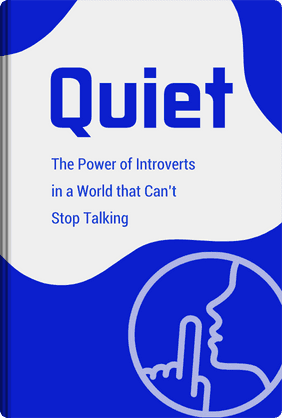
Quiet
Susan Cain
 40 Duration
 7 Key Points
 4.6 Rate
For busy parents who want to apply these game-changing insights immediately but struggle to find time for a full book, an app can help you get the core ideas faster.


Get the key insights from Susan Cain's "Quiet" and other essential parenting books in 15-minute summaries, perfect for learning on a packed schedule.
 LeapAhead
How to Parent an Introverted Child at Home
Home must be a sanctuary. It is the one place where your child does not have to perform, mask their exhaustion, or pretend to be loud.
1. Build a "Restorative Niche"
After seven hours in an American public school filled with buzzing fluorescent lights, chaotic hallways, and forced collaboration, your child needs immediate decompression. Create a physical space in your house dedicated to quiet. It does not need to be elaborate. A bean bag chair in a corner, a specific comfortable rug, or a window seat works perfectly. Let them know this is their zone where no one will demand their attention.
2. Respect the Post-School Crash
When your child gets into the car or walks through the front door, resist the urge to immediately ask, "How was your day? What did you do?" They have spent the entire day fielding questions and managing social dynamics. Give them a solid 45 minutes of complete silence, a snack, and zero demands before you initiate conversation.
3. Rethink Weekend Schedules
Extroverted parents often book back-to-back weekend activities—soccer practice, followed by a birthday party at a trampoline park, followed by a family dinner. For an introverted child, this is a nightmare. Limit scheduled activities. Leave massive blocks of blank space on the calendar. Swap a chaotic Saturday afternoon outing for a quiet trip to Barnes & Noble or let them listen to an Audible book in their room while building Legos. Protect their downtime aggressively.
Introverted kids often share traits with highly sensitive people, meaning their nervous systems process sensory input—like bright lights, loud noises, and crowded rooms—much more deeply than others. If you want to further understand why your child needs that post-school crash and how to create a genuinely restorative home environment, exploring the psychology of sensitivity is an amazing next step. It provides practical tools to help your child thrive without feeling overwhelmed by their surroundings.

The Highly Sensitive Person
Elaine N. Aron
24 Duration10 Key Points4.6 RateAdvocating for the Introvert Child in School
Having an introvert child in school often feels like an uphill battle against the "Extrovert Ideal." Classrooms are designed for extroverts. Desks are arranged in pods. Grades are heavily weighted on verbal participation. Group work is the default.

Here is how you advocate for your child without stepping on the teacher's toes.
Reframe Their Silence
Teachers often interpret silence as disengagement or lack of comprehension. You have to proactively change this narrative. At the beginning of the school year, send a short, friendly email or schedule a brief meeting with the teacher.
Script for Parents:
"My child is a deep thinker who processes information internally before they speak. They are highly engaged and listening closely, even if they do not immediately raise their hand. I want to make sure you know that their quietness is their learning style, not a lack of interest."
"My child is a deep thinker who processes information internally before they speak. They are highly engaged and listening closely, even if they do not immediately raise their hand. I want to make sure you know that their quietness is their learning style, not a lack of interest."
Negotiate "Participation" Metrics
If a teacher grades heavily on class participation, your child is at an immediate disadvantage. Work with the teacher to broaden the definition of participation.
Ask the teacher directly:
- "Can written responses count toward their participation grade?"
- "Could they share their thoughts with you one-on-one after class instead of in front of the whole room?"
- "In group projects, can they take on the role of researcher or writer instead of the primary presenter?"
Master the "Micro-Participation" Strategy
You cannot shield your child from ever speaking in public, but you can help them game the system. Teach your child the strategy of early micro-participation. If they raise their hand and answer one simple, factual question in the first ten minutes of class, the teacher registers that they have participated. The pressure is off for the rest of the period, and they can settle back into their comfortable role of observing and processing.
Shifting Your Social Expectations
For parents focused on the methods of raising introverted child Susan Cain offers a massive reality check: popular culture’s definition of social success is flawed.
Quality Over Quantity
Stop worrying if your child does not have a massive group of friends. Introverts thrive on deep, meaningful connections. If your child has one or two close friends they trust, they are socially successful. Do not force them to invite the whole class to their birthday party. A movie night with two best friends is perfectly fine.
Pre-game Social Events
Introverts handle social situations much better when they know exactly what to expect. Eliminate the unknown. If they are going to a new camp or a party, walk them through the logistics beforehand.
"We are going to arrive at 2 PM. There will probably be about fifteen kids there. We will stay for two hours. If you get overwhelmed, give me this specific signal, and we will go outside for a quiet break."
Having an exit strategy lowers their anxiety immediately.
"We are going to arrive at 2 PM. There will probably be about fifteen kids there. We will stay for two hours. If you get overwhelmed, give me this specific signal, and we will go outside for a quiet break."
Having an exit strategy lowers their anxiety immediately.
Let Them Leave the Party Early
Introverts have a finite social battery. When it runs out, they hit a wall. Do not force them to stay until the bitter end of an event just to be polite. When they tell you they are ready to go, believe them. Say your goodbyes and leave.
The Ultimate Goal: Self-Advocacy
Your long-term job is not to fight all your child's battles. Your job is to teach them how to fight their own.
As they get older, give them the vocabulary to explain their own needs. Teach them to say:
- "I need a minute to think about that before I answer."
- "I am going to pass on the party tonight. I need some downtime."
- "I work better independently. Can I tackle this part of the project on my own?"

When you fully embrace the principles of Quiet book parenting introverts, you stop seeing a child who needs to be fixed. You see a careful observer, a deep thinker, and a loyal friend. The world has enough loud people talking over each other. It desperately needs the listeners, the thinkers, and the quiet innovators. Your job is to make sure your child knows that their quiet voice is exactly what makes them powerful.
Teaching your quiet child to stand up for their own boundaries is one of the greatest gifts you can give them. If you are looking for actionable ways to step back and help your child take the wheel in managing their energy, schoolwork, and social life, this next book is a phenomenal resource. It shows parents how to foster independence and confidence, ensuring your introverted child feels fully capable of navigating an extroverted world on their own terms.

The Self-Driven Child
William Stixrud, Ph.D., Ned Johnson
43 Duration9 Key Points4.3 RateKeeping up with the best parenting advice can feel like another full-time job. If your bookshelf has a growing pile of unread books, an app can help you clear that 'reading debt' by listening to key ideas during your commute or coffee break.
Quickly absorb practical strategies from bestsellers on parenting and child psychology, turning small pockets of free time into powerful learning moments.
LeapAheadFAQ
How do I know if my child is introverted or just struggling with social anxiety?
Introversion is a healthy preference for low-stimulation environments. An introverted child enjoys being alone and feels energized by it. Social anxiety is driven by a distinct fear of judgment, embarrassment, or failure in social settings. If your child wants to join in but is paralyzed by fear, that is anxiety. If they are perfectly content playing alone and show no distress about missing out, that is introversion.
Introversion is a healthy preference for low-stimulation environments. An introverted child enjoys being alone and feels energized by it. Social anxiety is driven by a distinct fear of judgment, embarrassment, or failure in social settings. If your child wants to join in but is paralyzed by fear, that is anxiety. If they are perfectly content playing alone and show no distress about missing out, that is introversion.
Should I force my quiet child to join team sports or extracurricular activities?
Do not force them into highly chaotic, loud team sports just to "bring them out of their shell." Instead, follow their interests toward deep-focus activities. Individual sports like track, swimming, or martial arts often appeal to introverts. Art classes, coding clubs, or creative writing groups also offer social interaction without the overwhelming noise of a football field.
Do not force them into highly chaotic, loud team sports just to "bring them out of their shell." Instead, follow their interests toward deep-focus activities. Individual sports like track, swimming, or martial arts often appeal to introverts. Art classes, coding clubs, or creative writing groups also offer social interaction without the overwhelming noise of a football field.
How do I respond when family members tell my child to "stop being so quiet"?
Be a gentle but firm barrier. You can say, "They are not just being quiet; they are taking everything in. They will share when they are ready." Never let anyone make your child feel bad for their temperament in your presence. When you defend their quiet nature publicly, you show your child that you are their safest ally.
Be a gentle but firm barrier. You can say, "They are not just being quiet; they are taking everything in. They will share when they are ready." Never let anyone make your child feel bad for their temperament in your presence. When you defend their quiet nature publicly, you show your child that you are their safest ally.