

You watch your child melt down over a difficult math problem or a lost soccer game, and your first instinct is to fix it. You want to smooth the path, call the teacher, or offer immediate distraction. We all want our kids to be strong, but telling them to "tough it out" rarely works. The truth is, resilience isn't taught through lectures. It is absorbed. Kids learn how to handle struggles, setbacks, and ambitions by watching you handle yours.
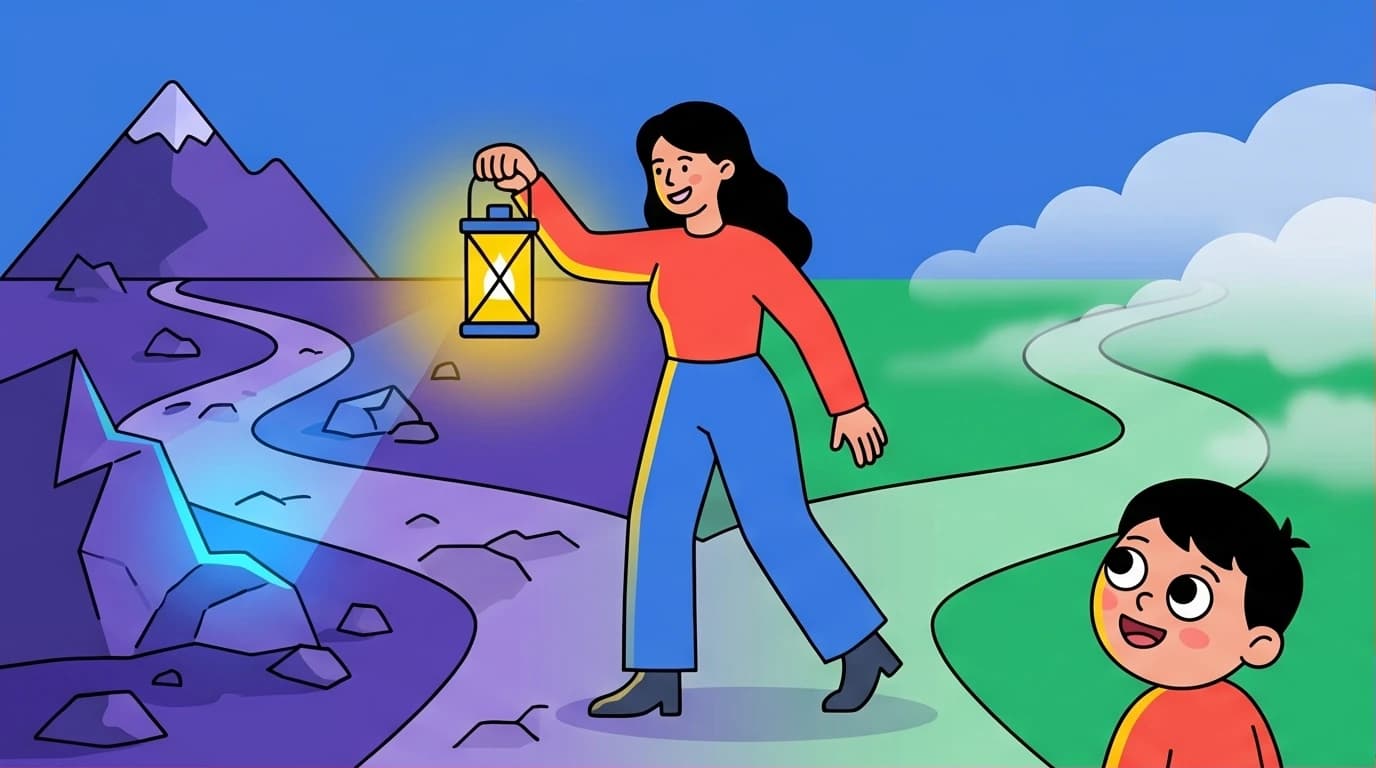
The pressure on modern mothers is relentless. You juggle careers, household management, and the mental load of raising humans. But this exact friction is your greatest parenting tool. You do not need a pristine, stress-free life to teach grit. You need to use your daily challenges as a live-action classroom.
Managing this constant juggle is a resilience test in itself. If you're searching for actionable strategies, you're not alone.
The Shift: From Fixing to Leading
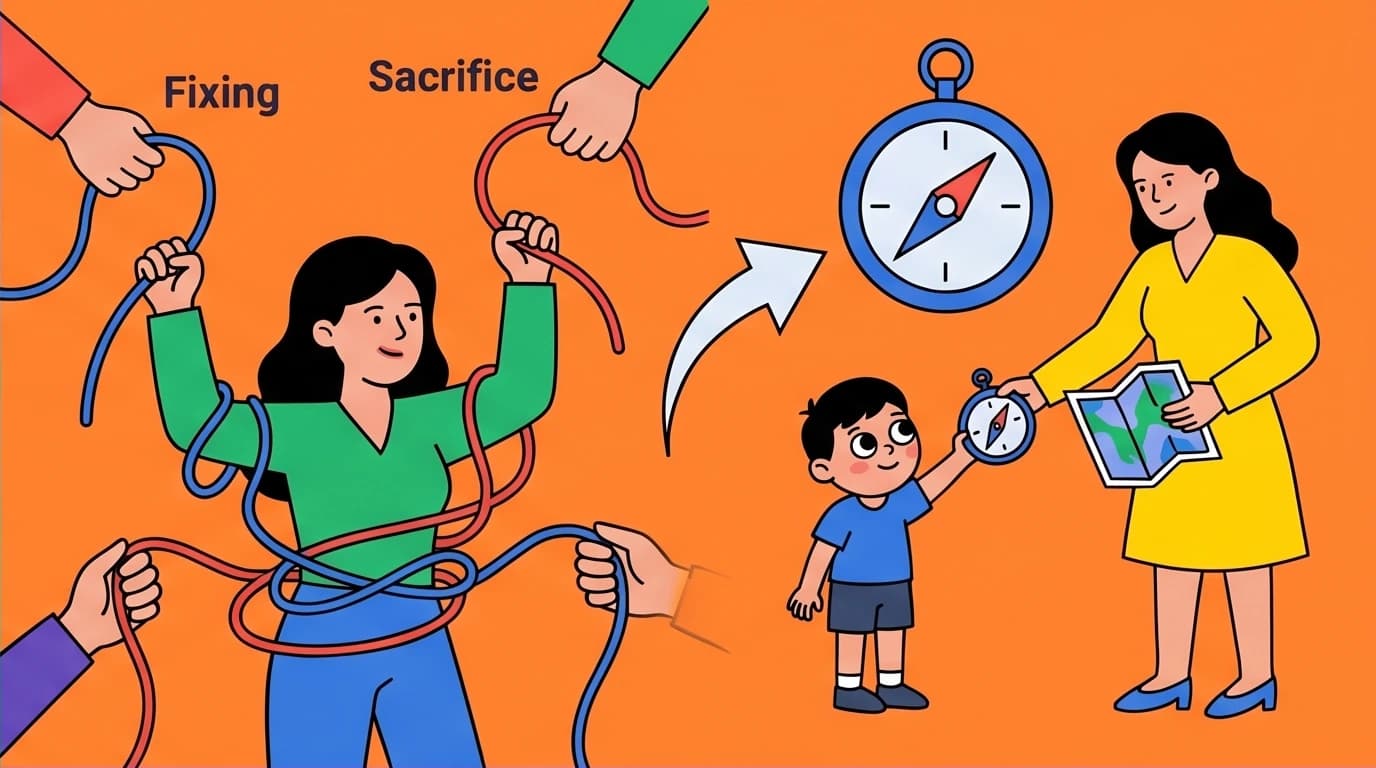
Historically, society pushed the "martyr mom" narrative—the idea that a good mother sacrifices every ounce of her ambition and shields her kids from all discomfort. This approach is outdated and counterproductive. Empowering mothers to pursue their own goals, set boundaries, and openly navigate obstacles is the most effective way to foster grit in the next generation.
When you step into your own power, you stop managing your child's every move and start leading by example. You transition from a micromanager who prevents failure to a mentor who guides them through it.
How to Model Success for Children in the Real World
Kids have excellent radar for hypocrisy. You cannot demand they work hard if they only see you effortlessly succeeding or hiding your struggles. Knowing how to model success for children means making your invisible efforts visible.
1. Narrate Your Failures
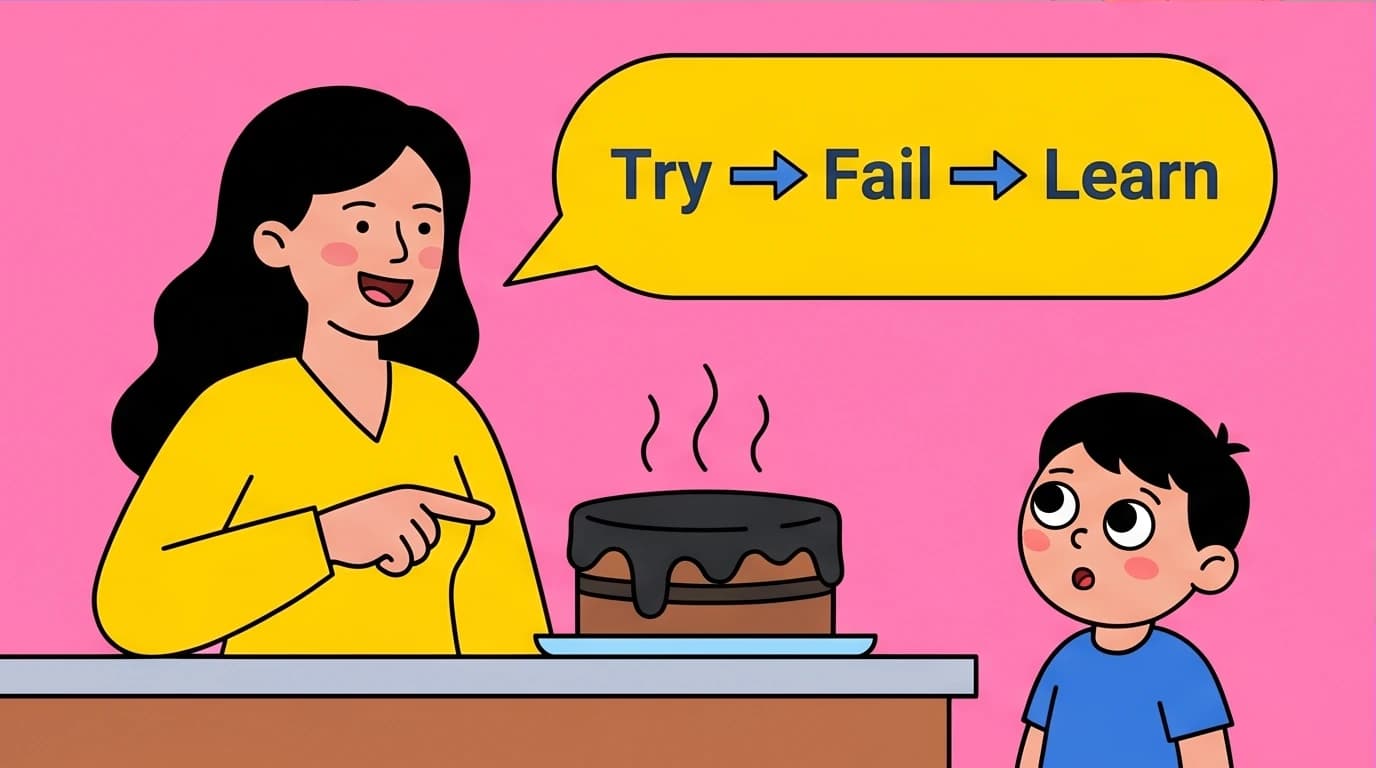
Success looks easy from the outside. You need to show them the messy middle. If you lose a client pitch, burn dinner, or struggle to put together a piece of furniture you just ordered from Amazon, talk about it out loud.
Instead of: Hiding in the bathroom to cry out of frustration.
Try saying: "I am really frustrated right now. I worked hard on a project, and it didn't go the way I wanted. I am going to take a 10-minute walk to clear my head, and then I’m going to figure out what I can learn from this."
Try saying: "I am really frustrated right now. I worked hard on a project, and it didn't go the way I wanted. I am going to take a 10-minute walk to clear my head, and then I’m going to figure out what I can learn from this."
This gives them a direct script for emotional regulation. They see that failure causes disappointment, but it does not cause destruction.
2. Showcase Your Own Learning Curve
Let your kids see you be a beginner at something. Buy a book on a topic you know nothing about at Barnes & Noble. Take up running and let them see you sweating, breathing hard, and struggling to finish a 3-mile loop. Tell them, "My muscles ache today, and I wanted to quit at mile two, but I pushed through."
When they see you tolerate the discomfort of learning, they realize that struggling with their own spelling words or piano practice is a normal part of the human experience, not a sign of inadequacy.
If you want to dive deeper into why this combination of passion and perseverance is so critical for your child's future, you might want to explore the definitive science behind it. Angela Duckworth spent years researching what actually makes people successful—and spoiler alert, it isn't raw talent. Her groundbreaking work explores how we can deliberately cultivate resilience in ourselves and our kids. It's a fantastic read if you want practical insights on building that crucial "don't-quit" muscle.
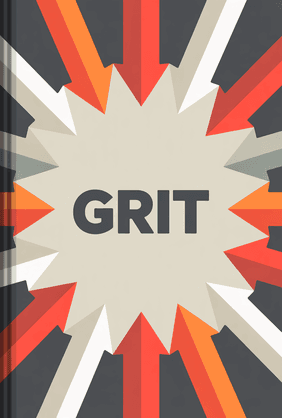
Grit
Angela Duckworth
 18 Duration
 8 Key Points
 4.6 Rate
If your bookshelf is already overflowing, finding time to read another book—no matter how great—can feel daunting. That's where microlearning can help you absorb these key ideas without the pressure.

Absorb the core lessons from bestselling parenting and personal growth books in just 15-minute audio or text sessions, perfect for your commute or coffee break.

Download LeapAhead App now
Leadership Skills for Moms: The Living Room is Your Boardroom
Corporate leadership principles translate directly into effective parenting. Applying leadership skills for moms doesn't mean speaking in corporate jargon. It means relying on strategic vision, emotional intelligence, and delegation rather than yelling and controlling.
Master Emotional Regulation Under Pressure
A great leader does not panic when the team misses a deadline. A great mother tries not to panic when a child remembers a massive science project the night before it is due. Your calm presence dictates the temperature of the house. If you escalate, they escalate. If you hold your ground, breathe, and ask, "Okay, what is our immediate next step?" you teach them crisis management.
Strategic Delegation and Natural Consequences
Leaders do not do the work of their subordinates. Mothers should not do the work of a capable child. If your 10-year-old forgets his lunch on the kitchen counter, let him eat the standard cafeteria cheese sandwich.
Rescuing them from minor discomfort robs them of the opportunity to develop a system for remembering next time. Delegation means handing over the responsibility of their own lives piece by piece. You are training them to be independent operators.
Practical Frameworks for Teaching Kids Growth Mindset
Stanford psychologist Carol Dweck introduced the concept of the growth mindset—the belief that abilities can be developed through dedication and hard work. Teaching kids growth mindset requires intentional shifts in your daily vocabulary.
The "Power of Yet"
When your child throws a pencil across the room and yells, "I can't do this fraction worksheet!" intervene with one word: Yet.
"You can't do it yet. Your brain is building the muscle to figure it out."
"You can't do it yet. Your brain is building the muscle to figure it out."
Praise Process Over Trait
If you constantly tell your child, "You are so smart," they become terrified of doing anything that might make them look dumb. They will avoid hard challenges to protect their "smart" label.
Shift your praise entirely to the process.
- "I love how many different colors you used in this drawing."
- "I noticed you tried three different ways to fix that Lego tower before asking for help. That shows serious determination."
- "You studied for a solid hour without checking your phone. I am proud of your focus."
The Dinner Table Autopsy
Make failure a normal, boring topic of conversation in your house. At dinner, go around the table and ask, "What did you fail at today?"
You must participate. Share a minor mistake you made at work or in your personal life, and follow it up with what you learned. This normalizes friction. It teaches kids that highly successful, competent adults make mistakes every single day and survive them.
You must participate. Share a minor mistake you made at work or in your personal life, and follow it up with what you learned. This normalizes friction. It teaches kids that highly successful, competent adults make mistakes every single day and survive them.
Since we just touched on Carol Dweck’s transformative research, there is truly no better time to read the source material. Her landmark book dives deep into the differences between a fixed mindset and a growth mindset, offering brilliant examples of how our subtle shifts in phrasing can change a child's entire trajectory. If you're serious about helping your kids see failures as stepping stones rather than roadblocks, this is absolute required reading for your parenting toolkit.

Mindset
Carol S. Dweck
51 Duration8 Key Points4.6 RateBuilding Emotional Scaffolding
Resilience is not the absence of emotion. It is the ability to experience heavy emotions and keep moving forward. Do not tell a crying child, "It's not a big deal." To them, striking out in Little League or being left out of a group chat feels catastrophic.
Validate the emotion, but do not fix the situation.
Say: "I know it hurts to feel left out. It makes total sense that you are sad right now. I am right here with you."
Once the emotional wave passes, then you can ask: "What do you think we should do about this tomorrow?"
Say: "I know it hurts to feel left out. It makes total sense that you are sad right now. I am right here with you."
Once the emotional wave passes, then you can ask: "What do you think we should do about this tomorrow?"
You provide the emotional scaffolding so they feel safe enough to formulate their own solutions.
Holding space for your child's big, messy feelings without instantly trying to fix them is one of the hardest parts of parenting. If you're looking for a judgment-free, incredibly practical guide on how to become that sturdy emotional scaffold for your kids, Dr. Becky Kennedy's approach is a game-changer. She provides exact scripts and actionable strategies that help you connect with your child during their toughest moments, all while honoring your own boundaries and mental health.

Good Inside
Dr. Becky Kennedy
38 Duration7 Key Points4.6 RateIt can feel like a catch-22: you need these parenting strategies now, but you're too drained at the end of the day to sit down and read. An easier way to get started is by listening to the key ideas from these books.
Listen to key insights from experts like Dr. Becky Kennedy while you're driving or doing chores, turning small pockets of time into powerful learning moments for calmer parenting.
Download LeapAhead App now
Common Pitfalls to Avoid
Even highly intentional mothers fall into traps when anxiety takes over. Watch out for these resilience-killers.
The Snowplow Effect
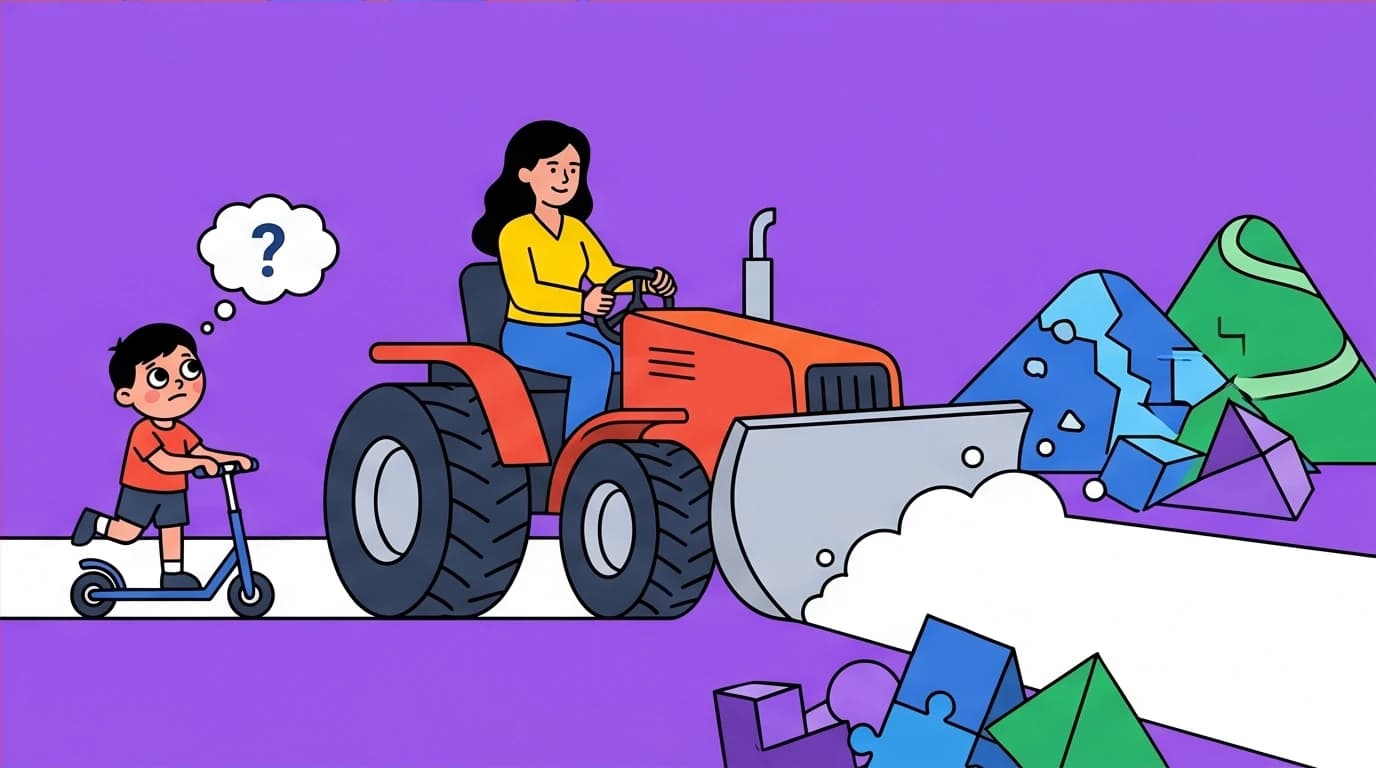
Helicopter parents hover. Snowplow parents actively clear the path of all obstacles so the child never experiences friction. They text the teacher to get an extension. They call the coach to argue about playing time.
If you remove all heavy lifting from your child's life, their resilience muscles will atrophy. They will hit college or their first job, encounter a difficult boss, and shatter. Let them carry their own backpacks. Let them navigate their own minor social conflicts.
It’s completely natural to want to pave a smooth road for the people you love most, but backing off is essential for their overall development. If you find yourself struggling to let go of the reins, Julie Lythcott-Haims offers a brilliant, eye-opening perspective on the dangers of overparenting. Drawing from her experience as a Stanford dean, she shares compelling stories and concrete advice on how to step back so your children can finally step up and learn to advocate for themselves.
How to Raise an Adult
Julie Lythcott-Haims
33 Duration9 Key Points4.6 RateToxic Positivity
When your child is upset, responding with "Look on the bright side!" or "At least it's not worse!" is dismissive. It teaches them to suppress negative feelings. True grit requires facing reality, however unpleasant it is, and deciding to move through it anyway. Acknowledge the suck. Sometimes things are just hard, and that is okay.
Hiding Your Own Boundaries
Mothers often think that being a good parent means being available 24/7. This models a complete lack of boundaries and sets them up for burnout in their own adulthood.
It is healthy to say, "Mom is reading a book for 30 minutes. Unless something is on fire, do not interrupt me." Setting boundaries shows your kids that adults require rest, personal space, and self-respect to function at a high level. Next time you are browsing Audible or Apple Books, pick up something for your own professional or personal development and let them see you prioritize your own growth.
It is healthy to say, "Mom is reading a book for 30 minutes. Unless something is on fire, do not interrupt me." Setting boundaries shows your kids that adults require rest, personal space, and self-respect to function at a high level. Next time you are browsing Audible or Apple Books, pick up something for your own professional or personal development and let them see you prioritize your own growth.
This practice of self-prioritization is fundamental, but it often comes with a heavy dose of societal and internal pressure.
The Long Game of Resilience
Raising a resilient child is not a weekend project. It is a daily, repetitive practice. It happens in the car on the way to school, in the kitchen after a long day, and in the quiet moments when things go wrong.
You do not need to be perfect. In fact, a perfect mother would be terrible for a child's resilience. Your flaws, your mistakes, and your subsequent apologies are vital data points for your kids. When you lose your temper, pause, and say, "I reacted poorly just then. I am sorry. I am going to try that again," you give them a masterclass in accountability and course correction.
Focus on building your own internal strength. Focus on leading your household with clarity and purpose. When you commit to your own continual growth, your children will naturally follow your lead. They will learn to stand tall, not because you told them to, but because they watched you do it every single day.
FAQ
What if my child gives up too easily on everything?
Lower the barrier to entry but do not remove the expectation. If they quit piano after 5 minutes, require 10 minutes of sitting at the bench. They don't have to play well, but they have to tolerate the frustration for a set duration. Validate how hard it is, but hold the boundary. Over time, their tolerance for frustration will expand.
Lower the barrier to entry but do not remove the expectation. If they quit piano after 5 minutes, require 10 minutes of sitting at the bench. They don't have to play well, but they have to tolerate the frustration for a set duration. Validate how hard it is, but hold the boundary. Over time, their tolerance for frustration will expand.
How do I balance modeling hard work without showing them unhealthy burnout?
Narrate your recovery just as loudly as you narrate your hard work. If you pull a late night for a work presentation, make sure they hear you say the next day, "I pushed myself hard yesterday, so today I am going to rest and prioritize sleep." You must model the off-switch.
Narrate your recovery just as loudly as you narrate your hard work. If you pull a late night for a work presentation, make sure they hear you say the next day, "I pushed myself hard yesterday, so today I am going to rest and prioritize sleep." You must model the off-switch.
Is it too late to start teaching resilience if my child is already a teenager?
No. Teenagers actually respond better to the "modeling" approach than to lectures. Stop trying to manage their daily schedules. Hand over the reins of their responsibilities (laundry, waking up on time, managing homework). Let them fail safely while they still live under your roof. Be a consultant rather than a manager.
No. Teenagers actually respond better to the "modeling" approach than to lectures. Stop trying to manage their daily schedules. Hand over the reins of their responsibilities (laundry, waking up on time, managing homework). Let them fail safely while they still live under your roof. Be a consultant rather than a manager.
How do I deal with my own anxiety when watching my child fail?
Recognize that your anxiety belongs to you, not them. When you feel the urge to intervene, physically step back, take a deep breath, and ask yourself: "Is this a safety issue, or just an uncomfortable learning moment?" If it is the latter, let it play out. Your job is to prepare the child for the road, not the road for the child.
Recognize that your anxiety belongs to you, not them. When you feel the urge to intervene, physically step back, take a deep breath, and ask yourself: "Is this a safety issue, or just an uncomfortable learning moment?" If it is the latter, let it play out. Your job is to prepare the child for the road, not the road for the child.