


You probably saw the viral screenshot floating around social media in early 2020. It was a page from a book published in 2008, plainly stating that a severe pneumonia-like illness would spread across the globe in the year 2020. Almost overnight, physical copies vanished from Barnes & Noble shelves, and the book skyrocketed to the top of Amazon’s bestseller lists.
Readers were left with a pressing question: Did a controversial psychic actually predict the modern global crisis?
People want to know what else is hiding in those pages. Are there more disasters looming? Is there hope? To answer these questions, we need to look past the viral hype and conduct a thorough analysis. The Sylvia Browne End of Days predictions span from the early 2010s to the end of the 21st century, covering everything from medical breakthroughs to the literal end of human existence on Earth.
Why This Book Suddenly Reappeared on the Radar
Before breaking down the timeline, you have to understand the context. Sylvia Browne was a prominent, often polarizing figure in American media, making frequent appearances on shows like The Montel Williams Show and Larry King Live. She claimed to have psychic abilities and spirit guides who helped her see the future and the afterlife.
End of Days: Predictions and Prophecies About the End of the World, co-written with Lindsay Harrison, was published in 2008. At the time, it was just another addition to her massive bibliography. But the text on page 312 changed its legacy forever.
The exact quote reads:
"In around 2020 a severe pneumonia-like illness will spread throughout the globe, attacking the lungs and the bronchial tubes and resisting all known treatments. Almost more baffling than the illness itself will be the fact that it will suddenly vanish as quickly as it arrived, attack again ten years later, and then disappear completely."

"In around 2020 a severe pneumonia-like illness will spread throughout the globe, attacking the lungs and the bronchial tubes and resisting all known treatments. Almost more baffling than the illness itself will be the fact that it will suddenly vanish as quickly as it arrived, attack again ten years later, and then disappear completely."
The stark accuracy of the first half of that prediction sent shockwaves through the internet. This sparked massive interest in what else Browne had foreseen.
If all this talk about eerie 2020 predictions and societal shifts has piqued your curiosity, there is simply no substitute for reading the source material yourself. Before you dive into second-hand summaries or viral social media posts, you might want to explore exactly how Sylvia Browne laid out her timeline for the 21st century. Grabbing a copy of her original work allows you to see the full context behind the headlines, examine her other bold claims, and decide for yourself whether she possessed genuine foresight or just made lucky guesses.
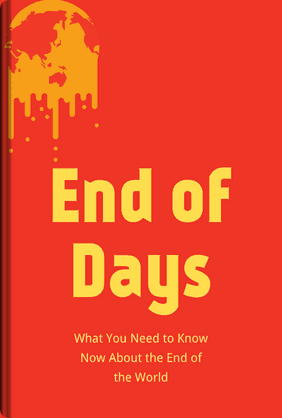
End of Days
Sylvia Browne, Jeanie Hackett, et al.
 23 Duration
 8 Key Points
 4.7 Rate
But if you're short on time and want to quickly grasp the main prophecies before committing to the full book, there's a more modern way to start.


LeapAhead

Use this app to listen to the core ideas from End of Days and thousands of other non-fiction books in just 15 minutes, perfect for catching up on busy days.
Comprehensive End of Days Book Summary
To provide a complete End of Days book summary, we must categorize her predictions. Browne didn't just write a list of dates. She structured the book by first examining how various ancient cultures and major religions (Christianity, Judaism, Islam, Native American traditions) viewed the end of the world. After establishing this historical baseline, she laid out her own timeline of Earth's final century.
Here is a structured breakdown of the core predictions she made for the coming decades.
Global Health and Medicine
Aside from the famous 2020 prediction, Browne made several bold claims about the medical field. She viewed the 21st century as an era of rapid biological advancement, though plagued by unique challenges.
- Mental Health: Browne predicted a massive spike in mental health awareness and treatments. She claimed that psychology and psychiatry would merge more seamlessly with holistic and spiritual practices.
- Blindness and Paralysis: She predicted that by the late 2020s, blindness would become a thing of the past thanks to microchip implants in the brain. Similarly, she stated that spinal cord injuries and paralysis would be curable through advanced stem cell therapies and nerve regeneration techniques.
- The Common Cold and Cancer: Here is where her timeline falters. She predicted the common cold would be completely eradicated by 2009. She also claimed a definitive cure for cancer would be available to the general public by 2020.
Environmental Shifts and Climate
Long before climate change became the dominant political talking point it is today, Browne's visions focused heavily on environmental degradation and planetary shifts.
- Extreme Weather: She detailed an increase in massive hurricanes, tsunamis, and unseasonal weather patterns. She warned that the East Coast of the United States would face unprecedented flooding.
- Land Mass Changes: Browne foresaw parts of the coastline slipping into the ocean, while new landmasses would supposedly emerge from the sea. She warned against living in low-lying coastal areas due to rising water levels.
- The Global Temperature: She described a world where temperature extremes become the norm—blistering summers exceeding 120 degrees Fahrenheit in areas not accustomed to such heat, and brutal, freezing winters.

Societal, Political, and Technological Changes
Browne’s view of human society in the late 21st century is a mix of utopian technology and shifting power dynamics.
- The Fall of Traditional Politics: She predicted that a massive overhaul of the US government would occur by the 2020s, shifting away from a two-party system.
- Extraterrestrial Life: She firmly stated that humanity would make public, undeniable contact with extraterrestrial life by the year 2010. They would supposedly share advanced technology with us.
- The Economy: She foresaw the complete disappearance of paper money, replaced entirely by an electronic global currency. While paper money still exists, the explosion of cryptocurrency and digital wallets shows a strong alignment with this specific trend.
Browne’s visions of a cashless society and biological microchips might sound like science fiction, but we are already seeing massive leaps in these very fields. If you find the trajectory of modern technology fascinating, you'll definitely want to look into how rapid innovation is actually shaping our upcoming decades. Instead of relying on psychic foresight, some of today's brightest minds use data and exponential trends to map out what's coming next—from AI breakthroughs to medical miracles that could make paralyzing injuries a thing of the past.
The Future Is Faster Than You Think
Peter H. Diamandis and Steven Kotler
27 Duration11 Key Points5 RateDeep Dive: End of Days Sylvia Browne Analysis
Any serious End of Days Sylvia Browne analysis requires us to remain objective. Prophecy is a tricky business. When evaluating Sylvia Browne prophecies, we have to recognize the psychological mechanics at play—specifically the Barnum effect, where vague statements are interpreted as highly accurate by individuals seeking meaning.
The Hits:
The 2020 prediction is undeniably striking. The specificity of a "pneumonia-like illness" attacking the "lungs and bronchial tubes" around the exact year it happened is difficult to dismiss as pure coincidence. Furthermore, her predictions regarding the shift toward a cashless society and the integration of microchips in human biology (resembling modern ventures like Neuralink) show a strong intuitive grasp of technological trajectories.
The 2020 prediction is undeniably striking. The specificity of a "pneumonia-like illness" attacking the "lungs and bronchial tubes" around the exact year it happened is difficult to dismiss as pure coincidence. Furthermore, her predictions regarding the shift toward a cashless society and the integration of microchips in human biology (resembling modern ventures like Neuralink) show a strong intuitive grasp of technological trajectories.
The Misses:
Her misses are massive and cannot be ignored. Aliens did not land and reveal themselves in 2010. The common cold remains a nuisance. Cancer has not been cured. Furthermore, the second half of her 2020 prediction—that the virus would "suddenly vanish as quickly as it arrived"—did not align with the reality of a multi-year pandemic that slowly transitioned into an endemic phase.
Her misses are massive and cannot be ignored. Aliens did not land and reveal themselves in 2010. The common cold remains a nuisance. Cancer has not been cured. Furthermore, the second half of her 2020 prediction—that the virus would "suddenly vanish as quickly as it arrived"—did not align with the reality of a multi-year pandemic that slowly transitioned into an endemic phase.
Why do we focus on the hits and forget the misses? Human brains are wired to find patterns in chaos. When global structures feel fragile, we look for evidence that someone, somewhere, saw it coming. It provides a strange sense of comfort: if the disaster was predicted, then it is part of a plan, rather than random, senseless chaos.
While End of Days gained fame for its predictions, it represents just one facet of her extensive work. For those curious about her other major writings, exploring a guide to the best Sylvia Browne books can offer a broader perspective on her spiritual philosophy.
It's human nature to zero in on a spectacular "hit" like the 2020 prediction while completely ignoring the misses. When the world feels unpredictable, we crave certainty. If you're intrigued by how we evaluate predictions and why our brains are so easily tricked by patterns in the chaos, diving into the science of forecasting is a real eye-opener. Learning how to separate genuine, data-backed foresight from random coincidences can completely change how you view everything from political polling to the evening weather report.
The Signal and the Noise
Nate Silver, Mike Chamberlain, et al.
20 Duration7 Key Points4.8 RateThe Spiritual Meaning of Global Events
This brings us to the most crucial, yet often overlooked, aspect of the book. Readers fixate on the disasters, but they miss the underlying philosophy. Browne did not write the book to induce panic. Her primary goal was to explain the spiritual meaning of global events.
In Browne’s theological framework—often aligned with New Age philosophy and Gnostic Christianity—Earth is not our permanent home. It is a testing ground. It is a school for souls.
When analyzing global events through this lens, wars, pandemics, and natural disasters are not punishments from an angry deity. They are catalysts for spiritual evolution.
- Forced Empathy: Browne believed that global crises force humanity to drop superficial differences. When a virus attacks globally, or a tsunami wipes out a coastline, socioeconomic status and borders become irrelevant. Humanity is forced to practice collective empathy.
- Shedding Outdated Dogma: She predicted the end of organized, dogmatic religion. In its place, she foresaw a rise in individualized, quiet spirituality. People would step away from massive institutions and realize that they harbor a direct, personal connection to the divine.
- The Actual "End of Days": According to Browne, the world does not end in a fiery apocalypse. Instead, around the year 2100, she claimed that the "other side" (the spirit world) and our physical dimension will slowly merge. Humanity will simply stop reincarnating on Earth, leaving the planet to return to a pristine, unpopulated state. The end of days, in her view, is essentially a graduation ceremony for the human soul.

This concept of the "other side" is central to her work. For a more detailed look at what she believed happens after we die, delving into Sylvia Browne's afterlife beliefs can provide a fascinating framework for understanding her spiritual views.
Viewing Earth as a temporary classroom for the soul offers a deeply comforting perspective, especially when the evening news is filled with chaos. If Browne’s concept of spiritual evolution resonates with you, there is a wealth of literature that expands on this idea without the apocalyptic undertones. Exploring how our daily struggles contribute to our soul's ultimate growth can help you navigate modern anxieties with a sense of grounded purpose. It’s a wonderful way to shift your focus from fearing the future to actively creating a more meaningful present.

The Seat of the Soul
Gary Zukav
18 Duration7 Key Points4.6 RateHow to Read and Interpret Prophecy Today
If you are picking up End of Days now, how should you approach it?
- Do not use it as a calendar. Treat specific dates with extreme skepticism. Psychic predictions often blur timelines. A vision for 2010 might manifest as a slow cultural shift over fifty years.
- Focus on the macro, not the micro. The value in Sylvia Browne’s work isn't in knowing exactly when a disease will strike. The value lies in her macro-level observations about human resilience and the shift toward digital economies and alternative energy.
- Use it for personal reflection. When reading about potential future disasters, observe your own reactions. Are you paralyzed by fear, or motivated to organize your life, connect with your community, and build resilience?
Books like End of Days serve as psychological mirrors. They force us to confront our mortality, our fragility, and our ultimate purpose. Whether you view Sylvia Browne as a gifted clairvoyant or a highly observant trend-forecaster, the book's core message remains useful: times will get hard, the earth will change, but the human spirit is designed to survive, adapt, and eventually ascend.
The idea of personal evolution was a cornerstone of Browne's teachings. She believed that everyone has the capacity for psychic awareness and encouraged people to develop their intuition with her spiritual methods.
If you're intrigued by the ideas in these books but find your to-read list is growing faster than your free time, fitting in more learning can feel like a challenge.
LeapAhead
This app helps you clear your reading list by turning bestselling books into 15-minute audio and text summaries, so you can keep learning even when you're exhausted.
FAQ
Did Sylvia Browne predict the end of the world?
She predicted an end to human life on Earth, but not through a violent apocalypse. She claimed that around the year 2100, humans would simply stop reincarnating on this planet. Earth would be left in peace to regenerate, while human souls would remain on the "other side" or in a higher spiritual dimension.
She predicted an end to human life on Earth, but not through a violent apocalypse. She claimed that around the year 2100, humans would simply stop reincarnating on this planet. Earth would be left in peace to regenerate, while human souls would remain on the "other side" or in a higher spiritual dimension.
When was End of Days written?
End of Days: Predictions and Prophecies About the End of the World was published in June 2008. This timeline is what made her 2020 pandemic prediction so shocking to modern readers, as it was written 12 years before the event took place.
End of Days: Predictions and Prophecies About the End of the World was published in June 2008. This timeline is what made her 2020 pandemic prediction so shocking to modern readers, as it was written 12 years before the event took place.
How accurate were Sylvia Browne prophecies overall?
Her accuracy is heavily debated and mixed. While she successfully described a 2020 respiratory illness and correctly anticipated the shift toward a cashless society, she missed significantly on other major predictions. She wrongly predicted that alien contact would be made public in 2010, the common cold would be cured by 2009, and cancer would be eradicated by 2020.
Her accuracy is heavily debated and mixed. While she successfully described a 2020 respiratory illness and correctly anticipated the shift toward a cashless society, she missed significantly on other major predictions. She wrongly predicted that alien contact would be made public in 2010, the common cold would be cured by 2009, and cancer would be eradicated by 2020.
What is the main takeaway from the book?
Beyond the specific dates and catastrophic predictions, the main takeaway is spiritual. Browne emphasizes that Earth is a temporary learning environment for the soul. Global hardships are meant to serve as catalysts for human compassion, pushing society away from greed and organized dogma toward a more unified, spiritually awakened existence.
Beyond the specific dates and catastrophic predictions, the main takeaway is spiritual. Browne emphasizes that Earth is a temporary learning environment for the soul. Global hardships are meant to serve as catalysts for human compassion, pushing society away from greed and organized dogma toward a more unified, spiritually awakened existence.