

You stare at your laptop screen. The tasks are clearly listed. The deadline is approaching. You know exactly what you need to do and why it matters, yet you feel completely paralyzed. You end up scrolling on your phone or staring at the wall, followed immediately by a heavy wave of guilt.

You ask yourself: Why do I lack motivation? Am I just lazy?
Stop blaming your character. Laziness is a choice to do nothing and feeling perfectly fine about it. What you are experiencing is apathy, resistance, and exhaustion. This is not a willpower issue. It is a biological and psychological roadblock. To get your drive back, you have to look under the hood at your brain chemistry and your mental state.
The Biology of Drive: Dopamine and Motivation
When people think of motivation, they usually think of inspiration or a sudden burst of energy. Science tells a different story. Motivation is heavily governed by a specific neurotransmitter: dopamine.
Many people mistakenly believe dopamine is simply the "reward" chemical that makes you feel good. In reality, it is the "pursuit" chemical. Dopamine is what your brain releases to make you desire something and take action to get it. The relationship between dopamine and motivation is the foundation of your daily drive.
If you cannot find the motivation to start a project, clean your house, or go to the gym, your dopamine baseline is likely compromised. Here is how that happens:
- Cheap Dopamine Overload: Social media algorithms, junk food, video games, and constant smartphone notifications flood your brain with massive, effortless spikes of dopamine.
- The Crash: What goes up must come down. After these massive spikes, your dopamine drops below its normal baseline.
- The Motivation Deficit: When your baseline is low, regular, healthy tasks (like reading a book or finishing a report) do not trigger enough dopamine to cross the threshold required for action. Your brain calculates the effort-to-reward ratio and decides the hard work just isn't worth it.
You aren't broken. Your brain's reward circuitry is just temporarily recalibrated to expect high rewards for zero effort.

This is especially true for goals like "reading more." If a full book feels too daunting, you can still get the core ideas in a format that works with a shorter attention span.


LeapAhead helps you absorb the key ideas from bestselling nonfiction in just 15 minutes, making it easier to learn even when your motivation is low.
 LeapAhead
If you want to dive deeper into how modern society has hijacked our brain's reward system, Dopamine Nation by Dr. Anna Lembke is an absolute must-read. This eye-opening book explores the neuroscience of our addiction to cheap thrills and offers a practical, science-backed framework for resetting your dopamine baseline. It's the perfect guide if you are struggling to find joy and motivation in your everyday tasks and want to reclaim your focus.
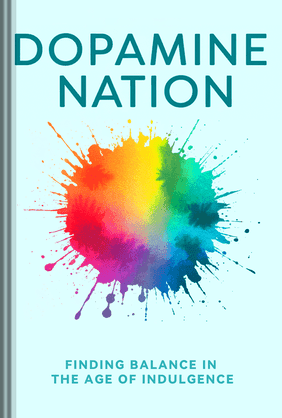
Dopamine Nation
Anna Lembke, M.D.
 20 Duration
 8 Key Points
 4.6 Rate
Psychological Reasons for No Motivation
Beyond brain chemistry, your mind creates invisible barriers. If your dopamine levels are fine but you still can't move forward, you are likely hitting a psychological wall. The primary psychological reasons for no motivation usually stem from fear, exhaustion, or a lack of alignment.
1. The Overwhelm and "Freeze" Response
When a task feels too large, too ambiguous, or too high-stakes, your nervous system perceives it as a threat. The human brain responds to threats in three ways: fight, flight, or freeze. Procrastination and lack of motivation are often just the freeze response in disguise. You are not unmotivated; you are overwhelmed. Your brain shuts down action to protect you from the perceived stress of the task.

2. Chronic Burnout
Burnout is not just being tired. It is a state of emotional, physical, and mental exhaustion caused by excessive and prolonged stress. If you have spent months pushing yourself through high-stress situations without adequate recovery, your adrenal system is depleted. Apathy is your body's emergency brake. It kills your motivation to force you to stop and rest.
When you’re this exhausted, the idea of picking up a book to improve your skills feels impossible. A lighter approach, like listening to key ideas on a walk or during a commute, can be a more manageable way to keep learning without draining your limited energy.
For days when you're too burned out for heavy reading, LeapAhead lets you listen to book summaries so you can still learn and grow on the go.
LeapAheadFor those who feel like they are constantly running on empty, Burnout by Emily and Amelia Nagoski is a game-changer. The authors explain the biological stress cycle and why simply "relaxing" on the couch doesn't actually cure burnout. If you are stuck in a state of exhaustion where your body's emergency brake is killing your drive, this book will teach you how to finally process that stress, recharge your adrenal system, and get your spark back.
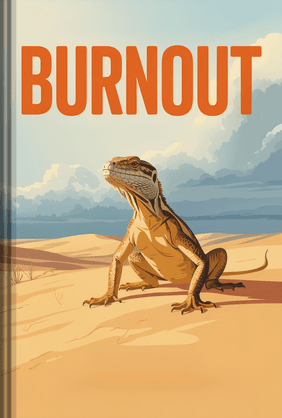
Burnout
Emily Nagoski, Ph.D., Amelia Nagoski, DMA
25 Duration9 Key Points4.5 Rate3. Perfectionism and Fear of Failure
Perfectionism destroys drive. If your subconscious believes that a project must be executed flawlessly, the barrier to entry becomes impossibly high. Your brain figures that if you can't do it perfectly, it is safer to not do it at all.
The Trap of Intrinsic vs Extrinsic Motivation
Sometimes, the issue isn't your brain chemistry or your stress levels. It is the type of fuel you are putting in the tank. To understand this, we have to look at intrinsic vs extrinsic motivation.
- Extrinsic Motivation: Doing something for external rewards or to avoid punishment. Examples include working solely for a paycheck, studying to get a grade, or going to the gym to look good for an upcoming vacation.
- Intrinsic Motivation: Doing something because the act itself is inherently rewarding, interesting, or aligned with your core values. Examples include solving a puzzle because you enjoy the challenge, or writing a code because you love building things.
Extrinsic motivation is highly effective for short-term tasks. If someone offers you a massive bonus to work late on a Friday, you will probably do it. But extrinsic rewards suffer from diminishing returns. Over time, the paycheck isn't enough to make you care.

If you are chronically unmotivated at your job or in your studies, you might be running entirely on extrinsic fuel. The human spirit cannot sustain long-term effort without intrinsic meaning. You have to find a way to connect the daily grind to a deeper personal value, or the friction will eventually stop you in your tracks.
Want to learn more about what truly fuels human behavior? In Drive, Daniel H. Pink masterfully breaks down the limits of the traditional "carrot and stick" approach to motivation. He explores the science behind why intrinsic rewards—like autonomy, mastery, and purpose—are the real secrets to high performance and deep satisfaction. If you are feeling unfulfilled at work or school, this book can help you redesign your approach to find genuine meaning in what you do.

Drive
Daniel H. Pink
24 Duration11 Key Points4.5 RateUnderstanding the science behind your lack of motivation is the crucial first step. If you're ready to move from theory to action, the next step is to equip yourself with specific, actionable techniques.
The Science of Motivation: How to Rebuild Your Drive
Understanding the science of motivation gives you a massive advantage. You no longer have to wait for inspiration to strike. You can engineer your environment and habits to rebuild your drive from the ground up.
1. Reset Your Dopamine Baseline
You need to make hard things appealing again. To do this, you must cut back on the cheap dopamine hits that are numbing your brain's reward centers.
Try a partial dopamine fast: for the first two hours of your day, avoid your phone, social media, and high-sugar foods. Let your brain experience boredom. Boredom is the natural precursor to action. When cheap stimulation is removed, your brain will naturally start craving the dopamine release that comes from completing real tasks.
Try a partial dopamine fast: for the first two hours of your day, avoid your phone, social media, and high-sugar foods. Let your brain experience boredom. Boredom is the natural precursor to action. When cheap stimulation is removed, your brain will naturally start craving the dopamine release that comes from completing real tasks.
2. Lower the Bar to Bypass the Amygdala
If overwhelm is triggering your freeze response, you must shrink the task until it no longer registers as a threat to your nervous system.
Do not tell yourself, "I need to clean the whole house." Tell yourself, "I will put away three items in the kitchen."
Do not say, "I need to write a 10-page report." Say, "I will open the document and write one sentence."
Micro-commitments bypass the brain's fear center (the amygdala). Once you start, physics takes over: an object in motion stays in motion.
Do not tell yourself, "I need to clean the whole house." Tell yourself, "I will put away three items in the kitchen."
Do not say, "I need to write a 10-page report." Say, "I will open the document and write one sentence."
Micro-commitments bypass the brain's fear center (the amygdala). Once you start, physics takes over: an object in motion stays in motion.
3. Action Precedes Motivation
This is the most critical shift in understanding motivation. Most people wait to feel motivated before they take action. Science shows it works the other way around.
When you take a small action, your brain recognizes the progress and releases a small hit of dopamine. That dopamine creates the motivation to take the next step. Action creates momentum, and momentum creates motivation. Stop waiting for the feeling. Force the smallest possible action, and the feeling will follow.
If you are ready to put this science into practice and start building unstoppable momentum, James Clear's Atomic Habits is the ultimate playbook. It perfectly aligns with the concept that small actions create massive results. By teaching you how to design an environment that makes good habits inevitable and bad habits impossible, this book will help you bypass your brain's fear center and take action even on the days you don't feel motivated at all.

Atomic Habits
James Clear
26 Duration8 Key Points4.7 Rate4. Audit Your "Why"
Look at the areas of your life where you lack drive. Are you operating purely on extrinsic motivation? If so, try to find an intrinsic angle. If you hate your current project, can you focus on mastering a specific skill within it that will serve your future career? If you can't find any intrinsic value, it might be a signal that you are on the wrong path entirely.
Rebuilding your drive is a crucial first step, but maintaining it is the real challenge. For a deeper look into long-term success, it's important to build systems that keep you going.
FAQ
Is a complete lack of motivation a sign of depression or ADHD?
It can be. While occasional apathy is normal, a chronic, severe lack of motivation (known as anhedonia) is a hallmark symptom of clinical depression. Similarly, ADHD is fundamentally a disorder of dopamine regulation, making it extremely difficult to initiate tasks that aren't highly stimulating. If your lack of drive is ruining your quality of life, consider speaking with a mental health professional.
It can be. While occasional apathy is normal, a chronic, severe lack of motivation (known as anhedonia) is a hallmark symptom of clinical depression. Similarly, ADHD is fundamentally a disorder of dopamine regulation, making it extremely difficult to initiate tasks that aren't highly stimulating. If your lack of drive is ruining your quality of life, consider speaking with a mental health professional.
How do I get motivated when I'm already burned out?
You don't. Trying to force motivation during burnout is like trying to drive a car with no gas by pressing harder on the accelerator. Burnout is a physiological state of exhaustion. Your immediate focus should be on nervous system regulation—getting enough sleep, stepping away from stressors, and prioritizing aggressive rest. Motivation will naturally return as your energy reserves replenish.
You don't. Trying to force motivation during burnout is like trying to drive a car with no gas by pressing harder on the accelerator. Burnout is a physiological state of exhaustion. Your immediate focus should be on nervous system regulation—getting enough sleep, stepping away from stressors, and prioritizing aggressive rest. Motivation will naturally return as your energy reserves replenish.
Why do I start strong but lose motivation halfway through a project?
When you start a new project, your brain gets a massive dopamine hit from the novelty of the idea. But novelty wears off quickly. Once you transition from the exciting "idea phase" to the difficult "execution phase," the cheap dopamine dries up. Pushing through the middle requires shifting from relying on sudden inspiration to relying on daily habits, discipline, and intrinsic motivation.
When you start a new project, your brain gets a massive dopamine hit from the novelty of the idea. But novelty wears off quickly. Once you transition from the exciting "idea phase" to the difficult "execution phase," the cheap dopamine dries up. Pushing through the middle requires shifting from relying on sudden inspiration to relying on daily habits, discipline, and intrinsic motivation.