

You know the feeling. You are trying to articulate a complex thought about society, work, or human foolishness, and you realize someone else has already said it better. Much better. And significantly funnier.

The internet is flooded with misattributed, cheesy inspirational graphics. But as a lifelong learner, you are not looking for empty platitudes. You want the real stuff. You are searching for genuine, razor-sharp observations from literary giants that actually make people stop, think, and laugh. Authors possess a unique ability to strip away societal polite fiction and expose the ridiculousness of reality. They use wit as a weapon, packaging profound truths into bite-sized, devastatingly clever sentences.
Whether you are looking for an icebreaker for your next speech, a clever bio for your social profile, or just want to highlight some brilliant text on your Kindle, this guide breaks down the most intelligent literary humor ever published.
While this collection focuses on timeless literary wit, sometimes you need a quote specifically tailored to break the ice in a professional setting.
Why Literary Wit Hits Harder Than Ordinary Jokes
There is a distinct difference between a joke and a witty remark. A joke relies on a simple punchline. Wit relies on an intellectual pivot. It forces your brain to connect two seemingly unrelated ideas, often exposing a hidden hypocrisy in the process.
When you read a great novel, the author builds an entire world just to make a point. When they compress that worldview into a single sentence, you get an explosion of insight. This is why we browse the aisles of Barnes & Noble or scroll through Goodreads—we are hunting for that exact jolt of recognition. Literary wit stays with you because it is not just trying to make you laugh; it is trying to make you realize something true.

The Masters of American Satire: Mark Twain Funny Quotes
You cannot discuss literary humor without starting with the undisputed king of American satire. Mark Twain possessed an unmatched ability to skewer politicians, human ego, and societal norms with a folksy, unapologetic directness. His observations from the 19th century remain unnervingly accurate today.
On Politics and Society:
"Suppose you were an idiot, and suppose you were a member of Congress; but I repeat myself."
Twain understood that pointing out the obvious requires perfect timing. This quote works because of the self-correction. It frames the insult not as an attack, but as an accidental redundancy.
On Reading and Education:
"A classic is something that everybody wants to have read and nobody wants to read."
If you have ever stared guiltily at a dusty copy of War and Peace on your shelf while reaching for an easy thriller, Twain is speaking directly to you. He exposes the gap between our aspirational selves and our actual habits.
If Twain’s observation hits a little too close to home and your bookshelf is lined with classics you've yet to conquer, there's a modern way to tackle that reading list without the guilt.


LeapAhead

Get the core wisdom from classics and bestselling nonfiction in just 15 minutes, making it easy to finally absorb the ideas from those books you've been meaning to read.
On Human Nature:
"Always do right. This will gratify some people and astonish the rest."
This is the perfect example of cynical optimism. The best Mark Twain funny quotes operate on this exact frequency—they accept human flaws as a given, then mine those flaws for comedy.
While Mark Twain undoubtedly set the gold standard for American satire in the nineteenth century, the tradition of sharp, unapologetic observational comedy is very much alive today. If you love Twain's ability to expose the absurdities of daily life, you will appreciate modern essayists who carry that same torch. For a contemporary take on human foolishness and societal quirks, diving into a collection of deeply sarcastic, real-world essays is the perfect way to satisfy your craving for literary wit.

Me Talk Pretty One Day
David Sedaris
 17 Duration
 6 Key Points
 4.6 Rate
Humorous Quotes From Literature About Life and Society
When authors turn their pens toward the daily grind of living, the results are often hilariously bleak. Some of the most humorous quotes from literature come from writers who simply refused to romanticize life.
Oscar Wilde on Social Dynamics:
"Some cause happiness wherever they go; others whenever they go."
Oscar Wilde was the architect of the perfect insult. His wit relied heavily on paradox and subverting expectations. You read the first half expecting a compliment, only to be hit with a devastating backhand in the second half.
Dorothy Parker on Boredom and Intellect:
"The cure for boredom is curiosity. There is no cure for curiosity."
Parker dominated the New York literary scene with her biting sarcasm. She understood that being highly observant is both a gift and a curse. A curious mind is never bored, but it is constantly tormented by the need to know more.
Douglas Adams on Deadlines:
"I love deadlines. I love the whooshing noise they make as they go by."

For any writer, student, or professional who has ever watched a project timeline evaporate, this quote from The Hitchhiker's Guide to the Galaxy is painfully relatable. Adams captured the universal human talent for procrastination with a brilliant auditory metaphor.
Adams's take on procrastination is a classic, but humor can also be a powerful tool to get you moving. If you need a laugh to get over that productivity slump, explore our list of funny motivational quotes.
Jane Austen on Unwanted Advice:
"I do not want people to be very agreeable, as it saves me the trouble of liking them a great deal."
Austen is often pigeonholed as a romance writer, but she was a fierce, observant satirist. This line perfectly encapsulates the introvert’s defense mechanism. If people are difficult, you are freed from the social obligation of building a relationship with them.
Jane Austen’s biting societal critiques prove that classical literature is far from stuffy. In fact, beneath the elegant ballroom dances and polite parlor conversations of her era, she was consistently delivering some of the most savage, witty takedowns of human ego ever published. To truly appreciate her genius, you have to experience how seamlessly she weaves this humor into her narratives. If her quotes make you chuckle, her full-length novels will have you marveling at her razor-sharp comedic timing.
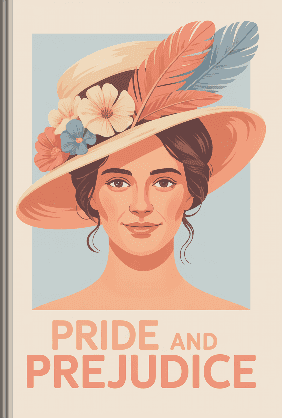
Pride and Prejudice
Jane Austen
49 Duration9 Key Points4.5 RateSmart Funny Quotes That Expose the Human Ego
Authors are keen observers of the ego. They watch how people desperately try to appear smarter, braver, or more moral than they actually are. Smart funny quotes usually target this exact gap between perception and reality.
Kurt Vonnegut on Identity:
"We are what we pretend to be, so we must be careful about what we pretend to be."
Vonnegut’s signature style was wrapping deep existential warnings in deceptively simple language. It sounds like a mild joke about faking it until you make it, but it functions as a stark warning about how our masks eventually become our faces.
Terry Pratchett on Human Intelligence:
"The trouble with having an open mind, of course, is that people will insist on coming along and trying to put things in it."
Pratchett’s fantasy works are essentially masterclasses in sociology. Here, he warns us about the vulnerability of being overly receptive. An "open mind" is a virtue, but without a filter, it becomes a dumping ground for other people's nonsense.
Agatha Christie on Marriage:
"An archaeologist is the best husband a woman can have. The older she gets, the more interested he is in her."
Christie blends her own personal life (she was married to a prominent archaeologist) with a sharp observation about aging and marital dynamics. It is dry, self-deprecating, and structurally perfect.
Christie's dry observation on marriage is a perfect example of wit found in unexpected places. This brand of humor extends beautifully to the delightful chaos of family life.
Funny Philosophical Quotes to Make You Think
Philosophy does not have to be a dense, unreadable slog. Some of the greatest thinkers realized that absurdism and humor are the best vehicles for existential truth. When you are looking for funny philosophical quotes, you are looking for ideas that laugh into the void.
Friedrich Nietzsche on Human Frailty:
"Is man merely a mistake of God's? Or God merely a mistake of man's?"
Nietzsche was notoriously intense, but his provocations carry a dark, ironic wit. By flipping the subject and the object, he forces the reader to confront the origins of their own belief systems in one tight sentence.
Voltaire on Medicine:
"The art of medicine consists of amusing the patient while nature cures the disease."
Voltaire’s skepticism of authority figures extended to the medical profession of his day. It is a brilliant, cynical breakdown of the illusion of control.
Albert Camus on Daily Choices:
"Should I kill myself, or have a cup of coffee?"
While seemingly dark, this is one of the most brilliant summations of existentialism ever written. Camus juxtaposes the ultimate philosophical question of existence with the most mundane morning routine. It perfectly captures the absurdity of human life: we carry the weight of ultimate choices while simultaneously navigating basic caffeine needs.
As Albert Camus brilliantly demonstrated, wrestling with the meaning of life does not require abandoning your sense of humor. In fact, confronting the absurdity of our daily routines through a philosophical lens can actually be incredibly liberating. If you find yourself captivated by this blend of deep existential questioning and dry wit, exploring foundational philosophical texts can profoundly shift your perspective. Diving into the concept of absurdism might just be the intellectual jolt you need.
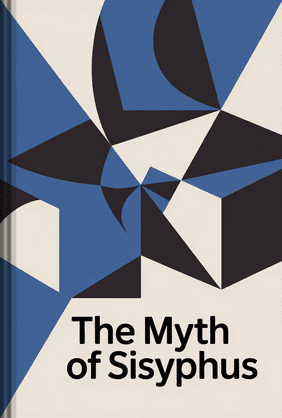
The Myth of Sisyphus
Albert Camus
49 Duration8 Key Points4.5 RateHow to Cultivate and Apply Literary Wit
Reading witty quotes from famous authors is entertaining, but actively using them requires skill. Dropping a profound Oscar Wilde quote into a casual conversation about the weather will make you sound pretentious. But placing the perfect Mark Twain observation into a presentation on corporate inefficiency? That makes you memorable.
Here is how you can practically harness this literary intelligence:
1. Build a Personal "Commonplace Book"
Do not rely on your memory. When you are reading a paperback from your local bookstore or listening to an audiobook on Audible, keep a system for capturing quotes. Highlight them on your Kindle. Write them in a dedicated notebook. A commonplace book is a centuries-old tradition where readers compile their favorite insights, organizing them by theme (e.g., Leadership, Foolishness, Courage).

2. Use Them as Anchors in Your Writing
If you are writing a blog post, an essay, or a persuasive email, start with a quote that frames the problem. Let the author do the heavy lifting of introducing the concept. If you are writing about the dangers of over-planning, open with a sharp quote about chaos. It instantly establishes authority and tone.
3. Study the Structure of the Joke
Notice how these authors construct their sentences. Look at the rhythm. Notice the rule of three, the use of paradox, and the way they place the most impactful word at the very end of the sentence. If you want to be funnier and sharper in your own communication, mimic their sentence structures.
Paying attention to how great authors construct their sentences is one of the fastest ways to improve your own communication skills. The rhythm, the cadence, and the deliberate word choices are all part of the craft. If you are serious about taking your writing to the next level and want to learn directly from a master storyteller, studying a guide that blends practical mechanics with entertaining personal anecdotes is incredibly valuable. It is the perfect way to sharpen your own literary wit.

On Writing
Stephen King
42 Duration8 Key Points4.5 Rate4. Verify Before You Share
We live in an era of rampant misattribution. Marilyn Monroe did not say half the things the internet claims she said. Neither did Einstein. Before you use a quote in a professional setting, take three minutes to verify its source. Search the exact phrase alongside the author's name and look for a specific book title or documented speech. Your credibility depends on it.
Cultivating this kind of literary intelligence requires absorbing a lot of ideas, which can be challenging in a world that constantly fragments our time. For those who want to keep learning but struggle to fit long reading sessions into a busy day, micro-learning can be a game-changer.
LeapAhead
Listen to or read the key insights from thousands of books in 15-minute sessions, turning your commute or workout into a powerful learning habit.
The Last Word
The pursuit of wit is really the pursuit of truth, just delivered with a smile. The smartest minds in history understood that if you want to tell people the truth, you had better make them laugh, or they will kill you for it. By keeping these witty quotes from famous authors close at hand, you equip yourself with the greatest defensive and offensive intellectual tools ever forged.
Read deeply, think critically, and never underestimate the power of a perfectly timed, brilliantly articulated insult to the status quo.
FAQ
How can I verify a quote is actually from a famous author?
Always look for a primary source. A reliable quote should be traceable to a specific book, essay, letter, or recorded speech. Websites like Wikiquote often have dedicated sections detailing misattributed quotes. If an image on social media lists a quote without citing the specific work, be highly skeptical.
Always look for a primary source. A reliable quote should be traceable to a specific book, essay, letter, or recorded speech. Websites like Wikiquote often have dedicated sections detailing misattributed quotes. If an image on social media lists a quote without citing the specific work, be highly skeptical.
What makes a quote "witty" rather than just "funny"?
Funny usually provokes an immediate, emotional laugh based on a situation or a basic punchline. Wit is intellectual. It relies on clever wordplay, paradox, or exposing a hidden hypocrisy. Wit requires the listener to connect the dots, making the realization much more satisfying and memorable.
Funny usually provokes an immediate, emotional laugh based on a situation or a basic punchline. Wit is intellectual. It relies on clever wordplay, paradox, or exposing a hidden hypocrisy. Wit requires the listener to connect the dots, making the realization much more satisfying and memorable.
Who is considered the wittiest author in history?
While highly subjective, Oscar Wilde and Mark Twain are widely considered the defining pillars of literary wit in the English language. Wilde mastered the aristocratic, paradoxical epigram, while Twain perfected the sharp, folksy, American societal critique.
While highly subjective, Oscar Wilde and Mark Twain are widely considered the defining pillars of literary wit in the English language. Wilde mastered the aristocratic, paradoxical epigram, while Twain perfected the sharp, folksy, American societal critique.
Are there modern authors who write with this level of wit?
Absolutely. While we often look to classic literature, modern authors like Terry Pratchett, Neil Gaiman, David Sedaris, and Margaret Atwood continue the tradition of sharp literary humor. Their observations on modern society, technology, and culture are just as biting as Twain’s were in his era.
Absolutely. While we often look to classic literature, modern authors like Terry Pratchett, Neil Gaiman, David Sedaris, and Margaret Atwood continue the tradition of sharp literary humor. Their observations on modern society, technology, and culture are just as biting as Twain’s were in his era.