
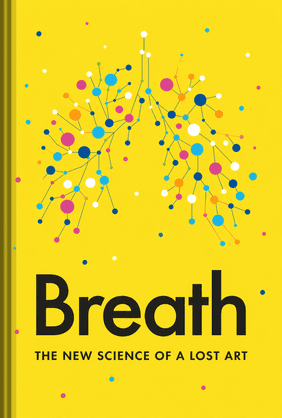
Breath
James Nestor
 40 min
 7 Key Points
 4.6 Rate
What's inside?
Explore the transformative power of breathing and learn how to harness it to improve your health, fitness, and overall well-being.
You'll learn
 1. What's the deal with breathing and health?2. Tips to breathe better for a healthier you3. The story of how humans learned to breathe4. Can the way you breathe make you sick?5. Easy ways to breathe right every day6. Breathe better, perform better: a guide for athletes.
Key points
01The Hidden Epidemic of Human Dysevolution
Take a quick look around you the next time you are sitting in a busy coffee shop, riding the subway, or working in an open-plan office, and you will likely notice something quite alarming. A significant portion of the population is quietly gasping for air through open mouths, completely unaware of the physiological damage they are inflicting upon themselves with every inhalation. We often assume that human evolution is a straight upward trajectory toward physical perfection, but the reality of our respiratory system tells a drastically different and somewhat tragic story. To understand why modern humans are so uniquely terrible at breathing, we have to travel back in time and examine the bones of our ancestors, specifically their skulls and jawlines. The skeletal remains of ancient humans reveal a fascinating truth: they had wide faces, enormous forward-facing jaws, beautifully straight teeth, and massive nasal cavities. They did not suffer from snoring, sleep apnea, or asthma in the ways that we do today. So, what exactly went wrong? The answer lies in a concept known as dysevolution, which simply means that a species can adapt to its environment in ways that are actually detrimental to its long-term health. For humans, this downward spiral began with the industrialization of our food supply. For hundreds of thousands of years, our ancestors consumed a diet that required an immense amount of physical effort to break down. They chewed on raw roots, tough meats, and fibrous vegetables for several hours a day. All of this intense mechanical stress on the jaw stimulated bone growth, resulting in wide dental arches that could easily accommodate all of our teeth, including the notoriously problematic wisdom teeth. When the jaws are wide and positioned far forward on the face, the airway behind them remains incredibly open and unobstructed. However, as we transitioned to agricultural societies and eventually into the modern industrial era, our diets became increasingly soft and highly processed. We began to consume foods that required almost no chewing at all—think of soft breads, heavily cooked grains, smoothies, and processed meats. Because our jaws were no longer being subjected to heavy mechanical stress during childhood development, they simply stopped growing to their full potential. While our brains continued to grow larger, our facial structure began to shrink, turning the human skull into an incredibly crowded piece of real estate. The wide, U-shaped dental arches of our ancestors slowly morphed into narrow, V-shaped palates. When the palate shrinks, the teeth have nowhere to go, which perfectly explains why almost every teenager today requires braces or orthodontic intervention. But crooked teeth are merely the cosmetic symptom of a much more dangerous underlying problem. When the upper jaw narrows, it pushes up into the nasal cavity, restricting the amount of airflow that can pass through the nose. Simultaneously, the lower jaw falls backward, pushing the tongue directly into the throat and dramatically narrowing the airway. We are essentially trying to breathe through a pinched straw. Consider the sheer absurdity of our current situation. Humans are the only mammals on the planet that routinely suffer from perfectly preventable respiratory issues like chronic snoring and sleep apnea simply because our facial anatomy has collapsed inward. Nestor points out that you will never find a wild cheetah or a chimpanzee with crooked teeth or a blocked airway. They continue to eat the diets they have evolved to eat, and their facial structures develop flawlessly as a result. This anatomical shift has forced millions of people into the dangerous habit of mouth breathing. When the nasal passages feel tight or restricted, the brain naturally commands the body to open the mouth to secure enough oxygen. Over time, this temporary emergency backup system becomes the default way of breathing for entirely too many people. The physical collapse of our faces has created a hidden epidemic of sleep deprivation, chronic fatigue, and respiratory illness. But the most hopeful takeaway from this historical dive into human dysevolution is that the bone structure of the face is not completely locked in stone. By understanding exactly how we lost our natural ability to breathe, we can begin to take the necessary steps to actively reverse the damage, expand our airways, and reclaim the robust health of our ancestors.
02The Grueling Experiment Proving Nasal Supremacy
It sounds almost like a bizarre torture method pulled straight from the script of a psychological thriller, but James Nestor actually paid medical professionals to completely plug his nasal passages for ten straight days. What he and the scientists discovered during this grueling phase of his research will make you want to reach for a roll of tape and seal your mouth shut immediately. To truly understand the devastating impact of mouth breathing, Nestor teamed up with Dr. Jayakar Nayak, a renowned rhinologist at Stanford University, to conduct a highly controlled, two-part experiment. For the first ten days, Nestor had silicone plugs inserted deep into his nose, forcing him to breathe exclusively through his mouth. The physiological and psychological fallout was instantaneous and utterly terrifying. Within just a few hours of relying solely on his mouth for air, Nestor’s blood pressure spiked significantly, pushing him into a stage of pre-hypertension. As the first night approached, the true horrors of mouth breathing revealed themselves. Before the experiment, Nestor was a very mild snorer. But on the very first night of mouth breathing, his snoring increased by an astonishing thirteen hundred percent. By day three, he had developed severe obstructive sleep apnea, a condition where the airway completely collapses, causing the body to suffocate repeatedly throughout the night. His blood oxygen levels plummeted, and his sympathetic nervous system was locked into a state of constant "fight or flight" panic. The daytime symptoms were equally brutal. Nestor experienced profound mental fog, intense irritability, and a constant, dragging fatigue that no amount of coffee could cure. He also noted that he had to wake up multiple times a night to urinate. This happens because the body, stressed by the lack of deep sleep and proper oxygenation, fails to release a hormone called vasopressin, which normally tells the kidneys to store water during the night. The mouth is simply not designed to be a primary breathing organ. It is a crude, emergency backup tube meant to be used only when we are sprinting away from a predator or suffering from a severe nasal blockage. When you breathe through your mouth, you are pulling raw, unfiltered, cold, and dry air directly into your delicate lung tissues, causing irritation and inflammation. Then came the second phase of the experiment. The silicone plugs were removed, and Nestor spent the next ten days breathing exclusively through his nose, even utilizing a small piece of surgical tape over his lips at night to ensure his mouth stayed closed while he slept. The reversal of his miserable symptoms was nothing short of miraculous. Within twenty-four hours, his blood pressure normalized. His snoring practically vanished, dropping to mere minutes per night, and his newly developed sleep apnea disappeared completely. His energy levels skyrocketed, his mental clarity returned, and he slept deeply through the night without needing to use the bathroom. This dramatic transformation highlights the incredible, hidden magic of the human nose. Your nose is not merely two empty holes situated in the middle of your face; it is an incredibly complex, highly sophisticated air conditioning and filtration system. When you inhale through your nose, the air is forced through a maze of structures called turbinates. These structures act like a radiator, warming cold air and adding moisture so that by the time the breath reaches your lungs, it is perfectly conditioned for optimal absorption. Furthermore, the nasal passages are lined with tiny, hair-like structures called cilia and a layer of mucous that trap dust, pollution, viruses, and bacteria, preventing them from ever reaching your bloodstream. Perhaps the most astonishing benefit of nasal breathing, however, involves a miraculous molecule called nitric oxide. Nitric oxide is produced in abundance within the paranasal sinuses, but it is entirely bypassed when you breathe through your mouth. When you breathe through your nose, you carry this nitric oxide directly into your lungs. This gas is a potent vasodilator, meaning it significantly widens the blood vessels and increases the efficiency of oxygen exchange throughout the body. In fact, nasal breathing can increase blood oxygenation by up to twenty percent compared to mouth breathing. Furthermore, nitric oxide possesses powerful antiviral and antibacterial properties. It actively sterilizes the air you breathe, acting as a first line of defense against airborne pathogens. Think about the sheer number of people who wake up every single morning with a painfully dry mouth, a groggy head, and a persistent feeling of exhaustion. They are unknowingly subjecting their bodies to the same traumatic physiological stress that Nestor experienced during his Stanford experiment. The simple act of closing your mouth and allowing your nose to do the job it was evolutionarily designed to do is the most fundamental and profound change you can make for your health. It filters, it warms, it sterilizes, and it deeply oxygenates. The science is incredibly clear: the nose is for breathing, and the mouth is for eating.
Continue reading with LeapAhead app
Full summary is waiting for you in the app
03The Secret Healing Power of a Complete Exhale
04The Magic Number for Perfect Biological Coherence
05The Ultimate Paradox of Breathing Less Air
06Chew Your Way to a Stronger Facial Structure
07Conclusion
About James Nestor
James Nestor is an American author and journalist known for his deep-diving explorations into human limits. His work, often centered around science, health, and adventure, has appeared in numerous publications. He is best known for his book "Breath: The New Science of a Lost Art."
