
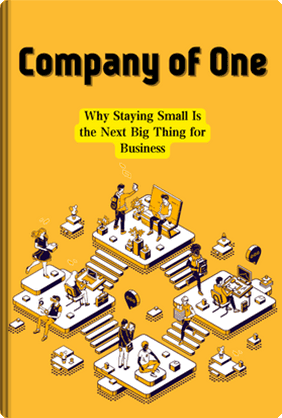
Company of One
Paul Jarvis
 16 min
 7 Key Points
 4.8 Rate
What's inside?
Explore the power of small-scale businesses and learn why keeping your business small can lead to greater success and satisfaction.
You'll learn
 1. Why staying small can be a big win for your business2. Making more money with less spending3. Winning over customers for life4. Why being flexible is key in business5. Building a business that lasts6. Balancing work and play in your own business
Key points
01You don't need to get bigger to be successful. Focus on quality, not quantity
In the world of business, we've been taught to believe that bigger is always better. More employees, more offices, more products - that's the way to success, right? But what if we've got it all wrong? What if the secret to a thriving business isn't about growing bigger, but staying small? This idea might seem a bit out there, but hear me out. Instead of hiring more people, why not restructure the workload? With the technology we have today, we can automate a lot of the repetitive tasks. It might seem like a strange idea, but growth isn't always the best strategy. Staying small has its perks. You get to call the shots, something that's often missing in big corporations. Plus, a smaller company can adapt faster to changes in the market, making it more agile and responsive. So, how does this "stay small" approach work? It's all about three key phases: starting small, managing growth, and continuous learning. Starting small means focusing on what you're good at and building a solid foundation for your business. It's less risky and makes growth more manageable. Managing growth doesn't mean avoiding it altogether. It's about making sure that growth is controlled and sustainable. And lastly, continuous learning. This is all about staying on top of industry trends and adapting to changes in the business environment. So, forget about the old "bigger is better" mantra. The "stay small" approach shows us that efficiency, resilience, and autonomy can lead to business success. It's about creating a sustainable and successful business without the need for constant expansion. So, maybe it's time we start thinking small to achieve big.
02Keep it simple, silly! It's easier to reach your goals that way
In the world of business, we often equate success with size and growth. The bigger, the better, right? But what if we've got it all wrong? What if the secret to success isn't about growing bigger, but staying small and simple? Let's take a step back and look at the traditional business model. It's all about growth. More employees, more markets, more products. But with growth comes complexity, and complexity can be a real headache. It can make it harder to manage your business and reach your goals. Now, let's flip the script. Instead of aiming for growth, what if we aim for simplicity? This is the idea behind the "company of one" model. Don't get me wrong, it's not about being a one-man-band or a lone wolf entrepreneur. It's about keeping your business small and manageable, even if you could grow bigger. So, what does a company of one look like? It's got four key traits: autonomy, resilience, simplicity, and speed. Autonomy is all about freedom. It's about letting people work at their own pace, without the red tape of bureaucracy. This can spark creativity and boost productivity. Resilience is about rolling with the punches. It's about making decisions based on the here and now, not just wishful thinking. Simplicity, our star player, is about cutting the fat. It's about ditching unnecessary processes, focusing on one product or service, and saying no to growth that could make your business harder to manage. And speed? That's all about efficiency. It's about using technology, outsourcing tasks, or streamlining processes to get things done faster. By focusing on these four traits, a company of one can stay light on its feet, ready to adapt, and efficient. This can lead to happier customers, as the business can focus on meeting their needs, instead of always chasing new ones. Take a small software development company, for example. Instead of trying to compete with the big guys and their wide range of services, they could choose to specialize in a specific niche. By keeping things simple and focusing on what they do best, they can deliver top-notch products and services that meet their customers' specific needs. So, in a nutshell, simplicity in business is about focusing on what really matters and ditching the rest. By keeping things simple, businesses can stay agile, efficient, and customer-focused. And that, my friends, can lead to some serious success.
Continue reading with LeapAhead app
Full summary is waiting for you in the app
03In a one-person business, you're the boss. Lead well
04Know why you're in business. It'll keep you motivated and on track
05Happy customers = successful business. Make sure they're succeeding too
06Trust is key. Build it and keep it with everyone you work with
07Conclusion
About Paul Jarvis
Paul Jarvis is a writer, designer, podcaster, online course teacher, and software creator. He specializes in topics like entrepreneurship, creativity, and digital marketing. Jarvis is known for his unconventional approach to business, advocating for simplicity and sustainability over growth and expansion.
