
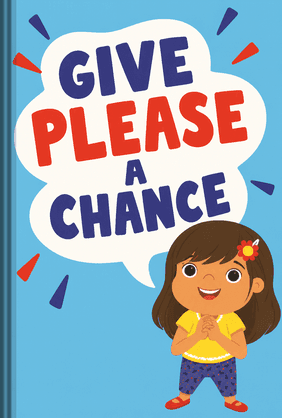
Give Please a Chance
Bill O'Reilly and James Patterson
 17 min
 6 Key Points
 4.5 Rate
What's inside?
Explore the importance of manners and politeness through a collection of delightful stories for children, emphasizing the power of the word "please".
You'll learn
 1. Why being polite matters every day2. Getting your point across effectively3. The magic of saying "please"4. Building relationships with respect5. How being nice can make you successful6. The power of empathy in dealing with people.
Key points
01Why is politeness so important?
You're at a bustling coffee shop, the barista is swamped with orders, and you're next in line. You could bark out your order, or you could say, "Could I please have a latte?" The word 'please' is small, but it carries a lot of weight. It transforms a demand into a request, showing respect, humility, and acknowledgement of the other person's ability to grant or deny your request. In "Give Please a Chance," authors Bill O'Reilly and James Patterson explore the power of 'please' through a series of engaging stories and illustrations. One memorable example involves a young boy asking his father for a bedtime story. Instead of demanding, "Tell me a story," the boy says, "Could you please tell me a story?" The father, touched by his son's politeness, happily obliges. This simple scenario illustrates how 'please' can soften a demand, making it more likely to be met with a positive response. The authors also use illustrations to convey the importance of politeness. One striking illustration shows a little girl asking her mother for a cookie. The first panel shows the girl demanding, "Give me a cookie!" The mother looks taken aback. The next panel shows the girl saying, "May I please have a cookie?" This time, the mother smiles and hands her a cookie. The contrast between the two panels helps young readers understand how 'please' can change the tone of a request, making it more pleasant and respectful. Politeness plays a crucial role in our daily interactions. It's the oil that keeps the gears of social interaction running smoothly. When we're polite, our interactions are more pleasant, our relationships improve, and we contribute to a more respectful and considerate society. Imagine if the boy in the book had demanded a story from his father. The father might have felt annoyed and less inclined to read a story. But because the boy said 'please', the father felt respected and was happy to fulfill his son's request. "Give Please a Chance" is primarily aimed at children, but its message is universal. The authors understand the importance of instilling these values early on. Teaching children the importance of politeness and the power of 'please' can help them develop into respectful and considerate adults. It's not just about getting what they want; it's about learning to respect others and their autonomy. The long-term benefits of teaching politeness to children extend far beyond the immediate gratification of having their requests granted. So, why is politeness so important? It's because it's the glue that holds our social interactions together. It's the difference between a demand and a request, between a frown and a smile, between conflict and cooperation. So, the next time you're in a bustling coffee shop, remember the power of 'please'. And if you have children, teach them the importance of this small but mighty word. Because a world where everyone gives 'please' a chance is a world that's a little bit kinder, a little bit more respectful, and a lot more pleasant to live in.
02How to use 'please' in daily interactions?
You're at a bustling coffee shop, waiting in line to order your favorite latte. The barista is visibly stressed, juggling multiple orders. When it's your turn, you say, "I want a latte." Now, imagine the same scenario, but this time, you say, "May I have a latte, please?" The difference is subtle but significant. The word 'please' has the power to transform our daily interactions, making them more respectful and polite. In "Give Please a Chance," authors Bill O'Reilly and James Patterson emphasize the importance of the word 'please' in our conversations. It's not just about being polite; it's about showing respect and consideration for others. When we say 'please,' we acknowledge that we are asking for a favor, and we show appreciation for the other person's effort. This simple word can often lead to more positive responses, as people are generally more willing to help when they feel respected and appreciated. Instilling the habit of saying 'please' from an early age is crucial. It's not just about teaching children manners; it's about helping them develop effective communication skills. When children learn to use 'please' in their requests, they learn to express their needs in a respectful way. Parents and educators can play a significant role in instilling this habit. They can model the behavior by using 'please' in their own conversations and gently reminding children to do the same. Let's consider a few practical examples. Suppose a child wants to play with a toy that another child is using. Instead of grabbing the toy or demanding it, the child can say, "Can I play with the toy, please?" This approach not only shows respect for the other child's feelings but also increases the chances of a positive response. Similarly, in a classroom setting, a student can ask the teacher, "Can you explain this again, please?" This respectful request is likely to elicit a more patient and thorough explanation from the teacher. In conclusion, the power of 'please' in our daily interactions cannot be overstated. This simple word can make our requests more polite, our conversations more respectful, and our relationships more harmonious. So, the next time you're about to make a request, remember to give 'please' a chance. After all, as O'Reilly and Patterson remind us, a little politeness can go a long way in fostering respect and understanding in our interactions.
Continue reading with LeapAhead app
Full summary is waiting for you in the app
03How to Make Requests Politely: A Guide for Children
04The Power of Saying 'Please'
05How to use 'please' in daily life?
06Conclusion
About Bill O'Reilly and James Patterson
Bill O'Reilly is a former political commentator for Fox News, author, and journalist known for his conservative views. James Patterson is a prolific American author, primarily of thriller novels, and has sold over 300 million copies of his books worldwide.