
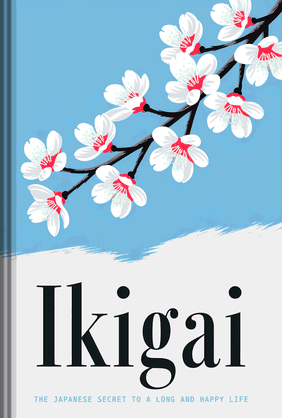
Ikigai
Héctor García, Francesc Miralles
 29 min
 9 Key Points
 4.7 Rate
What's inside?
Discover the Japanese philosophy of Ikigai and learn how to find your purpose, enjoy life and live longer.
You'll learn
 1. What's Ikigai and why it's key to a happy life?2. Finding your Ikigai: a how-to guide3. Japanese secrets to living longer4. Balancing work and play: why it matters5. Stress-busting and mindfulness tricks6. Stay active, stay social: keys to a long, happy life.
Key points
01The Meaning Behind Ikigai
In Japanese culture, the word ikigai captures a profound yet practical idea: it means a reason to live or a reason to get up in the morning. It isn’t about grand ambitions or abstract spiritual goals. Instead, it refers to the quiet sense of purpose that comes from doing something meaningful—something that makes life feel worthwhile on a day-to-day basis. For some, this might be found in raising a family. For others, it could be gardening, teaching, or perfecting a craft. The essential point is that ikigai is deeply personal, and it often emerges not from a single, life-altering revelation but from consistency, reflection, and engagement with the world. At its core, ikigai is about alignment—where four elements converge: what you love, what you're good at, what the world needs, and what you can be paid for. This framework provides a practical way to evaluate our daily activities and long-term goals. If your work brings you income but lacks personal meaning, or if your passion energizes you but leaves you isolated or financially unstable, your ikigai may be out of balance. The aim is not perfection in all four areas, but harmony—enough overlap to sustain both inner and outer life. The Japanese island of Okinawa, often cited for its population of healthy centenarians, offers a living example of ikigai in practice. People there don’t rush to retire or disengage. Many elders continue to contribute to their communities well into their 80s and 90s, not because they have to, but because they want to. Whether it's fishing, weaving, or mentoring the younger generation, they retain a sense of responsibility and joy that gives structure to their days. Importantly, ikigai is not tied to productivity in the Western sense. It doesn't demand that you monetize your hobbies or hustle harder. Instead, it encourages reflection on what genuinely energizes you. A retired man who tends his bonsai trees each morning with care and reverence may have a stronger ikigai than someone racing up the corporate ladder but feeling hollow inside. The former lives in tune with what matters to him; the latter may be chasing a goal without understanding why. Finding ikigai is less about reinventing your life and more about uncovering what already brings it quiet meaning. It starts with asking the right questions: What brings me joy without effort? When do I feel most useful? Which activities make time disappear? The answers don’t need to be grand or impressive. They just need to be true. In doing so, ikigai becomes not just a concept but a lens—one through which each day, however ordinary, can feel purposeful.
02Lessons from Okinawa’s Centenarians
In the small coastal village of Ogimi, nestled in the lush hills of northern Okinawa, longevity isn’t a mystery—it’s a way of life. Known as the “Village of Longevity,” Ogimi boasts one of the highest proportions of centenarians per capita in the world. But what stands out even more than the numbers is the spirit of the people who live there. In Ogimi, age isn’t seen as decline; it’s seen as deepening. Elders remain integral members of the community, actively participating in everything from local festivals to vegetable gardening. Walking through the village, it’s common to find 90-year-olds working in their fields, chatting with neighbors, or preparing traditional dishes for community events. Their schedules are rarely idle. Yet, unlike the rushed pace common in many modern societies, their days unfold with rhythm and intention. Activity is not just a means of staying fit—it’s a form of connection, contribution, and joy. Many residents speak of having a reason to wake up in the morning, whether it’s tending their small garden, caring for great-grandchildren, or leading calligraphy classes at the local cultural center. Their diet plays a quiet yet vital role. Meals in Ogimi are light, colorful, and nutrient-rich. Plates are filled with vegetables, seaweed, tofu, sweet potatoes, and modest portions of fish. Rarely is there red meat, and portions are small by Western standards. They follow the principle of “hara hachi bu”—eating until they are 80% full. Meals are often shared, creating not only nourishment for the body but also connection at the table. Equally important is the strong fabric of community life. Many villagers belong to small social groups known as *moai*—a kind of lifelong support network that meets regularly. These gatherings aren’t formal therapy or productivity circles; they are simply people coming together to talk, laugh, and be present. In times of celebration or loss, these bonds offer stability and emotional care. Elders in Ogimi often say they never feel truly alone. Perhaps what most defines longevity in Ogimi is the absence of retirement in the traditional sense. While formal jobs may end, purposeful living does not. There is no rush to withdraw from society, no cultural script that says one must fade into isolation. Instead, there’s an implicit understanding: as long as you can move, think, speak, or contribute, you do. Life stretches out not as a countdown, but as a series of meaningful days. These centenarians aren’t just surviving—they’re thriving, with twinkling eyes, strong hands, and open hearts. Their lives suggest that long life isn’t only about genes or medicine, but about lifestyle—built slowly, choice by choice, in community and intention.
Continue reading with LeapAhead app
Full summary is waiting for you in the app
03The Power of Staying Active
04Nurturing Social Connections
05Eating Light, Living Long
06Flow: The Secret to Joyful Work
07Resilience and Anti-Fragility
08Slowing Down to Savor Life
09Conclusion
About Héctor García, Francesc Miralles
Héctor García is a Spanish author and technologist who has spent over a decade living in Japan. Francesc Miralles is an award-winning Spanish writer and journalist, known for his self-help and non-fiction works. Together, they co-authored the international bestseller "Ikigai: The Japanese Secret to a Long and Happy Life".
