
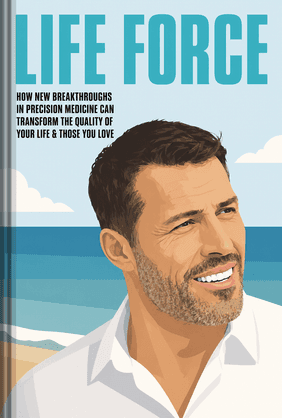
Life Force
Tony Robbins, Peter H. Diamandis, et al.
 20 min
 7 Key Points
 5 Rate
What's inside?
Explore the latest advancements in precision medicine and learn how they can significantly improve your life quality and the well-being of your loved ones.
You'll learn
 1. New advances in precision medicine and how they can make your life better.2. Using your genes, gut health, and cell health to live longer.3. Why personalized medicine is key to preventing and treating illnesses.4. How tech is changing healthcare and medicine.5. Taking charge of your health by making informed choices.6. The future of medicine: healing with stem cells.
Key points
01What's precision medicine all about?
Ever had a prescription that didn't quite hit the mark? Or a diagnosis that seemed a bit off? Well, that's because traditional medicine often takes a one-size-fits-all approach. But what if there was a way to tailor your healthcare to your unique genetic makeup? Enter precision medicine, a revolutionary approach that's changing the game in healthcare. Precision medicine isn't exactly a new kid on the block. Its roots can be traced back to the completion of the Human Genome Project in 2003. This monumental achievement gave scientists the blueprint of the human genome, opening the door to a more personalized approach to healthcare. Instead of treating patients based on average responses, doctors could now consider an individual's genetic makeup, lifestyle, and environment. This shift is transforming healthcare as we know it. Precision medicine places a strong emphasis on prevention and early detection. By understanding an individual's genetic predisposition to certain diseases, doctors can predict health risks and intervene early. This not only reduces the burden of disease but also improves the quality of life for patients. A key player in precision medicine is genomics. Genomics is the study of an individual's genes (the genome) and their functions. By studying an individual's genome, scientists can predict disease risk and identify early signs of disease. For instance, certain genetic variants are known to increase the risk of breast and ovarian cancer. By identifying these variants in patients, doctors can recommend regular screenings or preventive surgeries. But precision medicine doesn't stop at diagnosis. It also extends to treatment, giving rise to personalized therapies. These are treatments tailored to an individual's genetic profile. For example, certain cancers are caused by specific genetic mutations. Drugs that target these mutations can be more effective and have fewer side effects than traditional chemotherapy. So, what's the big deal about precision medicine? It's about a future where healthcare is personalized, preventative, and precise. It's about a world where doctors can predict your health risks and tailor treatments specifically for you. It's about transforming the quality of your life and those you love. And that, my friends, is a future worth striving for.
02Understanding Genomics: Your Guide to Genetic Testing and Health
Ever wondered why some people can eat all they want and never gain a pound, while others struggle with weight despite a healthy diet? Or why certain diseases seem to run in families? The answer lies in our genes. Genomics, the study of all of a person's genes (the genome), including interactions of those genes with each other and with the person's environment, provides a deeper understanding of these phenomena. Think of genomics as a vast, intricate map. Each person's genome is like a unique city, with genes acting as the buildings. Some buildings are skyscrapers, others are bungalows, and they all interact with each other and the environment around them. Just as the layout of a city can influence how its inhabitants live and interact, our genes can influence our health, our behaviors, and our responses to the environment. Now, imagine if we could predict which buildings might collapse or need repair in the future. That's where genetic testing comes in. It's like a detailed inspection of the city's infrastructure, identifying potential weak spots and areas of concern. Genetic testing can predict the likelihood of developing certain diseases, such as cancer or Alzheimer's, by identifying specific genetic variants associated with these conditions. For instance, women who carry the BRCA1 or BRCA2 gene have a higher risk of developing breast and ovarian cancer. However, this predictive power comes with its own set of challenges. There's the potential misuse of genetic information, with insurance companies or employers discriminating based on genetic predispositions. Then there's the psychological impact of knowing one's genetic risks, which could lead to unnecessary medical interventions or anxiety. Robbins, Diamandis, and their co-authors propose several solutions to these issues. They advocate for the right of individuals to decide whether or not to undergo genetic testing, and to be fully informed about the implications. They also call for strong laws to protect individuals' genetic information and prevent discrimination. In the end, the power of genomics and genetic testing lies in their potential to transform our understanding of health and disease. They offer a window into our genetic blueprint, providing valuable insights that can guide our health decisions. But as with any powerful tool, they must be used responsibly, with respect for individual rights and privacy. So, next time you wonder why you can't seem to shed those extra pounds despite your best efforts, or why your neighbor seems to have an uncanny resistance to the common cold, remember: it's all in the genes. But what will you do with that knowledge? That's the question we all need to consider.
Continue reading with LeapAhead app
Full summary is waiting for you in the app
03How AI and Machine Learning are Revolutionizing Precision Medicine?
04How will precision medicine shape the future of healthcare?
05How to use precision medicine for better health?
06Understanding the Societal Implications of Precision Medicine
07Conclusion
About Tony Robbins, Peter H. Diamandis, et al.
Tony Robbins is a renowned life and business strategist, best-selling author, and philanthropist. Peter H. Diamandis is a futurist, entrepreneur, and founder of the XPRIZE Foundation, which leads competitions to encourage technological development. Both are known for their innovative thinking and contributions to self-help and technology fields.