
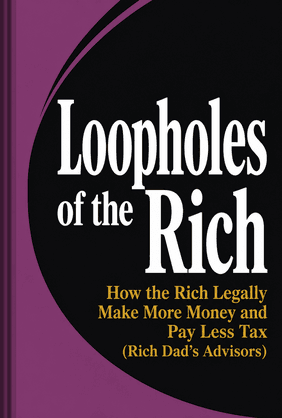
Loopholes of the Rich
Diane Kennedy and Robert T. Kiyosaki
 19 min
 7 Key Points
 5 Rate
What's inside?
Discover the legal strategies used by the wealthy to increase their income and reduce their taxes, and learn how you can apply these methods to your own financial situation.
You'll learn
 1. How to pay less tax, legally!2. Grow your money with smart moves.3. Using financial shortcuts to your advantage.4. Keep your money safe and sound.5. Good debt vs bad debt: what's the difference?6. Make a plan to stack up your wealth.
Key points
01Understanding the Tax System: Its Purpose and Structure
Ever wondered why some people seem to pay less tax than others, even when they earn more? It's not because the tax system is arbitrary or unfair. It's because they understand the purpose and structure of the tax system and use it to their advantage. The tax system isn't just a means for the government to collect revenue. It's a tool used to incentivize certain behaviors. For instance, the government offers tax breaks for homeownership, retirement savings, and business investments. These incentives are designed to encourage economic growth and stability. So, when you buy a house, save for retirement, or invest in a business, you're not just improving your financial situation; you're also contributing to the economy. And the government rewards you for it with tax breaks. Understanding the structure of the tax system is key to leveraging these incentives. The tax system is made up of levies, rates, exemptions, and deductions. Each component serves a specific purpose. Levies are the taxes you pay. Rates determine how much tax you owe based on your income. Exemptions and deductions reduce your taxable income. By understanding how these components work, you can minimize your tax liability and maximize your financial gains. This understanding of the tax system can serve as a foundation for your financial strategies. For example, if you know that the government offers tax breaks for business investments, you might decide to start a business or invest in one. Or, if you know that the government offers tax breaks for retirement savings, you might decide to contribute more to your retirement account. These are just a few of the strategies that you can use to legally make more money and pay less tax. In conclusion, the tax system isn't arbitrary or unfair. It's designed to incentivize certain behaviors and promote economic growth and stability. By understanding its purpose and structure, you can use it to your advantage. You can minimize your tax liability and maximize your financial gains. And you can use this knowledge as a foundation for your financial strategies. So, don't just see the tax system as a burden. See it as an opportunity. An opportunity to legally make more money and pay less tax.
02How the rich use taxes to increase wealth?
What if you could use taxes to increase your wealth instead of seeing it as a burden? Sounds counterintuitive, right? But that's exactly how the rich view taxes. They see it as a tool, not a burden. This perspective shift is crucial in leveraging the tax system to your advantage. The rich have a unique perspective on taxes. They don't see it as a necessary evil or a financial drain. Instead, they view it as a tool for wealth creation. This mindset shift is not just about being optimistic or positive. It's about understanding how the tax system works and using it to your advantage. So, how can you adopt this mindset? First, you need to understand that taxes are not just about paying your dues to the government. They're also about financial planning and strategy. When you start seeing taxes as a strategic part of your financial plan, you'll begin to see opportunities for wealth creation that you never noticed before. The rich leverage the tax system by using legal tax loopholes. These are not shady or illegal practices. They're simply parts of the tax code that provide opportunities for deductions, credits, tax deferrals, and income shifting. For example, a business owner can deduct expenses related to their business, such as office rent, supplies, and even meals and entertainment. These deductions reduce their taxable income, which in turn reduces their tax liability. But to leverage these loopholes, you need to understand the tax system. You need to stay updated on tax laws and understand how they apply to your financial situation. This is not just about hiring a good tax advisor. It's about being proactive and informed about your taxes. You can gain tax knowledge by reading books, attending seminars, or even taking online courses. The key is to never stop learning. The tax code is constantly changing, and staying updated can help you make informed decisions about your taxes. In conclusion, the rich view taxes as a tool for wealth creation, not a burden. They leverage the tax system by using legal tax loopholes and staying updated on tax laws. By adopting this mindset and gaining tax knowledge, you too can start using taxes to increase your wealth. So, start exploring these legal tax loopholes and see how they can work for you.
Continue reading with LeapAhead app
Full summary is waiting for you in the app
03Understanding and Using Legal Loopholes for Tax Reduction
04Strategies to Reduce Your Tax Burden
05Tax Strategies for a Comfortable Retirement
06Why you need professionals for tax planning
07Conclusion
About Diane Kennedy and Robert T. Kiyosaki
Diane Kennedy is a certified public accountant, renowned tax strategist, and author, specializing in international tax planning and real estate investment. Robert T. Kiyosaki is a successful entrepreneur, educator, and investor best known for his "Rich Dad Poor Dad" series, teaching financial literacy and wealth-building strategies.