
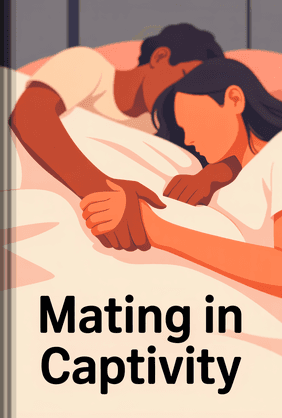
Mating in Captivity
Esther Perel
 48 min
 9 Key Points
 4.4 Rate
What's inside?
Explore the complexities of maintaining desire in committed relationships and learn how to reignite the spark in your love life.
You'll learn
 1. Keeping the spark alive in long-term love2. Finding the sweet spot between feeling safe and free in love3. Why sexy thoughts and fantasies matter4. Talking about sex and closeness without awkwardness5. Keeping things fun and fresh in the bedroom6. Figuring out the love and desire puzzle.
Key points
01Why Safety Sabotages Our Deepest Desires
We all crave a safe harbor in the unpredictable storm of life, yet that very safety can quietly extinguish the fiery passion we also desperately desire. This fundamental contradiction lies at the very heart of modern relationships, silently creating a rift between loving our partners and actually wanting them. To truly understand this dynamic, we must first look at how the concept of marriage and long-term partnership has evolved over the centuries. In the past, marriage was primarily an economic and social institution. People married to secure land, forge family alliances, and ensure basic survival. Passion and romance were considered lovely bonuses if they happened to bloom, but they were certainly not the foundation of a life together. Today, however, our expectations have skyrocketed to unprecedented heights. We enter relationships expecting our partners to be our ultimate best friends, our trusted confidants, our financial co-managers, our perfect co-parents, and, on top of all that, our passionate, insatiable lovers. We are asking one single human being to provide what an entire village used to provide. This immense pressure creates a suffocating environment where the weight of our expectations can easily crush the spontaneous, lighthearted nature of erotic desire. The core of Esther Perel’s philosophy rests on a fascinating paradox: the fundamental tension between love and desire. Love is essentially about having. It is about building a shared life, creating a predictable routine, establishing deep trust, and minimizing risk. When we love someone, we want to hold them close, know their whereabouts, and feel absolutely secure in their presence. Love thrives in the comfortable glow of predictability. Desire, on the other hand, operates on a completely different psychological frequency. Desire is about wanting. It thrives on mystery, novelty, risk, and the unknown. You cannot truly want what you already possess. Desire requires a gap, a space to cross, a sense of something just slightly out of reach. When we successfully build a perfectly safe, predictable, and cozy relationship, we inadvertently eliminate the very gap that desire needs to survive. Think about the early days of a courtship. The intense butterflies in your stomach, the obsessive checking of your phone, the overwhelming anticipation of the next date—all of these feelings are fueled by uncertainty. You do not fully know this person yet. You are not sure if they will call, how they will react, or what their deepest secrets are. This lack of knowledge creates a thrilling tension. However, as the relationship progresses and you move in together, that thrilling tension is replaced by the comforting reality of sweatpants on the sofa, shared chore charts, and predictable weekend routines. The mystery dissolves into familiarity. While this familiarity is beautiful and deeply necessary for a stable life, it is the natural enemy of eroticism. Many couples panic when they reach this stage. They notice the fading of spontaneous passion and immediately assume that their relationship is broken, or worse, that they have chosen the wrong partner. They look at the comfortable domestic life they have built and feel a profound sense of loss for the wild romance they used to share. Perel’s brilliant insight is that this transition is not a sign of failure at all. It is simply the natural consequence of achieving precisely what you set out to achieve: absolute security. The fading of desire is not a fatal disease; it is a predictable symptom of a highly successful, deeply safe attachment. Recognizing this paradox is the crucial first step toward revitalizing your relationship. Once you understand that love and desire are often pulling you in opposite directions, you can stop blaming yourself or your partner for the lack of a spark. You can begin to see that the goal is not to force these two opposing forces to perfectly align, but rather to learn how to skillfully manage the tension between them. It is about finding ways to inject a little bit of uncertainty and adventure back into the safe harbor you have built. Key takeaways to shift your perspective on love and desire: Acknowledge that asking one person to be your everything is historically unprecedented and emotionally exhausting. Understand that love seeks to close the gap, while desire needs a gap to thrive. Stop viewing the loss of early passion as a relationship failure; recognize it as a byproduct of successful bonding. Accept that keeping passion alive requires intentional effort to step outside the comfort zone of pure predictability. As you begin to digest this profound paradox, a natural question arises: if desire requires a gap, how do we recreate that space without destroying the closeness we cherish? The answer lies in challenging our deeply held beliefs about togetherness. While we have been taught that true love means merging completely with our partner, the truth is that maintaining a sense of separateness is the hidden key to lasting attraction. Let us explore exactly how to cultivate this necessary distance in the next chapter.
02The Hidden Power of Creating Emotional Distance
When two people become entirely indistinguishable from one another, there is no longer anyone left to desire. The romantic ideal of finding your "other half" and merging into a single, unified entity might sound beautiful in poetry, but it is an absolute disaster for your erotic life. We are culturally conditioned to believe that the ultimate goal of a long-term relationship is total fusion. We are told that we should share every hobby, attend every social event together, finish each other's sentences, and function as an inseparable unit. While this level of intense closeness can feel incredibly validating and safe, it effectively suffocates the spark of attraction. Fire needs oxygen to burn, and in the landscape of human relationships, oxygen equates to space, autonomy, and separateness. If you throw a heavy blanket of constant togetherness over a fire, it will inevitably smolder and die. Consider a common scenario observed in many modern households. A couple works from home, eats every meal together, watches the exact same television shows every evening, and goes to sleep at the exact same time. They have become so profoundly intertwined that they function more like comfortable siblings or exceptionally well-coordinated roommates than passionate lovers. They know every single detail of each other's daily existence. When there is no separation, there is nothing new to report, no fresh energy to bring back into the household, and no opportunity to miss one another. The psychological gap required for desire has been completely eradicated by their mutual devotion. Esther Perel emphasizes that eroticism requires a sense of "otherness." To want your partner, you need to be able to look at them and recognize that they are a distinct, independent human being with their own inner world, their own passions, and their own separate existence. When you merge completely, you lose sight of this otherness. Your partner simply becomes an extension of yourself, like your own arm or leg. And naturally, it is very difficult to feel an intense, mysterious attraction to your own arm. Creating emotional and physical distance is not about pulling away in a cold, rejecting, or dismissive manner. It is about intentionally cultivating your own individuality so that your partner has something fascinating to look at. It is about giving yourselves the gift of missing each other. When you go out into the world on your own, engage in your own hobbies, spend time with your own friends, and pursue your own intellectual interests, you return to the relationship energized and enriched. You bring stories, new perspectives, and a renewed sense of vitality. You become a slightly more mysterious, slightly more intriguing version of yourself. This concept can be deeply unsettling for people who equate distance with danger. If you have an anxious attachment style, you might interpret your partner's desire for a solo weekend trip or a separate hobby as a sign that they are losing interest in you. The fear of abandonment can trigger a desperate need to cling tighter, monitor their activities, and demand constant reassurance. However, this clinging behavior is exactly what drains the erotic energy from the dynamic. By demanding constant proximity, you are demanding that your partner sacrifice their individuality to soothe your anxiety. True relationship security is not found in constant physical presence; it is found in the confident knowledge that you can both venture out into the world as individuals and willingly choose to return to each other. Practical ways to reintroduce healthy separateness into your relationship: Cultivate independent interests: Dedicate time to a hobby, class, or passion project that is yours alone, without your partner's involvement. Encourage solo friendships: Spend time with your own friends without feeling the need to bring your partner along to every social gathering. Embrace physical space: If you work from home together, work in different rooms. Take walks alone. Allow yourselves to exist independently within the same environment. Celebrate their autonomy: When your partner returns from an independent activity, show genuine curiosity about their experience without demanding every single detail. By actively fostering this sense of separateness, you create a dynamic where you are two distinct individuals choosing to connect, rather than two halves desperately clinging to a merged identity. You allow the fire of your relationship to breathe, drawing in the fresh air of individual experiences. You begin to look across the room and see not just a co-manager of your household, but a fascinating, autonomous adult whom you actively want to pursue. While creating physical and emotional space is a powerful way to reignite attraction, there is another subtle, deeply ingrained habit that often works against modern couples. We have been taught that total, unfiltered honesty is the ultimate expression of love. But as we will uncover in the next chapter, sharing every single thought might actually be the fastest way to extinguish the spark you are trying to protect.
Continue reading with LeapAhead app
Full summary is waiting for you in the app
03How Total Honesty Can Kill the Spark
04Unleashing Your Imagination and Erotic Playfulness
05Surviving the Transition from Lovers to Parents
06The Magnetic Allure of the Forbidden Taboo
07Discovering the Thrilling Stranger Beside You
08Conclusion
About Esther Perel
Esther Perel is a Belgian psychotherapist, author, and speaker, renowned for her work on human relationships and sexuality. She's known for her TED talks and her books, including "Mating in Captivity," which explore the complexities of love and desire in modern relationships.
