
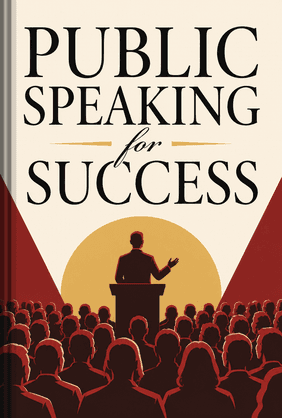
Public Speaking for Success
Dale Carnegie
 26 min
 8 Key Points
 4.9 Rate
What's inside?
Learn the art of effective communication and master the skill of public speaking to achieve success in your personal and professional life.
You'll learn
 1. Beat stage fright!2. Make your point clear.3. Master the art of convincing.4. Keep your audience hooked.5. Body language matters.6. Nail your speech.
Key points
01Understanding the Importance of Public Speaking
Ever been in a room full of people, heart pounding, palms sweating, as you prepare to deliver a speech? You're not alone. Public speaking is a common fear, but it's also a crucial skill that can open doors in your career, boost your self-esteem, and improve your everyday communication. Let's start with the career benefits. Imagine you're in a board meeting, pitching a new idea to your boss. You've spent weeks preparing, and you're confident in your proposal. You stand up, clear your throat, and begin to speak. Your words are clear and persuasive, your body language confident. Your boss is impressed, and a few weeks later, you're promoted. This is the power of effective public speaking. It can make you stand out in the workplace, leading to promotions and new opportunities. But the benefits of public speaking extend beyond the office. It's also a powerful tool for personal growth. Mastering public speaking can give you a confidence boost like no other. It's a challenge, sure, but when you step off that stage knowing you nailed your speech, you'll feel a sense of accomplishment that's hard to beat. And let's not forget about communication. The skills you learn through public speaking - clarity, persuasion, empathy - can enhance your everyday interactions. Whether you're negotiating with a salesperson, discussing a project with colleagues, or even chatting with friends, you'll be a more effective communicator. Now, let's address the elephant in the room: fear. It's normal to feel nervous before a speech. Stage fright, fear of judgment - these are common anxieties. But they don't have to hold you back. In fact, overcoming these fears is a key part of successful public speaking. So, how do you conquer these fears? Preparation is key. Knowing your material inside and out can give you a confidence boost and reduce anxiety. Practice is also crucial. The more you speak in public, the more comfortable you'll become. And don't underestimate the power of positive thinking. A positive mindset can help you manage fear and improve your performance. In conclusion, public speaking is more than just a useful skill. It's a pathway to career advancement, personal growth, and improved communication. So, don't let fear hold you back. Prepare, practice, and think positively. Your audience is waiting.
02Understanding Your Audience: A Guide to Effective Public Speaking
Imagine you're a chef preparing a meal for a customer. You wouldn't just whip up any dish, would you? No, you'd want to know their dietary preferences, allergies, and favorite flavors. You'd want to create a meal that they'll enjoy and remember. Public speaking is no different. As a speaker, your audience is your customer, and your speech is the meal you're preparing. Understanding your audience is crucial to delivering a speech that resonates and leaves a lasting impact. So, why is understanding your audience so important? Well, it's simple. The more you know about your audience, the better you can tailor your speech to their needs and interests. This makes your speech more engaging and effective. It's like cooking a meal that perfectly suits your customer's palate. They're more likely to enjoy it and come back for more. But how do you get to know your audience? This is where audience research comes in. It's like asking your customer about their food preferences. You can conduct surveys or interviews, or use social media to gather information about your audience. Each strategy has its benefits and contributes to a better understanding of your audience. For instance, surveys can provide quantitative data about your audience's demographics, while interviews can offer qualitative insights into their thoughts and feelings. Once you've gathered information about your audience, it's time to tailor your speech to their needs and expectations. This involves using language that they understand and incorporating examples that are relevant to them. It's like using ingredients that your customer likes and cooking them in a way that suits their taste. Here's a step-by-step guide on how to do it: 1. Identify the key points you want to convey. 2. Use language that your audience understands. 3. Incorporate examples that are relevant to your audience. 4. Practice your speech and adjust it based on feedback. But understanding your audience and tailoring your speech to their needs is only part of the equation. To truly connect with your audience, you need to establish empathy. This means understanding and sharing the feelings of your audience. It's like empathizing with your customer's dietary struggles and creating a meal that not only tastes good but also makes them feel good. Establishing a connection with your audience can make your speech more relatable and impactful. In conclusion, understanding your audience is a key ingredient in effective public speaking. It involves researching your audience, tailoring your speech to their needs, and establishing empathy and connection. Mastering these elements can greatly improve your public speaking skills. So, the next time you're preparing a speech, remember to put your audience first. After all, a chef is only as good as the satisfaction of their customers.
Continue reading with LeapAhead app
Full summary is waiting for you in the app
03"Mastering the Art of Speech Development"
04Strategies for Effective Speech Delivery
05Strategies for Handling Audience Questions and Feedback
06Improving Your Public Speaking Skills: A Guide to Practice and Reflection
07Applying Public Speaking Skills in Real-Life Situations
08Conclusion
About Dale Carnegie
Dale Carnegie was an American writer and lecturer known for courses in self-improvement, salesmanship, corporate training, public speaking, and interpersonal skills. He authored the bestseller "How to Win Friends and Influence People," a foundational guide in personal relationships and professional success.