
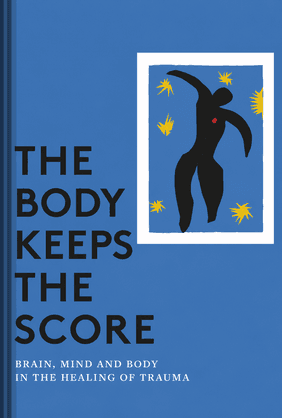
The Body Keeps The Score
Bessel Van Der Kolk
 32 min
 10 Key Points
 4.5 Rate
What's inside?
Explore the profound impact of trauma on the mind and body, and discover groundbreaking strategies for healing and recovery.
You'll learn
 1. How trauma messes with your body and mind2. Healing hacks for trauma3. Brain science in trauma recovery4. Why buddies matter in trauma healing5. The mind-body health link6. Taking back control after trauma.
Key points
01Why Time Does Not Heal All Wounds
Have you ever wondered why some people seem entirely trapped by their past, unable to move forward no matter how many years go by? We frequently hear the old saying that time heals all wounds, but for people who have endured severe trauma, time often stands completely still. To truly understand this phenomenon, we must look at the groundbreaking early work of Dr. Bessel van der Kolk, a pioneering psychiatrist who began his career working with Vietnam War veterans at a Veterans Affairs clinic in the late 1970s. During this era, the psychiatric community did not even have an official diagnosis for what we now commonly refer to as Post-Traumatic Stress Disorder, or PTSD. Soldiers returning from the war were simply expected to blend back into society, get a job, and forget the horrors they had witnessed. Yet, as Dr. van der Kolk sat in group therapy sessions with these veterans, he noticed something deeply unsettling. Men like Tom, a highly decorated soldier and a fiercely loyal friend, were physically back in the United States, but psychologically, they had never left the jungles of Vietnam. Tom had a loving family and a successful law practice, but he was completely numb to his daily life. The only time Tom felt truly alive, or felt any intense emotion at all, was when he was recalling the terrifying, adrenaline-fueled moments of combat. It became painfully clear that these veterans were not simply refusing to let go of the past; their brains and bodies were biologically hijacked by it. Their past was superimposing itself onto their present reality, turning everyday occurrences into life-or-death threats. Trauma, as we now understand it, is not just a story about something terrible that happened a long time ago. It is a fundamental disruption in how the human organism processes the world. When a person experiences a traumatic event, whether it is a catastrophic war, a severe car accident, a physical assault, or chronic childhood neglect, the overwhelming nature of the event fundamentally shatters their sense of safety. The trauma does not just become a bad memory filed away in the archives of the brain. Instead, it becomes a living, breathing entity that resides within the physical body. The central nervous system essentially gets stuck in a permanent state of high alert, constantly scanning the environment for danger, even when the person is sitting safely in their own living room. Think about how you react when you hear a sudden, massive explosion nearby. Your heart instantly starts racing, your breathing becomes shallow, your muscles tense up, and your entire focus narrows down to survival. For a healthy individual, this intense physiological reaction subsides within a few minutes once they realize that the noise was just a car backfiring. But for a trauma survivor, that physiological alarm system does not shut off. The trauma fundamentally rewires the brain to perceive danger everywhere. A specific smell, a certain tone of voice, or a particular physical posture can instantly trigger a full-blown physiological flashback. The person is not just remembering the trauma; they are physically reliving it in the present moment, complete with the same terror, helplessness, and physiological chaos. This brings us to a crucial realization that forms the foundation of this entire book: the body literally keeps the score. The physical body holds onto the terrifying experiences, storing the unresolved energy and fear in the muscles, the digestive system, the immune system, and the nervous system. You can clearly see this in the way traumatized individuals carry themselves. Their shoulders might be permanently hunched, their breathing might be chronically shallow, and their facial muscles might be constantly tight. They often suffer from chronic pain, mysterious autoimmune diseases, and pervasive exhaustion because their bodies are expending massive amounts of energy fighting an invisible enemy. Understanding this physiological reality is the first step toward true healing. For decades, society has placed a massive burden of shame on trauma survivors, telling them to simply get over it, to think positively, or to stop dwelling on the past. But telling a trauma survivor to just relax is as ineffective as telling someone with a broken leg to just walk it off. The damage is structural, and it is entirely outside of their conscious control. The behaviors that society often labels as crazy, irrational, or destructive—such as sudden outbursts of rage, deep isolation, or substance abuse—are actually desperate, biological attempts to regulate a nervous system that is completely overwhelmed. By recognizing that trauma is fundamentally a physical injury to the nervous system, we can begin to approach it with the profound compassion and scientific precision it requires. We stop asking people, "What is wrong with you?" and begin asking, "What happened to you?" This shift in perspective is incredibly liberating. It removes the deep-seated shame that survivors carry, validating their struggle as a biological reality rather than a moral failing or a lack of willpower. As we journey further into the mechanics of the mind and body, we will discover exactly how this invisible injury alters the landscape of the brain, and more importantly, how we can begin to repair the hidden damage and restore a sense of safety to the human body.
02The Smoke Alarm Inside Your Brain
To truly grasp what trauma does to a human being, we must look under the hood and examine the fascinating, highly complex machinery of the human brain. The brain is not a single, unified organ; rather, it is a brilliant evolutionary assembly of different parts, each responsible for specific tasks. When we understand how these parts communicate—and how trauma disrupts that communication—the confusing, chaotic behaviors of trauma survivors suddenly make perfect, logical sense. Dr. van der Kolk divides the brain into three main evolutionary levels: the reptilian brain, the mammalian brain, and the neocortex. By exploring how these layers interact, we can uncover the exact biological mechanisms that cause a person to feel perpetually unsafe. Deep within the center of the brain lies the limbic system, which we can think of as the mammalian brain. This area is responsible for our emotions, our threat detection, and our survival instincts. Within this limbic system, there is a crucial, almond-shaped structure called the amygdala. You can think of the amygdala as the brain’s internal smoke alarm. Its singular job is to constantly scan the incoming sensory information from your environment—what you see, hear, smell, and touch—and determine if you are safe or in danger. If the amygdala detects a threat, it instantly sends an urgent, blazing signal to the rest of the brain and body to prepare for action. It floods your system with stress hormones like adrenaline and cortisol, increases your heart rate, and primes your muscles to either fight off the danger or run away as fast as possible. Right next to the amygdala is another crucial structure called the hippocampus, which functions as the brain’s timekeeper and filing cabinet. Under normal, safe conditions, the hippocampus helps us place our experiences into a clear timeline. It tells us that a scary event happened in the past, and that we are currently safe in the present. However, during a highly traumatic event, the sheer terror and the massive flood of stress hormones cause the hippocampus to completely shut down. The filing cabinet is thrown wide open, and the memories of the trauma are never properly stamped with a time and date. Because the hippocampus fails to file the memory away in the past, the amygdala continues to treat the memory as a present, ongoing threat. This is the biological reality of a flashback. The brain literally does not know that the traumatic event is over. Now, let us move up to the newest and most advanced part of human brain, the neocortex, specifically the medial prefrontal cortex. This area, located right behind your forehead, is the rational, thinking, logical part of your brain. Dr. van der Kolk refers to this area as the watchtower. When the amygdala’s smoke alarm goes off, the watchtower’s job is to look out over the landscape, assess the situation, and determine if there is an actual fire or if you just burned the toast. If the watchtower determines that the loud noise was just a car backfiring, it sends a calming signal down to the amygdala, effectively shutting off the smoke alarm and allowing your heart rate to return to normal. This beautiful balance between the smoke alarm and the watchtower is what keeps emotionally healthy people grounded and stable in their daily lives. However, brain imaging studies, specifically functional MRI scans conducted by Dr. van der Kolk and his colleagues, have revealed something astonishing about the traumatized brain. When a trauma survivor is triggered by a reminder of their past, the amygdala lights up like a Christmas tree, signaling a massive, apocalyptic threat. But tragically, the medial prefrontal cortex—the watchtower—goes completely dark. The connection between the rational brain and the emotional brain is entirely severed. This means that a traumatized person is physically incapable of using logic to calm themselves down during a trigger. You cannot simply tell them that they are safe, because the part of their brain that processes rational reassurance is completely offline. They are trapped in a state of sheer, biological terror, entirely at the mercy of their hyperactive smoke alarm. Furthermore, these fMRI scans revealed another devastating neurological shutdown. During a traumatic flashback, a specific area on the left side of the brain called Broca’s area significantly decreases in activity. Broca’s area is the brain center responsible for language and translating our thoughts into words. When this area goes offline, the person literally loses the ability to speak about what they are experiencing. This perfectly explains the phenomenon of speechless terror. Trauma survivors often cannot articulate their pain, not because they are being stubborn or difficult, but because the biological machinery required for speech has been temporarily disabled by the trauma response. They are left with horrific visual images, intense physical sensations, and overwhelming emotions, but absolutely no words to describe them. At the same time, the right hemisphere of the brain, which processes nonverbal communication, visual imagery, and raw emotions, becomes highly active. This imbalance means that the trauma survivor is flooded with the emotional and sensory fragments of the trauma, without the logical, sequencing ability of the left brain to make sense of it. They do not experience a coherent story with a beginning, middle, and end. Instead, they experience a chaotic storm of disconnected sights, sounds, smells, and physical pain. This is why asking a trauma survivor to simply sit down and logically explain what happened to them is often a futile and deeply frustrating endeavor. Understanding this intricate brain anatomy fundamentally changes how we view trauma symptoms. When a person explodes in anger over a minor disagreement, or shrinks away in terror from a gentle touch, they are not consciously choosing to overreact. Their brain is operating exactly as it was wired to operate in a war zone or a dangerous home. Their smoke alarm is chronically malfunctioning, and their watchtower is out of order. Everyday life becomes an exhausting minefield, where simple interactions require massive amounts of energy just to keep the internal chaos at bay. By recognizing that trauma is a structural brain issue, we realize that true healing cannot simply come from rational thinking or willpower. We must find ways to repair the broken connections, quiet the hypersensitive smoke alarm, and bring the watchtower back online, restoring harmony to the beautiful, complex machinery of the mind.
Continue reading with LeapAhead app
Full summary is waiting for you in the app
03The Body Remembers What the Mind Forgets
04Developmental Trauma and Childhood Wounds
05The Limits of Talk Therapy
06Rewiring the Brain Through Connection
07Body-Based Healing Modalities
08Integrative Treatments That Work
09Creating a Trauma-Informed Society
10Conclusion
About Bessel Van Der Kolk
Bessel van der Kolk is a renowned psychiatrist, author, and educator specializing in post-traumatic stress. He is a professor of Psychiatry at Boston University Medical School and the founder of the Trauma Research Foundation. His work primarily focuses on the interaction of attachment, neurobiology, and developmental aspects of trauma’s effects on people.
