
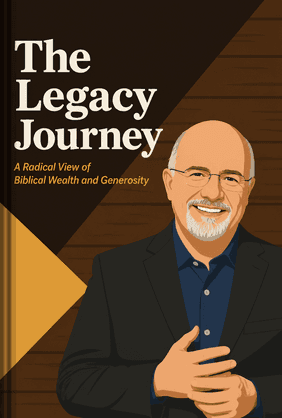
The Legacy Journey
Dave Ramsey and Ramsey Press
 17 min
 6 Key Points
 4.5 Rate
What's inside?
Explore a unique perspective on wealth and generosity based on biblical principles, and learn how to leave a lasting legacy for future generations.
You'll learn
 1. What's the Bible say about money?2. How to leave something behind for the grandkids3. Why giving back matters and how to do it4. Busting myths about being rich5. Investing the right way6. Finding peace in your finances.
Key points
01Understanding Wealth and Prosperity in Christianity
We've all heard it before, right? The idea that money is the root of all evil, especially within the Christian community. But is that really what the Bible says? Let's dive in and find out. The Bible doesn't actually say that money is evil. Instead, it warns against the love of money. In 1 Timothy 6:10, it says, "For the love of money is a root of all kinds of evil." The key word here is "love." It's not the money itself that's the problem, but the unhealthy attachment to it. The Bible also encourages us to use our wealth for the benefit of others and the glory of God. In 1 Timothy 6:18, it instructs those who are rich in this present world to do good, to be rich in good deeds, and to be generous and willing to share. This suggests that wealth isn't inherently bad, but it's how we use it that matters. So, it's time to reassess our understanding of wealth and prosperity. Instead of viewing wealth as a personal achievement or a sign of God's favor, we should see it as a tool for accomplishing God's purposes. There are numerous scriptures that discuss wealth, money, and possessions. For instance, Proverbs 3:9-10 encourages us to honor God with our wealth and with the firstfruits of all our produce. Matthew 6:24 warns us that we cannot serve both God and money. These scriptures provide guidance on how Christians should handle wealth and possessions, emphasizing biblical principles such as stewardship, generosity, and contentment. However, there are common misconceptions about wealth and prosperity in the Christian community. Some believe that wealth is a sign of God's favor, while others view it as inherently evil. But the Bible presents a balanced view of wealth and prosperity. It neither condemns wealth nor promotes poverty. Instead, it encourages a healthy attitude towards wealth, emphasizing the importance of using it in a way that honors God and benefits others. In the context of Christian faith, wealth should not be seen as an end in itself, but a means to serve God and others. It's not about how much we have, but how we use what we have. The Bible encourages us to use our wealth in a way that aligns with Christian values and principles, such as generosity, stewardship, and contentment. In conclusion, the biblical view of wealth and prosperity is not about the accumulation of wealth, but about the use of wealth. It's not about how much we have, but how we use what we have. It's not about the love of money, but the love of God and others. So, let's reflect on our own views of wealth and prosperity in light of this biblical perspective. And let's strive to use our wealth and prosperity in a way that honors God and benefits others. After all, that's what it's really all about.
02Understanding Wealth: A Biblical Perspective on Stewardship
Have you ever considered wealth as something more than just a means to an end? In "The Legacy Journey: A Radical View of Biblical Wealth and Generosity," Dave Ramsey presents an unconventional perspective on wealth. He suggests that wealth is not an end in itself, but a tool that can be used for various purposes. It's like a hammer. You can use it to build a house or to tear one down. The hammer itself is not good or bad; it's how you use it that matters. This perspective challenges the conventional view of wealth as a symbol of success or a source of security. Instead, it encourages us to see wealth as a resource that we can use to make a positive impact in the world. This brings us to the concept of stewardship. Stewardship is the idea that we are managers, not owners, of the resources we have. This concept applies to wealth management as well. When we view ourselves as stewards rather than owners of wealth, it changes our perspective. We begin to see wealth as something entrusted to us, something we are responsible for using wisely and ethically. In the book, Ramsey shares a case study of a wealthy businessman who viewed his wealth as a trust from God. He used his wealth to create jobs, support charities, and fund missions. He saw himself as a steward of his wealth, not its owner. This perspective allowed him to use his wealth in ways that aligned with his values and beliefs. But what does it mean to use wealth to advance God's kingdom? This can be interpreted in various ways. It could mean using wealth to support charitable causes, to help those in need, or to fund projects that promote justice and peace. In the book, Ramsey shares examples of individuals who used their wealth to reflect God's love and compassion. They saw their wealth not as a personal possession, but as a resource they could use to make a difference in the world. The book challenges us to rethink our attitudes towards wealth. It invites us to shift from a self-centered to a God-centered view of wealth. Instead of asking, "What can wealth do for me?" we are encouraged to ask, "What can I do with my wealth?" This shift in perspective can lead to a more fulfilling and meaningful use of wealth. So, how might you use your wealth in ways that align with divine purpose? This is not just a question for the wealthy. It's a question for all of us, regardless of how much or how little we have. Because in the end, it's not about how much wealth we accumulate, but how we use what we have. In conclusion, wealth is more than just a means to an end. It's a tool that we can use to make a positive impact in the world. As stewards of our wealth, we have the responsibility to use it wisely and ethically. And when we use our wealth in ways that reflect God's love and compassion, we not only enrich our own lives, but also contribute to the advancement of God's kingdom. So, how will you use your wealth?
Continue reading with LeapAhead app
Full summary is waiting for you in the app
03The Pitfalls of Wealth: A Biblical Perspective
04The Blessings of a Generous Lifestyle
05How to leave a lasting financial legacy?
06Conclusion
About Dave Ramsey and Ramsey Press
Dave Ramsey is a renowned American financial advisor, radio host, and author, known for his practical advice on debt elimination and wealth building. Ramsey Press is his publishing company, dedicated to providing resources that guide people in their financial journey.