
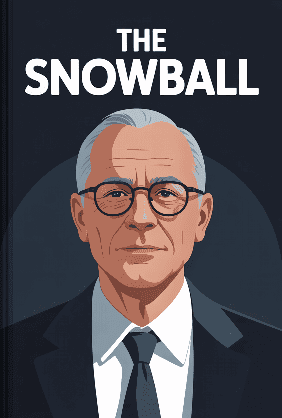
The Snowball
Alice Schroeder, Kirsten Potter, et al.
 21 min
 7 Key Points
 4.7 Rate
What's inside?
Dive into the life and business strategies of Warren Buffett, one of the world's wealthiest and most successful investors, and learn how to apply his wisdom to your own financial journey.
You'll learn
 1. What's Warren Buffett's secret sauce?2. Wanna get rich? Learn to invest smart!3. What's value investing and why should you care?4. Why being a good guy matters in business.5. Patience is a virtue, especially when it comes to money.6. How to pick a business to invest in like a pro.
Key points
01Exploring the Early Life and Influences of Warren Buffett
Warren Buffett, the Oracle of Omaha, didn't just wake up one day as a successful investor and business magnate. His journey to the top was a gradual process, shaped by his upbringing, early interests, education, and initial forays into investment. Born to a stockbroker father and a homemaker mother, Buffett's early life was steeped in the world of finance. His father's profession was like a seed planted in young Buffett's mind, which would later grow into a towering tree of financial acumen. His parents' values and principles, particularly their emphasis on hard work and integrity, also played a significant role in shaping his interest in business and finance. Buffett's entrepreneurial spirit was evident from a young age. From selling chewing gum and Coca-Cola door-to-door to delivering newspapers, his early business ventures were a testament to his strong work ethic and understanding of the value of money. These experiences, like stepping stones, gradually shaped his business acumen and laid the groundwork for his future success. Buffett's education further honed his financial prowess. Studying under Benjamin Graham at Columbia Business School, he was introduced to the concept of value investing. Graham's teachings were like a compass, guiding Buffett through the labyrinth of investment strategies and helping him develop his own investment philosophy. Buffett's initial forays into investment were not without their challenges. His first investment, in Cities Service Preferred, was a rollercoaster ride of highs and lows. However, this experience taught him invaluable lessons about patience and timing in the stock market. It was a baptism by fire, but one that would shape his approach to investing in the years to come. The lessons Buffett learned from his early investment experiences became the bedrock of his investment philosophy. From understanding the importance of buying undervalued companies to recognizing the significance of patience and timing, these lessons have been applied time and again in his successful investments. For instance, his investment in the Washington Post Company in the 1970s was a classic example of his value investing philosophy in action. He saw the intrinsic value in the company when others did not, and his patience paid off handsomely. In conclusion, Buffett's early life and influences played a pivotal role in shaping him into the successful investor he is today. His upbringing, early interests, education, and initial forays into investment were all integral parts of his journey to the top. They were the threads that wove the tapestry of his success, and they continue to influence his investment decisions to this day.
02Buffett's Journey to Success: Investment Philosophy and Leadership Style
Warren Buffett, the Oracle of Omaha, is a name that resonates with success, wealth, and wisdom in the world of finance. His journey to becoming one of the world's most successful investors is a testament to his unique investment philosophy and leadership style. At the heart of Buffett's investment philosophy is the concept of value investing. This strategy, which he learned from his mentor Benjamin Graham, involves buying stocks that are undervalued by the market. But unlike many investors who quickly sell off their stocks for a quick profit, Buffett takes a different approach. He holds onto these undervalued stocks for a long time, often decades, allowing them to grow and increase in value. This long-term investment strategy is a reflection of Buffett's belief in the importance of long-term growth over short-term market trends. But Buffett's investment philosophy goes beyond just buying undervalued stocks. He believes in understanding a company's business model before investing in it. He studies the company's financials, its competitive position, and its potential for growth. This deep understanding of a company's business model has been a key factor in his successful investments. When it comes to business, Buffett values integrity and transparency above all else. He believes that businesses should be honest and transparent with their shareholders, and this belief influences his investment decisions. He invests in companies that share these values, and avoids those that don't. Buffett's approach to managing the companies he invests in is also unique. He practices a hands-off management style, allowing the companies to operate independently while providing strategic guidance when needed. This approach not only empowers the companies but also allows them to leverage their unique strengths and capabilities. Buffett's ability to identify profitable investment opportunities is another key factor in his success. He has a knack for spotting undervalued companies with strong growth potential. This ability has allowed him to make successful investments across a wide range of industries, from insurance to food and beverage to technology. Buffett's leadership style is characterized by humility, integrity, and a long-term perspective. He treats his employees with respect, leads by example, and always keeps the long-term interests of his shareholders in mind. These traits inspire trust and confidence in his employees and shareholders, and have been instrumental in his success. Buffett's investment philosophy and business acumen have been key factors in the growth of Berkshire Hathaway, the multinational conglomerate he leads. Under his leadership, Berkshire Hathaway has grown into a diverse portfolio of companies, each contributing to its overall success. Buffett's long-term investment strategy and hands-off management style have allowed these companies to grow and thrive, contributing to Berkshire Hathaway's impressive growth. In conclusion, Warren Buffett's journey to success is a testament to his unique investment philosophy and leadership style. His approach to investing, his business acumen, and his leadership traits have not only made him one of the world's most successful investors but also a role model for future generations of investors.
Continue reading with LeapAhead app
Full summary is waiting for you in the app
03Understanding Buffett's Value Investing Philosophy
04Buffett's Philanthropy and its Impact on Society
05Exploring Buffett's Philosophy on Life and Success
06Reflecting on Buffett's Legacy: Lessons from a Legendary Investor
07Conclusion
About Alice Schroeder, Kirsten Potter, et al.
Alice Schroeder is a former insurance industry analyst and managing director at Morgan Stanley. She is known for her biography of Warren Buffett, "The Snowball." Kirsten Potter is a professional voice artist who has received multiple AudioFile Earphones Awards for her audiobook narrations.


