
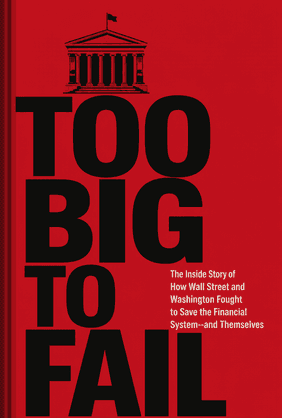
Too Big to Fail
Andrew Ross Sorkin
 20 min
 7 Key Points
 4 Rate
What's inside?
Dive into the gripping narrative of the 2008 financial crisis, exploring how Wall Street and Washington battled to rescue the economy, and in the process, saved themselves.
You'll learn
 1. What went down in the 2008 money mess?2. How did Wall Street and Washington mess up?3. What secret deals saved the banks?4. How did the crisis shake up the world's money?5. What happens when banks are too big to crash?6. How can we stop another money meltdown?
Key points
01Understanding the Prelude to the 2008 Financial Crisis
The 2008 financial crisis, a cataclysmic event that shook the global economy, was not a sudden, unexpected catastrophe. It was a slow-burning fire, fueled by risky lending practices, a housing bubble, complex financial instruments, and the interplay between Wall Street and Washington. Let's start with the risky lending practices. Before the crisis, banks were handing out subprime loans like candy at a parade. These were loans given to individuals with poor credit histories, making them high-risk borrowers. But why would banks lend to high-risk individuals? The answer lies in the way these loans were packaged. Banks bundled these subprime loans into mortgage-backed securities (MBS), which were then sold to investors. This practice transferred the risk from the banks to the investors. However, the risk associated with these MBS was often underestimated or ignored, setting the stage for disaster. Next, we have the housing bubble. Easy credit fueled a surge in housing prices, creating a bubble. When this bubble burst, homeowners found themselves unable to pay their mortgages, leading to a wave of foreclosures. This had a domino effect on the financial system, as the value of the MBS plummeted, leaving investors with significant losses. The crisis was further exacerbated by complex financial instruments like derivatives and credit default swaps. These instruments were like bets on the performance of the MBS. However, they were poorly understood and even more poorly regulated. When the MBS started to fail, these instruments magnified the losses, turning a bad situation into a catastrophic one. The key players in Wall Street and Washington also played significant roles in the crisis. Their decisions and actions, driven by the pursuit of profits and a lack of regulation, contributed to the crisis. Wall Street, with its relentless pursuit of profits, pushed for riskier and riskier investments. Washington, on the other hand, failed to regulate these practices effectively, allowing the situation to spiral out of control. The relationship between Wall Street and Washington was a significant factor in the crisis. Their actions and inactions, driven by a combination of lax regulation and the pursuit of profits, created a perfect storm that led to the crisis. The lack of understanding and regulation of complex financial instruments, the risky lending practices, and the housing bubble were all symptoms of this dysfunctional relationship. In conclusion, the 2008 financial crisis was a result of a combination of factors, including risky lending practices, a housing bubble, complex financial instruments, and the interplay between Wall Street and Washington. Understanding these precursors is crucial to preventing future crises. We must learn from our past mistakes to ensure that history does not repeat itself.
02"The Collapse of Bear Stearns: A Deep Dive"
The collapse of Bear Stearns in 2008 was like a seismic shock that rippled through the global financial system. It was a pivotal moment that marked the beginning of the worst financial crisis since the Great Depression. But what led to this catastrophic event? And what can we learn from it? Bear Stearns, once a titan of Wall Street, had a fatal flaw: a high-risk, high-reward strategy that involved heavy investments in subprime mortgages. These are loans given to individuals with poor credit histories, making them risky bets. When the housing market crashed, these subprime mortgages turned toxic, leading to massive losses for Bear Stearns. Adding fuel to the fire was the firm's over-reliance on short-term borrowing. This is a financial strategy where a company borrows money for a short period, often overnight, to finance its operations. It's like living paycheck to paycheck, but on a corporate scale. When the credit markets froze, Bear Stearns found itself in a liquidity crunch, unable to meet its financial obligations. The firm's aggressive risk-taking behavior, coupled with a lack of adequate risk management systems, was the final nail in the coffin. Risk management in finance is like a safety net, designed to identify and mitigate potential threats. But at Bear Stearns, the safety net was full of holes. As the firm teetered on the brink of collapse, its executives scrambled to save it. They sought financial assistance, sold assets, and even negotiated with potential buyers. But it was too little, too late. The firm's reputation was tarnished, and its financial problems were too severe. Wall Street and Washington also stepped in, trying to prevent a full-blown financial meltdown. They negotiated with potential buyers and even facilitated a government-backed sale of Bear Stearns to JPMorgan Chase. But this move was not without controversy. It raised questions about the role of government in the private sector and the concept of moral hazard - the idea that people or institutions are more likely to take risks if they believe they will be bailed out. The collapse of Bear Stearns sent shockwaves through the global financial system. It exposed vulnerabilities in the system and led to a loss of confidence in other financial institutions. It also led to significant changes in financial regulation and supervision, aimed at preventing a similar crisis in the future. The collapse of Bear Stearns is a stark reminder of the dangers of excessive risk-taking and the importance of robust risk management systems. It also highlights the potential pitfalls of government intervention in the private sector. As we navigate the complexities of the modern financial system, the lessons from Bear Stearns' collapse remain as relevant as ever.
Continue reading with LeapAhead app
Full summary is waiting for you in the app
03The Fall of Lehman Brothers: A Catastrophe in Global Finance
04What's the AIG crisis all about?
05Understanding the Troubled Asset Relief Program
06"Understanding the Aftermath of the Financial Crisis"
07Conclusion
About Andrew Ross Sorkin
Andrew Ross Sorkin is an American journalist and author. He is a financial columnist for The New York Times and a co-anchor of CNBC's Squawk Box. Sorkin is also the founder and editor of DealBook, a financial news service published by The New York Times.

