
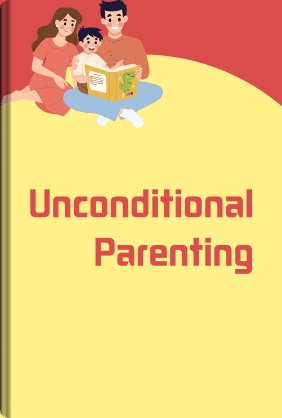
Unconditional Parenting
Alfie Kohn
 22 min
 7 Key Points
 4.9 Rate
What's inside?
Explore a new approach to parenting that emphasizes love and reason over rewards and punishments, fostering a deeper connection with your children.
You'll learn
 1. Why "do this, get that" parenting can mess up kids2. Why kids need love, no matter what3. How to make kids want to do stuff on their own4. Tips for talking to your kids effectively5. Why being understanding matters when disciplining kids6. Raising kids to be independent, responsible, and kind-hearted.
Key points
01Understanding Conditional Parenting: A Focus on Children's Needs and Emotions
You're at the park with your child. They're playing happily, but then they start throwing sand at other children. You tell them to stop, but they don't listen. So, you take away their favorite toy as a punishment. Sound familiar? This is a classic example of what's known as conditional parenting, where love and approval are given or withheld based on a child's behavior. Conditional parenting is the traditional approach many of us grew up with. It's the "if you do this, then you get that" mentality. If you behave well, you get a reward. If you misbehave, you get a punishment. It's a system of carrots and sticks designed to control behavior. But Alfie Kohn, in his book "Unconditional Parenting: Moving from Rewards and Punishments to Love and Reason," argues that this approach can be harmful to children. According to Kohn, conditional parenting can lead to feelings of insecurity and low self-esteem in children. They may start to believe that they are only loved when they behave in a certain way. This can also discourage children from developing their own internal motivation and moral compass. They may become more focused on avoiding punishment or gaining rewards than on understanding the impact of their actions on others. Kohn suggests that we need to shift our focus from controlling behavior to understanding and responding to our children's needs and emotions. This means looking beyond the surface behavior to understand what's really going on. Is your child throwing sand because they're bored, frustrated, or seeking attention? By understanding their underlying needs and emotions, we can respond in a way that makes them feel secure, valued, and understood. Making this shift requires a fundamental change in how we view our role as parents and our relationship with our children. Instead of seeing ourselves as enforcers of rules, we need to see ourselves as guides and supporters. This approach can lead to healthy emotional development and a strong parent-child relationship. It's about helping our children understand their emotions and needs, and guiding them towards making good choices, rather than simply trying to control their behavior. So, next time you're at the park and your child starts throwing sand, instead of immediately resorting to punishment, try to understand why they're doing it. What need or emotion is driving their behavior? By shifting our focus from behavior to needs and emotions, we can help our children feel secure, valued, and understood, and guide them towards making better choices. So, are you ready to make the shift from conditional parenting to understanding and responding to your child's needs and emotions? It's a journey that requires patience and understanding, but the rewards - a strong, healthy relationship with your child - are well worth it.
02What's unconditional parenting all about?
Ever noticed how some parents seem to have a magical bond with their children? Their kids seem to respect them, not out of fear of punishment or the promise of rewards, but simply because of the love and respect that exists between them. This isn't some sort of parenting sorcery, but rather a philosophy known as unconditional parenting. Unconditional parenting, as the name suggests, is all about loving your child without any conditions. It's not about saying, "I'll love you if you get good grades," or "I'll love you if you behave." Instead, it's about saying, "I love you, no matter what." This approach is a stark contrast to traditional parenting styles that often rely on rewards and punishments to control children's behavior. The crux of unconditional parenting lies in recognizing a child's inherent value and worth. It's about understanding that your child is not a blank slate that needs to be filled with your ideas and values, but a unique individual with their own thoughts, feelings, and perspectives. This recognition forms the basis of a loving, respectful relationship between parent and child. In unconditional parenting, the relationship between parent and child is not contingent on the child's behavior or performance. It's not about loving your child more when they do well and less when they don't. Instead, it's about maintaining a consistent level of love and respect, regardless of the circumstances. This approach encourages parents to treat their children with kindness and respect at all times, not just when they're behaving or performing well. Accepting children for who they are is a fundamental aspect of unconditional parenting. It's about not basing your love and acceptance on your child's behavior or achievements. It's about seeing your child as an individual with their own unique personality and traits, and not as an extension of yourself or as a reflection of your parenting skills. Unconditional parenting also encourages parents to treat their children with kindness and respect. It's about not using rewards and punishments to manipulate your child's behavior, but instead treating them as equals and respecting their autonomy and individuality. It's about understanding that your child is a person in their own right, with their own needs, desires, and rights. In conclusion, unconditional parenting is a philosophy that emphasizes love, respect, and acceptance. It's about treating your child as an individual, not as a project to be managed or a problem to be solved. It's about fostering a relationship with your child that is based on mutual respect and understanding, not on control and manipulation. So, if you're looking for a more loving, respectful, and fulfilling way to parent, why not give unconditional parenting a try?
Continue reading with LeapAhead app
Full summary is waiting for you in the app
03"Building Strong Relationships with Your Children: A Guide"
04How to Use Love and Reason in Parenting?
05Strategies for Implementing Unconditional Parenting
06The benefits of unconditional parenting: A guide
07Conclusion
About Alfie Kohn
Alfie Kohn is an American author and lecturer in the areas of education, parenting, and human behavior. He is a proponent of progressive education and has written numerous books challenging common educational and parenting practices. His work emphasizes autonomy, collaboration, and intrinsic motivation.
