
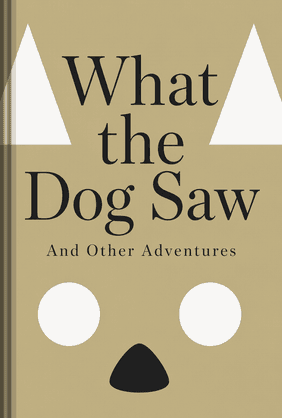
What the Dog Saw
Malcolm Gladwell
 34 min
 11 Key Points
 4.7 Rate
What's inside?
Explore a collection of intriguing essays that delve into the mysteries of human behavior, decision-making, and societal phenomena, all through the insightful lens of a curious observer.
You'll learn
 1. New takes on everyday stuff2. Learning to question the norm3. Understanding why people do what they do4. The power of a good story5. Why different viewpoints matter6. Using these ideas to make better choices.
Key points
01Exploring the Art of Salesmanship with Ron Popeil
Let's dive into the world of Ron Popeil, a man who could sell ice to Eskimos. Popeil was not just an inventor but a master salesman, who turned his inventions into must-have items with his captivating sales pitches. His journey from a struggling inventor to a successful marketer is a testament to the power of salesmanship. Born in New York City, Popeil spent his early years in a boarding school while his father sold kitchen gadgets in Chicago. He later joined his father in the business, and it was here that he learned the art of salesmanship. Popeil's inventions, such as the Chop-O-Matic and the Showtime Rotisserie, were not just products; they were solutions to everyday problems. But what made these products successful was not just their utility, but the way Popeil sold them. His sales pitches were not just about the product; they were performances that captivated audiences and made them believe they needed his products. Salesmanship, as demonstrated by Popeil, is not just about selling a product; it's about understanding the psychology of the customer. It's about knowing what the customer needs, what they want, and how to make them believe that your product is the solution to their problems. It's about showmanship, about attracting attention and making your product or service appealing. And in today's world, it's also about leveraging technology to enhance the sales process. Popeil's career is a perfect example of how showmanship, psychology, and technology can be combined to create a successful sales pitch. His infomercials were not just about showcasing the product; they were performances that captivated audiences. He understood the psychology of his customers, knowing that they were not just buying a product, but a solution to their problems. And he leveraged technology, using television as a platform to reach millions of potential customers. A successful pitch, as demonstrated by Popeil, is not just about the product. It's about how the product is presented, how well the seller understands the customer, and how technology is used to enhance the product and the sales process. It's about creating a narrative that makes the customer believe they need the product. And it's about delivering this narrative in a way that captivates the audience and compels them to buy. Mastering the art of salesmanship, as Popeil did, involves mastering these elements. It's about understanding the customer, creating a compelling narrative, and using technology to enhance the sales process. It's about showmanship, about captivating the audience and making them believe they need your product. And it's about delivering this narrative in a way that compels the audience to buy. In conclusion, understanding and mastering the art of salesmanship is crucial for anyone involved in selling a product or service. As demonstrated by Ron Popeil, a successful sales pitch is not just about the product; it's about understanding the customer, creating a compelling narrative, and using technology to enhance the sales process. It's about showmanship, about captivating the audience and making them believe they need your product. And it's about delivering this narrative in a way that compels the audience to buy.
02Exploring Product Diversity: The Mustard and Ketchup Conundrum
Have you ever noticed the stark contrast between the mustard and ketchup aisles at your local grocery store? Mustard comes in a dizzying array of varieties - Dijon, honey, whole grain, spicy brown, yellow, and more. Ketchup, on the other hand, is just... ketchup. Sure, there might be a few brands to choose from, but they all taste pretty much the same. This disparity, as Malcolm Gladwell points out in his book "What the Dog Saw: And Other Adventures", is a fascinating study in product diversity and consumer preference. Let's delve deeper into this mustard and ketchup conundrum. Why is there such a wide variety of mustards but only one kind of ketchup? The answer lies in the nature of the two condiments. Mustard is made from crushed mustard seeds and vinegar, which can be tweaked and modified in countless ways to create different flavors. Ketchup, however, is made from tomatoes, vinegar, sugar, and spices, and any significant deviation from this recipe results in a product that simply doesn't taste like ketchup. This conundrum reflects the role of consumer preference in product diversity. The uniformity of ketchup indicates that consumers have a very specific expectation of what ketchup should taste like. Any ketchup that doesn't meet this expectation is likely to be rejected. Mustard, on the other hand, is a condiment that consumers are willing to experiment with, leading to a wide variety of flavors and styles. But it's not just about the ingredients. The success of a product in the market is not solely dependent on its quality or taste, but also on how well it aligns with consumer preferences. This is where food product marketing comes into play. A product that perfectly meets consumer expectations, like ketchup, can dominate the market with little variation. A product that consumers are willing to experiment with, like mustard, can thrive in a diverse market. The mustard and ketchup conundrum serves as a metaphor for market dynamics and consumer behavior. It shows us that the market is not always driven by the best product, but rather by the product that best meets consumer preferences. Understanding this conundrum can provide valuable insights into market dynamics and consumer preferences. The mustard and ketchup conundrum also serves as a case study for understanding market dynamics. It shows us that the market is not a meritocracy where the best product always wins. Instead, it's a complex system where consumer preferences and expectations play a crucial role. Understanding consumer behavior is key to successful product marketing. The success of ketchup and the diversity of mustard are both results of aligning product offerings with consumer preferences. By understanding what consumers want and expect, businesses can tailor their products to meet these expectations and succeed in the market. In conclusion, the mustard and ketchup conundrum is a fascinating study in product diversity, consumer preferences, and market dynamics. It shows us that understanding these factors is crucial for successful product marketing. So the next time you're at the grocery store, take a moment to ponder the mustard and ketchup aisles. They might just teach you a thing or two about the market.
Continue reading with LeapAhead app
Full summary is waiting for you in the app
03Exploring Risk and Uncertainty: The Story of Nassim Taleb
04How color preference impacts marketing and product development?
05"Exploring the Story of John Rock: The Man Behind the Birth Control Pill"
06What's professional dog training all about?
07Why late bloomers matter in art and creativity?
08Understanding the Limitations of Predicting Success
09What's criminal profiling all about?
10Challenging Conventional Wisdom on Talent Management
11Conclusion
About Malcolm Gladwell
Malcolm Gladwell is a Canadian journalist, author, and public speaker. He is best known for his unique perspective on popular culture and his successful books, including "The Tipping Point" and "Outliers". His work often explores unexpected implications of research in social sciences and makes heavy use of academic work.


