


You know Robin Sharma’s book is a massive bestseller. You have probably seen it dominating the business and self-help shelves at Barnes & Noble or topping the charts on Amazon. But when you crack it open, you hit a wall. Instead of a direct manual on productivity, you get a 300-page fictional fable about an eccentric billionaire, a frustrated artist, and a struggling entrepreneur.
You do not have time for a fable. You have a business to run, a team to manage, or a career to build. You just want the exact system to implement into your morning routine.
This 5 am club summary strips away the fictional narrative entirely. What remains is a hard-hitting, highly analytical breakdown of the mechanics. We will extract the exact frameworks you need to reclaim your time, peak your cognitive performance, and actually make waking up before dawn worth your effort.
While this summary gives you the direct blueprint, you might still be wondering if the original book is worth your time. The narrative format is a major point of discussion for many readers.
The Core Premise of Robin Sharma 5 AM Club Summary
Why 5 AM? It is not just about having an extra hour. It is about brain chemistry and isolation.
Sharma calls this time the "Victory Hour." When you wake up at 5:00 AM, the world is asleep. There are no Slack notifications, no urgent emails, and no demands from your family. This isolation triggers a neurological state called transient hypofrontality.
Simply put, the prefrontal cortex—the part of your brain responsible for stress, worrying, and over-analyzing—temporarily shuts down. At the same time, the quiet of the dawn stimulates the production of dopamine and serotonin. You enter a state of flow naturally. You are not fighting distractions; distractions do not exist yet.
But waking up is only step one. What you do with that first hour dictates your success. That brings us to the core engine of the system.
While this no-fluff summary provides the exact mechanics you need to execute the morning framework, there is still immense value in reading Robin Sharma's original work. If you are the type of reader who learns best through narrative storytelling and wants to dive deeper into the eccentric billionaire's philosophy that started it all, picking up the full text is a smart investment. It will help reinforce the "Victory Hour" concepts and keep you motivated during those first few groggy mornings.
The 5 AM Club
Robin Sharma
 39 Duration
 10 Key Points
 4.6 Rate
The 20/20/20 Formula Explained (The 5 AM Club Cheat Sheet)
The heart of the book is the 20/20/20 formula. You divide your first hour awake into three precise 20-minute pockets. You do not check your phone. You do not read the news. You execute this sequence.
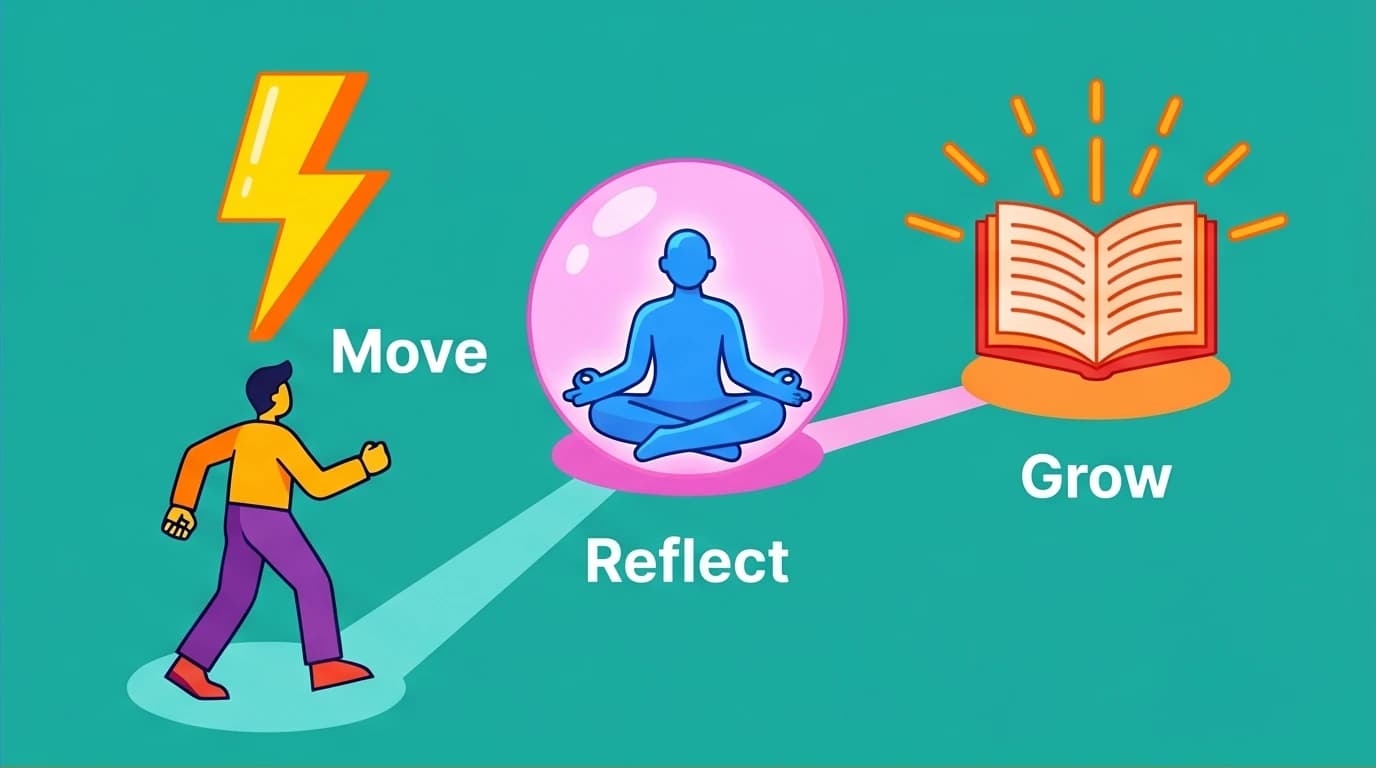
Pocket 1: Move (5:00 AM – 5:20 AM)
You must start with intense physical activity. It is not the time for a slow, casual walk. You need to sweat.
- What to do: HIIT (High-Intensity Interval Training), jumping jacks, sprinting, spinning, or intense bodyweight exercises.
- The Science: Sweating early drops your cortisol (the stress hormone) which is naturally highest when you wake up. More importantly, vigorous exercise releases BDNF (Brain-Derived Neurotrophic Factor). BDNF repairs brain cells and accelerates neural connections.
- The Result: You generate instant energy. Your brain wakes up completely, eliminating morning grogginess.
Pocket 2: Reflect (5:20 AM – 5:40 AM)
Now that your brain is flooded with BDNF and your cortisol is flushed, you move into stillness. This is the time to manage your internal environment.
- What to do: Journaling, meditation, praying, or simply sitting in absolute silence to plan your day.
- How to execute: Write down your frustrations to clear them out. Write down your top three goals for the day. Express gratitude. If you prefer meditation, sit still and focus on your breathing.
- The Result: You build emotional resilience. Instead of reacting to the day's emergencies in a state of panic, you approach your work with a grounded, clear, and proactive mindset.
Pocket 3: Grow (5:40 AM – 6:00 AM)
The final 20 minutes are dedicated to intellectual growth. Elite performers outlearn everyone else.
- What to do: Read a non-fiction book, listen to an educational podcast on Audible, study an industry report, or review a course.
- The Rule: No entertainment. Consume material that improves your professional skills, deepens your industry knowledge, or challenges your current way of thinking.
- The Result: Compounding knowledge. Just 20 minutes of daily learning equals roughly 120 hours of focused education a year. That alone will separate you from your competition.
Fitting an entire book chapter into this 20-minute slot can be tough. If you want to absorb the core ideas of a bestselling business or self-improvement book without the fluff, a book summary app can be a powerful tool.


LeapAhead

Use your 20-minute 'Grow' pocket to master the key insights from bestselling books on productivity and leadership in just 15 minutes.
Mastering the 20/20/20 formula is the first step. To ensure you stay on track, it helps to have a clear, actionable schedule to follow each morning.
5 AM Club Key Takeaways: Beyond the First Hour
A common trap is assuming the system ends at 6:00 AM. Waking up early means nothing if you ruin the rest of your day. The book outlines several other operational frameworks to sustain high performance. Here are the most critical 5 am club key takeaways you must apply.
The 90/90/1 Rule for Elite Production
Multitasking is the enemy of greatness. To dominate your field, use the 90/90/1 rule.
For the next 90 days, dedicate the first 90 minutes of your workday to your 1 most important project. Zero distractions. No emails. Phone in another room. This single habit ensures you produce deep, meaningful work rather than just reacting to busywork.
For the next 90 days, dedicate the first 90 minutes of your workday to your 1 most important project. Zero distractions. No emails. Phone in another room. This single habit ensures you produce deep, meaningful work rather than just reacting to busywork.
Executing the 90/90/1 rule is often easier said than done in today’s hyper-connected corporate culture. If you find yourself constantly battling Slack messages, endless email chains, or the temptation to check your smartphone, you need a stronger defense system to protect your focus. Cal Newport’s brilliant guide on eliminating distractions offers the perfect complementary strategy to Sharma's framework. It provides actionable tactics to help you cultivate intense concentration, ensuring those 90 minutes of morning work actually move the needle for your career.
Deep Work
Cal Newport
47 Duration8 Key Points4.6 RateThe 60/10 Method for Sustained Energy
You cannot work intensely for eight hours straight. Your brain requires recovery.
Work with absolute focus for 60 minutes, then take a hard 10-minute break. Step away from your screens. Go for a walk outside, hydrate, or stretch. This oscillation between deep work and deep recovery prevents afternoon burnout.
Work with absolute focus for 60 minutes, then take a hard 10-minute break. Step away from your screens. Go for a walk outside, hydrate, or stretch. This oscillation between deep work and deep recovery prevents afternoon burnout.
The 4 Interior Empires
Sharma argues that most people only focus on their "Mindset" (psychology). But Mindset is only 25% of the equation. To reach elite levels, you must optimize all four interior empires:

- Mindset (Psychology): Your thoughts, beliefs, and focus.
- Heartset (Emotionality): Forgiving past trauma, releasing anger, and cultivating gratitude. A great mindset is useless if your heart is full of resentment.
- Healthset (Physicality): Your fitness, diet, and energy. You cannot dominate your industry if you are exhausted.
- Soulset (Spirituality): Your connection to a higher purpose or your core values. Remembering why you do what you do.
The Pre-Sleep Ritual
You cannot join the 5 AM club if you go to sleep at midnight. Your morning routine actually begins at 8:00 PM the night before.
- 8:00 PM: Technology curfew. Turn off all screens. The blue light from your devices suppresses melatonin.
- 9:00 PM: Wind down. Read a physical book, take a warm bath, and prepare your workout clothes for the next morning. Ensure your bedroom is dark and cool (around 65 degrees Fahrenheit is optimal for deep sleep).
- 10:00 PM: Lights out. You must secure 7 hours of high-quality sleep to perform the 20/20/20 formula effectively.
Nailing your pre-sleep ritual is arguably the most critical piece of the 5 AM puzzle. Dropping your thermostat to a cool 65 degrees Fahrenheit and ditching the blue light are great first steps, but truly optimizing your rest requires understanding the science behind it. If you want to know exactly how sleep impacts your memory, immune system, and daily energy levels, this comprehensive breakdown by a leading neuroscientist is essential reading. It will completely reframe how you prioritize your 10:00 PM bedtime.

Why We Sleep
Matthew Walker and Steve West
38 Duration8 Key Points4.6 RateHow to Actually Install the Habit (The 66-Day Minimum)
You will hate waking up at 5 AM on day three. You will want to quit on day ten. Knowing this is your biggest advantage.
Sharma references the University College London study which proves it takes an average of 66 days to form a new habit. You must push through three distinct phases:

- Phase 1: Destruction (Days 1–22): It will be brutal. You are tearing down your old neural pathways. You will feel exhausted. Accept the pain as a necessary cost of entry.
- Phase 2: Installation (Days 23–44): The messy middle. Your brain is rewiring itself. You might feel confused or frustrated, but waking up is getting slightly easier.
- Phase 3: Integration (Days 45–66): The habit clicks. It becomes automatic. Waking up at 5 AM begins to require less willpower than sleeping in.
Do not rely on motivation. Motivation is unreliable. Rely on relentless consistency for the first 66 days.
Pushing through the initial 66-day installation phase requires more than just sheer willpower; it requires a bulletproof system. If you want to guarantee that waking up at 5:00 AM becomes a permanent lifestyle shift rather than a temporary New Year's resolution, you need to master the psychology of habit formation. James Clear’s renowned methodology teaches you how to design your environment and stack micro-behaviors so that setting your alarm a few hours earlier feels inevitable rather than impossible.

Atomic Habits
James Clear
26 Duration8 Key Points4.7 RateImplementing all these frameworks requires a serious commitment to learning, but your to-be-read pile might already feel overwhelming. To get a head start on all these powerful ideas without spending months reading, you can get the main takeaways first.
LeapAhead
Get actionable summaries of books like 'Atomic Habits' and 'Deep Work' to quickly learn and apply their core principles to your new morning routine.
FAQ
Do I absolutely have to wake up at exactly 5:00 AM?
While the book strictly advocates for 5:00 AM to capitalize on the isolation of the dawn, the underlying principle is about taking control of your first hour before the world makes demands of you. If your life schedule completely forbids 5 AM, applying the 20/20/20 formula to the first hour of your day (e.g., 6:00 AM) is the next best alternative.
While the book strictly advocates for 5:00 AM to capitalize on the isolation of the dawn, the underlying principle is about taking control of your first hour before the world makes demands of you. If your life schedule completely forbids 5 AM, applying the 20/20/20 formula to the first hour of your day (e.g., 6:00 AM) is the next best alternative.
What should I do if I work late shifts and cannot sleep by 10 PM?
The 5 AM Club framework assumes a standard daytime schedule. If you work nights, do not force a 5 AM wake-up at the expense of sleep deprivation. Prioritize 7-8 hours of sleep. When you do wake up, immediately execute the 20/20/20 formula to anchor your "morning," regardless of what the clock says.
The 5 AM Club framework assumes a standard daytime schedule. If you work nights, do not force a 5 AM wake-up at the expense of sleep deprivation. Prioritize 7-8 hours of sleep. When you do wake up, immediately execute the 20/20/20 formula to anchor your "morning," regardless of what the clock says.
Does the 20/20/20 formula leave room for a shower or breakfast?
No. The first 60 minutes are heavily scheduled. You move, you reflect, you grow. You take your shower, get dressed, and eat breakfast after 6:00 AM.
No. The first 60 minutes are heavily scheduled. You move, you reflect, you grow. You take your shower, get dressed, and eat breakfast after 6:00 AM.
What happens if I miss a day or mess up the routine?
Do not let one failure trigger a complete collapse. Elite performers give themselves grace but immediately correct the course. If you oversleep, simply get back on track the very next night by strictly enforcing your 8:00 PM technology curfew. Consistency over a 66-day window matters far more than a single bad morning.
Do not let one failure trigger a complete collapse. Elite performers give themselves grace but immediately correct the course. If you oversleep, simply get back on track the very next night by strictly enforcing your 8:00 PM technology curfew. Consistency over a 66-day window matters far more than a single bad morning.